Pori

- On brown and black skin, eczema often looks dark brown, purple, gray or ashy instead of red; itch, dryness and thickening are the clues.
- Follicular eczema, clusters of small itchy bumps around hair follicles, is more common on darker skin and is easy to mistake for keratosis pilaris.
- Eczema often leaves darker or lighter patches that outlast the rash; controlling flares early is the best prevention, and strong steroids used too long can lighten skin.
- Care is the same for every skin tone: short warm showers, fragrance-free creams or ointments, and prescription anti-inflammatory treatment when needed.
On brown and black skin, eczema often looks dark brown, purple, gray or ashy instead of red, and it may show up as clusters of small bumps around hair follicles. It itches, feels dry or rough, and can thicken with scratching. After a flare, the skin is often left darker or lighter than before, and those color changes can last for months.
Pori does not diagnose skin conditions; its selfie scans and photo diary in Pori can help you keep dated, consistent photos to show a dermatologist and see whether treatment is working.
Because most textbook photos show eczema on white skin, it is easy to miss or mistake on darker tones, both at home and in the clinic. This guide shows what eczema (atopic dermatitis) looks like on brown and black skin, the follicular form, the pigment changes it leaves, the look-alikes, and how treatment works. For the basics of eczema on the face, start with our guide to facial eczema care.
What does eczema look like on dark skin?
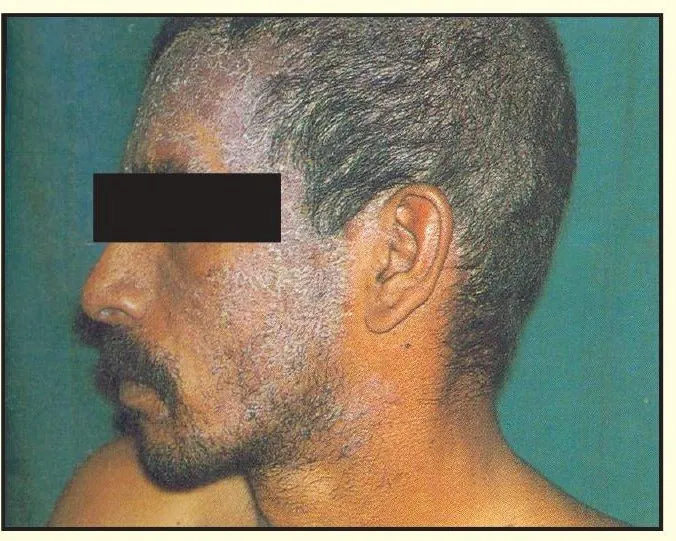
The AAD describes eczema on darker skin as dark brown, purple, or grayish areas, and notes that in older children the bumps on darker skin tend to look gray to violet-brown. The NHS says eczema can turn skin red, white, purple or grey, or lighter or darker than the skin around it, depending on skin tone. Redness is still there underneath, but melanin hides it.
Look for these signs together:
- Color: darker brown, violet, gray or an ashy, dull look compared with nearby skin. Dermatologist Andrew Alexis has described the shades as grayish-red, grayish-brown, or reddish-brown.
- Texture: dry, rough, scaly or flaky skin, sometimes with a white powdery scale that stands out on dark skin.
- Itch: the defining symptom, often worse at night.
- Thickening: skin that has been scratched for a long time becomes leathery with deeper lines, a change called lichenification. On dark skin these areas usually turn darker.
- Swelling or warmth in a flare, which can be easier to feel than to see.
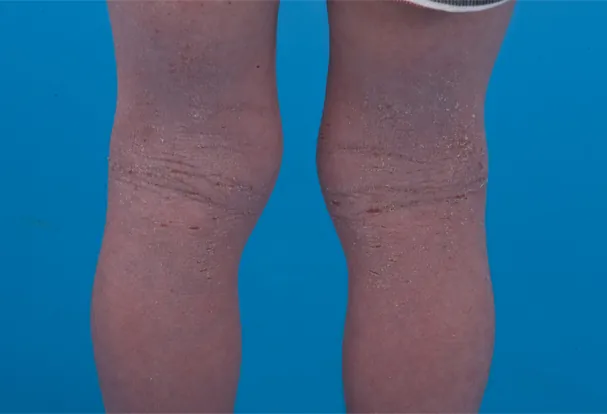
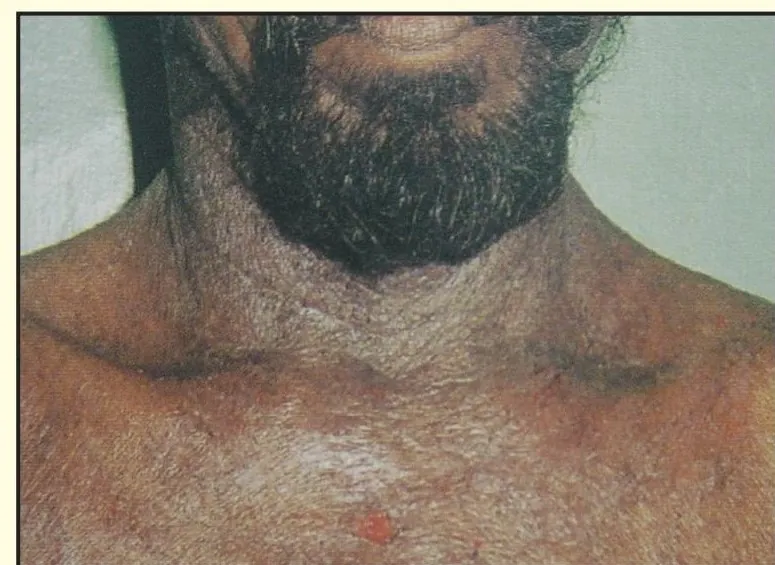
Because redness is hard to see, both people and doctors can underestimate how inflamed the skin is. In the same report, dermatologist Lawrence Eichenfield suggests pressing on the skin and comparing it with nearby unaffected skin to judge the color. Feel for heat, roughness and thickness as well.
Where does eczema appear on brown and black skin?
The classic places are the creases of the elbows and knees, the neck, wrists, ankles and hands, and the face and eyelids. The AAD notes some differences on darker skin. In children with darker skin, patches often form on the fronts of the knees and elbows and on the backs of the hands, the outer surfaces, instead of only in the creases. Children with brown or black skin are also more likely than white children to have eczema on the trunk.
What is follicular eczema?
Follicular eczema is eczema that forms as many small, itchy bumps centered on hair follicles, often on the trunk, arms and legs. The skin looks like goosebumps that do not go away, and it may look darker or ashy between the bumps. The AAD lists small, rough bumps as an eczema sign that is more common in darker skin tones, and dermatologists describe follicular and small-bump (micropapular) forms as common in skin of color.
Follicular eczema is easy to confuse with keratosis pilaris, which also causes rough bumps at the follicles. Keratosis pilaris usually sits on the backs of the upper arms and thighs and barely itches. Follicular eczema tends to itch, comes and goes with other eczema flares, and responds to eczema treatment. It can also look like folliculitis, which has pus-filled bumps and often follows shaving or sweating.
A related form described more often in people of African descent is a lichenoid variant, with flat, shiny, violet-tinged bumps that can look like lichen planus. A dermatologist can tell these apart, sometimes with a small biopsy.
Why does eczema leave dark or light patches on dark skin?
Inflammation and scratching disturb the pigment cells. Sometimes they make more melanin, which leaves darker patches, called post-inflammatory hyperpigmentation. Sometimes they make less, which leaves lighter patches, called hypopigmentation. The AAD notes that after eczema heals, the skin tends to look darker (or lighter) than the surrounding skin. On brown and black skin these changes can last longer than the eczema itself and are often the part that bothers people most.
- Darker patches follow the shape of the old rash and are flat. They fade slowly, often over many months, and fade faster when flares stop and the area is protected from the sun.
- Lighter patches can follow inflammation or heavy scratching. Dermatologists also note that long use of strong steroid creams can lighten skin, which is one reason to use them exactly as prescribed.
- Pityriasis alba is a mild form of eczema that causes pale, slightly scaly patches, usually on children's cheeks. DermNet says it is more noticeable in dark skin, often coexists with atopic dermatitis, and that the color gradually returns to normal, typically within about a year.
The best way to prevent new color changes is to control flares early. Fading creams cannot keep up with a rash that keeps returning.
What causes eczema, and is it contagious?
Atopic dermatitis comes from a weak skin barrier combined with an overactive immune response. It often runs in families and often goes with asthma, hay fever or food allergies. Flares can be set off by dry air, heat and sweat, harsh soaps, fragrance, wool, stress, and allergens such as dust mites. Eczema is not contagious; you cannot catch it or pass it on. Scratched skin can get infected, though, and infection needs treatment.
Could it be something else?
| Condition | How it differs from eczema on dark skin |
|---|---|
| Psoriasis | Thicker, sharply edged plaques with heavier silvery scale; elbows, knees, scalp |
| Keratosis pilaris | Rough follicle bumps on upper arms and thighs, little itch |
| Tinea versicolor | Light or dark spots with fine scale on chest, back and shoulders; caused by yeast |
| Vitiligo | Milk-white patches with no scale and no itch |
| Contact dermatitis | Rash shaped like whatever touched the skin, such as a necklace, hair dye or a new cream |
| Lichen planus | Flat-topped, shiny violet or gray bumps, sometimes with white lines in the mouth |
| Ringworm (tinea) | Ring-shaped patch with a raised, scaly edge that slowly spreads outward |
How is eczema on dark skin treated?
Treatment is the same for every skin tone. What changes is the attention to pigment: controlling flares fast, avoiding irritation and protecting healing skin from the sun.
Daily care
- Short, warm baths or showers, then pat dry. The AAD suggests limiting them to five to ten minutes, using warm water.
- Moisturize right after bathing while the skin is still damp, and again during the day. Ointments and creams hold in more water than lotions. Look for petrolatum, ceramides, glycerin, shea butter or colloidal oatmeal.
- Choose "fragrance-free", which the AAD prefers over "unscented". Many hair oils, pomades and scented body butters can irritate eczema-prone skin, so check those too.
- Gentle cleanser: see our list of face washes for eczema.
A thick, fragrance-free cream with ceramides is a solid base for face and body. You can scan your current products' barcodes or labels with the ingredient scanner in Pori to check them for fragrance and other common irritants.
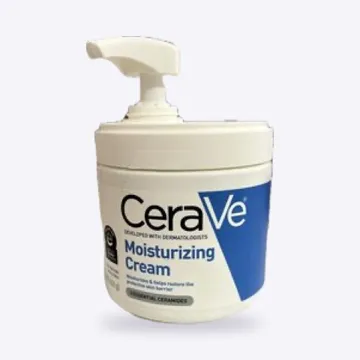
Moisturizing Cream
Thick ceramide cream for skin that dries out by midday.
Suits: Dry, Normal, Sensitive skin
From Pori's catalogue. Amazon links carry our Associates tag: Pori earns from qualifying purchases, at no cost to you. No brand pays to be listed. Photos: Open Beauty Facts contributors, CC BY-SA 3.0.
What a dermatologist may prescribe
The AAD lists corticosteroid creams or ointments, the calcineurin inhibitors tacrolimus and pimecrolimus, and newer nonsteroid creams such as crisaborole, roflumilast, ruxolitinib and tapinarof. Steroid-free creams are often used on the face and eyelids and for longer-term control. For moderate to severe eczema there is light therapy, biologic injections (dupilumab, tralokinumab, lebrikizumab, nemolizumab) and oral JAK inhibitors.
One point matters more on darker skin: a strong steroid used for too long, or on the face, can lighten the skin. Follow the plan your doctor gives you, ask before using any steroid on the face, and tell your dermatologist if treated skin looks paler than the skin around it.
Fading the marks afterward
Once eczema is controlled, the leftover dark marks fade over months. Daily broad-spectrum sunscreen helps (see sunscreens for dark skin). Many brightening acids and retinoids sting eczema-prone skin, so ask a dermatologist before starting one, and wait until the skin is fully calm. Light patches usually return to normal color by themselves once flares stop.
When should you see a doctor about eczema on dark skin?
- Itch keeps you or your child awake at night
- Skin is crusted, weeping yellow fluid, or has painful blisters or open sores, which can mean infection
- You have a fever or feel unwell with a flare
- Patches are spreading, or a week or two of good moisturizing has not helped
- Skin is thickening, or dark or light patches are building up
- You are not sure it is eczema
- Eczema is near the eyes or causes eye pain or blurred vision
If a doctor seems to be judging a flare only by redness, describe the itch, sleep loss and how it feels. You can find a dermatologist near you, and tracking flares with dated photos helps; our list of eczema tracker apps compares the options.
Frequently asked questions
What does eczema look like on black skin?
It often looks dark brown, purple, gray or ashy, with dry, rough or scaly skin and intense itch. Redness is usually hard to see. Long-scratched areas become thick and leathery and often turn darker.
What is follicular eczema?
It is a form of eczema made of many small, itchy bumps around hair follicles, often on the trunk, arms and legs. It is more common on darker skin and is treated like other eczema.
Why does eczema leave dark spots?
Inflammation and scratching make pigment cells produce extra melanin, which stays as flat dark marks after the rash heals. They usually fade over months, faster when flares are controlled and the skin is protected from the sun.
Why does eczema leave light patches on dark skin?
Inflammation can also reduce pigment, leaving lighter patches. Pityriasis alba, a mild eczema in children, causes pale scaly patches on the cheeks. Long use of strong steroid creams can lighten skin too. Most light patches return to normal over time.
Is eczema on dark skin treated differently?
The medicines are the same. The focus is on controlling flares quickly to prevent color changes, using steroid creams exactly as prescribed, avoiding irritating products, and protecting healing skin from the sun.
Is eczema contagious?
No. Eczema cannot be caught or passed on. Scratched skin can become infected, though, so see a doctor if it crusts, weeps or hurts.
Sources
- American Academy of Dermatology: Atopic dermatitis: Signs and symptoms
- American Academy of Dermatology: Atopic dermatitis: Diagnosis and treatment
- NHS: Atopic eczema
- Brunk D. How does atopic dermatitis present in skin of color? MDedge, 2022
- DermNet: Pityriasis alba
- American Academy of Dermatology: Dermatologists' tips for relieving dry skin
- DermNet: Postinflammatory hyperpigmentation
Pori is a wellness and skincare education app, not a medical device. This article is for general information and isn't medical advice. For anything that worries you, see a dermatologist.