Pori

- Folliculitis is inflamed hair follicles, seen as small red or pus-filled bumps centered on hairs; unlike acne, it has no blackheads or whiteheads and often itches.
- Main types: bacterial (staph), fungal (Malassezia, often called fungal acne), hot tub (Pseudomonas) and razor bumps from ingrown hairs.
- Match the treatment to the cause: warm compresses and benzoyl peroxide or antibacterial washes for bacterial, antifungal washes for fungal, and usually nothing for hot tub rash.
- See a doctor if bumps last more than 2 or 3 days despite home care, keep coming back, become painful boils, or come with fever.
Folliculitis is inflammation of hair follicles, usually from bacteria (staph), yeast (Malassezia) or a hot tub germ (Pseudomonas). It shows up as small red or pus-filled bumps, each centered on a hair, that often itch. Acne starts with clogged pores and includes blackheads and whiteheads, while folliculitis does not. Where the bumps appear and what came before them, such as shaving, a hot tub or sweaty workouts, usually tells the two apart.
Pori does not diagnose skin conditions. Its selfie scans and photo diary in Pori can help you keep dated, consistent photos to show a dermatologist and see whether treatment is working.
How can you tell folliculitis from acne?
DermNet defines folliculitis as an inflamed hair follicle due to any cause, and notes that acne itself is technically a type of folliculitis. In everyday use, though, "folliculitis" means bumps driven by infection or irritation of the follicle, and "acne" means breakouts driven by oil and clogged pores. The practical differences:
| Clue | Acne | Folliculitis |
|---|---|---|
| Blackheads and whiteheads | Yes, comedones are part of acne | No comedones |
| Shape of the rash | Mix of sizes: comedones, papules, pustules, sometimes nodules | Many similar, small bumps, often with a hair in the middle |
| Itch | Usually little itch | Often itchy, especially fungal and hot tub types |
| Where | Face, chest, upper back | Anywhere with hair: beard, scalp, legs, buttocks, chest, back, under a swimsuit |
| What came before | Hormones, oily skin; builds over weeks | Shaving, waxing, a hot tub, sweat under tight clothes, antibiotics or steroid creams; can appear within days |
| Response to acne products | Usually improves | Fungal type often doesn't improve, and can worsen with antibiotics |
Our guide to papules vs pustules explains acne's own bump types, and acne mechanica covers breakouts from friction and gear, which can look similar.
What does folliculitis look like?
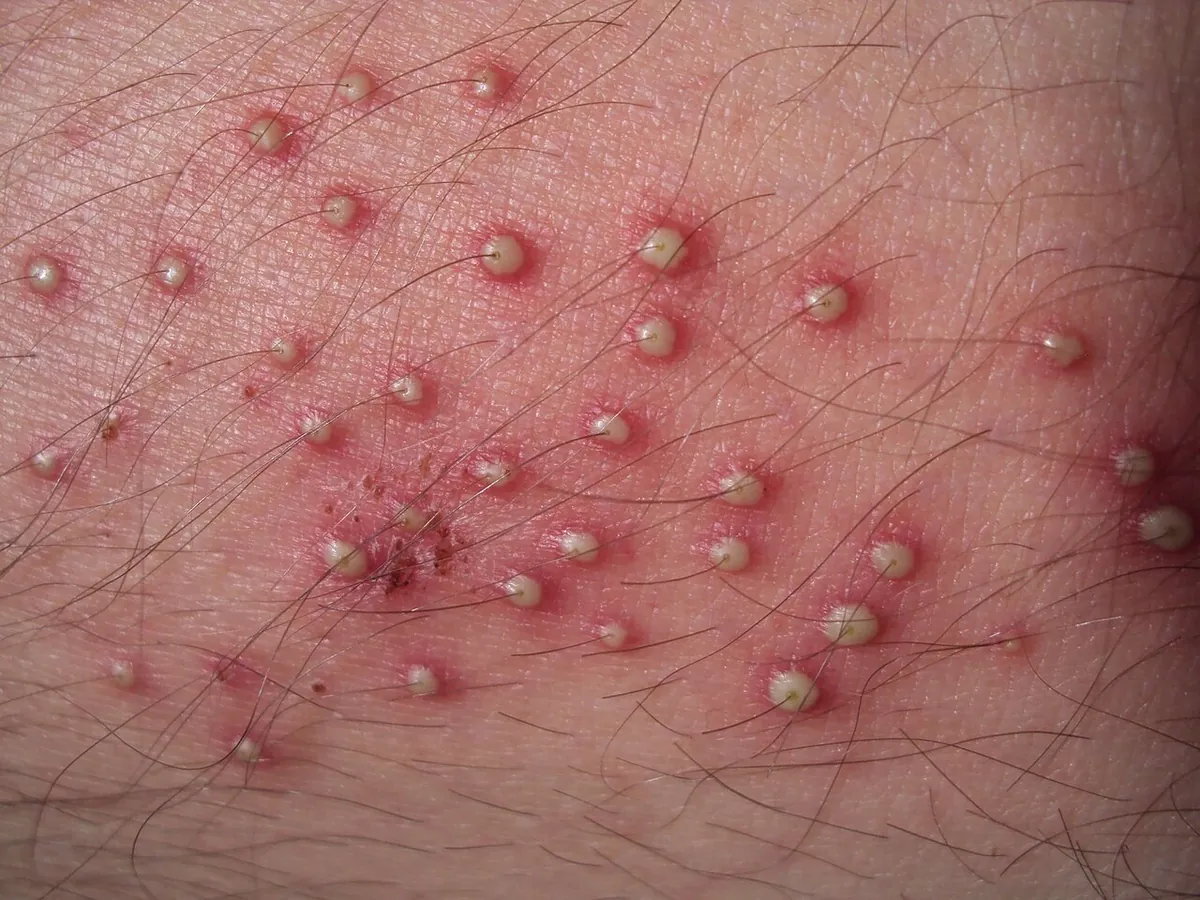
Cleveland Clinic says the main symptom is red bumps that look like pimples; some are filled with pus, and they can itch or sting. Look closely and you can often see a hair at the center of each bump.
On brown and black skin
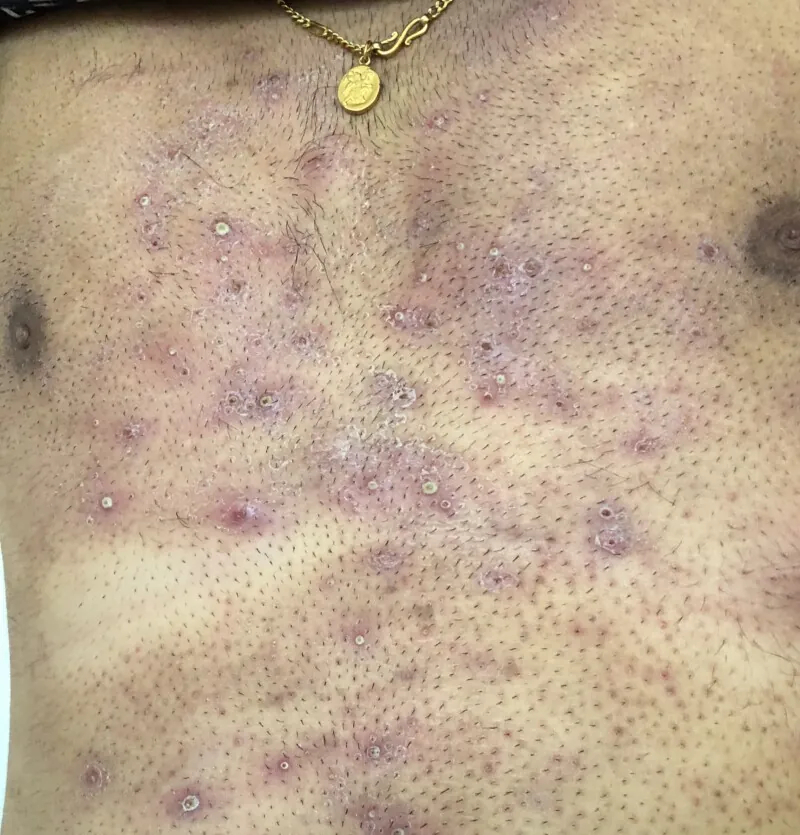
Redness can be hard to see on darker skin, DermNet notes, so bumps may look skin-colored or darker than the skin around them. Dark marks left behind, called postinflammatory hyperpigmentation, are common and can last longer than the bumps. A dermatologist can help prevent and fade them; our guide to fading dark spots covers the next step once the bumps are gone.
What are the main types of folliculitis?
Cleveland Clinic lists several types, including staph folliculitis, hot tub folliculitis, Malassezia folliculitis, razor bumps, gram-negative folliculitis, boils and carbuncles. These are the ones most often mistaken for acne.
Bacterial (staph) folliculitis
The most common kind. DermNet says bacterial folliculitis is most often due to Staphylococcus aureus. It tends to follow shaving, friction or blocked follicles: MedlinePlus says folliculitis can start from rubbing against clothing or shaving. Cleveland Clinic lists frequent shaving, heavy sweating, diabetes and obesity among the risk factors. Mild cases often settle within a few days. A deeper infection can become a painful boil, and a cluster of boils is a carbuncle.
Fungal (Malassezia or Pityrosporum) folliculitis
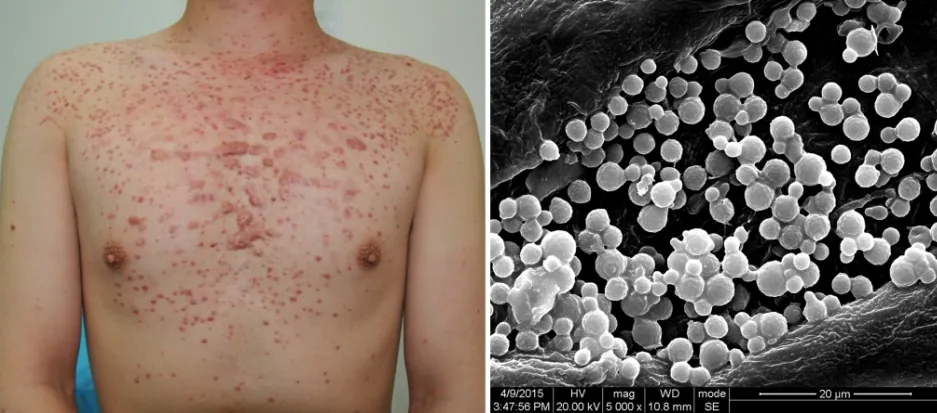
Often called fungal acne, this is caused by the same yeast behind tinea versicolor. DermNet describes small, uniform, itchy papules and pustules, mainly on the upper back and chest, sometimes on the forehead, neck and upper arms, with no comedones. It is most common in teen and young adult men. Triggers include heat and humidity, heavy sweating, occlusive creams and sunscreens, antibiotics, and steroid medicines. Because antibiotic use is a trigger, it can flare during acne treatment.
Hot tub folliculitis
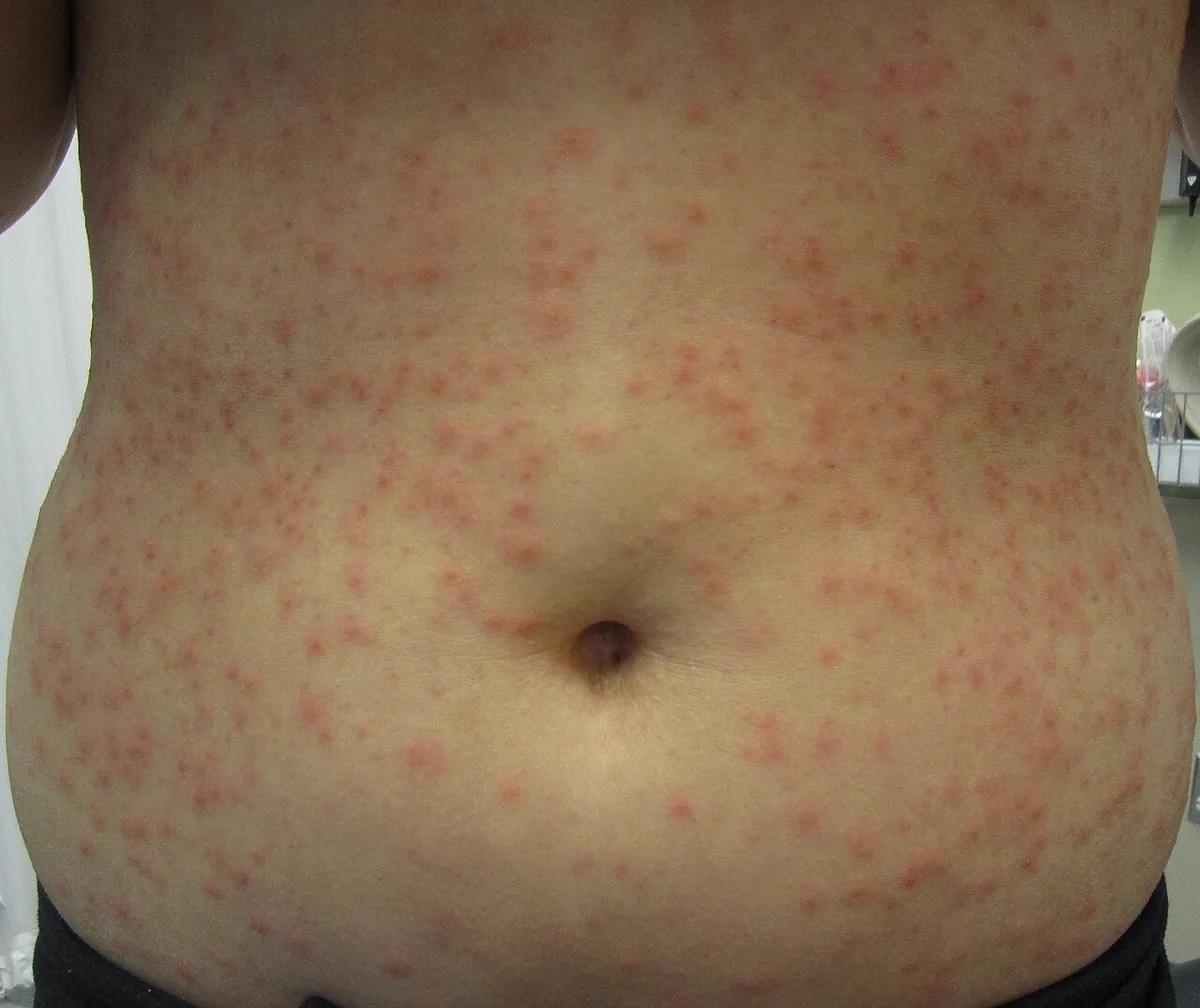
Caused by Pseudomonas aeruginosa, a germ that thrives in warm water. The CDC describes an itchy, red, and bumpy rash with pus-filled bumps around hair follicles that usually appears a few days after sitting in a poorly maintained hot tub and is often worse where a swimsuit held water against the skin. DermNet says it starts between 8 hours and five days after exposure and usually clears on its own within 14 days. The CDC says mild rashes usually clear in a few days without treatment.
Razor bumps (pseudofolliculitis barbae)
These are ingrown hairs, not an infection. The AAD explains that shaving can leave hairs short enough to curl back into the skin, and that razor bumps are especially common in men who have a darker skin tone and coarse, curly hair. DermNet notes swabs from these bumps are sterile. See razor bumps vs acne and ingrown hairs after shaving your face for prevention and treatment.
Gram-negative folliculitis
A rare pustular rash on the face that, per DermNet, usually follows long courses of tetracycline-type antibiotics for acne. Cleveland Clinic notes it can make acne look worse. If acne suddenly turns into crops of pustules while you're on antibiotics, tell your doctor.
Is folliculitis contagious?
Fungal folliculitis comes from yeast that already lives on your skin, and razor bumps are ingrown hairs, so neither is something you catch from someone else. Staph bacteria can spread through close contact and shared items, though, so the NHS advises people with staph infections not to share towels, washcloths, bed linen, toothbrushes or razors. Hot tub folliculitis comes from the water, so everyone who used the same tub can get it.
How do you treat folliculitis at home?
Mild folliculitis often clears on its own once you remove the cause. Start with the basics:
- Warm compresses. MedlinePlus says warm, moist compresses may help drain the affected follicles. Hold a warm, damp cloth on the area a few times a day.
- Pause shaving or waxing. DermNet advises stopping hair removal until the rash settles. When you restart, use an electric razor or plenty of shaving gel.
- Loosen up and shower after sweating. Change out of damp workout clothes and avoid tight, rubbing fabrics.
- Skip heavy, occlusive products on the area. DermNet recommends oil-free moisturizers.
- Don't squeeze or pick. It can push infection deeper and leave marks.
Over-the-counter washes: match the wash to the cause
For bacterial folliculitis, Cleveland Clinic suggests antibacterial cleansers, and an American Family Physician review lists benzoyl peroxide among the topical treatments that can speed healing. A benzoyl peroxide wash used on the chest, back or legs is an easy option. It can bleach towels and fabric, so rinse well. See our benzoyl peroxide ingredient guide for how to use it without irritation.
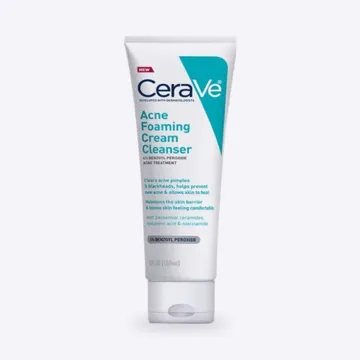
Acne Foaming Cream Cleanser
Face cleanser with benzoyl peroxide, niacinamide and glycolic acid. Fragrance-free.
Suits: Normal, Oily, Combination, Sensitive skin
From Pori's catalogue. Amazon links carry our Associates tag: Pori earns from qualifying purchases, at no cost to you. No brand pays to be listed. Photos: Open Beauty Facts contributors, CC BY-SA 3.0.
For suspected fungal folliculitis, an antibacterial wash won't touch the yeast. DermNet says topical selenium sulfide, econazole or ketoconazole work in most cases, and weekly use may prevent recurrence. Dandruff shampoos with these ingredients, left on the skin for a few minutes before rinsing, are the usual way to apply them over a large area.
Hot tub folliculitis usually needs no treatment. Shower and wash your swimsuit, and stay out of that tub.
What will a doctor prescribe?
A doctor first works out which type you have, sometimes with a swab or a skin scraping. MedlinePlus says treatment may include antibiotics applied to the skin or taken by mouth, or an antifungal medicine:
- Bacterial: antibiotic creams or ointments, or oral antibiotics for widespread or deep infection. Boils and carbuncles may need to be drained.
- Fungal: antifungal creams and washes; DermNet says oral fluconazole or itraconazole is used for stubborn cases, and the condition tends to recur, so maintenance washes are common.
- Hot tub: usually none; occasionally an antiseptic or oral antibiotic.
- Razor bumps: changes to how you remove hair first; a dermatologist can suggest further options if bumps keep returning.
When should you see a doctor?
MedlinePlus says to contact a provider if folliculitis comes back often, gets worse, or lasts longer than 2 or 3 days despite home care. Also get seen if:
- Bumps become firm, painful, larger or drain fluid, which can mean a boil.
- The rash spreads, or redness, warmth and swelling spread around it.
- You have fever, chills or feel unwell.
- You have diabetes or a weakened immune system.
- "Acne" isn't responding to acne treatment, or gets worse on antibiotics.
- Razor bumps keep returning; the AAD warns repeated bumps can leave deep grooves and raised scars.
- Hot tub rash gets worse or you get it more than once, per the CDC.
For recurring or unclear bumps, find a dermatologist near you.
How do you prevent folliculitis?
- Shave with a sharp blade or an electric razor, soften hair first, and go with the grain.
- Shower soon after workouts and change out of sweaty clothes.
- After a hot tub or pool, the CDC advises you remove your swimsuit and shower with soap, then wash the swimsuit. Our skincare routine for swimmers has more.
- Don't share razors or towels.
- If you're prone to fungal folliculitis, use an antifungal wash weekly in hot weather.
If breakouts on your torso look like acne, our guides to chest acne and back acne cover that side. A few weeks of dated photos, with notes on shaving, workouts and products, often makes the pattern obvious to you and your dermatologist.
Frequently asked questions
How do I know if it's folliculitis or acne?
Acne includes blackheads and whiteheads and bumps of different sizes. Folliculitis has no comedones; it is many similar small bumps, often itchy, each around a hair, and it often follows shaving, a hot tub or heavy sweating.
Does folliculitis go away on its own?
Mild bacterial and hot tub folliculitis often clear within days to two weeks once you remove the cause. Fungal folliculitis usually needs an antifungal wash or cream, and it tends to come back.
What does hot tub folliculitis look like?
An itchy, red, bumpy rash with pus-filled bumps around hair follicles, appearing hours to a few days after using a poorly maintained hot tub, and usually worst where a swimsuit held water against the skin.
Can I use acne products on folliculitis?
A benzoyl peroxide wash can help bacterial folliculitis. Fungal folliculitis needs an antifungal such as ketoconazole or selenium sulfide, and acne antibiotics can make it worse. If acne products aren't working, see a dermatologist.
Is folliculitis contagious?
Fungal folliculitis and razor bumps are not catching. Bacterial folliculitis is usually staph, and staph can spread through shared razors and towels, so keep those to yourself. Everyone who used the same dirty hot tub can get hot tub folliculitis.
What does folliculitis look like on dark skin?
The redness can be hard to see, so bumps may look skin-colored, purple or dark brown. Dark marks often stay after the bumps heal, which is a reason to treat early and see a dermatologist if it keeps returning.
Sources
- DermNet: Folliculitis
- DermNet: Malassezia folliculitis
- DermNet: Spa pool folliculitis
- Cleveland Clinic: Folliculitis
- MedlinePlus (US National Library of Medicine): Folliculitis
- CDC: Preventing hot tub rash
- American Academy of Dermatology: Razor bumps, how to prevent them
- American Family Physician: Common bacterial skin infections
- NHS: Staph infection
Pori is a wellness and skincare education app, not a medical device. This article is for general information and isn't medical advice. For anything that worries you, see a dermatologist.