Pori

- Tinea versicolor is an overgrowth of Malassezia yeast that causes small, finely scaly patches that are lighter, darker, pink or tan, usually on the chest, back, neck and upper arms.
- On brown and black skin the patches are often paler than the surrounding skin; they stand out more after sun because affected skin doesn't tan.
- Antifungal shampoos and creams with selenium sulfide, ketoconazole or pyrithione zinc clear it; large areas may need prescription antifungal pills.
- Skin color can take months to return, and it often comes back in hot, humid weather, so monthly antifungal washes help prevent it. It is not contagious.
Tinea versicolor (also called pityriasis versicolor) is a common yeast overgrowth that causes small, slightly scaly patches that are lighter or darker than the skin around them, or pink to light brown, usually on the chest, back, neck and upper arms. It is caused by Malassezia, a yeast that lives on everyone's skin, and it is not contagious. Antifungal shampoos and creams clear it, but the color can take months to even out and it often comes back in hot, humid weather.
Pori does not diagnose skin conditions. Its selfie scans and photo diary in Pori can help you keep dated, consistent photos to show a doctor and see whether treatment is working, which matters here because the color lags behind the cure.
What does tinea versicolor look like?
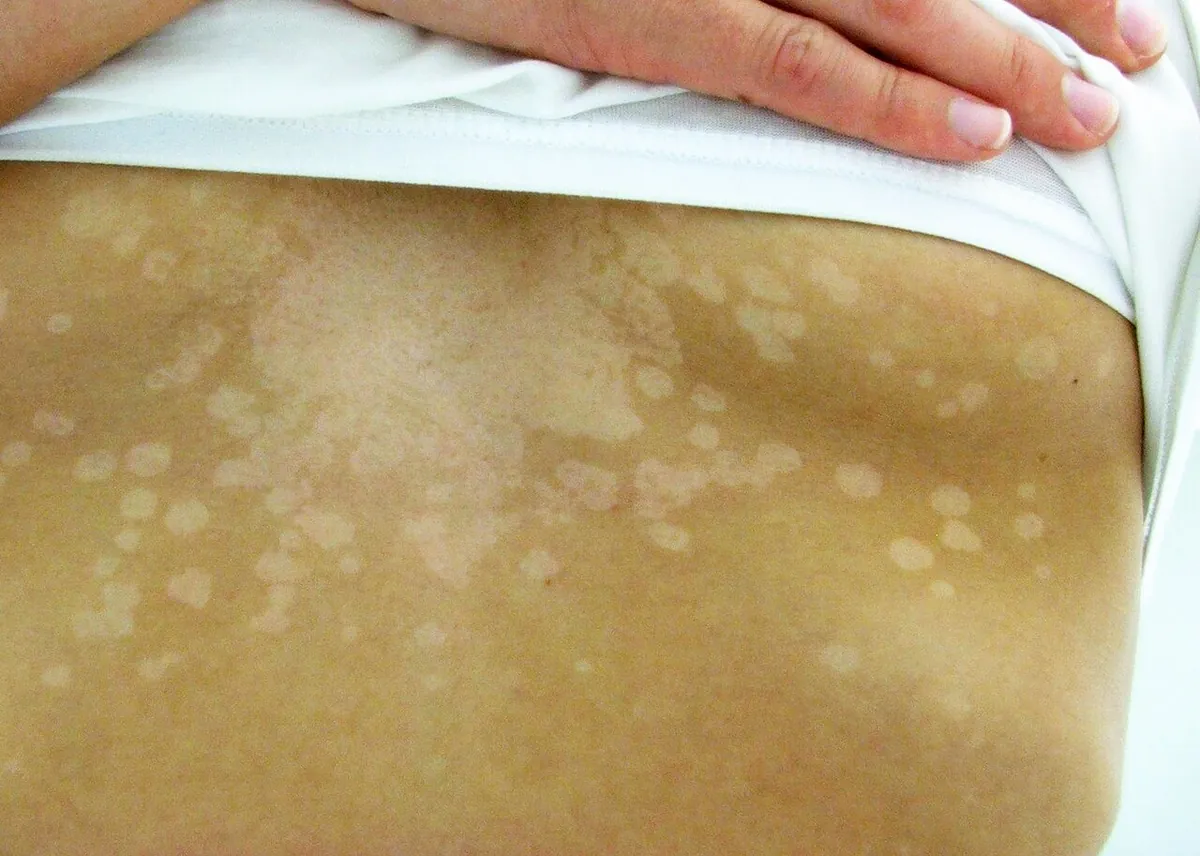
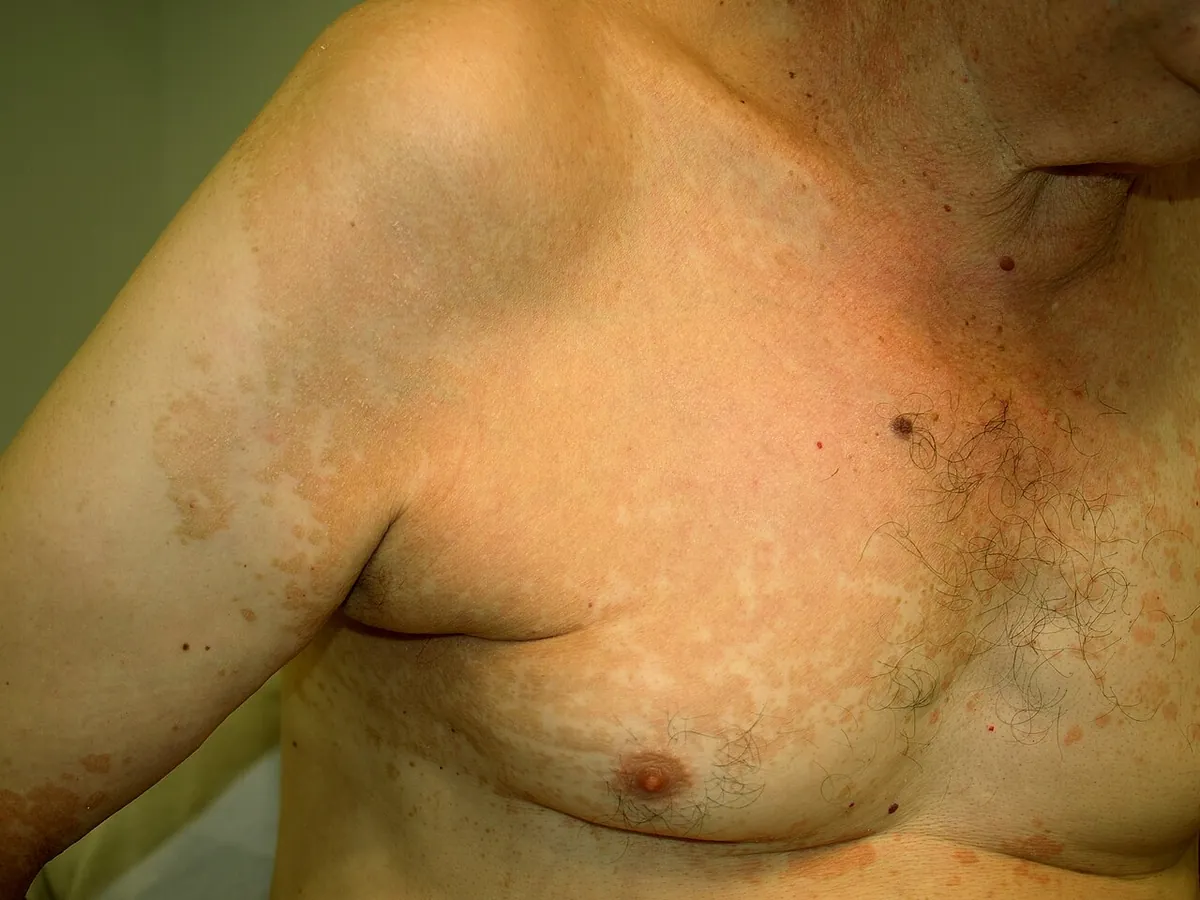
It looks like a scatter of small, round or oval spots with sharp edges and a fine, dusty scale. MedlinePlus describes patches of discolored skin with sharp borders and fine scales that are often lighter or darker than the surrounding skin. Over time the spots can merge into larger, map-like patches.
"Versicolor" means the color varies. The AAD says the spots can be white, pink, salmon, red, tan or brown. They are usually painless, though some people find them mildly itchy, and they tend to be more noticeable after time in the sun, because the affected skin doesn't tan.
Where it shows up
The usual sites are the chest, upper back, upper arms, neck and stomach, according to the NHS. MedlinePlus adds the underarms, and in children it can appear on the forehead. These are areas with plenty of oil glands, where Malassezia does best.
On brown and black skin
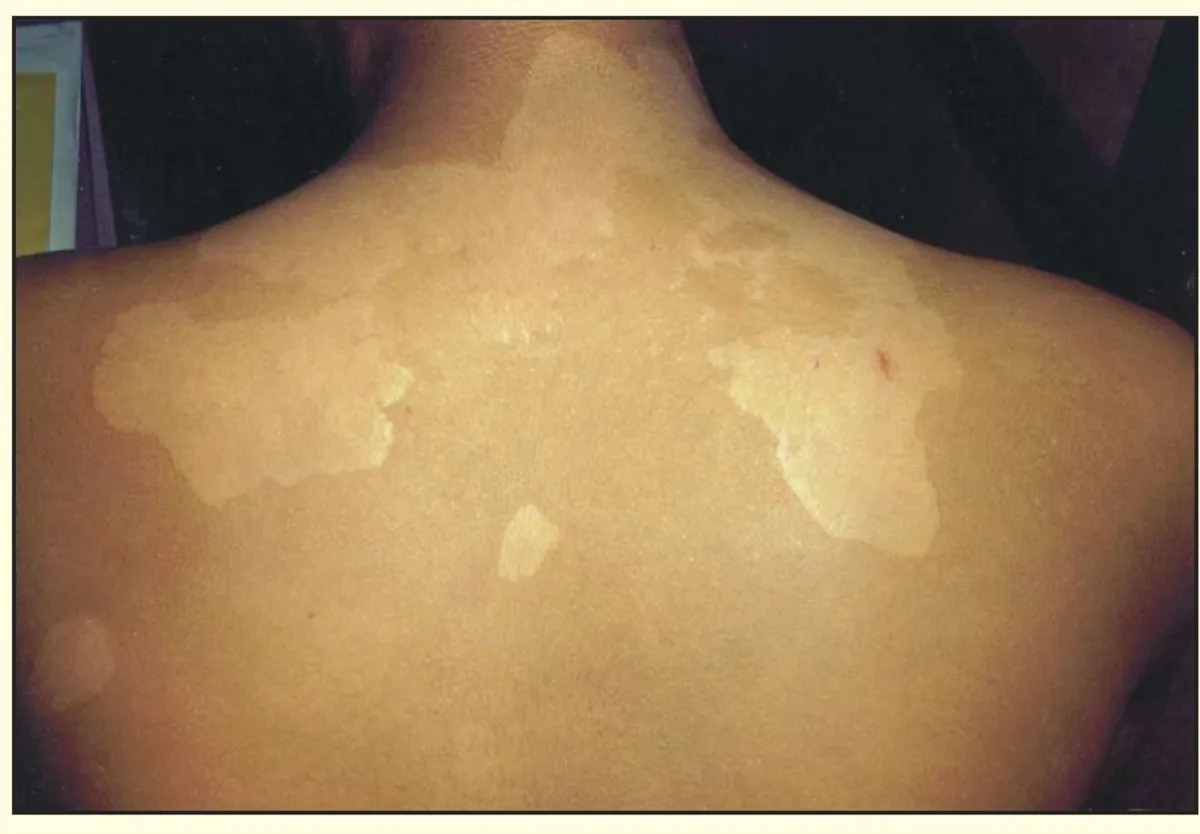
The NHS says that on brown or black skin, the patches tend to be paler than the surrounding skin, while on white skin they are often pink, red or pale brown. DermNet notes that pale patches are more noticeable on darker skin. MedlinePlus says people of color may see either lighter or darker patches. Because faint light spots can look like vitiligo, the AAD notes that the two are sometimes confused.
Why does it show up in summer?
Many people first notice tinea versicolor after a vacation or the first warm weeks of the year. Two things are happening at once. Heat, humidity and sweat help the yeast grow, and the tan on the rest of your skin makes untanned spots stand out. The AAD says the spots can fade in cold weather and return when it gets warm and humid, which is why it can seem to come and go with the seasons. MedlinePlus lists increased sweating, mild itching and mild swelling as other possible symptoms. If your spots appear every summer in the same places, that pattern alone is a strong hint to mention to your doctor.
What causes tinea versicolor, and is it contagious?
Malassezia yeast lives on everyone's skin. The AAD explains that when yeast grows out of control, the result is tinea versicolor. DermNet names the species most often involved as M. globosa, M. restricta and M. sympodialis. The AAD says the yeast prevents the skin from tanning, which is why the patches look paler after summer.
It is not contagious. The NHS states plainly that it cannot spread from person to person, and it isn't caused by poor washing.
Who gets it?
- Teens and young adults are affected most, per MedlinePlus and DermNet, with slightly more men than women.
- People in hot, humid climates. The AAD calls it one of the most common skin diseases in tropical and subtropical areas, where some people have it year-round.
- People who sweat a lot, per DermNet.
- Children and older adults can get it too.
The same yeast is linked to two other common problems: seborrheic dermatitis, the greasy flaking around the nose and brows, and Malassezia folliculitis, the itchy bumps often called fungal acne. Ketoconazole and selenium sulfide washes are used for all three.
What else could the patches be?
Light or dark patches have many causes. A dermatologist can often tell by looking, and may scrape a little scale to view under a microscope, where the yeast and short threads have a look DermNet describes as spaghetti and meatballs. Under a Wood's lamp (ultraviolet light), the patches may glow yellow-green.

| Condition | How it differs from tinea versicolor |
|---|---|
| Vitiligo | Complete loss of color, so patches look chalk-white, without the fine scale; the AAD notes faint tinea versicolor spots can be mistaken for it |
| Seborrheic dermatitis | Greasy, yellowish flakes on red or discolored skin in the nose folds, brows, scalp and mid-chest |
| Fungal acne (Malassezia folliculitis) | Same yeast, but it makes small, itchy, same-sized bumps inside hair follicles, not flat patches |
| Melasma or sun spots | Flat brown patches, mostly on the face, without scale; they darken with sun instead of standing out as pale |
| Ringworm (tinea corporis) | A different fungus; usually a single ring with a raised, scaly edge and a clearer center |
How do you treat tinea versicolor?
Antifungal products kill the yeast. The AAD says the active ingredient in over-the-counter options is often selenium sulfide, ketoconazole or pyrithione zinc, in shampoos, soaps, creams and lotions.
Antifungal shampoo used as a body wash
Dandruff shampoo is the usual first step for larger areas because it is easy to spread over the chest and back. MedlinePlus describes applying a dandruff shampoo with selenium sulfide or ketoconazole to the skin for 10 minutes daily in the shower. DermNet's version: apply from the jawline down, leave it on for 5 to 15 minutes, rinse, and repeat daily for a week, then weekly for a month. Follow the product label and your doctor's advice, and keep shampoo away from your eyes.
Antifungal creams
For a few small patches, an azole cream (such as ketoconazole or econazole) or terbinafine gel can work, according to DermNet.
Prescription pills
If the patches cover a large area or creams fail, a doctor may prescribe a short course of an oral antifungal; DermNet names itraconazole and fluconazole. It also notes that oral terbinafine, used for many other fungal infections, is not effective for this one. Oral antifungals can interact with other medicines, so they need a prescription and monitoring.
How long does it take for skin color to come back?
Longer than people expect. The yeast clears in weeks, but the AAD says the skin may stay lighter (or darker) for weeks or months, and the NHS says it can take a few months to return to its usual color. DermNet's rule of thumb: once the fine scale is gone, the infection is no longer active, and lingering color changes don't mean treatment failed. Sun helps the pale spots catch up only slowly, and tanning the rest of your skin makes them stand out more, so daily sunscreen keeps the contrast down while they recover. Our guide to sunscreen for dark skin covers options that don't leave a cast.
Why does tinea versicolor keep coming back?
Because the yeast is part of normal skin, treatment brings it back under control without removing it. The NHS says the patches can come back, and MedlinePlus says it often returns in warm weather. To keep it away:
- Use a medicated cleanser once or twice a month, as the AAD suggests, or more often during hot, humid months. DermNet says monthly selenium sulfide usually prevents recurrence.
- Start the routine before summer if it reliably flares then.
- Avoid getting overheated and sweaty for long stretches, as MedlinePlus advises, and change out of damp workout clothes.
Some people in tropical climates need a medicated wash year-round, the AAD notes.
When should you see a doctor?
The NHS says to see a GP if your skin has changed color, because tinea versicolor will usually only go away if treated. In practice, book a visit if:
- You are not sure what the patches are, especially chalk-white patches on the face or hands that could be vitiligo.
- Over-the-counter shampoo has not removed the scale after about a month.
- The patches cover a large area or keep coming back despite maintenance washes.
- A spot looks different from the rest: raised, changing, bleeding or getting darker.
- You have a weakened immune system.
A dermatologist can confirm the diagnosis in minutes. To book one, find a dermatologist near you.
How can photos help?
Because color returns slowly, it is hard to judge progress from memory. Photograph the same patch of chest or back in the same light every week or two. When the scale is gone and the photos show the pale patches slowly filling in, you know the treatment worked, even if the skin isn't even yet.
Frequently asked questions
Is tinea versicolor contagious?
No. It is caused by an overgrowth of Malassezia yeast that already lives on everyone's skin, and the NHS says it cannot spread from person to person. It is not caused by poor hygiene.
What is the fastest way to get rid of tinea versicolor?
An antifungal shampoo with selenium sulfide or ketoconazole, applied to the skin for several minutes in the shower daily for about a week, clears the yeast for most people. Large or stubborn cases may need prescription pills. The color takes longer to even out.
Why are my spots still white after treatment?
The skin's pigment recovers slowly. The AAD says it can stay lighter or darker for weeks or months. If the fine scale is gone, the infection is no longer active, and the color usually catches up over time.
Does tinea versicolor look different on dark skin?
On brown and black skin the patches are usually paler than the surrounding skin, though they can also be darker. On lighter skin they are often pink, red or pale brown.
How do I stop tinea versicolor from coming back?
Use an antifungal wash once or twice a month, more often in hot, humid weather, avoid long stretches of heat and sweat. Some people in tropical climates need a medicated wash year-round.
Is tinea versicolor the same as vitiligo?
No. Tinea versicolor is a yeast overgrowth with fine scale and patches that recover color after treatment. Vitiligo is a complete loss of pigment without scale. A dermatologist can tell them apart, sometimes with a Wood's lamp.
Sources
- American Academy of Dermatology: Tinea versicolor overview
- American Academy of Dermatology: Tinea versicolor signs and symptoms
- American Academy of Dermatology: Tinea versicolor diagnosis and treatment
- NHS: Pityriasis versicolor
- DermNet: Pityriasis versicolor
- MedlinePlus (US National Library of Medicine): Tinea versicolor
- DermNet: Malassezia folliculitis
Pori is a wellness and skincare education app, not a medical device. This article is for general information and isn't medical advice. For anything that worries you, see a dermatologist.