Pori

- Pityriasis rosea starts with one oval, scaly herald patch, 2 to 5 cm across, followed by smaller oval patches on the trunk days to weeks later.
- On the back the patches often slope along skin lines in a Christmas-tree pattern; on brown and black skin they can look gray, dark brown or black.
- It is not contagious, usually clears on its own in 6 to 8 weeks, and treatment is for itch: moisturizer, antihistamines and sometimes a steroid cream.
- Get checked if the rash is on your palms or soles, follows a new medicine, lasts over 3 months, or appears while you are pregnant.
Pityriasis rosea is a common, harmless rash that usually starts with one oval, pink, scaly patch called the herald patch, followed days to weeks later by many smaller oval patches on the chest, back, arms and legs. On the back the small patches often line up along the skin's natural creases, a pattern doctors compare to the branches of a Christmas tree. It is not contagious and clears on its own, usually within 6 to 8 weeks, though it can take a few months.
Pori does not diagnose skin conditions; its selfie scans and photo diary in Pori can help you keep dated, consistent photos to show a dermatologist and see whether treatment is working.
What does pityriasis rosea look like?
The rash has a typical order of events, which is often the best clue.
- The herald patch. The NHS describes it as usually oval or round, slightly raised and about 2cm to 5cm across. It often has a fine ring of scale just inside its edge and a paler center. Many people mistake it for ringworm.
- The spread. The NHS says smaller scaly spots appear about 5 to 15 days later, usually on the chest and back. The AAD says the widespread rash can follow a few days to a few weeks after the herald patch.
- The pattern. MedlinePlus notes that the rash may appear in a Christmas tree pattern. DermNet explains that the oval patches tend to follow the relaxed skin tension lines of the upper body, so on the back their long sides slope down and out from the spine.
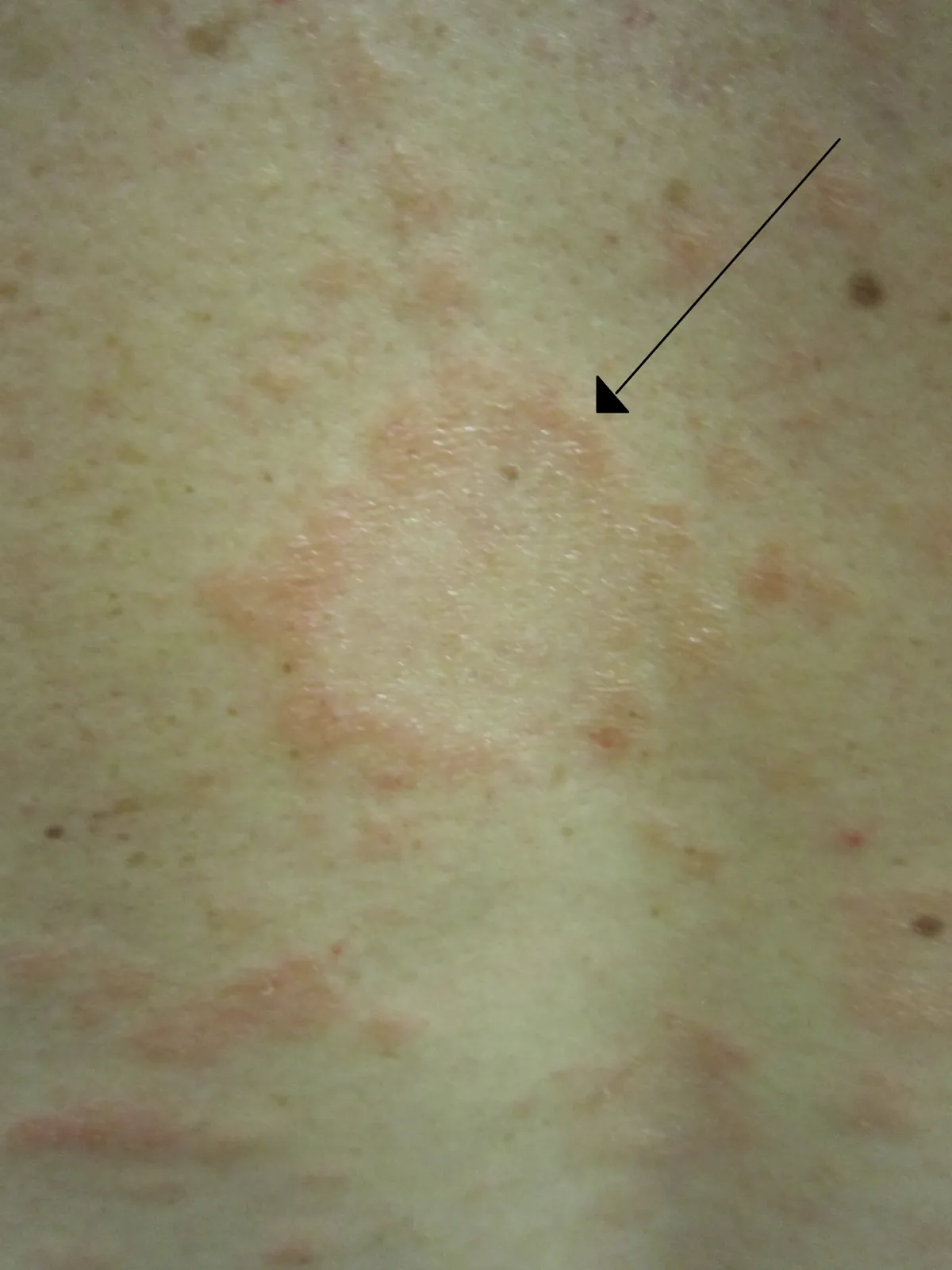
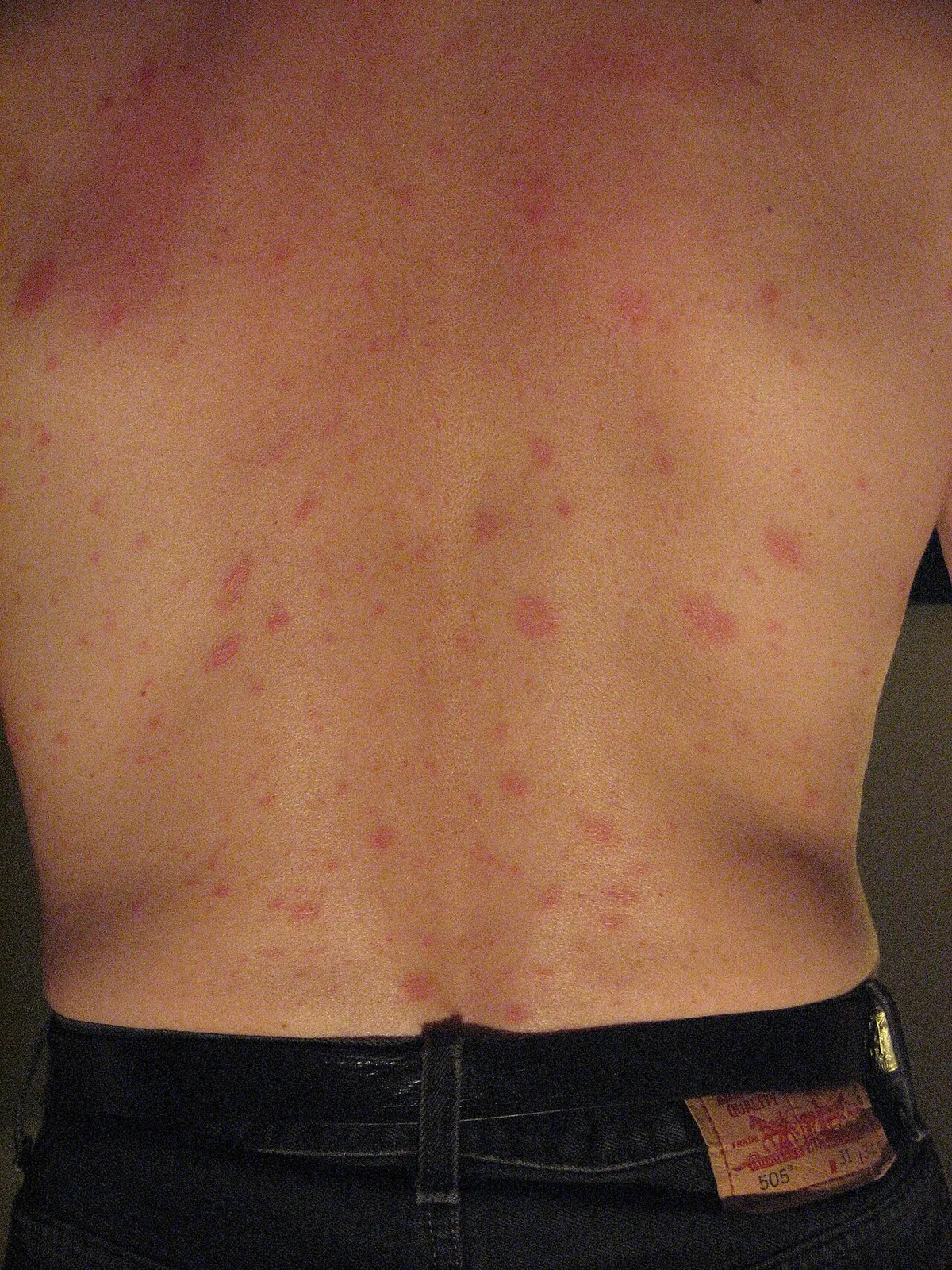
The spots often appear on both sides of the body and can itch. In children the NHS says they may also appear on the face or scalp. In adults the face is usually spared, which helps tell it apart from many other rashes. American Family Physician notes that on the upper chest the patches can form a V shape instead. Some people feel unwell first: MedlinePlus lists headache, tiredness, sore throat and mild fever.
What does pityriasis rosea look like on brown and black skin?
The pink color in most textbook photos can be missing on darker skin. The NHS says the herald patch may be darker with a light border, and the smaller spots can be gray, dark brown or black. The scaly edges and the tree-like layout on the back still show.
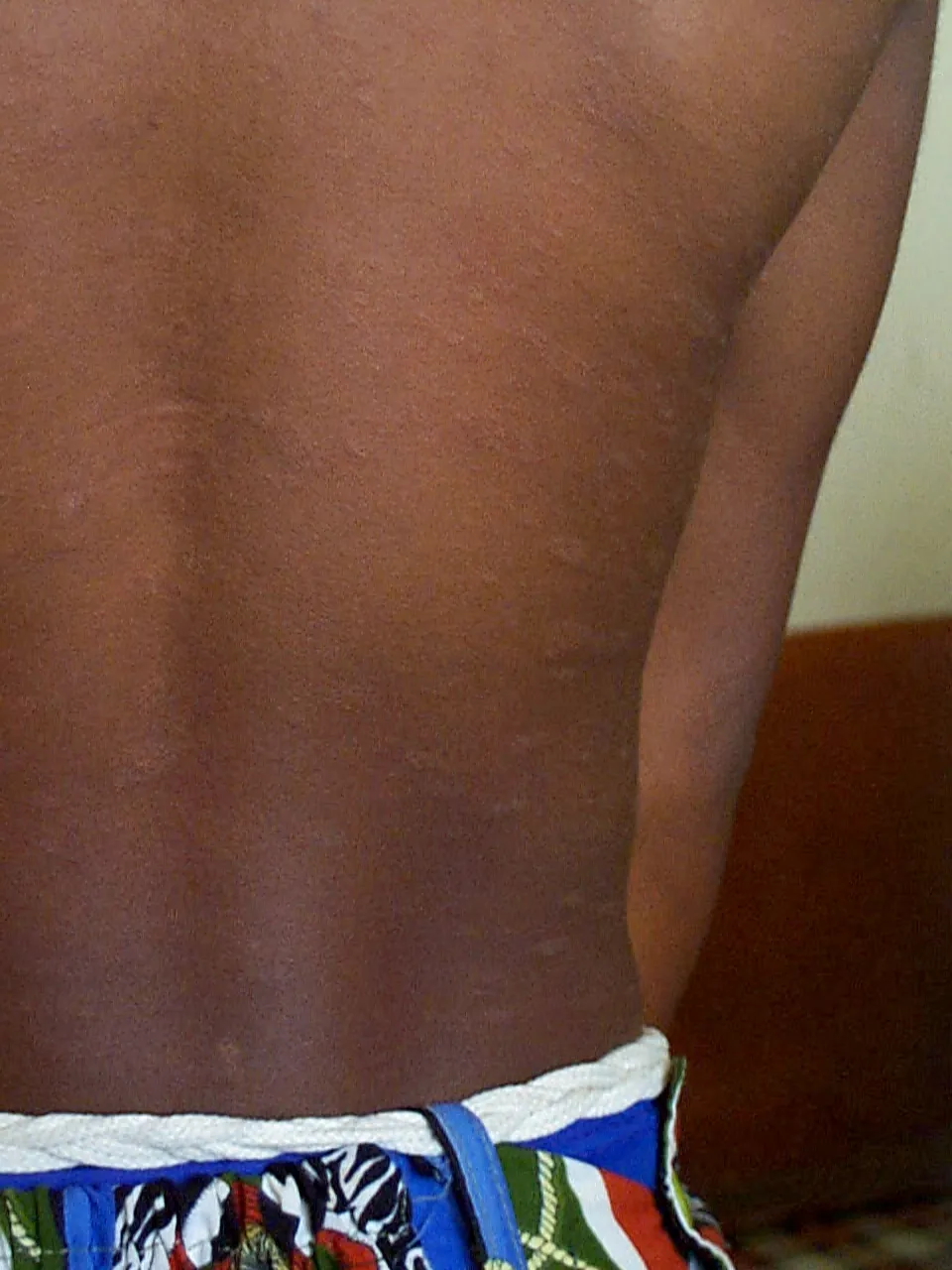
After the rash clears, darker or lighter patches can remain. The AAD says these are not scars and fade over time, although spots on sun-exposed skin can take months to fade. The NHS adds that they are more noticeable on brown and black skin and usually fade within a few months. Gentle sun protection can help them even out; see our skincare routine for dark skin.
What causes pityriasis rosea, and is it contagious?
Nobody knows the exact cause. The AAD says research suggests a virus, and some people get it after a viral illness. DermNet says the strongest known link is with human herpesviruses 6 and 7, though studies have not confirmed it. These are common childhood viruses and are unrelated to cold sores.
Pityriasis rosea is not contagious and is not a sexually transmitted infection, according to the AAD. MedlinePlus notes that it sometimes shows up in several people in the same household at once, which is one reason a viral trigger is suspected.
Who gets it?
- The AAD says you are most likely to get it between 10 and 35 years of age, though it can happen at any age.
- MedlinePlus says it is seen most often in the fall and spring, and women seem to get it more often than men.
- Most people who get it are otherwise healthy, and many get it only once. DermNet puts recurrence at 1 to 3%.
Can medicines cause a rash that looks like it?
Yes. The AAD notes that some medicines and vaccines can cause a rash that looks like pityriasis rosea, and names terbinafine, naproxen and captopril as examples. If the rash started soon after a new medicine, tell your doctor; stopping or swapping the drug may be the treatment.
What else could it be?
The AAD warns that the rash can look like ringworm, psoriasis or eczema, which often need treatment. DermNet and American Family Physician add secondary syphilis, which can cause oval spots on the trunk, palms and soles. This table shows the most common look-alikes.
| Condition | How it differs from pityriasis rosea |
|---|---|
| Ringworm (tinea corporis) | One or a few rings that slowly grow outward, with scale on the outer edge; no shower of small patches. It improves with antifungal cream, which does nothing for pityriasis rosea. |
| Guttate psoriasis | Many small, thicker, more heavily scaly drops, often after a strep throat, with no herald patch. See psoriasis on the face. |
| Nummular or other eczema | Coin-shaped patches that itch a lot, ooze or crust, and come and go; no tree pattern. See eczema basics. |
| Tinea versicolor | Small, finely scaly lighter or darker patches on the chest and back that come back each summer; caused by yeast. See tinea versicolor. |
| Secondary syphilis | Can look almost identical, but often involves the palms and soles, with no herald patch. A blood test tells them apart. |
| Drug or vaccine reaction | Starts after a new medicine or vaccine and can last as long as you keep taking the drug. |
For rashes that also reach the face, our guide to the common causes of a rash on the face may help.
When should you get tested for other causes?
Doctors usually diagnose pityriasis rosea by looking at it. MedlinePlus says that in rare cases a blood test to rule out syphilis or a skin biopsy is needed. DermNet says other conditions should be considered when the diagnosis is uncertain, especially if the palms or soles are involved, and that blood tests for the herpesviruses are not useful. Ask your doctor about tests if:
- The rash is on your palms or the soles of your feet.
- There was no herald patch, or the rash does not follow the usual pattern.
- You have had a new sexual partner, sores in the mouth or genitals, or swollen glands.
- You started a new medicine or had a vaccine shortly before the rash appeared.
- The rash lasts longer than about 10 weeks. Cleveland Clinic uses 10 weeks as a reason to see a doctor, and the NHS uses 3 months.
- You are pregnant (see below).
How is pityriasis rosea treated?
There is no cure, and the AAD says the rash goes away on its own. Treatment is about comfort while you wait. MedlinePlus says an episode usually lasts 4 to 8 weeks and rarely comes back; DermNet gives 6 to 10 weeks. The NHS says it may get worse before it gets better.
Home care
- Use a plain moisturizer on the rash, as the NHS suggests. Products with colloidal oatmeal can soothe itchy, dry patches.
- Skip harsh soaps and body washes, and take lukewarm rather than hot showers.
- Oral antihistamines can ease itch, especially at night. Ask a pharmacist which one suits you.
- MedlinePlus lists mild hydrocortisone cream for itchy spots. Follow the label.
- Moderate sunlight may help the rash fade faster, according to MedlinePlus, but avoid sunburn.
What a doctor may prescribe
If the itch is bad or the rash is widespread, a doctor may prescribe a stronger steroid cream, and Cleveland Clinic says oral prednisone is sometimes used. DermNet says a short course of the antiviral acyclovir may speed healing and relieve itch in severe cases, and that light therapy (phototherapy) is an option for extensive or persistent rashes. A board-certified dermatologist can confirm the diagnosis and help with lingering dark or light spots.
Is pityriasis rosea dangerous in pregnancy?
Usually the rash itself is harmless, but pregnancy is the exception worth acting on. The NHS says that if you are pregnant and get a new rash, you should contact your midwife, maternity unit or doctor right away, because pityriasis rosea in the first 15 weeks of pregnancy has been linked with miscarriage and premature birth. The AAD notes that studies disagree and that your obstetrician may simply monitor you more closely. Either way, tell them.
When should you see a doctor?
Most cases need no visit at all, but book one if:
- You are not sure what the rash is, especially if it looks like ringworm and antifungal cream has not helped.
- The itch is keeping you awake or does not respond to pharmacy treatment.
- The rash involves the palms, soles or mouth, or you feel unwell beyond a mild cold.
- You are pregnant.
- The rash lasts longer than 10 weeks, looks infected, or dark or light spots linger and bother you.
Taking a photo of the herald patch on the day you notice it, and of your back a week or two later, gives your doctor the full story even after the first patch has faded.
Frequently asked questions
How long does pityriasis rosea last?
The AAD says it usually lasts 6 to 8 weeks. Some cases clear in 4 weeks and others take a few months. Dark or light marks left behind can take several more months to fade.
Is pityriasis rosea contagious?
No. The AAD and NHS say it does not spread from person to person, and it is not a sexually transmitted infection. You do not need to stay home from work or school.
What does the herald patch look like?
It is a single oval or round patch about 2 to 5 cm across, slightly raised, pink or salmon on light skin and darker with a light border on dark skin, often with a fine ring of scale inside its edge.
Can pityriasis rosea come back?
It rarely does. Most people get it only once, and DermNet estimates recurrence at 1 to 3 percent.
Does antifungal cream help pityriasis rosea?
No. Pityriasis rosea is not a fungal infection. If antifungal cream has not helped a patch you thought was ringworm, that is a reason to have it looked at.
Should I worry about pityriasis rosea in pregnancy?
Tell your midwife or obstetrician straight away. The NHS says pityriasis rosea in the first 15 weeks of pregnancy has been linked with miscarriage and premature birth, though studies disagree, and your care team may want to monitor you.
Sources
Pori is a wellness and skincare education app, not a medical device. This article is for general information and isn't medical advice. For anything that worries you, see a dermatologist.