Pori

- Poison ivy, oak and sumac contain urushiol, an oil that causes an itchy, red, blistering allergic rash, often in straight lines or streaks.
- Wash the skin gently with soap and water, rubbing alcohol or a poison ivy wash right away; within 10 to 20 minutes it may prevent the rash entirely.
- The rash and blister fluid are not contagious; only oil left on skin, clothes, tools or pets spreads it.
- Go to the ER for trouble breathing or swallowing, a rash on the eyes, mouth or genitals, a swollen face, a rash over most of the body, fever, or after breathing smoke from burning plants.
A poison ivy rash is an itchy, red, blistering rash caused by an allergic reaction to urushiol, an oil found in poison ivy, poison oak and poison sumac. It often shows up as lines or streaks where the plant brushed across your skin, appearing a few hours to a few days after contact. Washing the oil off within minutes can prevent the rash, and once the oil is gone the rash does not spread from person to person.
Pori does not diagnose skin conditions; its selfie scans and photo diary in Pori can help you keep dated, consistent photos to show a dermatologist and see whether treatment is working.
What does a poison ivy rash look like?
The AAD says most people develop an itchy, red, and blistering rash. MedlinePlus describes a red, streaky, patchy rash where the plant touched the skin. The straight lines are the giveaway: a leaf or stem dragged across your arm or leg leaves a trail of oil, and the rash follows it.
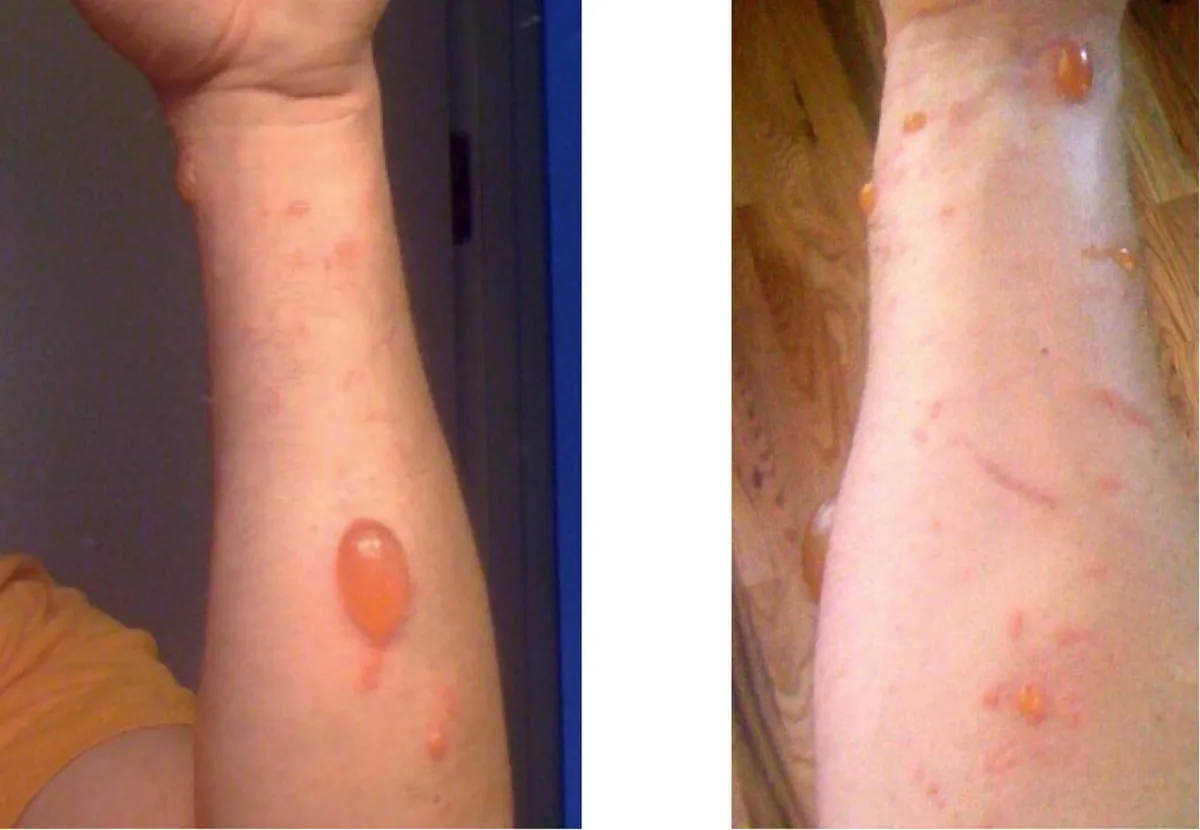
Over the next days you may see:
- Red, itchy bumps and patches, sometimes with swelling.
- Blisters, from tiny ones to large fluid-filled bubbles, which break open and leak fluid.
- Crusting as the blisters dry. The AAD says the blisters crust over and the rash clears in 2 to 3 weeks.
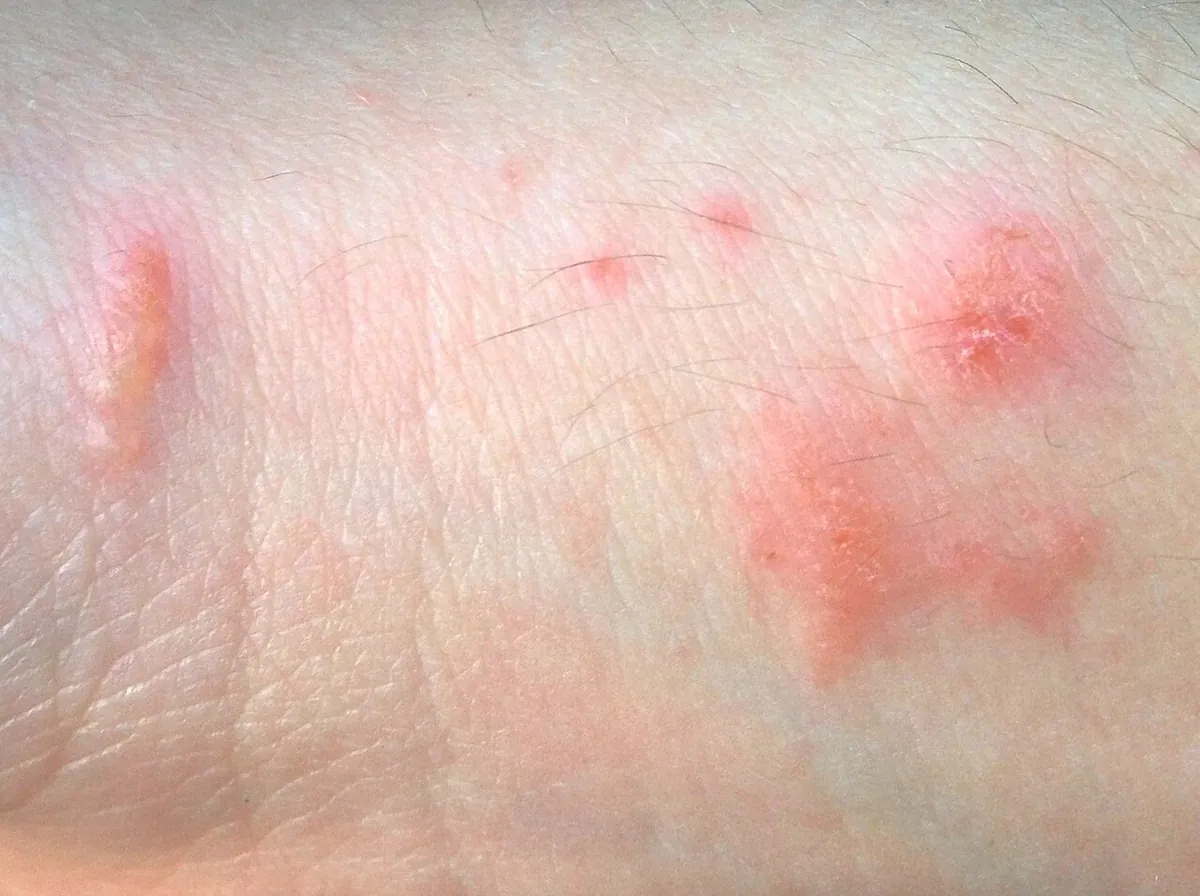
Rarely, the AAD notes, people see black spots or streaks that look like black lacquer spilled onto the skin, with little redness. This is called black-spot poison ivy dermatitis.
How does it look on brown and black skin?
As with many rashes, redness can be harder to see on brown and black skin, so a poison ivy rash may look less red than in most photos. The streaky lines, the raised bumps, the blisters and the intense itch show on every skin tone, and they are the better clues. If dark marks linger after the rash heals, our guide to fading dark spots can help.
What causes a poison ivy rash?
Urushiol is in the sap of poison ivy, poison oak and poison sumac. Cleveland Clinic says almost everyone is allergic to it and up to 90% of people who touch the oil develop an itchy rash. NIOSH says these plants grow throughout the US except Alaska and Hawaii.
You can pick up urushiol without touching the plant itself:
- From clothing, shoes, gloves and gardening tools. NIOSH says urushiol can stay active on surfaces for up to 5 years if not cleaned.
- From a pet's fur after a walk through the brush.
- From smoke when the plants are burned, which carries the oil into the air.
Poison oak and poison sumac carry the same oil, so the rash, the timing and the treatment below are the same for all three plants. Being allergic to one usually means reacting to the others. If you are not sure which plant you touched, treat it the same way.
When does the rash appear?
The AAD says that if you have had a poison ivy rash before, a new one usually appears within 4 to 48 hours. The first time, it typically takes 2 to 3 weeks. MedlinePlus says the worst symptoms are often seen 4 to 7 days after contact.
New patches can keep appearing for days. The AAD explains that skin with the most oil reacts first and skin with less oil reacts later, which can look like spreading.
Is poison ivy contagious?
The rash itself is not contagious. The AAD says touching the rash does not move it to other parts of your body or to other people. The FDA and Cleveland Clinic say the fluid from the blisters contains no urushiol and cannot spread the rash.
The oil is the part that spreads. Until it is washed off your skin, clothes, tools and pets, it can cause a rash on you or anyone who touches it. MedlinePlus puts it this way: once the oil is washed off, the rash does not often spread from person to person.
What should you do right after touching poison ivy?
Speed matters, because the skin absorbs urushiol quickly. The AAD says that washing within 10 to 20 minutes of touching the plant or its oil may prevent a rash, and that washing an hour or so later can still make it milder.
- Wash the skin right away with soap and water, rubbing alcohol, dish soap or a poison ivy wash. Wash gently: the AAD warns that scrubbing can rub the oil into your skin.
- Rinse with plenty of cool water, often, so cleanser does not dry on the skin.
- Clean under your nails. MedlinePlus suggests a brush.
- Wash clothes and shoes in hot water with detergent, separately from other laundry, as NIOSH advises.
- Wear gloves to clean tools and gear, and bathe pets that may have been in the plants.
What else could it be?
| Condition | How it differs from poison ivy |
|---|---|
| Other contact dermatitis | Same type of allergy, triggered by a product, metal or fragrance; the rash matches where the item touched, not straight streaks. See contact dermatitis. |
| Hives | Raised welts that come and go within hours and change place; rarely blisters. See hives on the face. |
| Impetigo | Sores with honey-colored crusts, often around the nose and mouth, that spread by contact. See impetigo. |
| Shingles | Painful, burning blisters in a band on one side of the body or face, often with pain days before the rash. See shingles on the face. |
| Insect bites | Separate itchy bumps, each with a central bite point, in no line pattern. |
For rashes on the face, see our guide to the common causes of a rash on the face.
How do you treat a poison ivy rash at home?
The AAD says most people can treat a mild rash at home, as long as they are sure it is poison ivy, oak or sumac. The rash usually clears without treatment: MedlinePlus says it may last 1 to 3 weeks, and Cleveland Clinic says most rashes go away within two weeks. The AAD's home care steps:
- Do not scratch. Scratching can cause an infection.
- Leave blisters alone. If they open, do not remove the skin over them.
- Apply cool compresses to itchy skin.
- Take short, warm baths or cool showers. Add colloidal oatmeal or a cup of baking soda to the running water.
- Use calamine lotion or hydrocortisone cream. The FDA notes that skin protectants with zinc compounds, such as calamine, help dry oozing and weeping.
- Antihistamine pills can ease itch. Do not put antihistamine cream on the rash: the AAD says it can make the rash and the itch worse.
What a doctor may prescribe
For severe or widespread rashes, or rashes on the face or genitals, MedlinePlus says a doctor may prescribe steroids taken by mouth or given by injection. The AAD names prednisone for rashes that cover much of the body. If scratching leads to an infection, a doctor may also treat that.
When is a poison ivy rash an emergency?
The AAD says to go to the emergency room right away if you have:
- Difficulty breathing or swallowing.
- A rash around one or both eyes, your mouth or on your genitals.
- Swelling on your face, especially if an eye has swollen shut.
- Itching that gets worse or makes it impossible to sleep.
- A rash on most of your body.
- A fever.
Smoke from burning plants is its own emergency. MedlinePlus says to get emergency treatment if you have been exposed to smoke from burning poison ivy, oak or sumac. Cleveland Clinic says oil in the air can affect the lungs and cause serious breathing problems, and NIOSH says inhaling the smoke can cause severe allergic respiratory problems. Never burn these plants to get rid of them.
See a doctor soon, without rushing to the ER, if the rash shows signs of infection such as pus, soft yellow scabs or increasing tenderness, or if it has not improved within a few weeks, as the FDA advises. If you get poison ivy often or are not sure what keeps causing a rash, a dermatologist near you can help, including with patch testing for other contact allergies.
How can you avoid poison ivy?
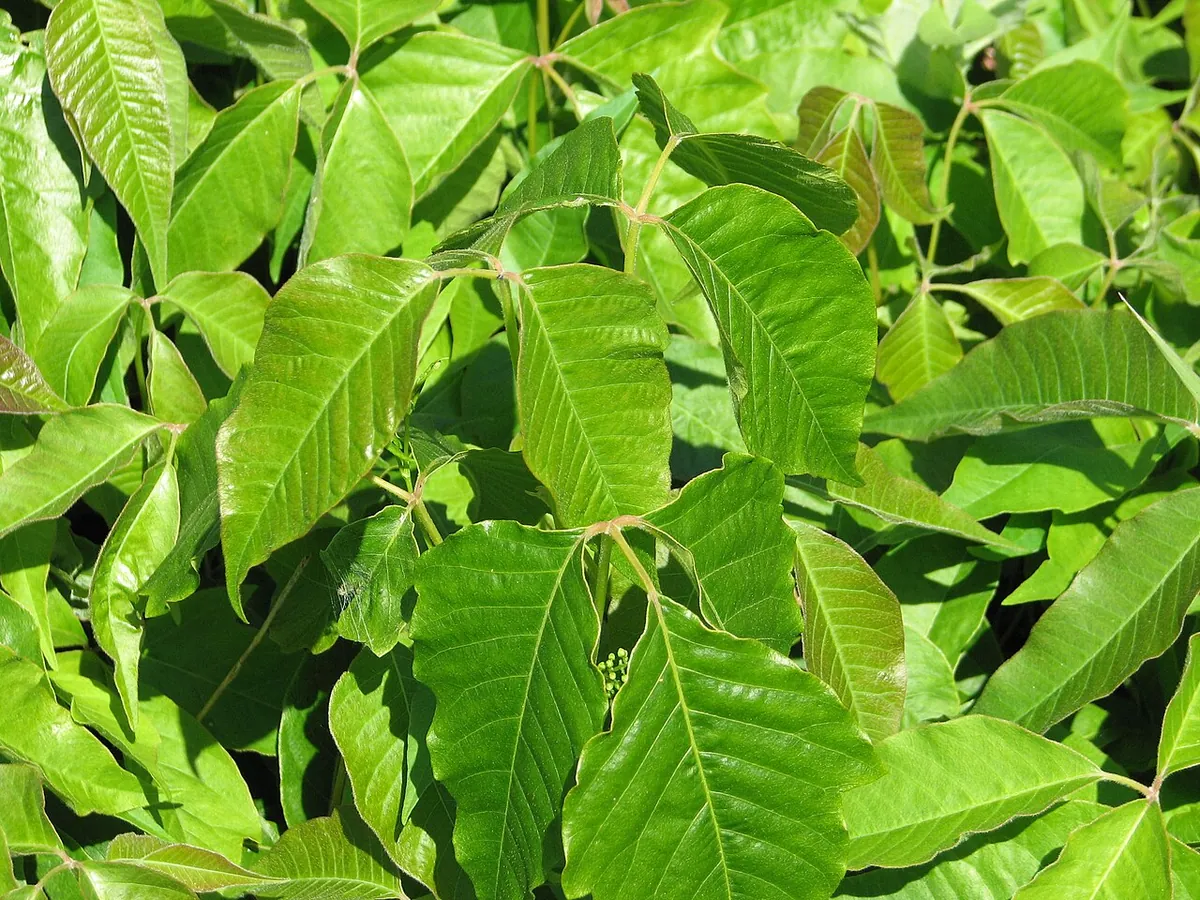
- Learn the plant. Poison ivy usually has leaves in groups of three and grows as a vine or a low shrub.
- Wear long sleeves, long pants, boots and gloves when you work outdoors, as NIOSH recommends.
- Barrier creams offer some protection; NIOSH says to wash them off and reapply twice a day.
- Wash gloves, tools and clothes after yard work, and keep pets out of overgrown areas.
Frequently asked questions
How long does a poison ivy rash last?
Usually one to three weeks. The AAD says the blisters crust over and the rash clears in 2 to 3 weeks, and Cleveland Clinic says most go away within two weeks. A first-ever rash can take longer to appear and to clear.
Can you spread poison ivy by scratching?
Scratching does not spread the rash itself, and blister fluid does not contain urushiol. Oil still on your hands or under your nails can spread it, so wash first. Scratching can also infect the skin.
Is poison ivy contagious to other people?
Not once the oil has been washed off. Someone can get a rash from oil left on your skin, clothes, tools or a pet, but not from touching your rash or blisters.
Why does the poison ivy rash keep spreading?
New patches can appear for several days because skin that got less oil reacts later, according to the AAD. Unwashed clothing, gloves or a pet's fur can also carry the oil back to your skin.
When should I go to the ER for poison ivy?
Go right away for trouble breathing or swallowing, a rash around the eyes, mouth or genitals, a swollen face or an eye swollen shut, a rash on most of your body, a fever, itch that stops you sleeping, or if you breathed smoke from burning poison ivy.
Does hydrocortisone cream work on poison ivy?
The AAD lists calamine lotion and hydrocortisone cream for mild rashes, along with cool compresses, oatmeal baths and antihistamine pills. Severe rashes need a doctor, who may prescribe oral steroids.
Sources
- American Academy of Dermatology: Poison ivy, oak, and sumac: What does the rash look like?
- American Academy of Dermatology: Poison ivy, oak, and sumac: When does the rash appear?
- American Academy of Dermatology: What should I do if I touch a plant?
- American Academy of Dermatology: Poison ivy, oak, and sumac: How to treat the rash
- MedlinePlus: Poison ivy, oak, sumac rash
- Cleveland Clinic: Poison ivy, poison oak and poison sumac
- CDC NIOSH: Poisonous plants
- US FDA: Outsmarting poison ivy and other poisonous plants
Pori is a wellness and skincare education app, not a medical device. This article is for general information and isn't medical advice. For anything that worries you, see a dermatologist.