Pori

- Cold sores move through five stages: tingle, blisters, weeping, crust and healing; most clear in one to two weeks.
- They are caused by herpes simplex virus, usually HSV-1, which stays dormant in nerves and wakes up with triggers such as sun, illness, stress and hormonal changes.
- Start treatment at the first tingle: docosanol 10% cream is available over the counter, and doctors prescribe antivirals such as acyclovir, valacyclovir and famciclovir.
- Cold sores are contagious from the first tingle until fully healed; see a doctor for a sore near the eye, a first outbreak, or one that hasn't healed within 10 days.
A cold sore goes through five stages: a tingle or burn on the lip, a cluster of small fluid-filled blisters, a weeping stage when they burst, a crust or scab, and healing as the scab falls off. Cold sores are caused by the herpes simplex virus, usually HSV-1, and most clear in one to two weeks. Antiviral treatment works best when you start it at the first tingle.
Pori does not diagnose skin conditions. Its selfie scans and photo diary in Pori can help you keep dated, consistent photos to show a doctor and see whether treatment is working, or to spot what tends to come before an outbreak.
What are the stages of a cold sore?
Cleveland Clinic lays out a typical timeline for a cold sore. Timing varies from person to person, and a first outbreak can come with fever and swollen glands.
| Stage | When | What you notice |
|---|---|---|
| 1. Tingle (prodrome) | Day 1 | Tingling, itching, burning, pain or numbness on the lip or nearby skin, before anything shows |
| 2. Blisters | Days 1 to 2 | Small bumps that fill with fluid within hours, often in a cluster at the edge of the lip |
| 3. Weeping | Days 2 to 3 | Blisters break open and ooze clear fluid |
| 4. Crust | Days 3 to 4 | A yellowish or brown crust forms over the open sore and may crack |
| 5. Healing | Days 6 to 14 | The scab falls off, leaving pink skin that settles over the next days |
The source for the day ranges is Cleveland Clinic's cold sore guide, which says the scab usually falls off within six to 14 days of the start of the outbreak. The AAD says a cold sore goes away without treatment in 7 to 14 days, and the NHS expects cold sores to start to heal within 10 days.
Stage 1: the tingle
The AAD describes the warning stage as tingling, sometimes with skin that feels a little numb. This is the moment to start treatment. Some people get the warning signs and never develop a sore.
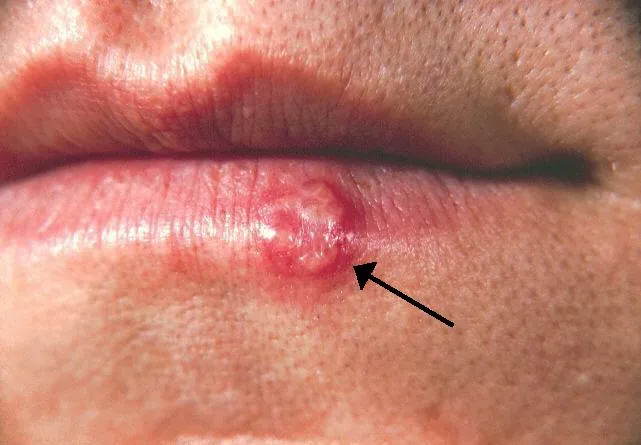
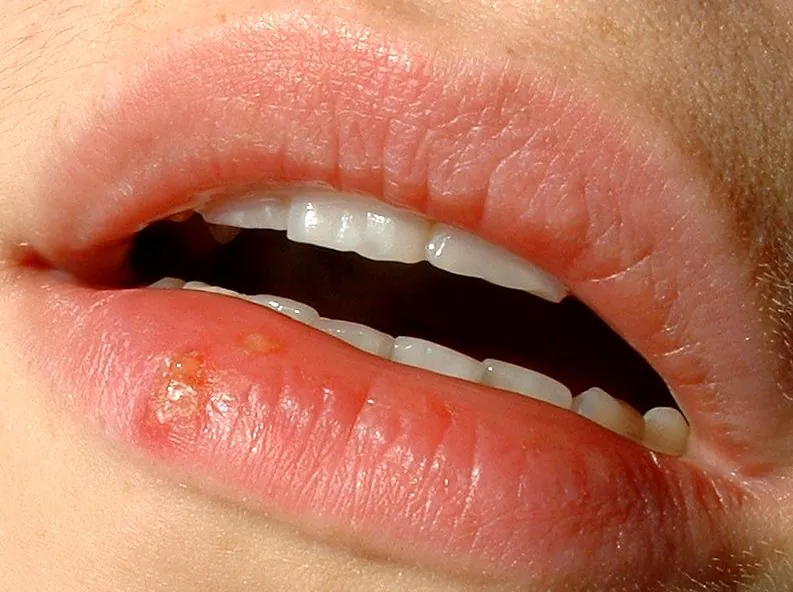
Stage 2: blisters
One or more painful, fluid-filled blisters appear, usually on or around the lips. The NHS says they appear over the 48 hours after the first tingle.
Stage 3: weeping
The blisters burst and leak fluid. Cleveland Clinic calls this the weeping phase. The fluid carries the virus, so hands, towels, lip balm and kisses can all spread it.
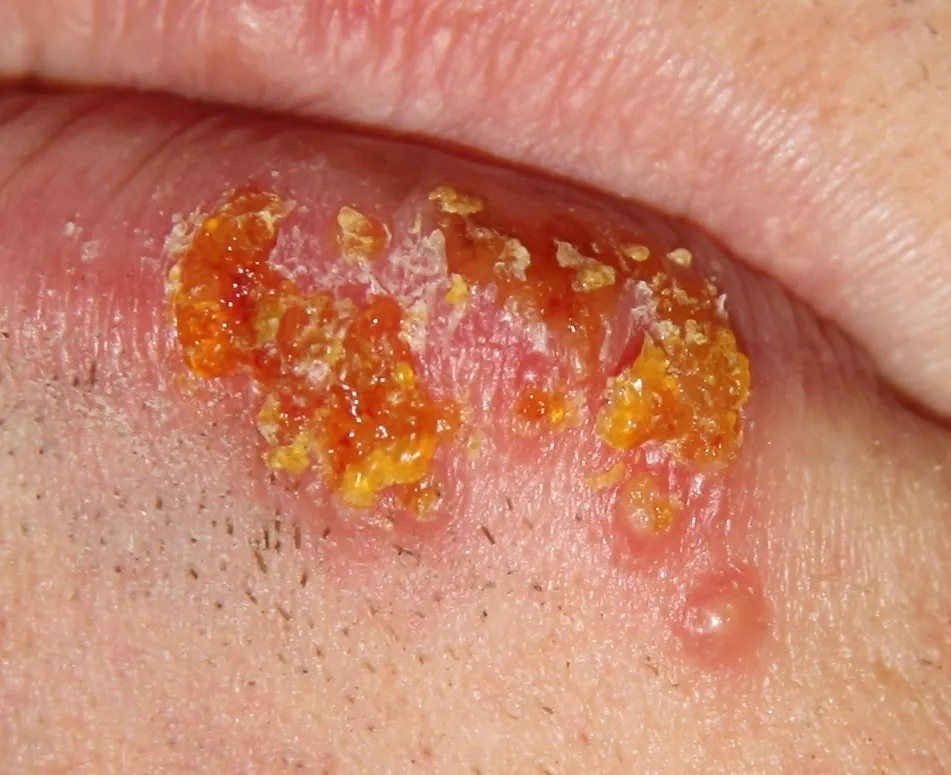
Stages 4 and 5: crust and healing
A crust forms over the sore, then dries and flakes away as new skin forms underneath.
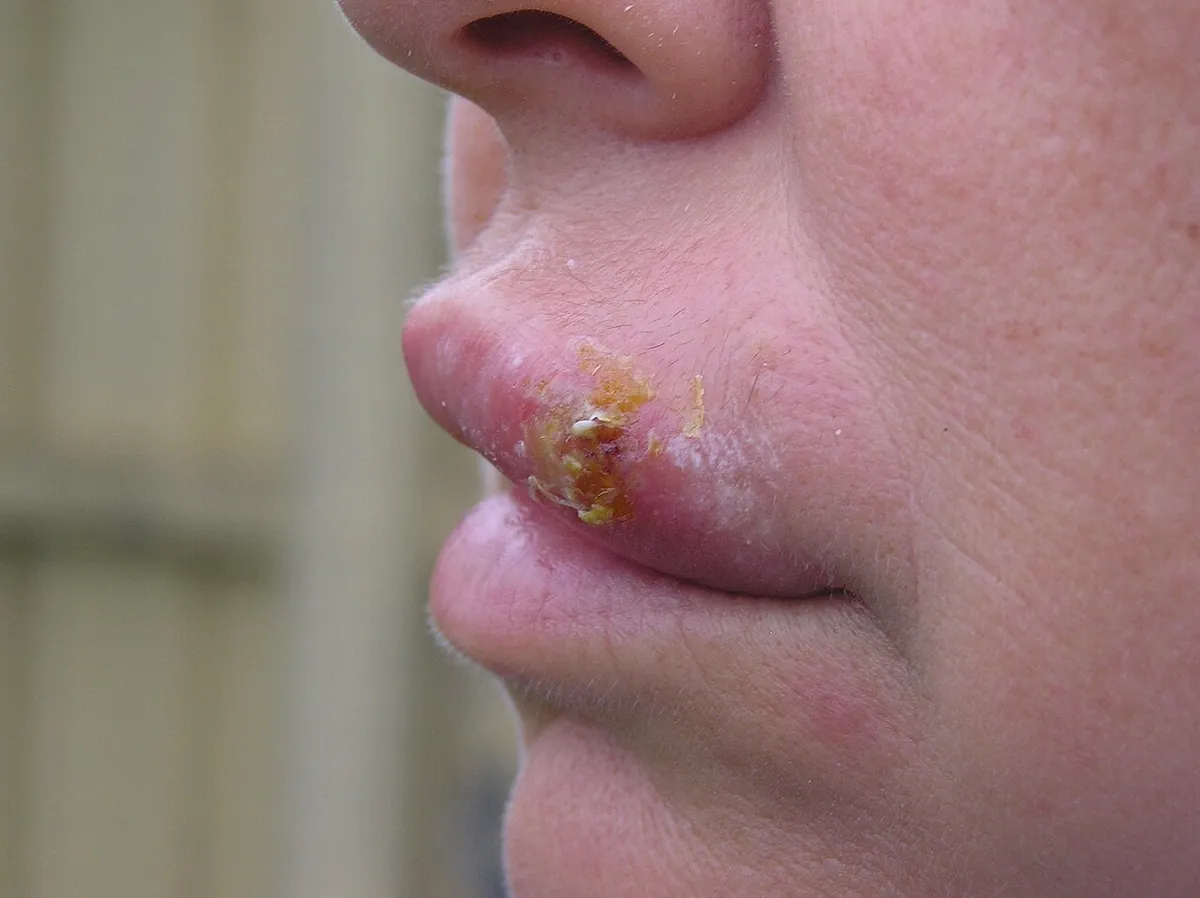
What does a cold sore look like on brown and black skin?
The blisters and crust look much the same on every skin tone. The pink or red ring around them can be harder to see on brown and black skin, so the tingle and the blisters themselves are the better guides. The NHS cold sore page includes a photo of a crusted cold sore on dark brown skin if you want to compare.
What causes cold sores, and are they contagious?
Cold sores come from the herpes simplex virus. HSV-1 causes most cases of oral herpes, and once you have it, the virus stays dormant in nerves in the head and can wake up again later. The WHO estimates that 3.8 billion people under age 50 (64%) worldwide have HSV-1, and the AAD says more than half of Americans ages 14 to 49 carry the virus. Many people catch it in early childhood.
Cold sores are contagious. The NHS and Cleveland Clinic say you are contagious from when you first notice tingling until the sore has completely healed, and Cleveland Clinic says the first 24 hours after the blisters form are the most infectious. The WHO adds that HSV-1 can spread even when no sore is visible, though the risk is highest with active sores.
While you have a cold sore:
- Don't kiss anyone, and never kiss a newborn baby. The NHS warns that neonatal herpes is very dangerous to newborn babies.
- Avoid oral sex until it has fully healed.
- Wash your hands after touching the sore or applying cream, and keep your fingers away from your eyes.
- Don't share cups, cutlery, towels, lip balm or lipstick. The AAD suggests throwing away lip products used during an outbreak once it clears.
What triggers a cold sore outbreak?
Something wakes the dormant virus. Cleveland Clinic lists sickness, stress, sun exposure, trauma to the mouth area and hormonal changes such as menstruation and pregnancy. The NHS names illness, sunshine and periods. Knowing your own pattern helps: if a beach trip or a cold reliably sets off a sore, you can be ready with treatment.
Sun is a common trigger
The AAD says sun exposure triggers cold sores for some people and that wearing lip balm year-round that has SPF 30 or higher and broad-spectrum protection may help prevent new cold sores. Reapply it often, especially after eating, drinking or swimming. Our guide to how much sunscreen to use covers the rest of the face.
What helps a cold sore heal faster?
Over the counter: docosanol
Docosanol 10% cream, sold as Abreva and as store brands, is available without a prescription. Its US Drug Facts label says it shortens healing time and duration of symptoms such as tingling, pain, burning and itching, and the brand describes it as the only OTC medicine approved by the FDA to do that. The label directions for adults and children 12 and older:
- Wash your hands before and after applying it.
- Apply it at the first sign of a cold sore (the tingle); early treatment works best.
- Rub it in gently and use it 5 times a day until healed.
- Don't use it in or near the eyes or inside the mouth.
- Stop and ask a doctor if the sore gets worse or has not healed within 10 days. For children under 12, ask a doctor.
Other things from the pharmacy
The NHS says pharmacists can recommend antiviral creams and cold sore patches, which protect the skin while it heals. Cleveland Clinic notes that numbing gels ease pain but do not speed healing. Antiviral creams do not always work after blisters appear, so keep a tube where you can reach it.
Prescription antivirals
A doctor can prescribe stronger antivirals. The AAD lists:
- Applied to the sore: acyclovir cream (Zovirax or Xerese) and penciclovir (Denavir).
- Taken by mouth: acyclovir (Sitavig or Zovirax), valacyclovir (Valtrex) and famciclovir (Famvir).
Cleveland Clinic says antivirals work best when started within 48 hours of the cold sore forming, and oral antivirals are often considered for a first outbreak or severe ones. People who get frequent cold sores may take a low daily dose to prevent outbreaks; the AAD lists six or more outbreaks a year as a reason to see a dermatologist. Antivirals shorten outbreaks but cannot clear the virus from the body, the WHO notes.
Is it a cold sore or something else?
Sores around the mouth are not all herpes. These are the usual look-alikes:
| Condition | How it differs from a cold sore |
|---|---|
| Canker sore | Forms inside the mouth, not on the outer lip; not caused by a virus and not contagious, per Cleveland Clinic |
| Impetigo | A bacterial infection with spreading honey-colored crusts, often around the nose and mouth; no tingle beforehand and it needs antibiotics. DermNet lists herpes simplex as a look-alike. |
| Pimple near the lip | One raised bump with a single white or yellow head, no cluster of clear blisters and no warning tingle; see papules vs pustules |
| Perioral dermatitis | Many tiny bumps around the mouth with a clear rim by the lips; not blisters, not painful |
| Chapped lips | Dry, peeling, cracked lips across the whole lip, without blisters |
When should you see a doctor about a cold sore?
- A sore near your eye. The AAD says to see an eye doctor immediately, and to get urgent care for light sensitivity, pain, grittiness or a runny eye.
- Your first outbreak, especially with fever, swollen glands or painful sores on the gums, tongue or throat, which the AAD says can happen with a first infection in young children.
- It hasn't started healing within 10 days, per the NHS and Cleveland Clinic, or lasts longer than 2 weeks, per the AAD.
- The sore is very large or painful, or you aren't sure it is a cold sore.
- You have a weakened immune system.
- A newborn has been exposed or has any blisters.
- You get six or more outbreaks a year and want to talk about daily prevention. You can find a dermatologist near you.
How can photos help with cold sores?
A simple log of each outbreak shows how long the stages last for you and what came before them: a sunny weekend, a cold, a stressful week or your period. Take close-ups of the lip in the same light each day. Because a full-face photo can identify you, crop to the lips if you plan to share pictures with anyone other than your doctor. Bring the log to your appointment if you are asking about daily antivirals.
Frequently asked questions
What are the stages of a cold sore?
Tingling or burning first, then small fluid-filled blisters within a day or two, then a weeping stage when they burst, then a crust or scab, and finally healing as the scab falls off, usually within 6 to 14 days.
How long is a cold sore contagious?
From the first tingle until it has completely healed, according to the NHS and Cleveland Clinic. The first day after blisters form is the most infectious. Avoid kissing, especially babies, and don't share cups or lip balm.
Does Abreva work once the blister has appeared?
The docosanol label says to start at the first sign of a cold sore, the tingle, because early treatment works best. You can still use it later, but the NHS notes antiviral creams do not always work after blisters appear.
Can the sun cause cold sores?
Yes, sun exposure triggers cold sores for some people. The AAD suggests wearing a broad-spectrum lip balm with SPF 30 or higher year-round to help prevent new ones.
What is the difference between a cold sore and a canker sore?
Cold sores are caused by herpes simplex virus, are contagious and usually form on or around the outer lip. Canker sores form inside the mouth, have other causes and are not contagious.
Should I pop a cold sore blister?
No. The fluid carries the virus, so popping or picking can spread it to your fingers, other skin or your eyes, and it can slow healing. Leave it to crust and wash your hands after touching it.
Sources
- Cleveland Clinic: Cold sores
- NHS: Cold sores
- American Academy of Dermatology: Cold sores overview
- American Academy of Dermatology: Cold sores signs and symptoms
- American Academy of Dermatology: Cold sores diagnosis and treatment
- US FDA: Abreva (docosanol 10% cream) label
- World Health Organization: Herpes simplex virus fact sheet
- DermNet: Impetigo
Pori is a wellness and skincare education app, not a medical device. This article is for general information and isn't medical advice. For anything that worries you, see a dermatologist.