Pori
- Use at least 1 teaspoon on your face, about two finger-lengths, and about 1 ounce (a shot glass) for your body.
- Apply about 15 minutes before going out; reapply every 2 hours outdoors and right after swimming, sweating or towel drying.
- SPF 30 blocks about 97% of UVB; choose broad spectrum, and SPF 50 for long days outdoors.
- UVA passes through window glass, so wear sunscreen near windows; away from them, reapplying every 4 to 6 hours is enough.
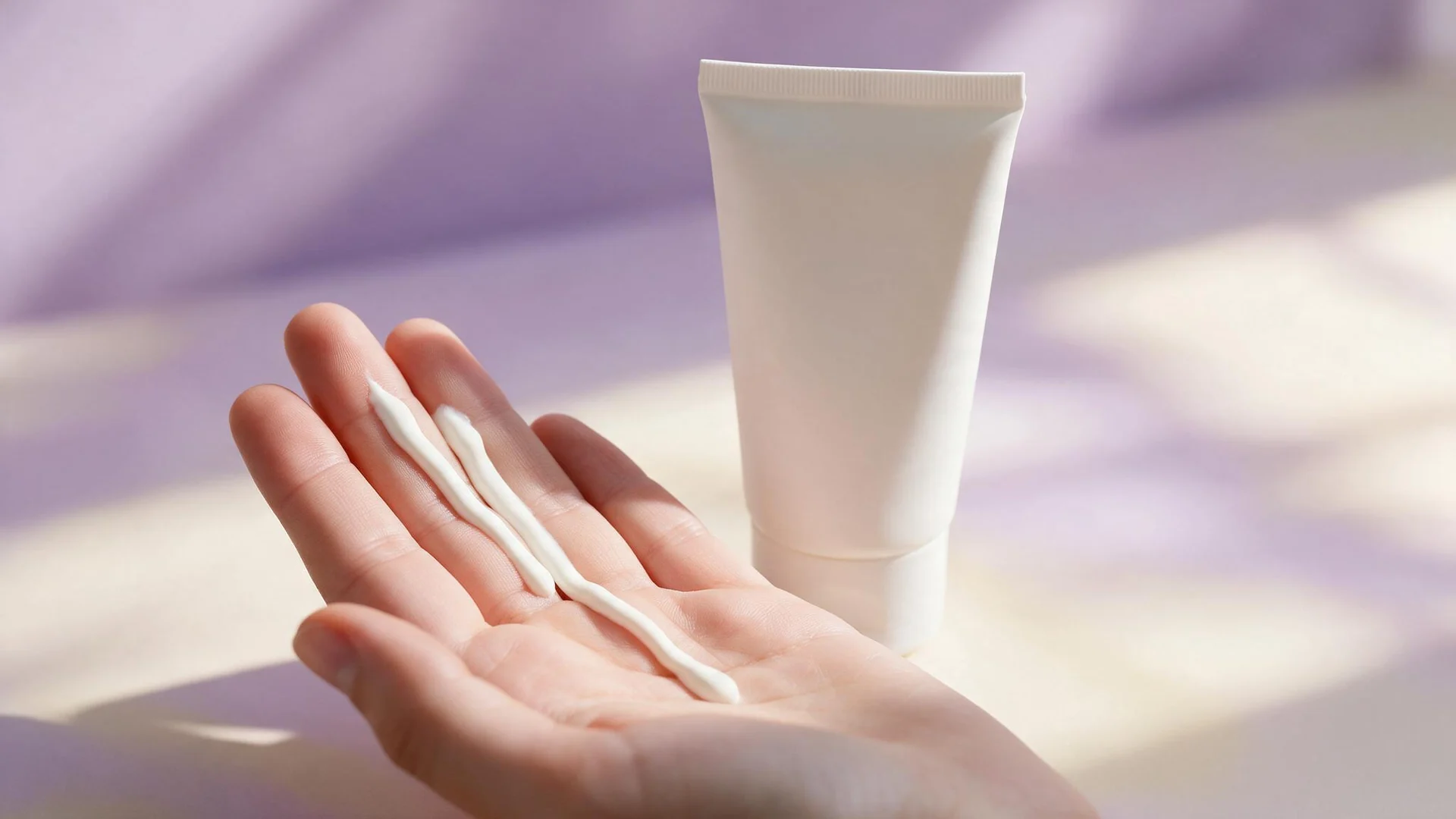
Use at least one teaspoon of sunscreen on your face, which the American Academy of Dermatology describes as about enough to cover the length of your index and middle fingers. That is where the two-finger rule comes from. Apply it about 15 minutes before you go outside, then reapply every two hours outdoors and right after swimming or sweating.
The rest of this guide covers why most people use too little, how to do the two-finger rule well, when to reapply, how SPF 30 compares with SPF 50, mineral vs chemical filters, and whether you need sunscreen indoors.
How much sunscreen should I put on my face?
The AAD's guidance is at least 1 teaspoon for the face, and about 1 ounce, roughly a full shot glass, to cover the exposed skin of an adult body. The FDA gives the same body figure: an average-sized adult or child needs at least one ounce. The UK's NHS puts the full-body amount at around 6 to 8 teaspoons.
| Area | How much | Source |
|---|---|---|
| Face | At least 1 teaspoon, about two finger-lengths | AAD |
| Whole body, adult | About 1 ounce (a shot glass) | AAD, FDA |
| Whole body, adult | About 6 to 8 teaspoons | NHS |
| Lips | Lip balm with SPF 30 or higher | AAD |
The amount matters because the SPF on the bottle is measured with a thick layer. Researchers who measured how people actually apply sunscreen found a median of 0.5 mg/cm², against the manufacturers' recommendation of 2 mg/cm², and concluded that protection was much lower than the stated SPF suggests. The most frequently missed sites in that study were the back and sides of the neck, the temples and the ears, with median coverage of zero.
The format you use changes the dose too. In a study of 52 people, the average layer was 1.1 mg/cm² for lotion, 1.6 mg/cm² for spray and 0.35 mg/cm² for stick. If you like a stick for touch-ups, it helps to know that one quick swipe leaves far less than a lotion does.
What is the two-finger rule for sunscreen?
The two-finger rule means squeezing a line of sunscreen along the full length of your index and middle fingers and using it all on your face. That matches the AAD's 1-teaspoon guidance for the face. Here is a simple way to do it:
- Finish your skincare first. Sunscreen is the last step of a morning routine, after moisturizer. Our skincare routine order guide shows where each step goes.
- Squeeze two full finger-lengths of lotion or cream.
- Dot it over your forehead, nose, cheeks and chin so it spreads evenly instead of piling up in one spot.
- Spread and rub it thoroughly into your skin. If the full amount feels heavy, apply half, let it settle for a minute, then add the rest.
- Cover the spots people skip: ears, hairline, temples and the sides and back of the neck. The AAD's list of easily forgotten areas includes your neck, face and ears.
- Wait about 15 minutes before going out. The AAD says it takes approximately 15 minutes for your skin to absorb the sunscreen and protect you. The NHS suggests applying 30 minutes before going out and again just before when you'll be in the sun long enough to burn.
Spray sunscreen needs extra care on the face. The AAD advises never spraying it around or near the face or mouth; spray it into your hands and rub it in.
How often should I reapply sunscreen?
Reapply every two hours when you're outdoors, and immediately after swimming or sweating, according to the AAD and the FDA. The NHS adds that you should reapply after towel drying and whenever it may have rubbed off, even if the product says water resistant.
"Water resistant" has a specific meaning on US labels. The FDA requires the label to state whether the product remains effective for 40 minutes or 80 minutes when swimming or sweating, and no sunscreen can claim to be waterproof.
| Situation | When to reapply | Source |
|---|---|---|
| Outdoors, dry | Every 2 hours | AAD, FDA, NHS |
| Swimming or heavy sweating | Right after, and at the 40 or 80 minutes on a water-resistant label | AAD, FDA |
| After towel drying | Straight away | NHS |
| Indoors, away from windows | Every 4 to 6 hours | Skin Cancer Foundation |
Makeup and moisturizers with SPF are convenient, but the AAD points out that sunscreen needs to be reapplied approximately every two hours when you're outdoors, and a morning layer of foundation won't cover that. For a long day outside, plan on a separate sunscreen you can reapply.
SPF 30 vs SPF 50: which should I use?
For daily use, SPF 30 is enough for most people, and SPF 50 is a sensible choice for long days outdoors. The AAD recommends an SPF of 30 or higher, which blocks 97% of the sun's UVB rays. Higher numbers block a little more, but the AAD notes that no sunscreen can block 100%.
The Skin Cancer Foundation recommends SPF 30 or higher for daily use and a water-resistant, broad-spectrum SPF 50 or higher for extended outdoor activity. It also warns that very high SPFs can create a false sense of security, leading people to stay out longer or skip reapplying, and that SPF is not a time multiplier.
Two points matter more than the gap between 30 and 50:
- Broad spectrum. SPF measures protection from UVB, the main cause of sunburn. A broad-spectrum label means the product helps protect against both UVA and UVB. The AAD links UVA to premature aging.
- The amount you apply. Because people tend to apply a fraction of the tested dose, the protection they get is much lower than the stated SPF. A full two-finger dose of SPF 30 is a better bet than a thin smear of SPF 50.
Mineral vs chemical sunscreen: what's the difference?
Mineral sunscreens use zinc oxide, titanium dioxide or both; chemical sunscreens use other UV filters. The AAD says both types form a protective layer on your skin that absorbs the sun's rays, and mineral (physical) sunscreens also reflect them. Dermatologists recommend mineral sunscreens for people with sensitive skin.
| Mineral (physical) | Chemical | |
|---|---|---|
| Active ingredients | Zinc oxide, titanium dioxide | Filters such as avobenzone and oxybenzone |
| How it works | Absorbs and reflects UV | Absorbs UV |
| FDA status | Proposed as generally recognized as safe and effective, up to 25% | FDA has asked for more data on 12 filters; it has not called them unsafe |
| Good fit for | Sensitive skin | People who prefer a sheer finish |
The safety question comes up often. The FDA found sufficient safety data on both zinc oxide and titanium dioxide to propose them as generally recognized as safe and effective at up to 25%. For 12 other filters, including oxybenzone and avobenzone, it asked manufacturers for more data and stresses that this is not a finding that they are unsafe. The AAD summarizes it this way: the science doesn't show that any sunscreen ingredients currently available in the U.S. are harmful to human health. The FDA's advice is continued use of sun protection, sunscreen included. In June 2026 the FDA also added bemotrizinol to the list of permitted US sunscreen ingredients.
If you have darker skin or melasma-prone skin, look at tinted formulas. The AAD notes that visible light can worsen skin darkening, particularly for people with darker skin tones, and that tinted sunscreens with iron oxide may help. Our guide on how to fade dark spots covers the rest of that routine.
Do I need sunscreen indoors or on cloudy days?
Yes, if you sit near windows or spend time outside on overcast days. UVB is blocked by window glass, but the AAD says UVA rays can pass through window glass. Clouds don't help much either: up to 80% of the sun's harmful UV rays can penetrate the clouds.
Indoors, you can ease off on reapplying. A dermatologist writing for the Skin Cancer Foundation says that if you're inside all day and not near a window, you can reapply every four to six hours. If your desk faces a window or you drive a lot, treat the day closer to an outdoor one.
What are the most common sunscreen mistakes?
- Using a pea-sized dab. That is a fraction of the teaspoon the AAD recommends for the face.
- Skipping the edges. Ears, temples and neck are the most frequently missed sites.
- Using old sunscreen. The FDA requires sunscreens to keep their strength for at least three years, and the AAD says to throw out sunscreen once the expiration date has passed. Without a date, the FDA says to consider it expired three years after purchase.
- Forgetting your lips and scalp. Use a lip balm with an SPF of at least 30, and sunscreen on a thinning scalp or a wide-brimmed hat.
- Using sunscreen on young babies. The FDA says sunscreen is not recommended for infants under six months old; ask a doctor first.
If a sunscreen stings or breaks you out, try a different formula before giving up on the habit. Our sensitive skin routine has tips on choosing gentler products.
How can I tell if my sun protection is working?
Sun damage builds slowly, so it's hard to judge from one day to the next. A consistent photo record makes changes in tone and dark spots easier to see over months. Pori scores your skin from a selfie, including a Pigmentation & Tone score, and keeps before-and-after comparisons and progress charts, so you can see whether spots fade once you're applying a full dose every day.
An app is not a diagnosis. Pori doesn't check moles, so see a dermatologist about any spot that is new, changing, bleeding or different from the others.
Frequently asked questions
How much sunscreen should I use on my face?
The American Academy of Dermatology recommends at least 1 teaspoon for the face, about enough to cover the length of your index and middle fingers. Most people use much less than that.
What is the two finger rule for sunscreen?
Squeeze a line of sunscreen along the full length of your index and middle fingers and use all of it on your face. It approximates the teaspoon dermatologists recommend.
How often should I reapply sunscreen?
Every two hours when you're outdoors, and immediately after swimming, sweating or towel drying. Water-resistant sunscreens last 40 or 80 minutes in water, as stated on the label.
Is SPF 50 better than SPF 30?
SPF 50 blocks slightly more UVB than SPF 30, which blocks about 97%. SPF 30 is fine for daily use; SPF 50 makes sense for long days outdoors, and applying enough matters more than the number.
Is mineral sunscreen better than chemical sunscreen?
Both protect your skin when applied properly. Dermatologists recommend mineral sunscreens with zinc oxide or titanium dioxide for sensitive skin, and the FDA has not found other US filters to be unsafe.
Do I need sunscreen indoors?
If you're near windows, yes, because UVA rays pass through glass. If you're indoors all day away from windows, a dermatologist with the Skin Cancer Foundation says reapplying every four to six hours is enough.
Sources
- American Academy of Dermatology: How to apply sunscreen
- American Academy of Dermatology: Sunscreen FAQs
- American Academy of Dermatology: How to select a sunscreen
- FDA: Sunscreen: How to help protect your skin from the sun
- FDA: Questions and answers: FDA's regulatory actions on over-the-counter sunscreen
- NHS: Sunscreen and sun safety
- Skin Cancer Foundation: Does a high SPF protect my skin better?
- Skin Cancer Foundation: How often do I need to reapply sunscreen if I'm indoors all day?
- Azurdia RM et al. Sunscreen application by photosensitive patients is inadequate for protection. Br J Dermatol, 1999 (PubMed)
- Novick R et al. Factors that influence sunscreen application thickness. Photodermatol Photoimmunol Photomed, 2015 (PubMed)
Pori is a wellness and skincare education app, not a medical device. This article is for general information and isn't medical advice. For anything that worries you, see a dermatologist.