Pori
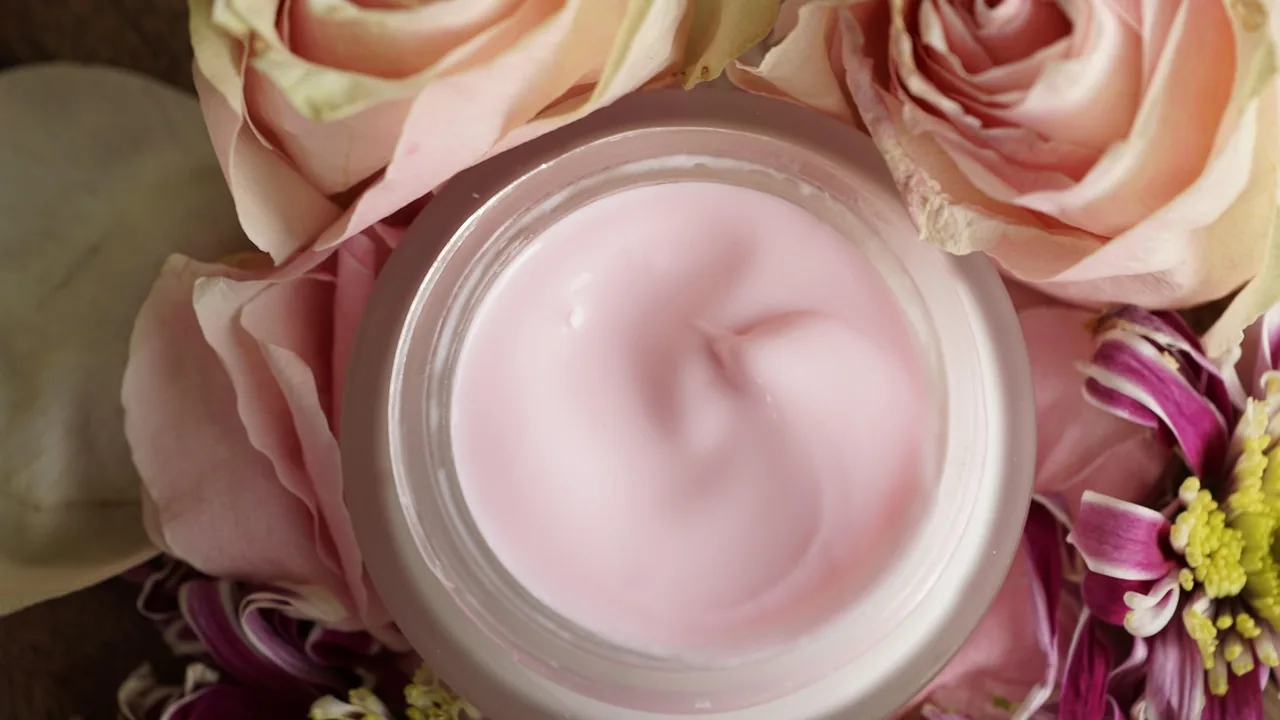
- At night: remove sunscreen and makeup, apply one active on clean dry skin, then moisturize.
- Retinoids and AHAs go at night because both raise sun sensitivity; water alone leaves about half of sunscreen on the skin.
- Start retinol every other night or less and build toward nightly only if your skin stays comfortable; avoid retinoids in pregnancy.
- Give each active its own night, leave recovery nights between them, and keep a sleeping mask for dry or tight nights.
A night skincare routine is where treatment happens. Take off sunscreen and makeup, apply your active ingredient (a retinoid, an exfoliating acid or an acne treatment) on clean skin, then seal it in with a moisturizer. Retinoids and many acids go at night because they make skin more sensitive to the sun, and evening skin also loses water faster.
That's the short version. Below is why the evening suits actives, how to get sunscreen and makeup fully off, whether retinol should be a nightly habit, how night creams and sleeping masks differ, and a weekly schedule for rotating actives without irritating your skin. It mirrors our morning skincare routine, which is built around protection instead.
Why do actives like retinol go in the night routine?
Retinoids and acids go at night mainly because daylight works against them. A dermatologist quoted by the American Academy of Dermatology advises using retinoids only at night, because they can make skin more sun-sensitive. The Cleveland Clinic gives the same reason, noting that retinol makes your skin more sensitive to sunlight, and suggests adding it at bedtime.
Alpha hydroxy acids carry a similar warning. The FDA's recommended label says AHA products may increase your skin's sensitivity to the sun and particularly the possibility of sunburn; in the studies the agency cites, sensitivity to UV-induced cell damage roughly doubled on average. Some ingredients also break down in light. In a lab study, more than half of the tretinoin in a mix with benzoyl peroxide degraded within about 2 hours under light, while adapalene stayed stable.
There's a practical reason as well. DermNet notes that applying topical retinoids at night or just before sleep makes them less noticeable on the face, so you don't have to wear them under makeup or sunscreen.
Does skin really repair itself at night?
Skin follows a daily rhythm, and the evening is when it is most permeable and loses the most water. A review in Cureus summarizes a study that measured 16 volunteers every two hours and found transepidermal water loss increased significantly in the evening at all sites, being least in the morning, along with higher skin permeability in the evening. The same review lists daily variation in keratinocyte proliferation, blood flow and skin temperature.
Two practical points follow. A moisturizer at night has real work to do, because skin is losing more water then. The same review notes that evening skin is also more permeable, which fits the habit of applying treatments at bedtime, though it doesn't test any night product directly. Claims that a cream "boosts overnight repair" go further than this evidence, so judge night products on their ingredients, not their marketing.
How do you take off sunscreen and makeup at night?
Use a cleanser or a cleansing oil, never water alone. In a 20-person study of sunscreen removal, water alone left about 54% to 59% of the sunscreen on the skin. A foaming cleanser removed regular sunscreen well but left about 37% of a water-resistant one, while a cleansing oil brought water-resistant sunscreen residue down to about 6%, close to the clean-skin control. Fewer people reported dryness after the oil.
| What you wore today | How to cleanse |
|---|---|
| Nothing, or a regular (non-water-resistant) sunscreen | One gentle cleanser |
| Water-resistant sunscreen | Cleansing oil or balm, optionally followed by a gentle cleanser |
| Full makeup or long-wear foundation | Cleansing oil or balm first, then a gentle cleanser |
| Eye makeup or mascara | Remover held on the lashes for a few seconds, then wipe without scrubbing |
A Cleveland Clinic dermatologist recommends double cleansing if you wear makeup, starting with a cleansing balm or oil, and says it isn't needed otherwise. The AAD's advice for acne-prone skin is to remove your makeup, including eye makeup, before going to bed, without scrubbing. If you wash only once a day, make it the evening one.
What should you put on your face at night?
After cleansing, a night routine needs one treatment at most and a moisturizer. The AAD's order applies here too: apply medication or treatment right after cleansing, then moisturizer.
- Cleanse as above, then pat dry.
- Treatment on dry skin: a retinoid, an exfoliating acid, or a prescription or acne product. Retinol users need only about a pea-sized amount spread in a thin layer over the face.
- Eye cream, if you use one, patted on with your ring finger.
- Moisturizer, richer than your daytime one if your skin is dry. Creams hold more water than lotions, according to the AAD's moisturizer guide.
- Optional occlusive on dry patches or the whole face: a sleeping mask or a thin layer of petrolatum.
The AAD also warns that using too many products may irritate the skin, especially more than one anti-aging product. One active per night is a good rule.
Should I use retinol every night?
Not at first. Start every other night or less, and move toward nightly use only if your skin stays comfortable. The AAD article suggests choosing the least intense formula and applying it every other night to start, then building up slowly. The Cleveland Clinic suggests a patch test first, then once every few days, gradually ramping up, with every-other-day use for the first couple of weeks.
Dryness, redness, peeling and itching are common early on and usually fade as skin adjusts. If they don't, cut back a night or two, or buffer with moisturizer. Nightly use is optional, and plenty of people stay on three or four nights a week. Our retinol for beginners guide has a full ramp-up plan.
Pregnancy: the AAD states that retinoids should not be used during pregnancy, and DermNet notes that some topical retinoids are contraindicated in pregnancy. If you're pregnant, trying to conceive or breastfeeding, ask your doctor before using any retinoid.
Sleeping mask vs night cream: what's the difference?
A night cream is a moisturizer, usually richer than a day lotion and often carrying an active. A sleeping mask is a leave-on final layer, usually a gel or balm, meant to sit on top of your routine and slow water loss. The ingredient list tells you more than the name on the jar.
DermNet's breakdown of moisturizers helps sort them. Occlusives such as petroleum jelly and dimethicone form an oily layer on the skin's surface, humectants such as glycerin draw water into the outer layer, and emollients soften and smooth. Ointments are the most occlusive but can feel greasy; creams absorb faster but need reapplying more often.
| Night cream | Sleeping mask | |
|---|---|---|
| Where it goes | The moisturizer step | The last step, over moisturizer (or instead of it) |
| Typical base | Emollients and humectants, sometimes with an active | Humectant gel or an occlusive-heavy balm |
| Best for | Most skin types as the everyday night moisturizer | Dry or dehydrated skin, cold weather, flights |
| Watch out for | Stacking a second active on a retinoid night | Feeling heavy on oily or acne-prone skin |
For many people, a plain cream is enough. Add a mask or a thin layer of petrolatum on nights your skin feels tight, such as after a retinoid night or in winter. If you're acne-prone, try the heaviest occlusives on a small area first.
How do you rotate actives across the week?
Give each active its own night and leave recovery nights in between. The AAD cautions that exfoliating while using retinoids or benzoyl peroxide may worsen dry skin or even cause acne breakouts, so don't use an acid and a retinoid on the same night when you're starting out. Here is one schedule for someone using both:
| Night | Treatment step | Moisturizer |
|---|---|---|
| Monday | Exfoliating acid (AHA or BHA) | Regular |
| Tuesday | Retinoid | Regular |
| Wednesday | None (recovery) | Rich, plus optional sleeping mask |
| Thursday | None (recovery) | Rich |
| Friday | Retinoid | Regular |
| Saturday | None (recovery) | Rich |
| Sunday | Exfoliating acid, or another recovery night | Regular |
Build up from there. If your skin handles two retinoid nights a week for a month, add a third. If it starts to sting, drop the acid first, since the AAD notes that the more aggressive the exfoliation, the less often it needs to be done. This is essentially skin cycling, and our list of skincare ingredients not to mix covers the other pairings to keep apart, such as tretinoin and benzoyl peroxide on the same night.
If you use a prescription product, follow your prescriber's schedule over any generic plan, including this one.
What does a simple night routine look like by skin type?
- Oily or acne-prone: gentle foaming cleanser, a retinoid or BHA on alternating nights, a light gel moisturizer.
- Dry: cleansing balm or creamy cleanser, a retinoid two or three nights a week, a rich cream, and an occlusive on tight nights.
- Combination: gentle cleanser, actives on alternating nights, cream on the cheeks and a lighter layer or none on the T-zone.
- Sensitive: one gentle cleanser, a fragrance-free moisturizer, and any active introduced slowly after a patch test, one at a time.
How can a selfie skin scan help you judge your night routine?
Night actives work slowly, and early dryness can make it hard to tell whether things are getting better or worse. A regular photo record gives you something steadier than memory. Pori takes a selfie and returns an overall skin score from 0 to 100, with separate readings for Hydration & Moisture, Pores & Texture and Pigmentation & Tone, and a before-and-after comparison so you can line up week one against week twelve. Its skin diary logs sleep, water and stress next to each scan, and the Pro ingredient scanner checks a night cream or serum label against your skin type, flagging each ingredient as beneficial, use with caution or avoid. Scan in the morning before applying anything, so last night's products don't skew the result.
An app reads appearance and isn't a diagnosis. If a product causes swelling, blistering or a rash that doesn't settle, stop it and see a dermatologist.
Frequently asked questions
What should I put on my face at night?
Cleanse, then apply one treatment such as a retinoid or exfoliating acid if you use one, then a moisturizer. Dry skin can add a sleeping mask or a thin occlusive layer on top.
Should I use retinol every night?
Not at first. Start every other night or every few nights and build up slowly; nightly use is fine only once your skin tolerates it without lasting dryness or redness.
Can I use retinol and an exfoliating acid on the same night?
It is safer to use them on different nights, especially when starting out. Combining exfoliation with retinoids can worsen dryness and irritation.
Is a sleeping mask the same as a night cream?
No. A night cream is your moisturizer step, while a sleeping mask is usually a leave-on final layer that helps slow water loss overnight. Many people only need the cream.
Do I need to double cleanse at night?
Only if you wear makeup or water-resistant sunscreen. An oil or balm followed by a gentle cleanser removes these more completely than a single foaming wash.
Can I use retinol while pregnant?
Retinoids should not be used during pregnancy. If you are pregnant, trying to conceive or breastfeeding, ask your doctor which night products are safe for you.
Sources
- American Academy of Dermatology: Retinoid or retinol?
- Cleveland Clinic: Retinol: what it is, benefits and how to use
- DermNet: Topical retinoids
- FDA: Alpha hydroxy acids
- Camilion JV et al. Physiological, pathological, and circadian factors impacting skin hydration. Cureus, 2022 (PMC)
- Chen W et al. The optimal cleansing method for the removal of sunscreen: water, cleanser or cleansing oil? J Cosmet Dermatol, 2020 (PubMed)
- Martin B et al. Chemical stability of adapalene and tretinoin when combined with benzoyl peroxide. Br J Dermatol, 1998 (PubMed)
- American Academy of Dermatology: How to safely exfoliate at home
Pori is a wellness and skincare education app, not a medical device. This article is for general information and isn't medical advice. For anything that worries you, see a dermatologist.