 Pori

- Impetigo is a contagious staph or strep skin infection: red sores that burst and dry into honey-colored crusts, most often around the nose, mouth, arms and legs.
- Non-bullous impetigo (about 70% of cases) crusts; bullous impetigo makes larger, fragile blisters and is caused by toxin-producing staph.
- A few sores are treated with antibiotic or antiseptic cream; many sores or blisters need antibiotic tablets, and it often improves within days.
- The CDC says people can return to school once antibiotics have started and sores are covered; the NHS says it stops being contagious 48 hours after treatment starts.
Impetigo is a common, contagious bacterial skin infection that causes red sores which burst, weep and dry into golden, honey-colored crusts, most often around the nose and mouth or on the arms and legs. A second form, bullous impetigo, makes larger fluid-filled blisters. It is most common in young children, and antibiotic cream or tablets usually clear it within days.
Pori does not diagnose skin conditions. Its selfie scans and photo diary in Pori can help you keep dated, consistent photos to show a doctor and see whether treatment is working.
What does impetigo look like?
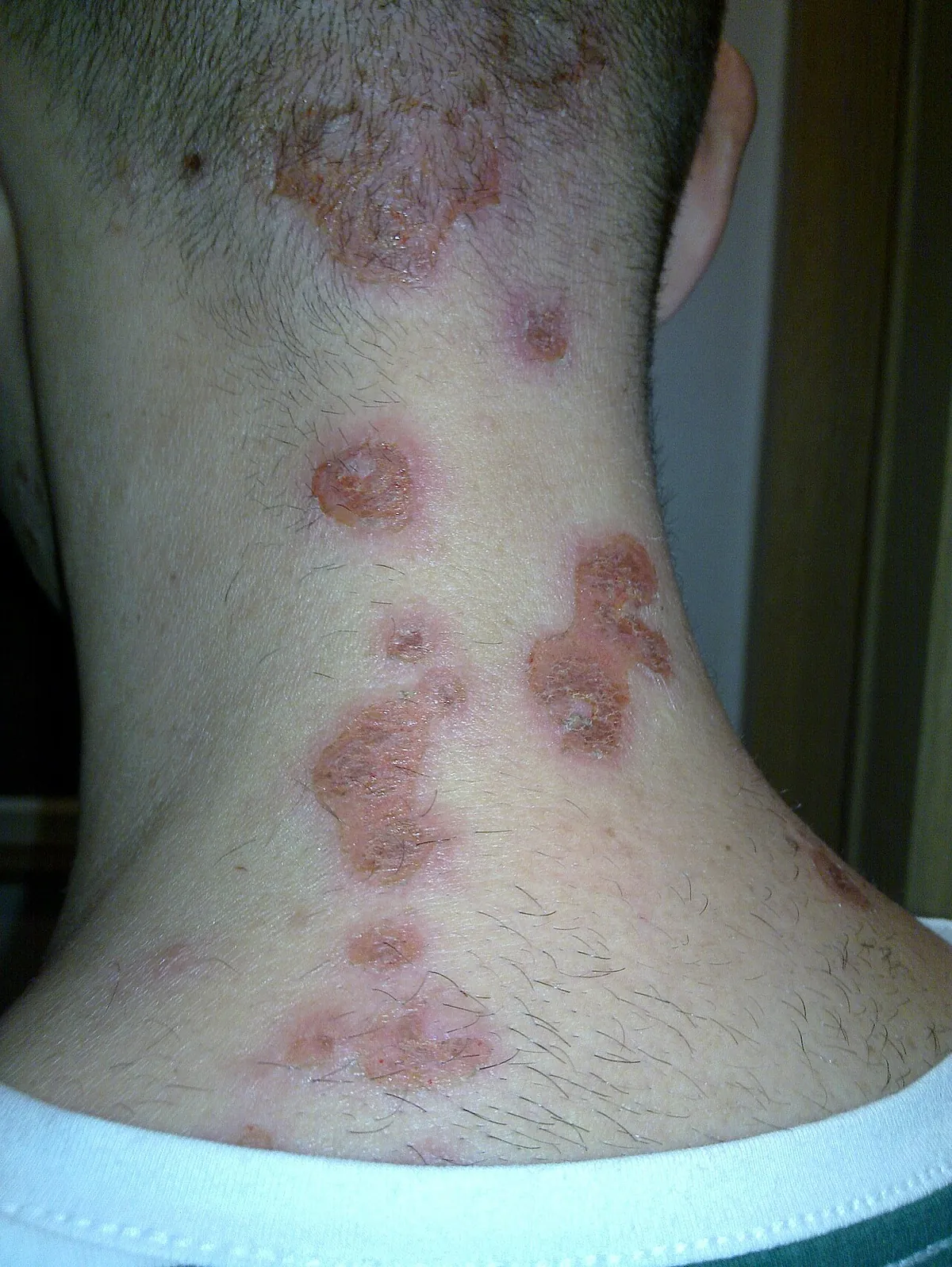
The classic picture is a crusted sore. The CDC describes sores that start as red, itchy sores that break open and leak clear fluid or pus for a few days, then form a crusty yellow or honey-colored scab that heals without a scar. The NHS says the golden-brown crust can look a bit like cornflakes stuck to your skin. The patches may itch or hurt, and they can spread to new spots as someone scratches.
Sores usually appear about 10 days after exposure, according to the CDC, and favor exposed skin: the arms, legs, mouth and nose. Impetigo can also start in skin that is already broken, such as a scrape, a bug bite or an eczema patch that has been scratched.
Impetigo on brown and black skin
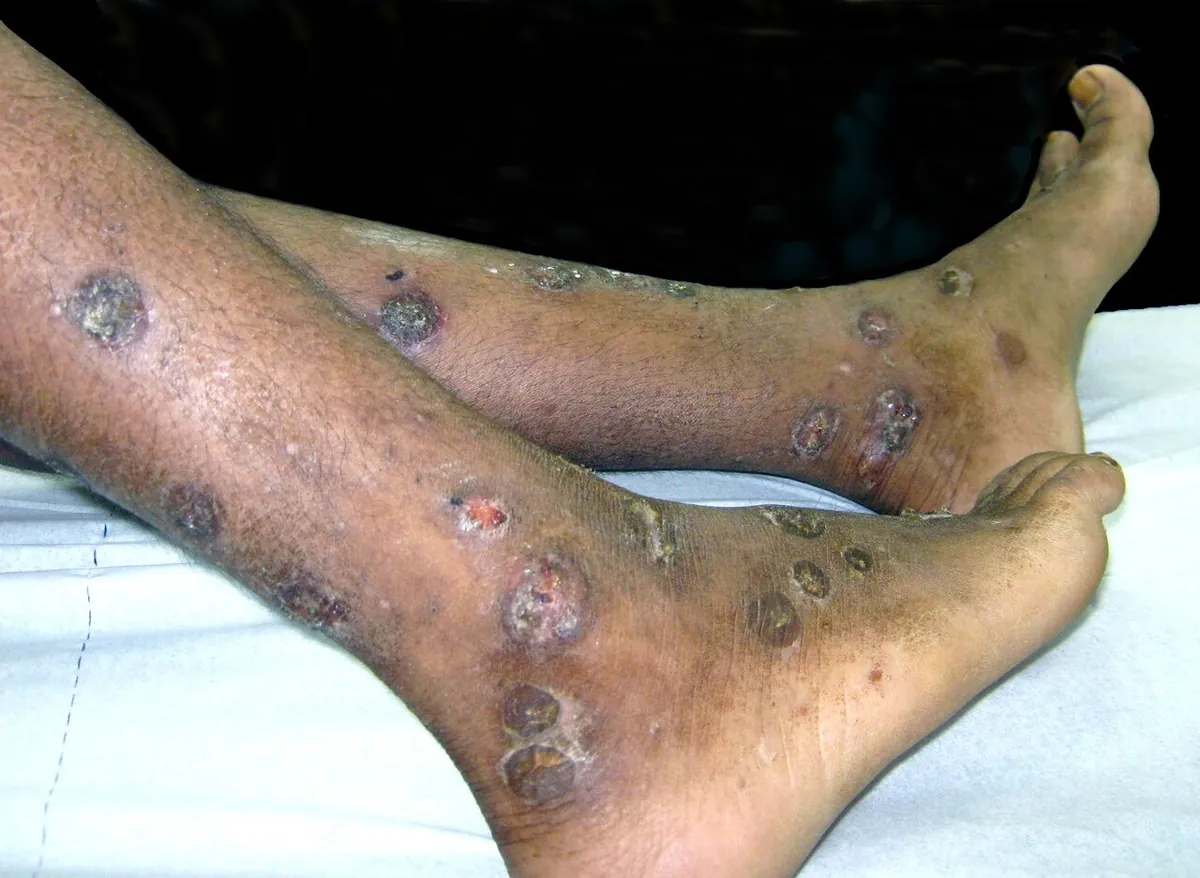
The first red spot is easy to miss on darker skin. Both the NHS and DermNet note that the redness can be harder to see on brown and black skin. Look instead for the crusts, the weeping and the way new sores appear near old ones. The sores and crusts often sit on skin that looks darker than the surrounding area, and DermNet lists lasting color changes after healing among the possible complications, so marks can stay after the infection itself is gone.
What is the difference between non-bullous and bullous impetigo?
Non-bullous impetigo is the crusted kind and by far the more common type. A 2025 review of trials puts it at about 70% of cases, with bullous impetigo making up the rest.
| Feature | Non-bullous impetigo | Bullous impetigo |
|---|---|---|
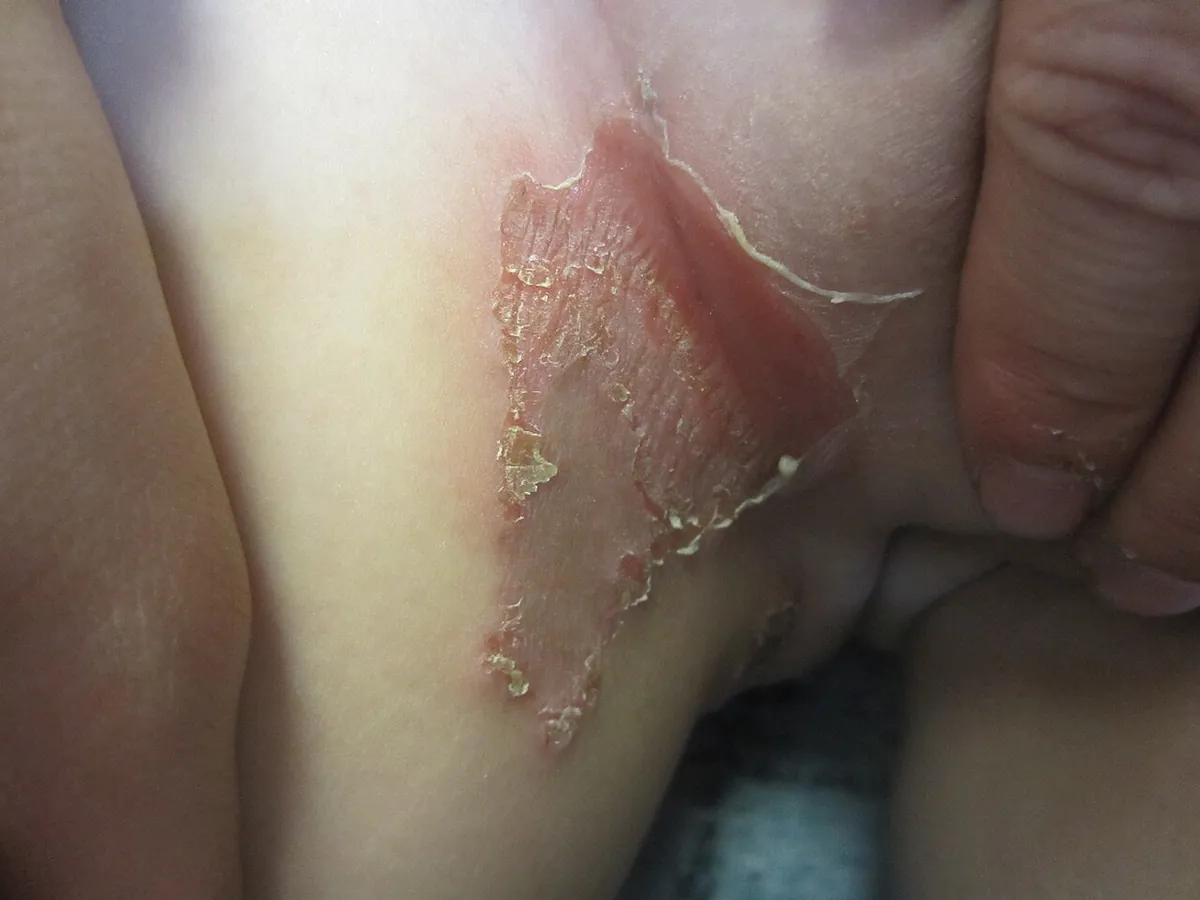
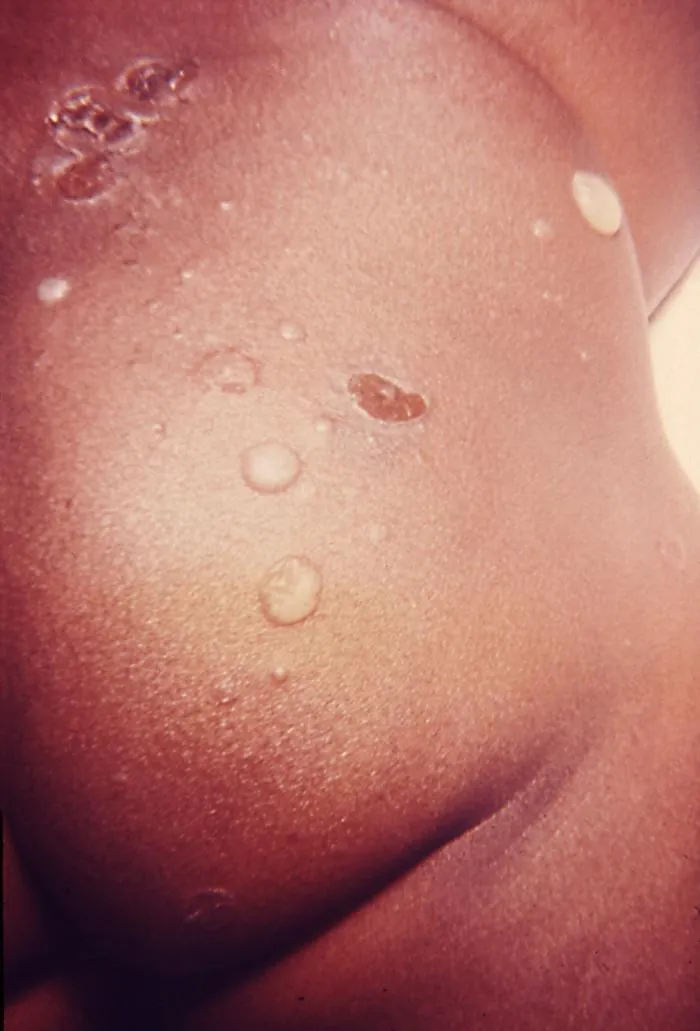
| What you see | Red spot that becomes a pustule or small blister, then a honey-colored crust | Larger, thin-roofed blisters that burst easily and leave a raw patch with a scaly rim |
| Usual cause | Staphylococcus aureus, group A Streptococcus, or both | S. aureus strains that make an exfoliative toxin |
| Common sites | Face (around the nose and mouth) and limbs | Face, trunk, limbs, buttocks and diaper area |
| How you feel | Usually well | Fever and feeling unwell are more likely |
The details come from DermNet's impetigo page. The toxin in bullous impetigo separates the top layers of skin, which is why the blisters are fragile. The NHS describes yellow fluid oozing from the blisters and hardening into a scaly border around a scab.
What causes impetigo, and who gets it?
Two bacteria cause nearly all impetigo: Staphylococcus aureus (staph) and group A Streptococcus (strep). They often live harmlessly on the skin or in the nose, and they get in through a break in the skin. The AAD lists cuts, scratches, bug bites, rashes, sores or burns as entry points and says children who scratch eczema or chickenpox can develop it. It sometimes starts on skin that looks unbroken.
Anyone can get impetigo, but the CDC says it is most common in children ages 2 to 5. Risk goes up with:
- Close contact with someone who has it, the most common risk factor
- Crowded places such as daycare, schools and shelters
- Hot, humid climates
- Skin conditions and injuries, including eczema, scabies and frequent scrapes
- Contact sports; the AAD notes that wrestlers and football players often catch it through skin-to-skin contact
Is impetigo contagious, and when can my child go back to school?
Yes. The AAD calls impetigo highly contagious. It spreads by touching the sores and through shared towels, clothing and sports gear, and it often passes between people in the same household.
Return-to-school advice differs a little by country, so check your school or daycare policy too:
- CDC (US): people can go back to work, school or daycare once they have started antibiotic treatment and covered all sores on exposed skin.
- NHS (UK): impetigo stops being contagious 48 hours after starting hydrogen peroxide cream or prescribed antibiotics, or once the sores have dried and crusted over. Untreated, that can take 7 to 21 days.
- AAD: with treatment it is usually no longer contagious within 24 to 48 hours. Children may need a few days at home, while teens and adults can usually keep going to school or work if they cover the sores and avoid skin-to-skin contact.
Until the sores are no longer contagious, the NHS advises not touching or scratching them, not sharing towels or bedding, washing bedding and washcloths at a high temperature, not preparing food for others, and skipping the gym and contact sports.
What else could it be?
Several rashes can look like impetigo, and some need different treatment. DermNet lists herpes simplex and pustular folliculitis among the conditions doctors rule out. This table is a rough guide; a clinician makes the call.
| Condition | How it differs from impetigo |
|---|---|
| Cold sore (herpes simplex) | Starts with tingling or burning, then a tight cluster of small blisters on or beside the lip; usually comes back in the same spot. Needs antivirals, not antibiotics. |
| Folliculitis | Small pus bumps, each centered on a hair follicle, often after shaving or a hot tub; no spreading honey-colored crusts. |
| Eczema | Dry, itchy, scaly patches that come and go. If eczema starts to weep and form yellow crusts, it may have become infected with impetigo, which needs a doctor. |
| Ringworm (tinea) | A fungal rash, often a ring with a scaly edge and clearer center; it does not form honey-colored crusts. |
How is impetigo treated?
A doctor usually diagnoses impetigo by looking at it; the CDC says lab tests are not needed. Treatment is quick, and the AAD recommends it even though impetigo can clear on its own in two to four weeks, because treatment lowers the risk of new sores, deeper infection and passing it on.
A few sores: antiseptic or antibiotic cream
- Prescription antibiotic creams and ointments: the AAD names mupirocin and retapamulin. Ozenoxacin 1% cream is another option; the FDA approved it for impetigo in patients two months of age and older, and a 2025 meta-analysis found it worked about as well as mupirocin.
- Antiseptic cream: in the UK, pharmacists can offer hydrogen peroxide 1% cream for small areas. DermNet lists it, along with povidone-iodine ointment, for localized non-bullous impetigo.
Many sores or bullous impetigo: tablets
The CDC says oral antibiotics are used when there are more sores. DermNet lists oral antibiotics for bullous impetigo, widespread impetigo (more than three sores), treatment failure, or someone who is unwell. A few people need injected antibiotics. Finish the full course even if the skin looks better, as the NHS advises.
Care at home while it heals
- Soak the sores in warm, soapy water to gently lift dirt and crusts, as the AAD suggests.
- Apply the prescribed cream or ointment.
- Cover the sores with gauze and tape to help healing and stop the spread.
- Wash your hands after touching or treating the skin.
With treatment, the NHS says impetigo often gets better in a few days. If it keeps coming back, a doctor may swab the skin and nose and prescribe an antiseptic body wash or a nasal ointment, since the bacteria often live in the nostrils.
Can impetigo cause complications?
Complications are uncommon. The CDC lists two rare ones after strep impetigo: post-streptococcal glomerulonephritis, a kidney problem, and rheumatic fever. DermNet adds cellulitis (a deeper skin infection), staphylococcal scalded skin syndrome and scarlet fever, and notes that the kidney problem appears 2 to 6 weeks after the skin infection. Scarring is uncommon unless the infection goes deeper (ecthyma).
When should you see a doctor about impetigo?
See a doctor or pharmacist whenever you think it is impetigo, since prescription treatment is usually needed. Get care promptly if:
- The child is a baby; the NHS says to see a GP rather than a pharmacist for children 11 months or younger.
- Sores are spreading fast, are large or blistered, or there are many of them.
- There is fever, swollen glands or the person seems unwell.
- Redness, warmth, swelling or pain is spreading around the sores, which can be a sign of cellulitis. On brown and black skin, the NHS suggests checking for warmth, swelling and pain because redness is harder to see.
- The skin has not improved after a few days of treatment, or impetigo has come back within a year.
- You have a weakened immune system.
For repeat infections or sores that will not heal, you can find a dermatologist near you.
How can you stop impetigo from spreading at home?
- Clean cuts, scrapes and bug bites with soap and water, and cover them.
- Treat eczema and scabies so the skin barrier stays intact.
- Give each person their own towel, washcloth and razor, and wash bedding hot during an outbreak.
- Wash your hands after touching sores, creams or dressings.
Photos help when sores come and go. If you are tracking a child's skin, photograph the sores themselves in close-up, not the whole face, and keep the pictures private. A dated record of where sores appeared and how fast they cleared makes a follow-up visit much easier.
Frequently asked questions
What does impetigo look like?
It usually starts as red sores or small blisters that burst, ooze and dry into golden, honey-colored crusts, often around the nose and mouth or on the arms and legs. On brown and black skin the redness can be hard to see, so the crusts are the main clue.
How long is impetigo contagious?
The NHS says it stops being contagious 48 hours after starting hydrogen peroxide cream or prescribed antibiotics, or once the sores have crusted and healed. Without treatment that can take 7 to 21 days.
When can a child go back to school with impetigo?
The CDC says once antibiotic treatment has started and all sores on exposed skin are covered. The AAD says children may need a few days at home, so ask your doctor and check the school or daycare policy.
What is bullous impetigo?
It is a less common form caused by staph bacteria that make a toxin, which splits the skin and forms larger, thin-roofed blisters. They burst easily and leave a raw patch with a scaly rim. It is usually treated with antibiotic tablets.
Can impetigo go away on its own?
It can clear by itself in two to four weeks, but the AAD recommends treatment because it lowers the risk of new sores, deeper infection and spreading it to others.
Can adults get impetigo?
Yes. It is most common in children ages 2 to 5, but adults get it too, especially through close contact, contact sports or skin that is already broken by eczema, cuts or bites.
Sources
Pori is a wellness and skincare education app, not a medical device. This article is for general information and isn't medical advice. For anything that worries you, see a dermatologist.