Pori

- A normal mole is usually under about 5 mm, round or oval, one even color, with a smooth edge, and stays stable for years.
- Melanoma is more often uneven in shape and color, ragged at the edge, larger than 6 mm, changing, or unlike your other moles (the ugly duckling).
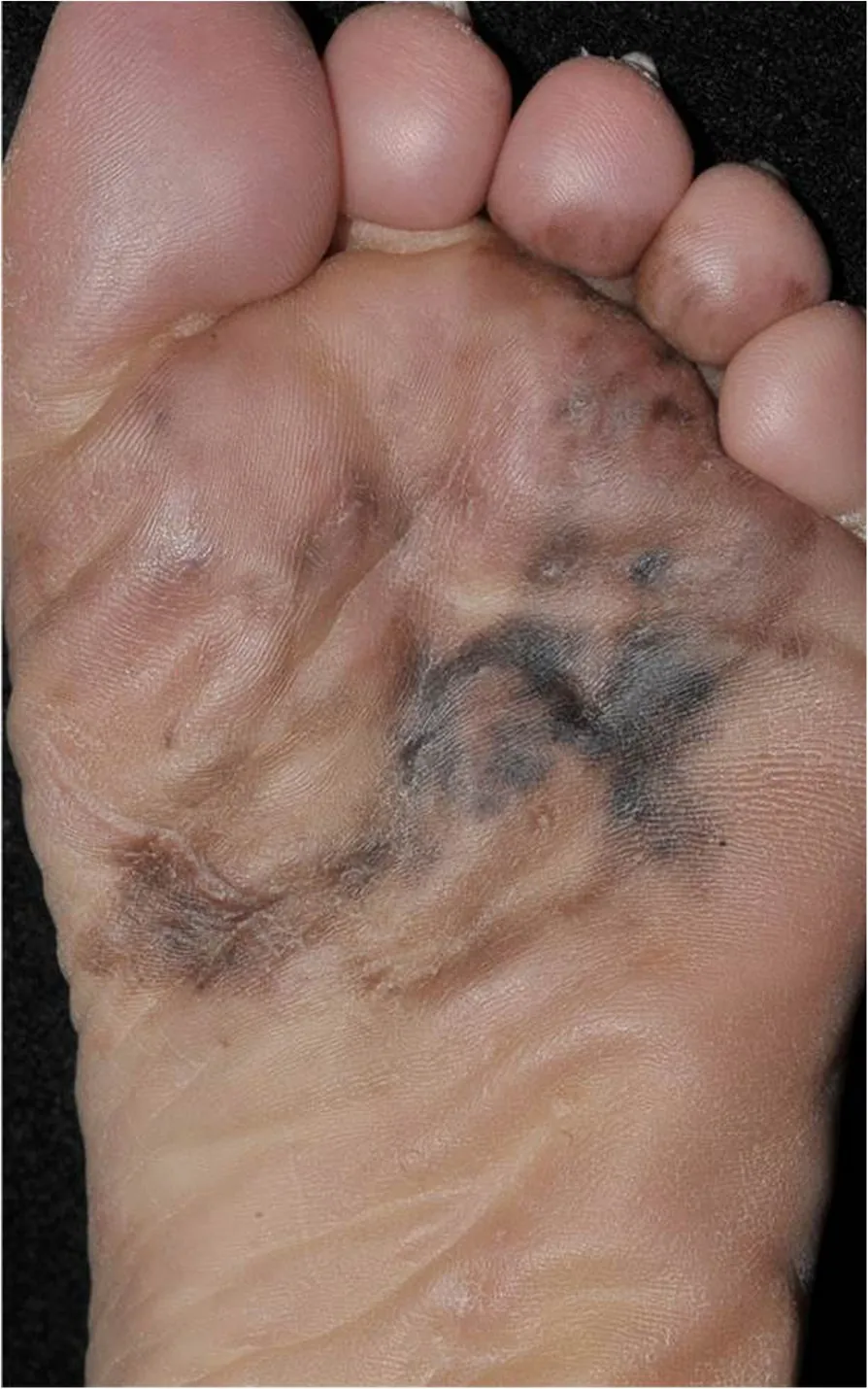
- Melanoma often appears as a new spot; on brown and black skin it is more often found on the palms, soles or under a nail, where it can look like a bruise or a dark nail streak.
- Pori does not check moles and no app replaces a skin exam: show any new, changing or unusual spot to a dermatologist, who may do a biopsy.
A normal mole is usually small, round or oval, one even shade of tan, brown or pink, with a smooth, sharp edge, and it stays the same for years. A melanoma is more often uneven in shape and color, has a ragged or blurred edge, is larger than about 6 mm, looks different from your other moles, or is changing. Any mole that is new in adulthood, changing, bleeding or unlike the rest should be seen by a dermatologist.
Pori does not diagnose skin conditions and does not check moles, and no app replaces a skin exam. Its selfie scans and photo diary can help you keep dated, consistent photos of your face to show a dermatologist, and that is all they are for here.
Below, an ordinary mole and a melanoma side by side, the in-between "atypical" mole, the changes that matter, and melanoma on palms, soles and nails. For other skin cancers, see skin cancer signs with pictures.
What does a normal mole look like?
The National Cancer Institute (NCI) describes a common mole as usually smaller than about 5 millimeters wide, with a smooth surface and a distinct edge. It is usually one even color: pink, tan or brown. Moles can be flat or raised, round or oval. The NCI says most adults have between 10 and 40 of them, usually above the waist on skin that sees the sun.
Normal moles also have a life story. They may be present at birth, but most appear in childhood and the teen years. Many start flat and brown, slowly rise, and later fade toward skin color. The NCI notes that in older people common moles tend to fade away. That slow, even change over decades is normal. The changes that matter happen over weeks or months and affect one mole more than the others.
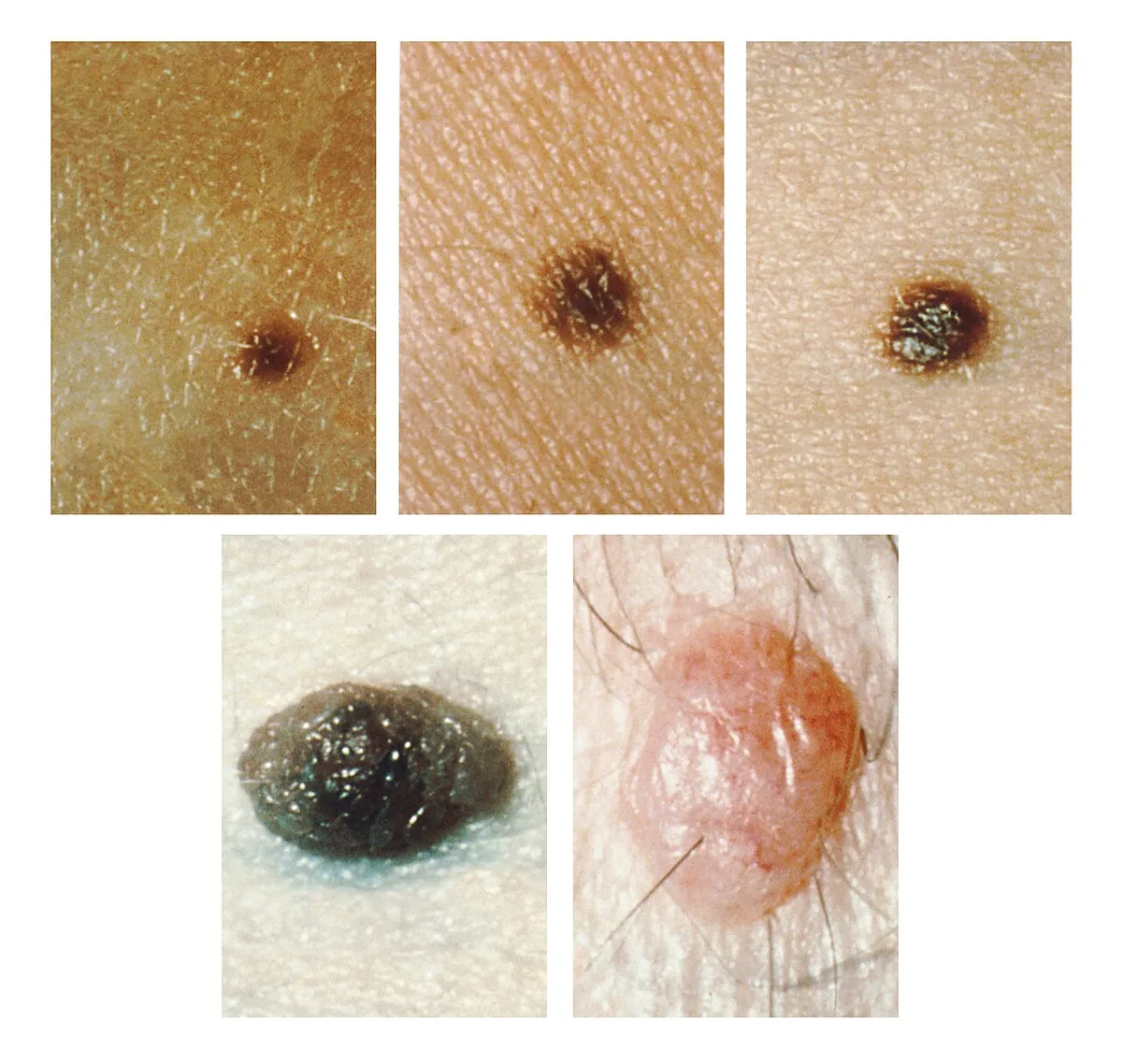
Do moles look different on brown and black skin?
Yes. The NCI says people with dark skin or hair tend to have darker moles than people with fair skin or blond hair. A dark brown, evenly colored mole is common on deeper skin tones and is not a warning sign by itself. What matters is the same on every skin tone: an uneven mix of colors, a ragged edge, growth, or a spot in an unusual place such as the sole or under a nail. Many small dark bumps on the cheeks of people with brown or black skin are dermatosis papulosa nigra, which are harmless and are not moles.
Melanoma vs normal mole: what are the differences?
The NHS sums up a normal mole as usually round with smooth edges, one color, small, and usually unchanged over time. Melanomas are often an uneven shape, a mix of 2 or more colors, and bigger, often more than 6 mm wide. The table puts the main points next to each other.
| Feature | Typical normal mole | Possible melanoma |
|---|---|---|
| Shape | Round or oval, both halves match | Uneven; one half unlike the other |
| Edge | Smooth and sharp | Ragged, notched or blurred into the skin |
| Color | One even shade of tan, brown or pink | Several shades: brown, black, tan, sometimes red, white or blue |
| Size | Usually under about 5 mm | Usually over 6 mm, though it can be smaller |
| Change | Stable for years; slow, even fading with age | Changes in size, shape, color, height or feel over weeks or months |
| Compared with your other moles | Looks like its neighbors | Stands out as the "ugly duckling" |
| Symptoms | None | May itch, crust, bleed or feel sore |
The table follows the ABCDE rule (asymmetry, border, color, diameter, evolving). We explain each letter with more photos in our skin cancer signs guide, so here is just how two of them look in practice.
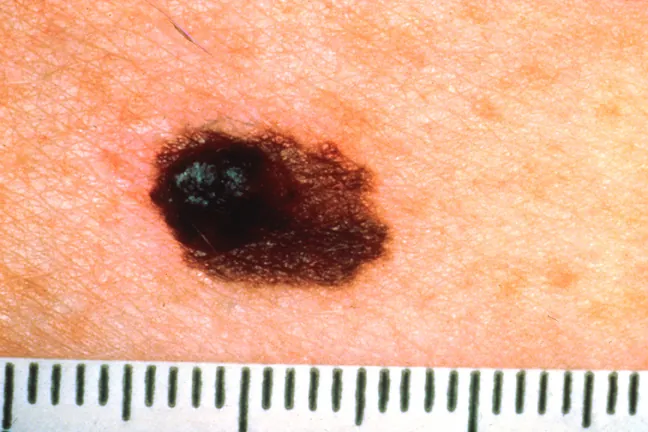
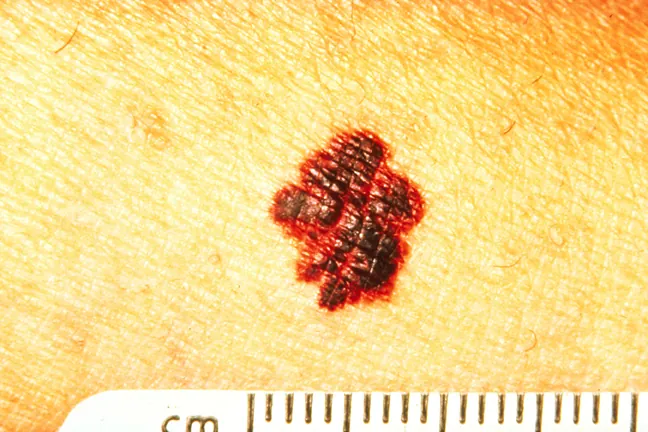
No single feature proves anything. Some harmless moles, such as atypical moles, are larger than 6 mm, and the NCI notes that melanomas can be tiny. A dermatologist looks at the whole picture, usually with a magnifying light called a dermatoscope.
What is an atypical (dysplastic) mole?
Between the ordinary mole and melanoma sits the atypical mole, also called a dysplastic nevus. The NCI says these are usually more than 5 mm wide, often flat, with mixed tan, brown and pink shades and an edge that may fade into the skin around it. They can look a lot like an early melanoma, which is why a dermatologist may want to check or remove one.
Atypical moles are a risk marker more than a danger in themselves. The NCI says they rarely become melanoma, but researchers estimate that people with more than five of them have about 10 times the melanoma risk of people with none. People with many moles or several atypical ones are often advised to check their skin monthly and to have regular skin exams, and doctors sometimes photograph the moles so changes are easier to see.
Does melanoma usually start in an existing mole?
Less often than people think. The NCI says melanoma more often develops in an area of apparently normal skin, as a new colored or otherwise unusual area. When it does start in an existing mole, the first sign is often a change in its shape, color, size or feel, and the NCI adds that only rarely does a common mole turn into melanoma.
So watch existing moles for change, and pay attention to any new spot in adulthood. The American Academy of Dermatology (AAD) notes that melanoma can look like a new mole, freckle or age spot that looks different from the others on your skin.
What is the ugly duckling sign?
Most of your moles resemble one another. A mole that breaks the pattern, by being darker, lighter, larger or a different shape, or by changing while the others stay the same, is called an ugly duckling. In a 2008 study in Archives of Dermatology, observers flagged all 5 melanomas but only 3 of 140 harmless moles as different from the rest of the patient's back. The study used photos, not home checks, but the idea is simple: compare each mole to its neighbors, not to a textbook picture.
What kind of change in a mole matters?
"Evolving" is the letter dermatologists care about most, because change is often the earliest sign. The NCI lists changes worth telling a doctor about: color changes, uneven growth, changes in shape or texture, itching, and bleeding or oozing.
- Growth: a mole that is getting wider, or spreading unevenly in one direction.
- Color: new dark or black areas, or patches of red, white, gray or blue.
- Height: a flat mole that develops a raised part or a firm bump.
- Surface: scaling, crusting, oozing or bleeding without an injury.
- Feeling: new itching, tenderness or pain.
The photo below shows why tracking helps. Doctors photographed this patient's atypical moles for follow-up, and 18 months later one had developed a small black bump that proved to be melanoma.
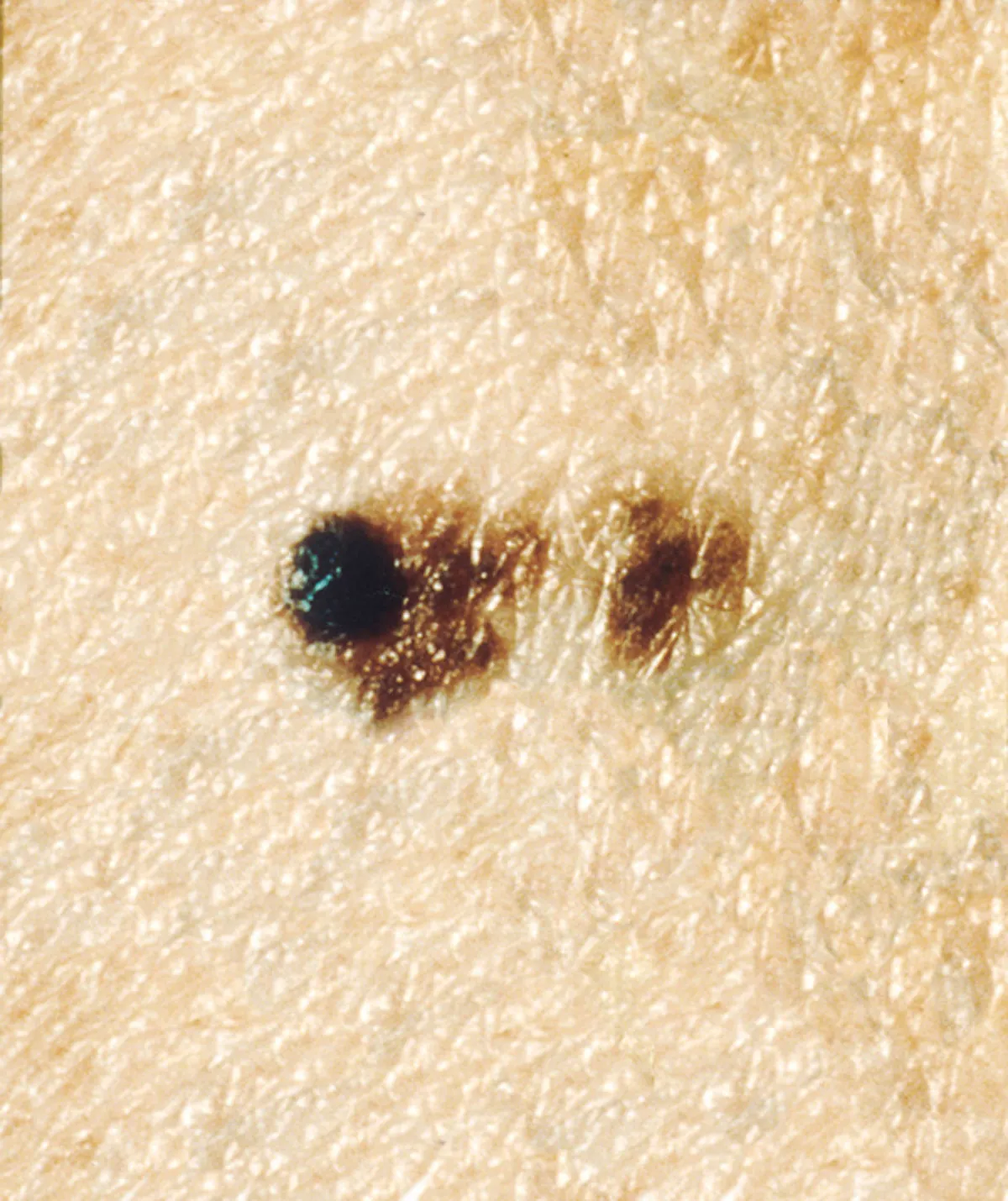
How do you track a mole for changes?
Memory is a poor guide to small changes, so photos help. Check your whole skin regularly with a full-length mirror and a hand mirror, as the AAD's skin self-exam guide describes, including your scalp, palms, soles, between the toes and under the nails. The AAD offers a printable body mole map to note where each mole is. For photos, use the same light, distance and angle each time and put a ruler or coin next to the mole for scale. Apps that store mole photos are compared in our mole checker app guide. No app can rule melanoma out: the NCI notes that mole apps lack evidence of their diagnostic accuracy, so deciding whether a spot is safe stays with a dermatologist.
What does melanoma look like on the palms, soles and nails?
Some melanomas grow where the ABCDE pictures rarely show them. Acral lentiginous melanoma appears on the palms, the soles and under the nails. DermNet describes it as a rare subtype, about 2 to 3% of melanomas overall, but the most common type in people of Asian and African descent, where it accounts for 40 to 60% of melanoma diagnoses. Sun exposure does not appear to be a risk factor for it. Early on it is usually a flat, light to dark brown patch that follows the skin lines, and DermNet notes that pale forms can mimic warts or calluses.
The AAD says that in people of African descent, melanoma tends to develop on the palm, bottom of the foot, or under or around a nail, and that on the sole it can look like a bruise. It also warns that in darker skin tones skin cancer is often advanced by the time it is diagnosed, partly because few people check their feet.
What about a dark line on a nail?
The AAD lists a dark-brown or black vertical line beneath a fingernail or toenail and a band of darker skin around a nail as signs of melanoma. Many nail streaks have harmless causes. A bruise grows out with the nail over a few months. The AAD notes that skin cancer doesn't grow out with the nail. See a dermatologist for a streak on a single nail that is new, widening, darkening or blurred at its edges or for dark color spreading onto the skin around the nail. The NHS also advises seeing a doctor about a dark area under a nail that was not caused by an injury.
What else can look like a melanoma?
Several common, harmless growths cause most "is this melanoma?" worries. A dermatologist can usually tell them apart quickly with a dermatoscope.
| Look-alike | How it usually differs |
|---|---|
| Seborrheic keratosis | Waxy, "stuck-on" brown or black growth with a rough surface; very common after 40 |
| Dermatosis papulosa nigra | Many small, smooth dark bumps on the cheeks and neck, mostly on brown and black skin |
| Cherry angioma | Bright red to purple dome made of blood vessels; can look dark when it is large |
| Sun spot (solar lentigo) | Flat, evenly tan or brown patch on sun-exposed skin, often several |
| Bruise or blood under a nail | Follows an injury and grows out with the nail |
| Skin tag | Soft, skin-colored or brown flap on a thin stalk |
What happens when a dermatologist checks a mole?
A dermatologist looks at the spot and your other moles, usually with a dermatoscope, and asks how long it has been there and whether it has changed. If a mole looks suspicious, the next step is a biopsy: the doctor numbs the skin and removes all or part of the mole so a lab can look at it under a microscope. Only that test can confirm melanoma.
Finding melanoma early makes a large difference. Using US cancer registry data for people diagnosed from 2015 to 2021, the American Cancer Society reports a 5-year relative survival rate of more than 99% for melanoma that has not spread beyond where it started, compared with 36% once it has spread to distant parts of the body.
When should you see a dermatologist about a mole?
Book a skin check if you notice any of the following:
- A mole with any ABCDE feature: uneven shape, ragged edge, several colors, larger than a pencil eraser, or changing
- A new mole or dark spot in adulthood, or one that looks unlike your other moles
- A mole that itches, bleeds, crusts or becomes sore without an injury
- A new or changing dark patch on a palm, sole or between the toes
- A dark streak in one nail that is new, widening or darkening, or dark color on the skin around a nail
- A sore that does not heal, or heals and comes back
People with many moles, atypical moles, a past melanoma or a parent, brother or sister with melanoma should ask about regular full-skin exams. You can find a board-certified dermatologist near you.
Frequently asked questions
How can I tell if a mole is melanoma or a normal mole?
A normal mole is usually small, round, one even color, with a smooth edge, and stays the same. Melanoma is more often uneven in shape or color, has a ragged edge, is larger than about 6 mm, is changing, or looks different from your other moles. Only a dermatologist, often with a biopsy, can tell for sure.
Can a normal mole turn into melanoma?
It can, but rarely. The National Cancer Institute says only rarely does a common mole turn into melanoma, and melanoma more often appears as a new spot on normal-looking skin. A change in an existing mole is still a reason to have it checked.
What does early melanoma look like?
Often a flat or slightly raised spot that is uneven in shape, has more than one shade of brown, black or tan, has a blurred or notched edge, or is growing. It can also look like a new mole, freckle or age spot that is different from the others on your skin.
Is a dark mole on dark skin a sign of melanoma?
Not by itself. People with darker skin tend to have darker moles. What matters is uneven color, a ragged edge, growth or change, and new spots on the palms, soles or under the nails, where melanoma is more common in people with brown and black skin.
Is a dark line on my nail melanoma?
Usually not. Many nail streaks are harmless, and a bruise grows out with the nail. See a dermatologist for a streak on one nail that is new, widening or darkening, or when dark color spreads onto the skin around the nail.
Can Pori or another app check my moles?
Pori does not check moles. The National Cancer Institute notes there is little evidence on how accurate mole apps are. Apps can help you keep photos to track change, but a dermatologist should examine any spot that worries you.
Sources
- National Cancer Institute: Common Moles, Dysplastic Nevi, and Risk of Melanoma
- NHS: Melanoma skin cancer: Symptoms
- American Academy of Dermatology: Melanoma: Signs and symptoms
- American Academy of Dermatology: Finding skin cancer in darker skin tones
- American Academy of Dermatology: How to perform a skin self-exam
- DermNet: Acral lentiginous melanoma
- Scope A et al. The "ugly duckling" sign: agreement between observers. Arch Dermatol, 2008 (PubMed)
- National Cancer Institute: Skin Cancer Screening (PDQ), Health Professional Version
- American Cancer Society: Survival Rates for Melanoma Skin Cancer
Pori is a wellness and skincare education app, not a medical device. This article is for general information and isn't medical advice. For anything that worries you, see a dermatologist.