Pori

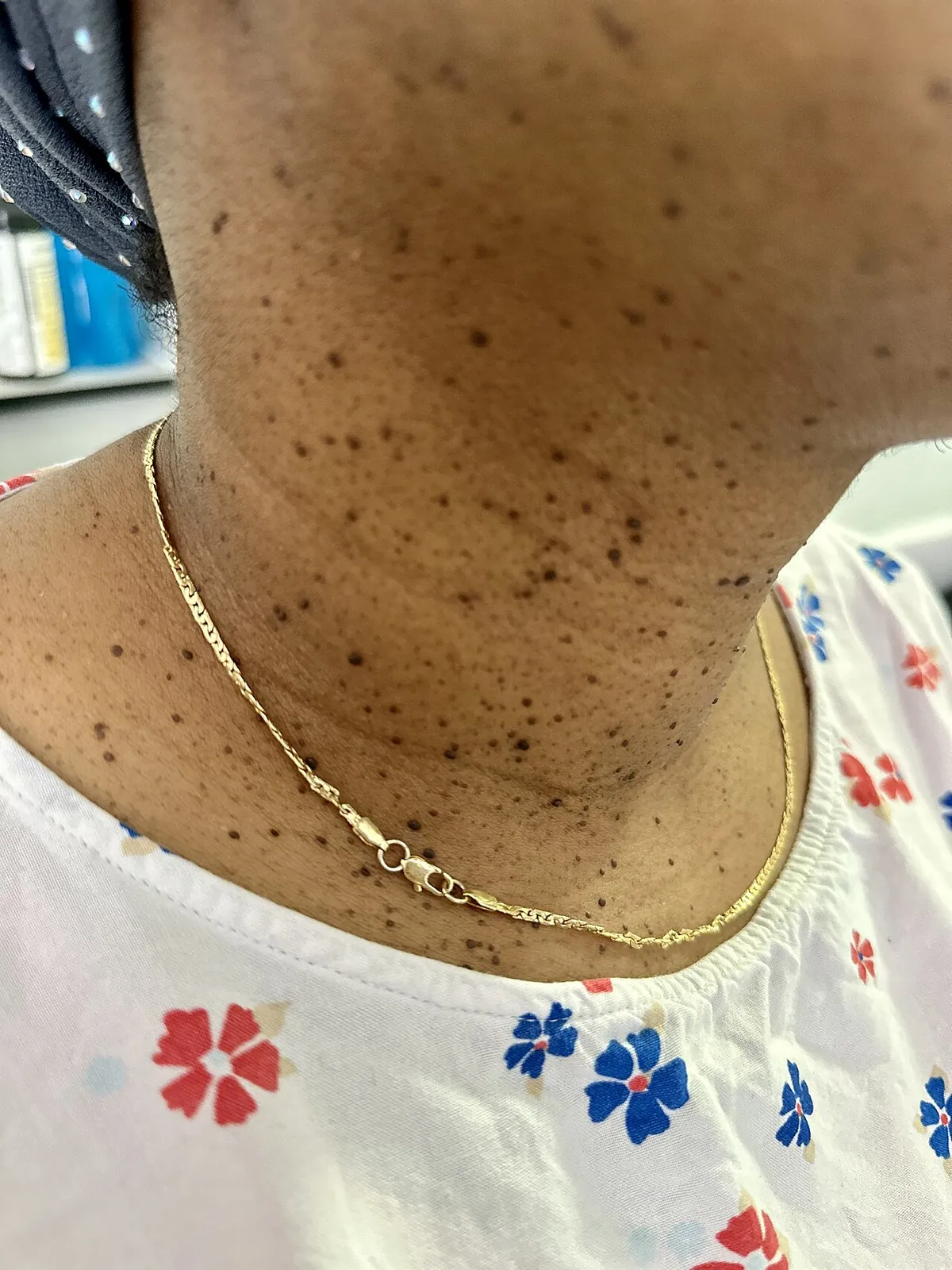
- Dermatosis papulosa nigra (DPN) causes small, smooth, dark brown or black bumps, 1 to 5 mm, on the cheeks, around the eyes, forehead and neck.
- It is very common in people with deeply pigmented skin, more common in women, runs in families and slowly increases with age; it is harmless and not contagious.
- Dermatologists can remove DPN by snipping, light electrodesiccation, curettage, cryotherapy or laser; dark marks, light spots, scars and keloids are the main risks.
- Never try to remove DPN at home; ask for a test spot, choose a dermatologist experienced with skin of color, and expect new spots over time.
Dermatosis papulosa nigra (DPN) is a harmless condition that causes small, smooth, dark brown or black bumps, usually 1 to 5 mm, on the cheeks, around the eyes, on the forehead and on the neck. It is very common in people with deeply pigmented skin, especially Black women, and the spots usually start in adolescence and multiply with age. DPN is not cancer and doesn't need treatment, but removal is possible; the main risk on dark skin is lighter or darker marks afterward.
Pori does not diagnose skin conditions. Its selfie scans and photo diary can help you keep dated, consistent photos to show a dermatologist and to see how your skin responds after a treatment.
What does dermatosis papulosa nigra look like?
The Skin of Color Society (SOCS) describes DPN as small brown or black spots around your cheekbones and eyes that can also appear on other parts of the face, the neck, chest and back. Some people have a few; others have many. According to SOCS, the spots can be flat or hang off your skin like a little tag, which is why people often call them "moles" or "flesh moles."
DermNet, the New Zealand dermatology reference, adds detail:
- Size and color: smooth, firm, black or dark brown bumps about 1 to 5 mm across.
- Surface: they don't scale, crust or ulcerate.
- Where: mainly the cheeks and forehead, and also the neck, upper back and chest.
- Feel: usually no symptoms, though SOCS notes they can be itchy or irritated, especially where clothing, glasses or a necklace rubs.
Is DPN a type of seborrheic keratosis?
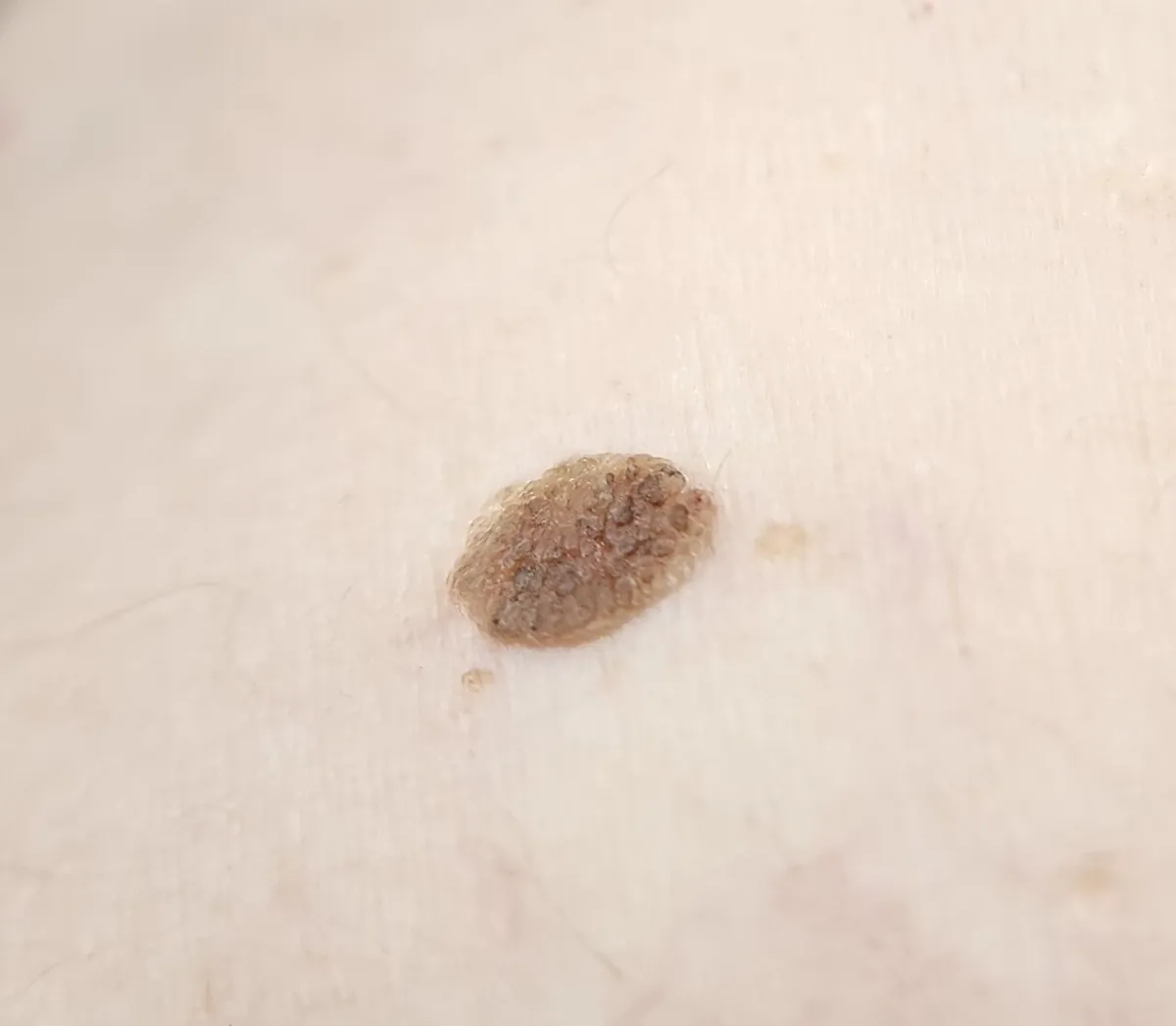
Yes. Under the microscope, DPN looks the same as a seborrheic keratosis, the waxy "stuck-on" growth many people get with age; DermNet calls the lesions histologically identical but with much more pigment. The AAD notes that on medium to dark skin, seborrheic keratoses tend to be small and appear around the eyes, which is the typical DPN pattern. The difference is mostly size, number and age of onset: DPN spots are smaller, darker and more numerous, and they start earlier in life.
Who gets DPN, and why?
SOCS says DPN commonly occurs in individuals with more deeply pigmented skin and that women are more likely to be affected. DermNet reports that it affects up to 35% of Black Americans and is most common in people with Fitzpatrick skin types IV to VI. It also occurs in people of Asian and Polynesian descent with darker skin, though DermNet notes the frequency in those groups is unknown. If you are not sure where your skin falls, our guide to Fitzpatrick skin types explains the scale.
The spots usually show up after the teenage years and, according to SOCS, get bigger and more numerous with age. They won't go away on their own.
The cause is unknown. Genetics play a large part: DermNet reports that 40% to 50% of people with DPN have a family history of it. It is not contagious, it is not caused by skincare or diet, and it is benign.
What else could these dark bumps be?
A dermatologist can usually diagnose DPN just by looking, and SOCS notes they may take a tiny sample to confirm it when in doubt. These are the main look-alikes:
| Condition | What it looks like | How it differs from DPN |
|---|---|---|
| Dermatosis papulosa nigra | Many small, smooth, dark bumps on cheeks, around eyes, neck | Starts in adolescence; runs in families; slowly increases |
| Seborrheic keratosis | Larger waxy, warty, stuck-on spots | Same growth type, but bigger, rougher and usually later in life |
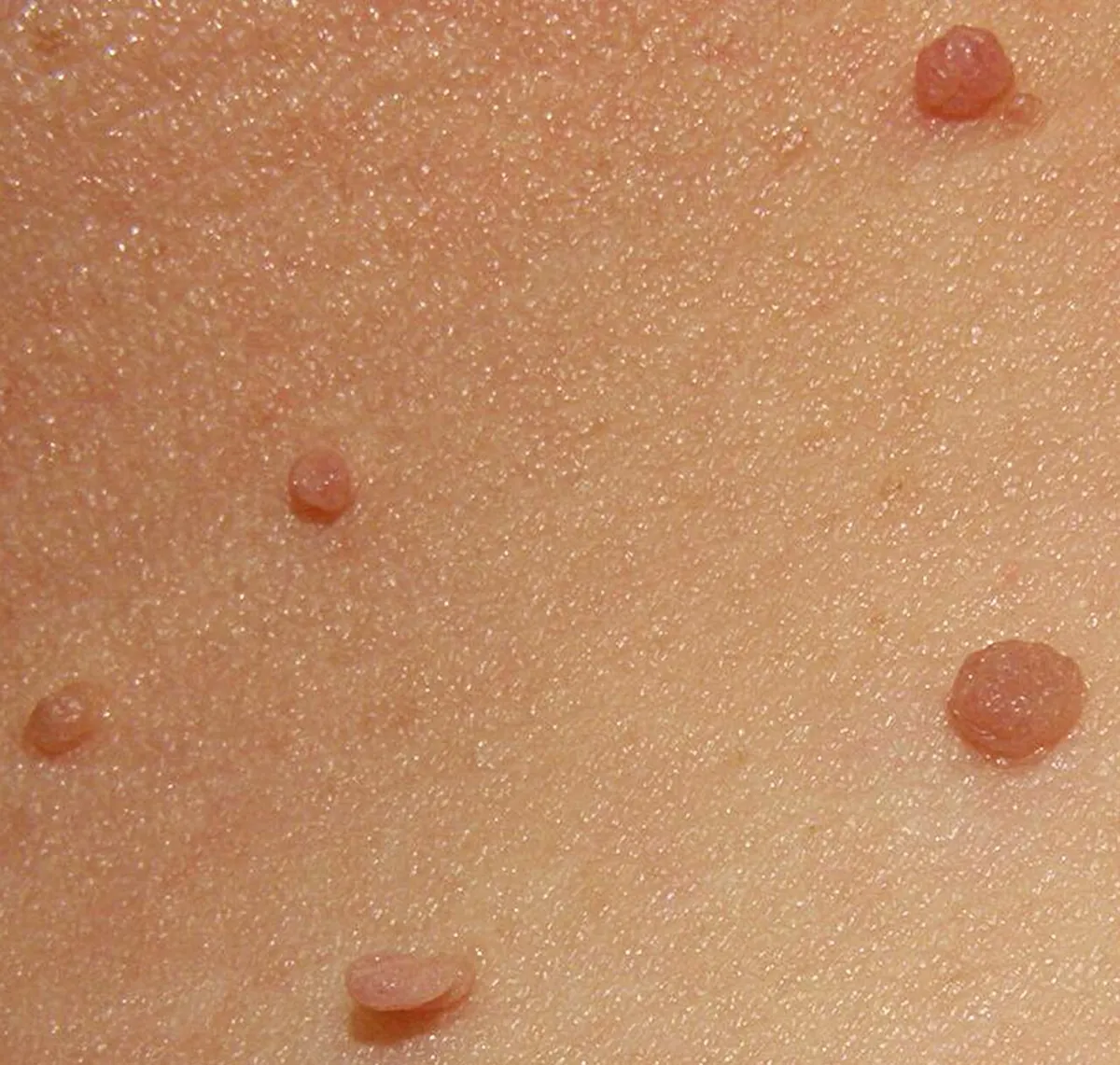
| Skin tag | Soft, skin-colored or slightly darker flap on a stalk | Softer, usually lighter in color, in folds where skin rubs |
| Mole (nevus) | Round, even brown or black spot | Usually fewer; can be anywhere on the body |
| Flat wart | Small, flat-topped bumps, sometimes in a line | Caused by a virus and can spread with shaving or scratching |
| Basal cell carcinoma | Firm, raised round growth that can be brown or black on darker skin | A single growing spot that may bleed, crust or not heal |
The AAD notes that on darker skin, basal cell carcinoma can appear as a brown or black firm, round growth. So a single spot that grows faster than the others, bleeds, crusts or looks different from your usual DPN should be checked; our guide to skin cancer signs with pictures shows what to watch for. See our guides to skin tags on the face and seborrheic keratosis for the other growths in this table.
Should you remove DPN, and what are the risks?
You don't have to. SOCS calls DPN not harmful and says that people who choose treatment usually do so because they don't like how the spots look. DermNet says the lesions are generally best left untreated. If they bother you, removal is a reasonable choice, made with a dermatologist who knows dark skin.
How dermatologists remove DPN
- Scissor excision or snip: SOCS lists cutting them out with scissors, which suits raised, tag-like spots.
- Light electrodesiccation and curettage: a fine electric needle destroys the spot, and it is gently scraped away. DermNet lists electrodesiccation followed by curettage among the options.
- Cryotherapy: freezing with liquid nitrogen. It is used with caution on dark skin because cold can destroy pigment cells and leave light spots.
- Lasers: SOCS lists lasers, and DermNet notes that Nd:YAG laser has been reported to give good cosmetic results.
A 2024 systematic review in the International Journal of Dermatology looked at 17 studies of DPN treatment, from excision and curettage to electrodesiccation, cryotherapy, topicals and lasers. The authors found that postinflammatory hyperpigmentation is a common adverse effect that often leaves patients dissatisfied, and that it can be reduced with topical treatments that calm inflammation. They concluded that the choice should consider skin type, the treatment area, cost and side effects.
Why removal is riskier on dark skin
Any injury to deeply pigmented skin can leave a mark. DermNet warns that locally destructive treatments can cause increased or decreased pigmentation, scarring and keloid formation, which is why dermatologists keep treatment as superficial as possible. SOCS puts it simply: people with darker skin should be careful with treatment because they might get scars or color changes. Practical points to discuss at the visit:
- Ask for a test spot on a less visible area first, and wait a few weeks to see how it heals.
- Ask whether the clinic regularly treats DPN on skin like yours.
- Ask what aftercare they recommend to limit dark marks; daily broad-spectrum sunscreen helps healing skin avoid extra darkening.
- If you have had keloids before, tell the dermatologist.
Treatment may not make the spots disappear completely, and SOCS notes that insurance usually does not cover it. New spots can keep appearing over the years. If dark marks do appear after treatment, our guides to fading dark spots and sunscreen for dark skin cover the next steps, and the skincare routine for dark skin keeps irritation low.
Never remove DPN at home
Cutting, burning, freezing kits, "mole remover" creams and pens can all leave the scars and dark marks that make DPN removal tricky in the first place. The AAD warns that at-home removal is essentially performing at-home surgery, with risks of infection, scarring and bleeding. The FDA has told sellers that there are no over-the-counter drugs that can be legally sold for mole or skin tag removal. The AAD also says not to remove a seborrheic keratosis yourself because of the risk of infection.
When should you see a dermatologist?
See a dermatologist if you want spots removed, if one spot looks different from the rest, or if a spot grows quickly, bleeds, itches persistently or crusts. Also book a visit if many new growths appear suddenly over a short time. A dermatologist who treats skin of color is the best choice; you can find a dermatologist near you, and SOCS keeps its own directory of members.
How can photos help?
DPN changes slowly, so it is hard to notice new spots or judge how treated areas heal. Photos taken in the same light every few months make that easy, and a before-and-after series lets you and your dermatologist judge whether a test spot healed cleanly before treating more. Our guide to skin analysis on darker skin tones explains why consistent lighting matters more on deep skin.
Pori's photo diary keeps dated selfies side by side. It does not identify DPN, moles or skin cancer; a dermatologist makes that call.
Frequently asked questions
What is dermatosis papulosa nigra?
It is a common, harmless condition that causes small, smooth, dark brown or black bumps, mostly on the cheeks, around the eyes, on the forehead and on the neck. It is a variant of seborrheic keratosis seen mainly in people with deeply pigmented skin.
Who gets dermatosis papulosa nigra?
It is most common in people with darker skin and affects up to 35% of Black Americans, according to DermNet. It also occurs in people of Asian and Polynesian descent, is more common in women, often runs in families, and usually starts in adolescence.
Is DPN cancer?
No. DPN is a benign growth, not a skin cancer. A single spot that grows quickly, bleeds, crusts or looks different from the rest should still be checked, because other growths can look similar.
How do dermatologists remove DPN?
Options include snipping with fine scissors, light electrodesiccation with or without curettage, cryotherapy and lasers. Treatment is kept superficial to lower the risk of dark marks, light spots, scars and keloids, and insurance usually does not cover it.
Will removing DPN leave dark spots?
It can. Postinflammatory hyperpigmentation is a common side effect of DPN removal, and freezing can leave light spots. Asking for a test spot, choosing a dermatologist experienced with dark skin and following their aftercare lowers the risk.
Can I remove DPN at home?
No. Cutting, burning, freezing kits and remover creams can cause infection, scars and dark marks. The FDA has approved no over-the-counter drugs for removing moles or skin tags, and dermatologists advise against at-home removal.
Sources
- Skin of Color Society: Dermatosis Papulosa Nigra (DPN)
- DermNet: Dermatosis papulosa nigra
- American Academy of Dermatology: Seborrheic keratoses: Who gets and causes
- Jain S, Caire H, Haas CJ. Management of dermatosis papulosa nigra: a systematic review. International Journal of Dermatology, 2024
- American Academy of Dermatology: Basal cell carcinoma: Signs and symptoms
- American Academy of Dermatology: 5 reasons to see a dermatologist for mole, skin tag removal
- American Academy of Dermatology: Seborrheic keratoses: Diagnosis and treatment
- FDA: Warning letter to Amazon.com on mole and skin tag removal products (2022)
Pori is a wellness and skincare education app, not a medical device. This article is for general information and isn't medical advice. For anything that worries you, see a dermatologist.