Pori

- Skin tags (acrochordons) are soft, harmless growths that hang from the skin, common on the eyelids, neck and anywhere skin or clothing rubs.
- They are more likely with diabetes, metabolic syndrome, pregnancy, extra weight and a family history; many new tags suddenly is a reason to see a doctor.
- Warts, molluscum, seborrheic keratoses, dermatosis papulosa nigra and skin cancer can look similar, so get any changing or uncertain growth checked.
- Don't cut, tie off or freeze tags at home; the FDA has approved no removal creams, and freezing-kit labels exclude the face and eyelids. A dermatologist removes them in minutes.
Skin tags (acrochordons) are small, soft, harmless growths that hang from the skin, often on a thin stalk. On the face they show up most on the eyelids and around the eyes, and they are common on the neck, underarms and anywhere skin rubs. They are usually skin-colored or a little darker and don't need treatment, but a dermatologist can remove one quickly; cutting, tying or freezing them yourself risks bleeding, infection, scarring and missing a skin cancer.
Pori does not diagnose skin conditions. Its selfie scans and photo diary can help you keep dated, consistent photos to show a dermatologist and to see whether a growth is changing.
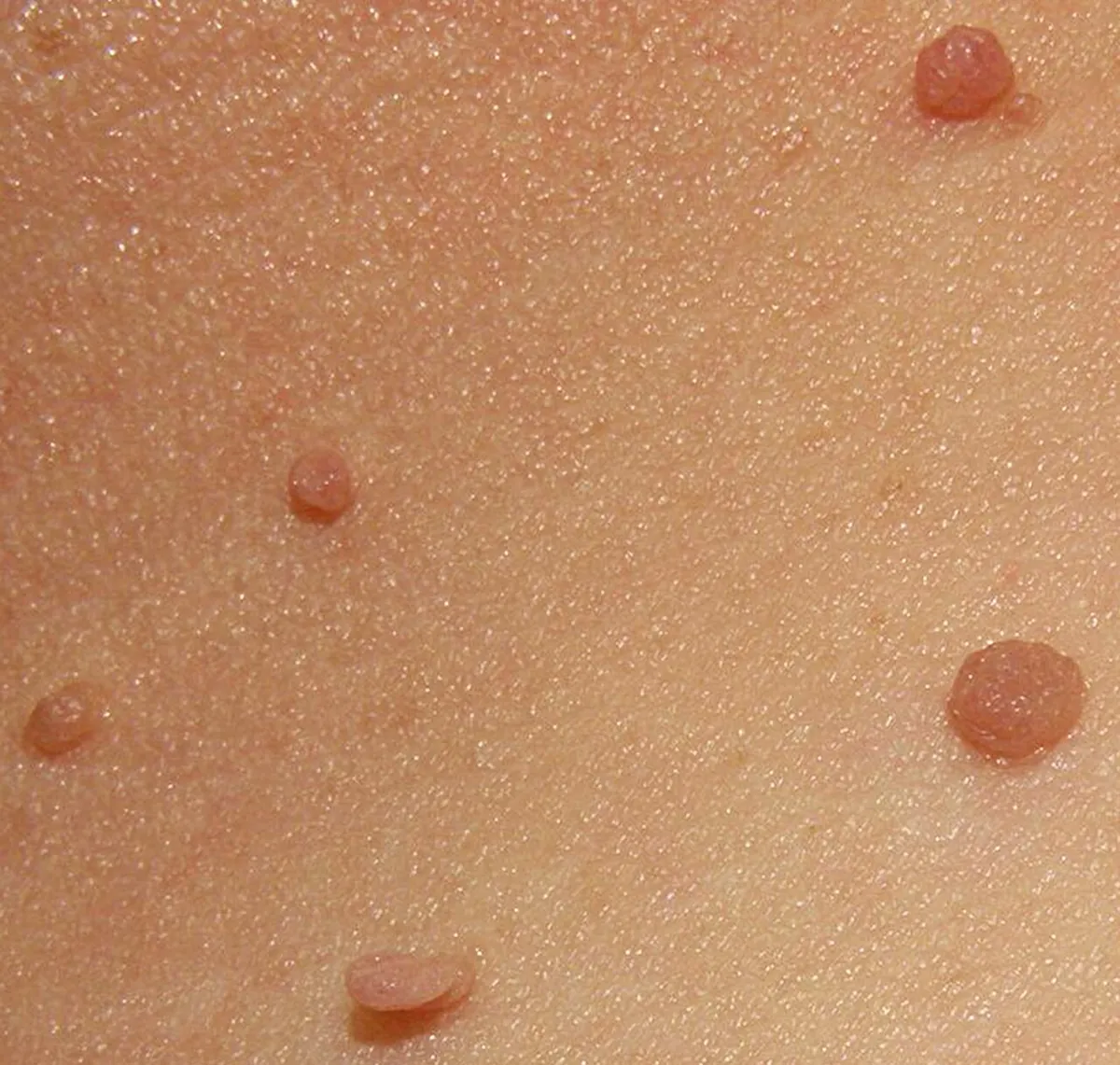
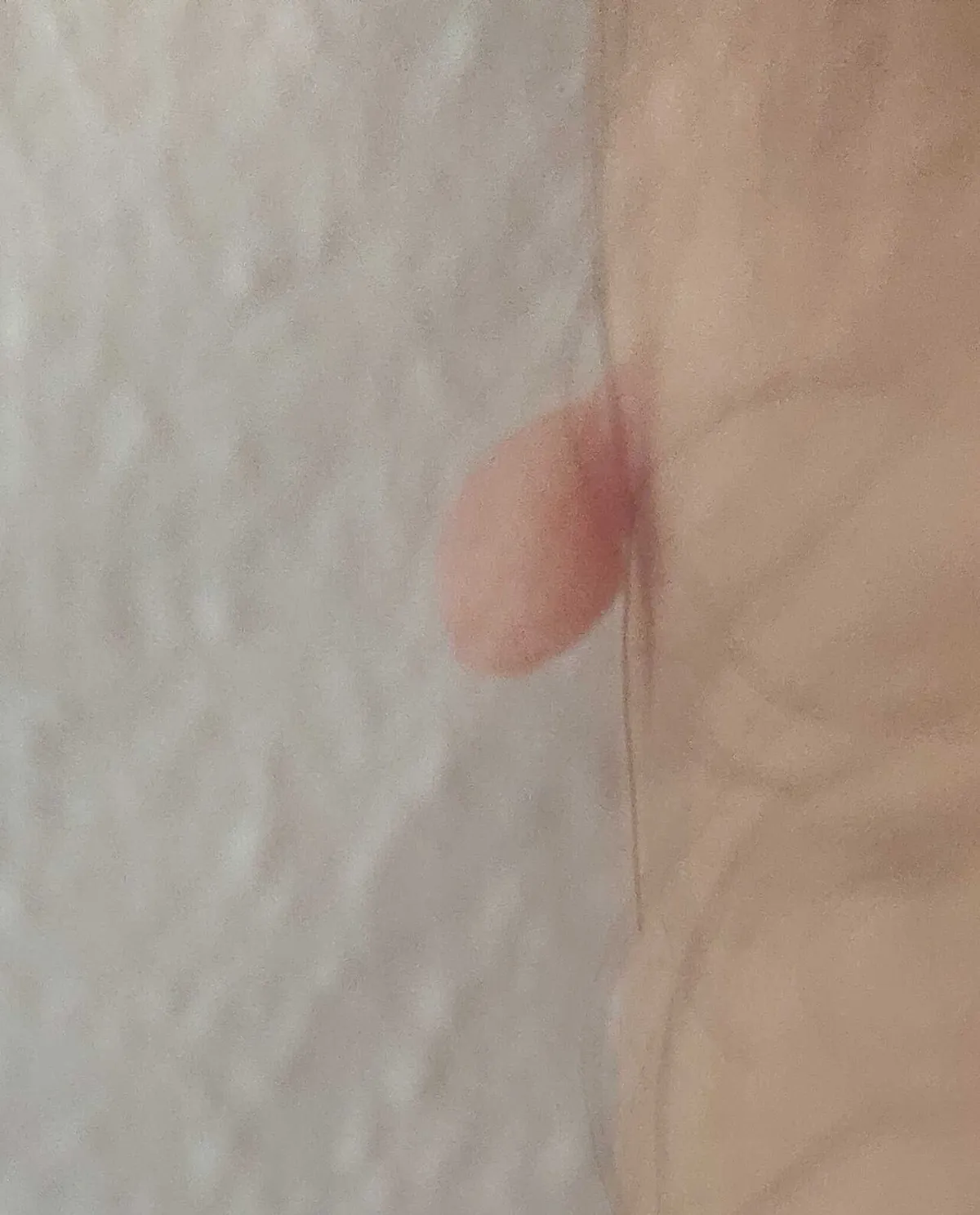
What does a skin tag on the face look like?
The American Academy of Dermatology (AAD) says skin tags may be the same color as your skin or darker, that some are pink and others turn red when irritated, and that you may see one dangling from a stalk while another is firmly fixed to the skin. The NHS describes them as soft growths that look like they're hanging off the skin, ranging from about 2 mm to 5 cm.
- Texture: soft, smooth and squishy, like a tiny flap or balloon of skin.
- Color: usually skin-colored, though they can be darker than the surrounding skin, pink, or red when irritated.
- Where on the face: eyelids, the skin around the eyes, and along the jaw and neck where collars and necklaces rub.
- Feel: painless, unless twisted, nicked by a razor or rubbed by glasses.
Why do skin tags form, and who gets them?
Friction is the main trigger. The AAD says they usually develop where skin has been rubbing against skin, jewelry, or clothing, which is why the eyelids, neck creases, underarms, groin and the skin under the breasts are common spots.
Some people are more prone. The AAD lists being overweight, pregnant or having loose skin, and a higher risk with diabetes, metabolic syndrome or a blood relative who has skin tags. The NHS links type 2 diabetes to skin tags because severe insulin resistance is thought to drive their growth, and pregnancy because of hormonal changes. DermNet adds high growth-factor levels, as in pregnancy or acromegaly, and possibly human papillomavirus.
Skin tags are not contagious and are not cancer. The AAD does flag one pattern: suddenly developing many skin tags is rare but can be a sign that something is going on inside your body, so see a dermatologist if that happens. Because diabetes raises the risk, several new tags are also worth mentioning to your primary care doctor.
Is it a skin tag or something else?
DermNet notes that seborrheic keratoses, viral warts or molluscum contagiosum may resemble skin tags, and the AAD warns that you may mistake a wart or even a skin cancer for a skin tag. On the face, these are the common look-alikes:
| Growth | What it looks like | How it differs from a skin tag |
|---|---|---|
| Skin tag | Soft, smooth flap on a stalk, skin-colored or slightly darker | Squishy; moves easily; grows where skin rubs |
| Filiform wart | Thin, finger-like spiky growth, often near the mouth, nose or eyes | Rough, firmer, caused by a virus and can spread |
| Molluscum contagiosum | Smooth, pearly, dome-shaped bumps with a central dimple | Caused by a virus; often in clusters; no stalk |
| Seborrheic keratosis | Waxy, warty, stuck-on brown spot | Looks pasted on rather than hanging |
| Dermatosis papulosa nigra | Many small, firm, dark bumps on cheeks and neck | Darker, firmer, more numerous; mainly on deeply pigmented skin |
| Mole | Round brown or skin-colored bump | Firmer and dome-shaped; may have hairs |
| Skin cancer | Shiny bump, sore or dark spot | Grows, bleeds, crusts, changes color or won't heal |
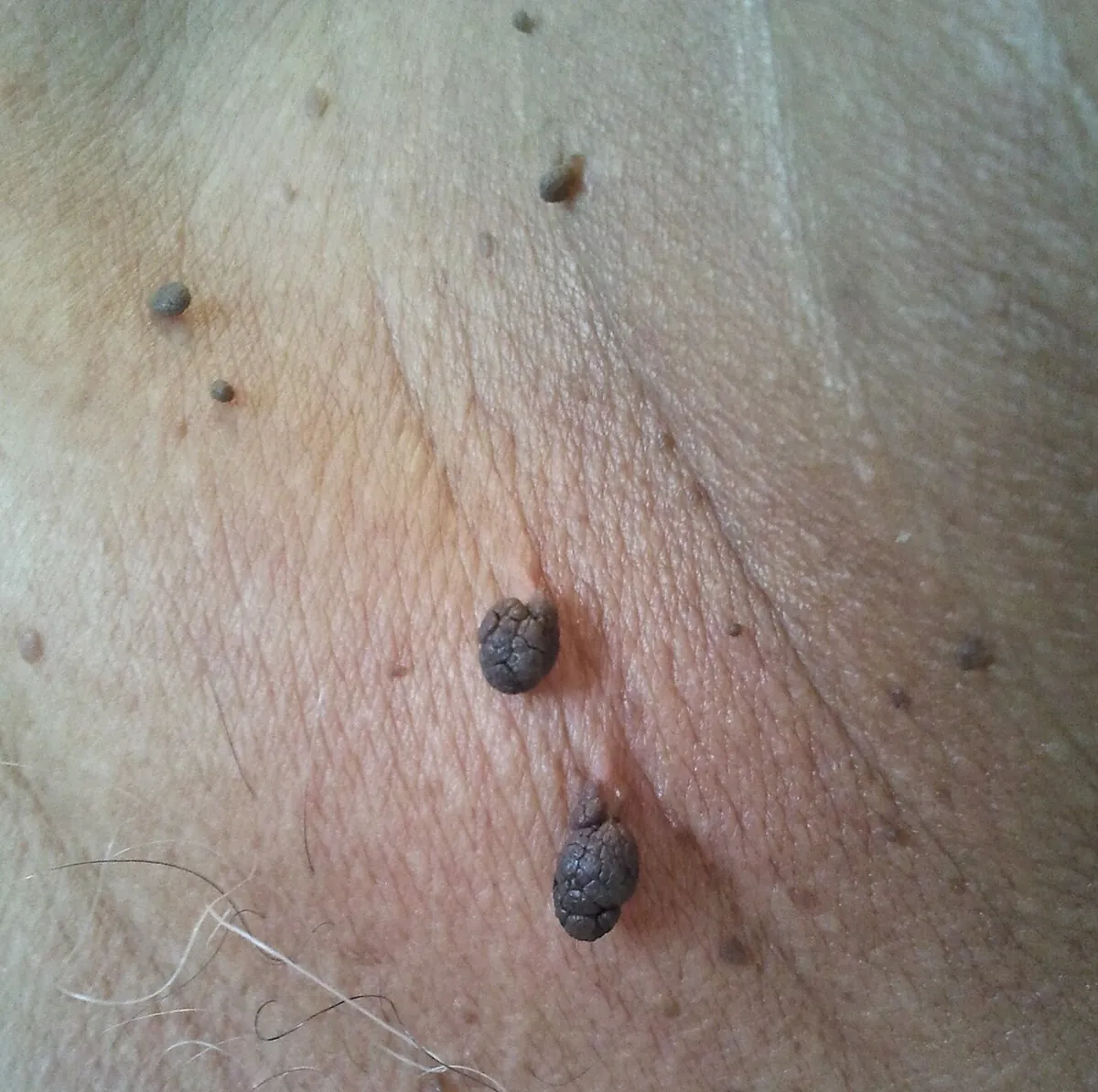
For the brown, flatter growths, see our guides to seborrheic keratosis and dermatosis papulosa nigra. Tiny white dots under the eyes are more often milia.
Do skin tags on the face need to be removed?
No, unless they bother you. The AAD says a skin tag only needs removal if it becomes irritated or bleeds, develops on your eyelid and affects your eyesight, or becomes painful, especially suddenly. Rubbing from glasses, a mask strap, a necklace or shaving can make a tag sore or bleed. Many people remove facial tags for appearance, which is a reasonable choice; the AAD notes insurers consider that cosmetic and rarely cover it.
How a dermatologist removes skin tags
The AAD says a dermatologist can quickly and safely remove one or more skin tags during an office visit, usually without a follow-up. The method depends on size and location:
- Snip excision: the area is numbed and the tag is cut off with sterile scissors or a blade, then a solution stops the bleeding.
- Cryosurgery: liquid nitrogen freezes the tag, which falls off with the blister or scab. Sometimes only the base is frozen and the tag is then snipped.
- Electrodesiccation: a tiny needle destroys the tag; the scab heals in one to three weeks.
Tags on or near the eyelid need extra care because of the eye beneath, so a dermatologist or eye doctor should handle those. On brown and black skin, ask how the chosen method might affect pigment, since freezing and burning can leave lighter or darker marks. If you need a referral, you can find a dermatologist near you.
Why shouldn't you cut or tie off a skin tag at home?
Online videos make snipping, tying off with thread or floss, or "burning" a tag look easy. The NHS says do not try to remove a skin tag yourself unless a GP recommends it, because of the risks of infection, bleeding and scarring. The AAD calls home removal essentially performing at-home surgery and warns it can lead to a serious infection or uncontrolled bleeding that sends people to the emergency room. Skin tags have their own blood supply, so even a small one can bleed more than you expect.
The bigger risk is the diagnosis. If the growth you remove is actually a skin cancer, the AAD says microscopic cancer cells can be left behind to grow and spread, and the evidence a pathologist needs is gone. On the face, any scar or dark mark is also highly visible. Our guide to skin cancer signs with pictures shows the growths that should never be removed at home.
What about creams, pens and wart removers?
Skip them. The AAD says products you can use at home to remove skin tags are not recommended and that the FDA warns people not to use them. In 2022 the FDA told Amazon in a warning letter that there are no over-the-counter drugs that can be legally sold for mole or skin tag removal and that self-treatment can delay a cancer diagnosis. Wart remover is no better: the AAD explains that skin tags are soft and wart remover can damage your skin, causing scarring or irritation.
What about FDA-cleared freezing kits?
Some freezing kits are a different category: they are medical devices, and the FDA has cleared a few for over-the-counter treatment of skin tags in adults. For example, the clearance letter for Compound W Skin Tag Remover covers the OTC treatment of skin tags in adults age 22 years or older. Clearance means the FDA found the device substantially equivalent to one already on the market. It does not make the kit right for your face.
The labels themselves set the limits. The maker warns that contact with eyes may cause blindness and that misuse can cause burns and permanent scarring of healthy skin. The Canadian label for the same kit, as listed by the retailer Well.ca, says do not treat any growth that is located on the eyelids, face or genitals, not to use it if you have diabetes or poor circulation, not to use it on tags larger than 3 mm, and to consult a doctor if you are unsure the growth is a skin tag. A facial tag, near the eyes, that you haven't had diagnosed meets several of those exclusions at once. Leave facial tags to a dermatologist.
When should you see a doctor about a skin tag?
- It bleeds, hurts, turns dark red or black, or gets repeatedly caught on glasses or clothing.
- It is on your eyelid or affects your vision.
- It grows, changes color, or looks different from your other tags.
- Many new tags appear in a short time.
- You are not sure it is a skin tag at all.
A tag that suddenly turns dark or painful is a reason for a visit, not for pulling it off.
Can you prevent skin tags?
The NHS says they cannot be prevented. Reducing friction where you can, such as loosening tight collars or swapping a necklace that rubs, may help a particular tag stay calm. Because diabetes and metabolic syndrome raise the risk, a check-up is sensible if you are getting many new tags.
Pori's photo diary can keep dated photos of a facial tag so you can show a dermatologist whether it has changed. It does not examine growths or tell a skin tag from a wart or skin cancer.
Frequently asked questions
What causes skin tags on the face?
Skin tags form mostly where skin rubs against skin, clothing or jewelry, such as the eyelids and neck. They are more common with extra weight, pregnancy, diabetes, metabolic syndrome and a family history of skin tags.
Are skin tags on the face dangerous?
Skin tags themselves are harmless and not contagious. The risk is mistaking something else for one, such as a wart or a skin cancer. A growth that bleeds, changes color, grows or looks different from your other tags should be checked.
Can I cut off a skin tag on my face?
No. The NHS and the American Academy of Dermatology advise against removing skin tags yourself because of the risk of bleeding, infection and scarring, and because a skin cancer removed at home can leave cancer cells behind and go undiagnosed.
Do skin tag removal creams or patches work?
The FDA has approved no over-the-counter drugs for removing skin tags or moles and has warned that such products can cause injuries and scarring. Wart removers can also damage the skin around a soft skin tag.
Can I use an FDA-cleared freezing kit on a facial skin tag?
A few freezing kits are FDA-cleared for skin tags in adults, but their labels warn of burns, scarring and blindness if the product reaches the eyes, and one kit's label says not to use it on the face or eyelids. Have facial tags removed by a dermatologist.
How do dermatologists remove skin tags on the face?
They snip the tag off after numbing the skin, freeze it with liquid nitrogen, or destroy it with a small electric needle. It is a quick office procedure, and insurance usually treats removal for appearance as cosmetic.
Sources
- American Academy of Dermatology: Skin tags: Why they develop, and how to remove them
- American Academy of Dermatology: 5 reasons to see a dermatologist for mole, skin tag removal
- NHS: Skin tags
- DermNet: Skin tag
- FDA: Warning letter to Amazon.com on mole and skin tag removal products (2022)
- FDA 510(k) clearance K242803: Compound W Skin Tag Remover
- Compound W: Freeze Off Skin Tag Remover directions and warnings
- Well.ca: Compound W Skin Tag Remover (Canadian label warnings)
Pori is a wellness and skincare education app, not a medical device. This article is for general information and isn't medical advice. For anything that worries you, see a dermatologist.