Pori

- Warts on the face are caused by HPV and are usually flat warts (small, smooth, flat-topped bumps in groups) or filiform warts (thin, thread-like growths near the eyes, nose or mouth).
- They are contagious and spread on your own skin through shaving, scratching and picking; on brown and black skin, flat warts can look tan or dark.
- OTC wart removers such as 17% salicylic acid are labeled not for use on the face; they can blister, scar or leave dark or light marks.
- Dermatologists use freezing, snipping, 5-fluorouracil, trichloroacetic acid, lasers or prescription creams; warts can take months to years to clear without treatment.
Warts on the face are small growths caused by the human papillomavirus (HPV), and on the face they are usually one of two types: flat warts, which are small, smooth, flat-topped bumps that often come in groups, and filiform warts, which are thin, thread-like growths near the eyes, nose or mouth. They are contagious and often fade on their own, but over-the-counter wart acids are labeled not for use on the face, so facial warts are best treated by a doctor.
Pori does not diagnose skin conditions; its selfie scans and photo diary in Pori can help you keep dated, consistent photos to show a dermatologist and see whether treatment is working.
This guide shows what each type looks like on different skin tones, why they spread on the face, what they are often confused with, and the treatments dermatologists use instead of drugstore wart removers.
What do warts on the face look like?
Flat warts (verruca plana)
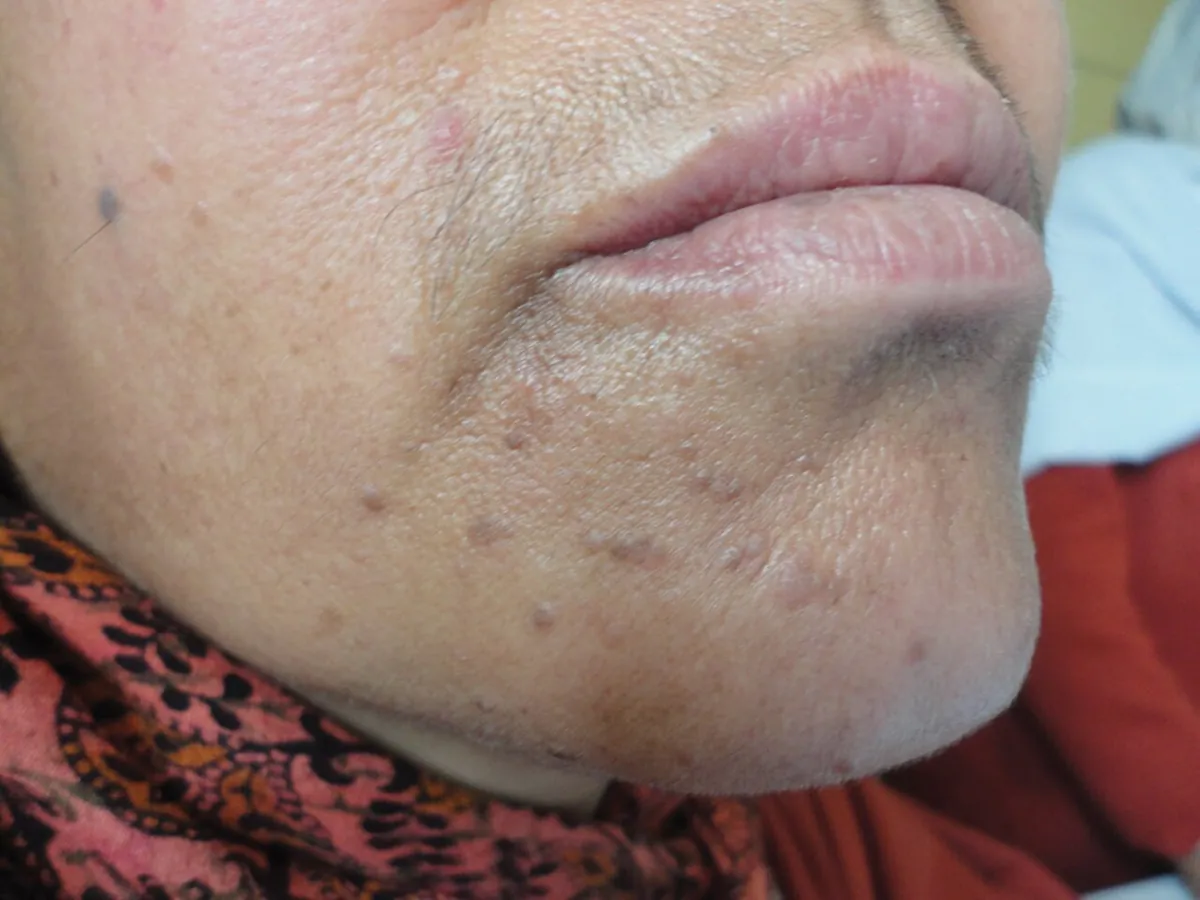
The AAD says flat warts can develop anywhere on the skin but are common on the face. They are smaller than common warts and have a smooth, flat surface. They tend to appear in clusters, and dozens or even hundreds can show up on the neck, legs or beard area.
- Children often get them on the cheeks or forehead.
- Adults tend to get them where hair is removed, such as the beard area or the legs.
- Color: the NHS describes plane (flat) warts as flat and sometimes yellow, and notes you can have many.
Filiform warts (verruca filiformis)
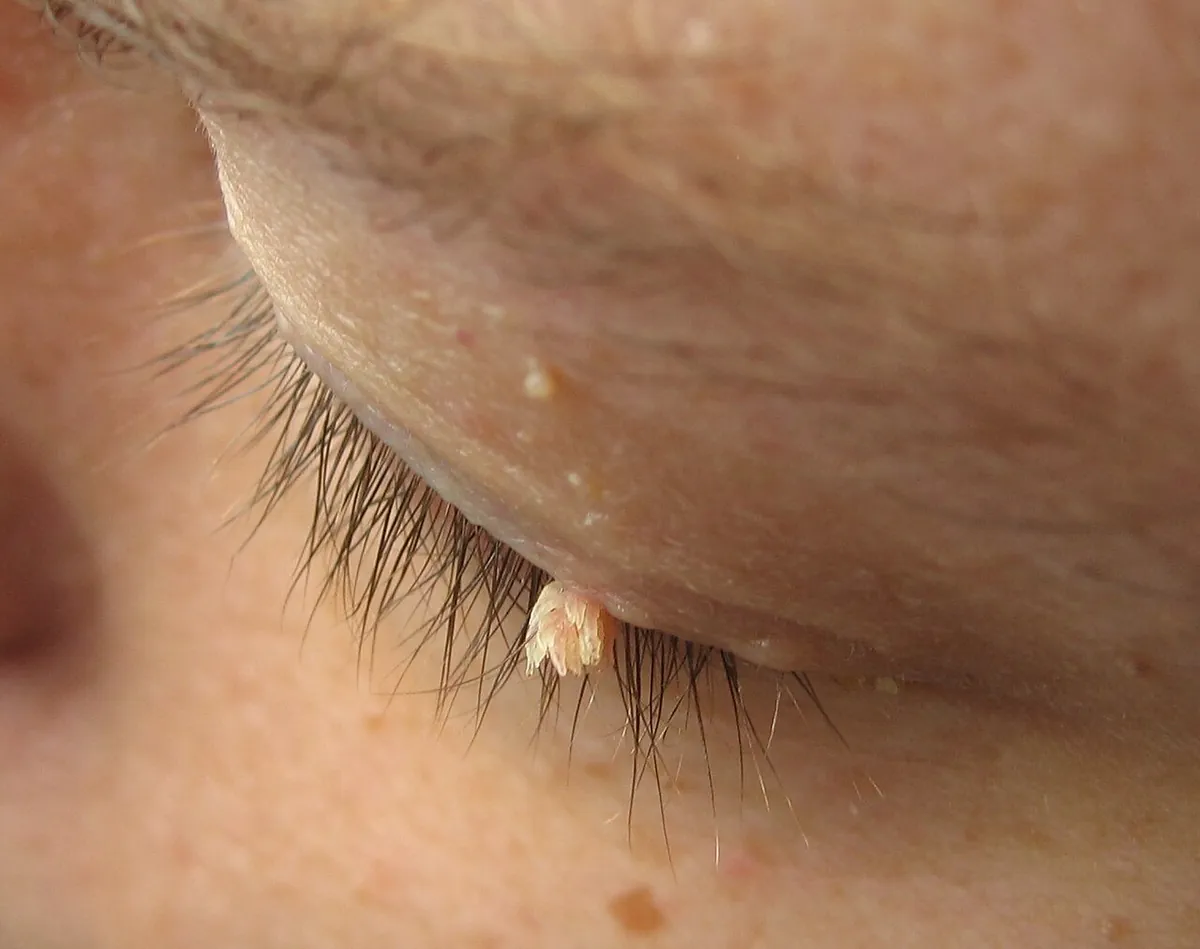
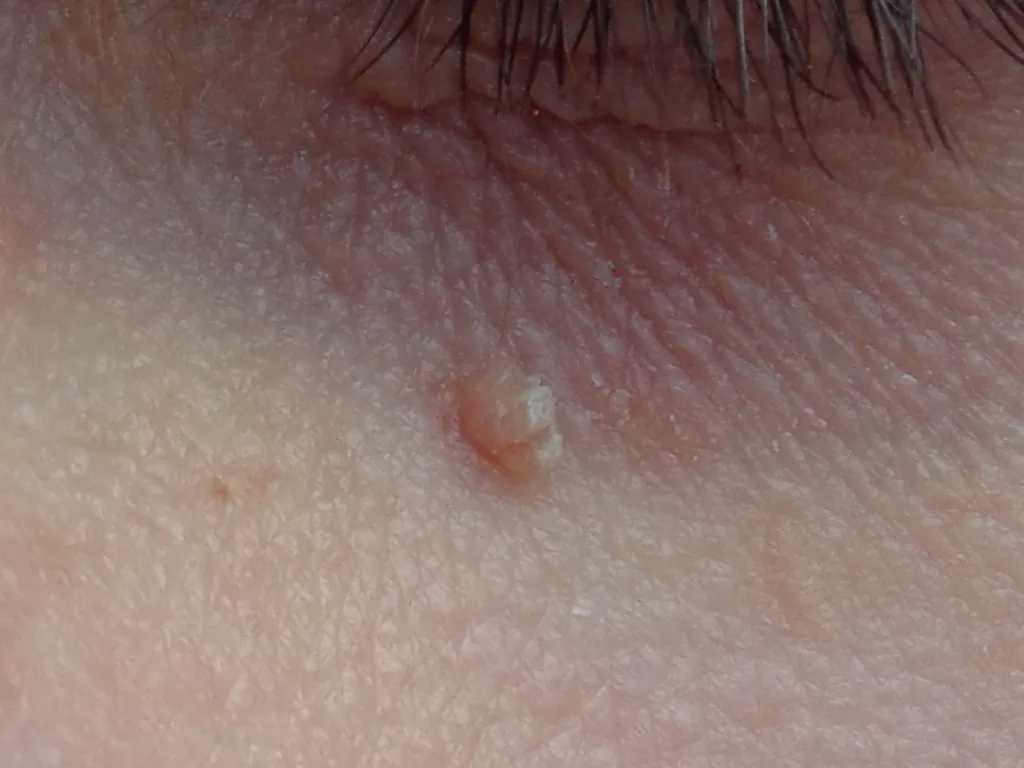
Filiform warts look very different. The AAD says they look like they have tentacles or threads sticking out of them and often grow around the mouth, eyes or nose. DermNet describes them as fine, finger-like projections rising from a narrow base. Unlike flat warts, they do not form clusters, so you often see just one or two.
Common warts
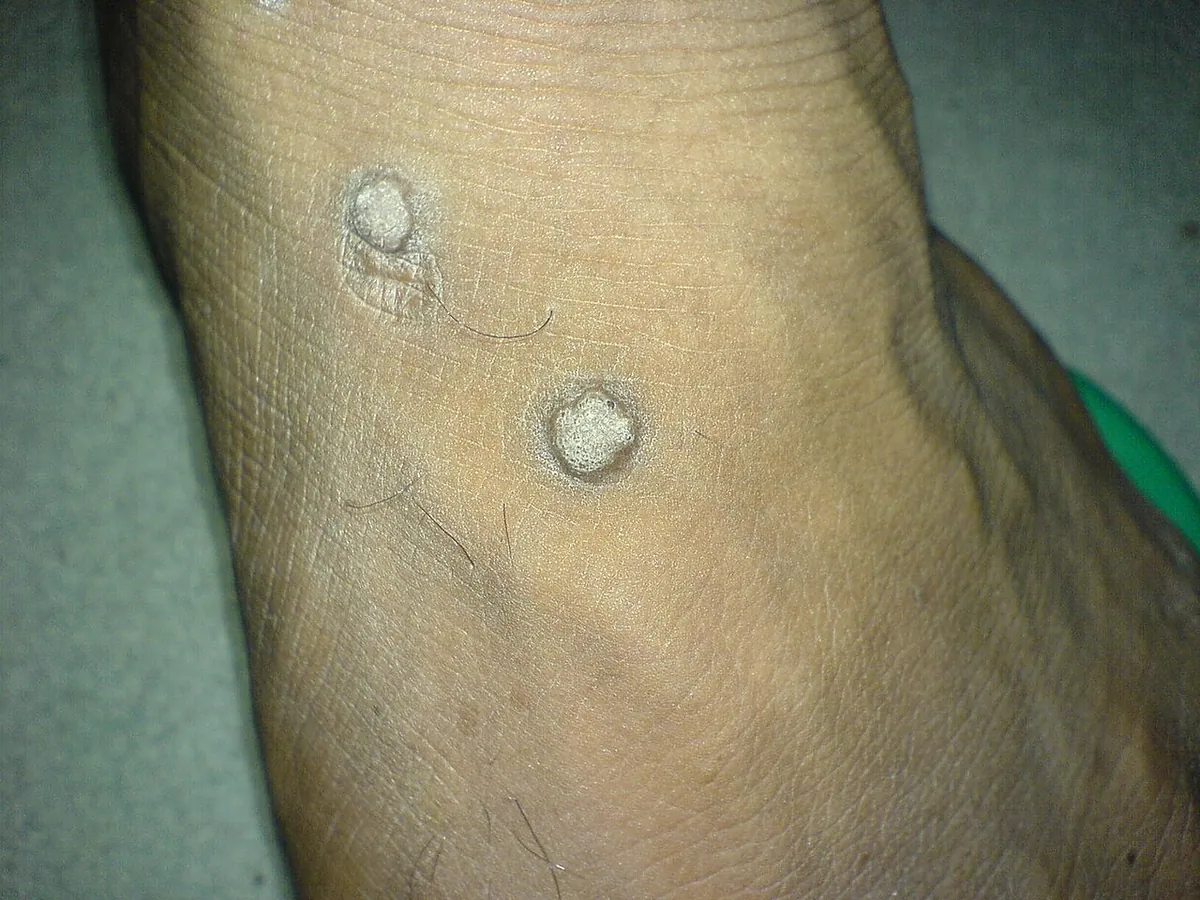
Common warts (verruca vulgaris) are round or oval, rough bumps. They are much more typical on the fingers, around the nails, on the backs of the hands, elbows and knees. A rough wart on the face is still worth showing a doctor, because several other growths can look similar.
How warts look on brown and black skin
The NHS notes warts are usually skin-colored but can look darker on black or brown skin. Flat warts on darker skin can show up as small tan, brown or darker flat bumps, which makes them easy to mistake for dark spots, freckles or dermatosis papulosa nigra. Treatment choice matters more on darker skin: DermNet notes that a hard freeze with liquid nitrogen can leave a permanent white mark.
What causes warts on the face, and are they contagious?
All warts are caused by HPV. DermNet says flat warts are mainly caused by HPV types 3 and 10.
Warts are contagious. The AAD says you can spread the virus that causes it to other people and to other parts of your body, and a wart stays contagious until you can no longer see or feel it. The NHS adds that the virus spreads through close skin contact and contaminated surfaces, more easily when skin is wet or damaged, and that warts can take months to appear after exposure.
On the face, the most common way warts multiply is by spreading on your own skin:
- Shaving: the AAD warns that shaving over a wart spreads the virus through tiny tears in the skin. DermNet notes shaving can spread flat warts across the beard area.
- Scratching: scratching can carry the virus along a line, so flat warts often appear in a streak.
- Picking: picking at a filiform wart can seed new ones nearby.
The AAD notes that a weakened immune system, from a medical condition or medication, can keep warts from clearing.
Is it a wart or something else?
| Condition | How it differs from a wart |
|---|---|
| Molluscum contagiosum | Shiny, pearly domes with a central dimple; common in children |
| Skin tags | Soft, smooth flaps of skin on a thin stalk; no threads or rough surface |
| Dermatosis papulosa nigra | Small dark brown or black bumps on the cheeks of people with darker skin; not contagious and do not spread by shaving |
| Seborrheic keratosis | Waxy, "stuck-on" brown growths in adults, usually larger, not contagious |
| Milia | Hard white dots under the skin, often around the eyes |
| Closed comedones | Small skin-colored acne bumps in oily areas; they come and go with breakouts |
| Actinic keratosis | Rough, scaly patches on sun-exposed skin in adults; needs a doctor's check |
For more possibilities, see our guide to bumps on the face that are not acne.
Why shouldn't you use OTC wart removers on your face?
Drugstore wart removers are made for the thick skin of hands and feet. Many contain strong salicylic acid, such as 17% in some gels and liquids, and others are freezing kits. Their labels and health agencies are clear that they are not for the face.
- The label says so. The DailyMed label for Compound W gel (17% salicylic acid) says do not use on moles, birthmarks, warts with hair growing from them, genital warts or warts on the face or mucous membranes. It also says not to use it if you have diabetes or poor blood circulation.
- Health agencies agree. The NHS says of pharmacy wart creams, plasters and sprays: "You should not use these treatments on your face." The AAD lists at-home salicylic acid for flat warts "(not on the face)".
- The risk is real. The AAD warns that salicylic acid can cause pain, bleeding or blisters. On the face, a chemical burn or blister sits where everyone can see it, close to the eyes and lips, and healing skin can leave a scar or a dark or light mark. That risk is higher on brown and black skin, which is prone to dark marks after irritation.
- It may not be a wart. Several growths on the face look like warts, and acid on a mole or a skin cancer can hide warning signs.
The same goes for home remedies you see online: cutting or tying off a filiform wart, burning it, or using a wart acid "just a little". The acne-strength salicylic acid in a face cleanser is a much lower concentration and will not remove a wart.
How do dermatologists treat warts on the face?
Treatment depends on the type of wart, how many there are and your skin tone. The AAD lists these in-office options:
- For flat warts: cryotherapy (freezing), 5-fluorouracil, trichloroacetic acid and laser therapy. Prescription creams such as tretinoin or imiquimod are also used for flat warts, often off-label, as a pediatric review in Contemporary Pediatrics describes. These work slowly over weeks to months.
- For filiform warts: cryotherapy, cutting the wart off (excision), or electrosurgery and curettage (burning and scraping). Because filiform warts grow on a narrow base, removal is often quick.
Each option has trade-offs on the face. DermNet notes cryotherapy can blister for days to weeks and that a hard freeze may leave a permanent white mark, and that electrosurgery leaves a scar. A dermatologist will usually choose the gentlest option that fits, and may treat a few warts first to see how your skin responds.
How long does it take?
Warts are stubborn. The AAD says that without treatment they can take from a few months to years to go away. DermNet reports that in children, about 50% of warts disappear within six months and 90% within two years. Flat warts often need several treatment visits, and new ones can appear while old ones fade. Waiting is a reasonable choice for small, painless flat warts in children.
How can you stop warts from spreading on your face?
- Do not pick, scratch or bite warts or the skin around them.
- Shave around them, or switch to an electric trimmer that does not cut the skin while you have warts in the beard area.
- Use your own towel and razor, and replace razors often.
- Wash your hands after touching a wart, as the NHS advises.
- Keep skin healthy: warts spread more easily through damaged skin, so treat dry, cracked or irritated skin.
Photos of the same area every few weeks show whether warts are fading or spreading, which helps your dermatologist decide when to switch treatments.
When should you see a doctor about a wart on your face?
The AAD recommends seeing a dermatologist for any warts on the face. Make an appointment, or find a dermatologist, especially if:
- a growth is changing, bleeding, painful, itchy or burning;
- you have many warts, or they keep spreading;
- a wart is on or near your eyelid or lips;
- you have a weakened immune system or diabetes;
- you are not sure it is a wart, especially if you are an adult and it appeared on sun-exposed skin. Our skin cancer signs guide explains what to watch for.
Frequently asked questions
What do flat warts on the face look like?
Flat warts are small, smooth, flat-topped bumps that are often skin-colored, pink, yellowish or light brown, and darker on brown and black skin. They usually appear in groups on the cheeks, forehead or beard area, sometimes in a line where skin was scratched or shaved.
Can I use Compound W or salicylic acid on a wart on my face?
No. OTC wart removers are labeled not for use on warts on the face. The acid is strong enough to blister and scar facial skin, and the NHS and AAD both advise against using these products on the face.
Are warts on the face contagious?
Yes. The virus spreads through skin contact and shared items, and you can spread it to other parts of your own face by shaving, scratching or picking.
What is a filiform wart?
A filiform wart is a long, thin wart with thread-like or finger-like projections, usually around the eyes, nose or mouth. Unlike flat warts, they do not usually form clusters. A dermatologist can freeze or snip them off.
Do warts on the face go away on their own?
Often, yes, but slowly. The AAD says it can take a few months to years. In children, about half of warts clear within six months and most within two years.
How do dermatologists remove warts on the face?
Options include freezing with liquid nitrogen, cutting off filiform warts, electrosurgery and curettage, 5-fluorouracil, trichloroacetic acid, laser treatment and prescription creams such as tretinoin. The choice depends on the wart type and your skin tone.
Sources
- American Academy of Dermatology: Warts: Signs and symptoms
- American Academy of Dermatology: Warts: Overview
- American Academy of Dermatology: Warts: Diagnosis and treatment
- American Academy of Dermatology: Warts: How to treat at home
- NHS: Warts and verrucas
- DermNet: Viral warts
- DailyMed: Compound W (salicylic acid) gel label
- Contemporary Pediatrics: Flat warts (verruca plana)
Pori is a wellness and skincare education app, not a medical device. This article is for general information and isn't medical advice. For anything that worries you, see a dermatologist.