 Pori

- An actinic keratosis is a rough, scaly spot from years of sun or tanning beds, often felt as a sandpaper patch before it is visible.
- It is precancerous: the risk for one spot is low, but some become squamous cell carcinoma, so dermatologists usually treat them.
- Single spots are frozen or scraped off; many spots are treated as a field with prescription creams or photodynamic therapy.
- Daily broad-spectrum SPF 30+, shade and hats prevent new ones; see a dermatologist for any rough spot that is thick, tender, bleeding or growing.
An actinic keratosis (AK) is a rough, scaly spot caused by years of sun or tanning-bed exposure. It is precancerous: most never become cancer, but some turn into squamous cell carcinoma, a common and treatable skin cancer. AKs often feel like sandpaper before you can see them and appear on the face, ears, balding scalp, lips, neck and the backs of the hands. They are common and easy to treat, and any you find are worth showing to a dermatologist.
Pori does not diagnose skin conditions. Its selfie scans and photo diary can help you keep dated, consistent photos of your face to show a dermatologist and to see how treated skin heals.
What does an actinic keratosis look and feel like?
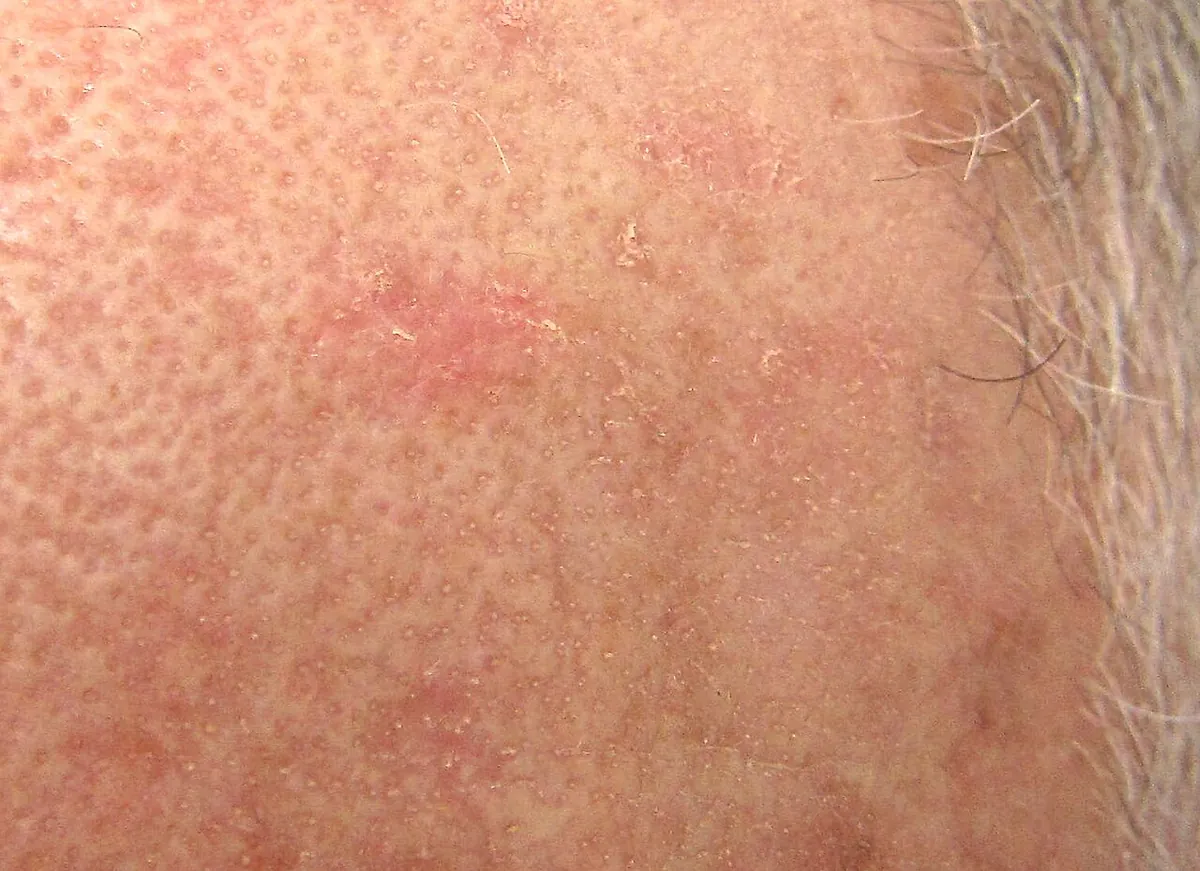
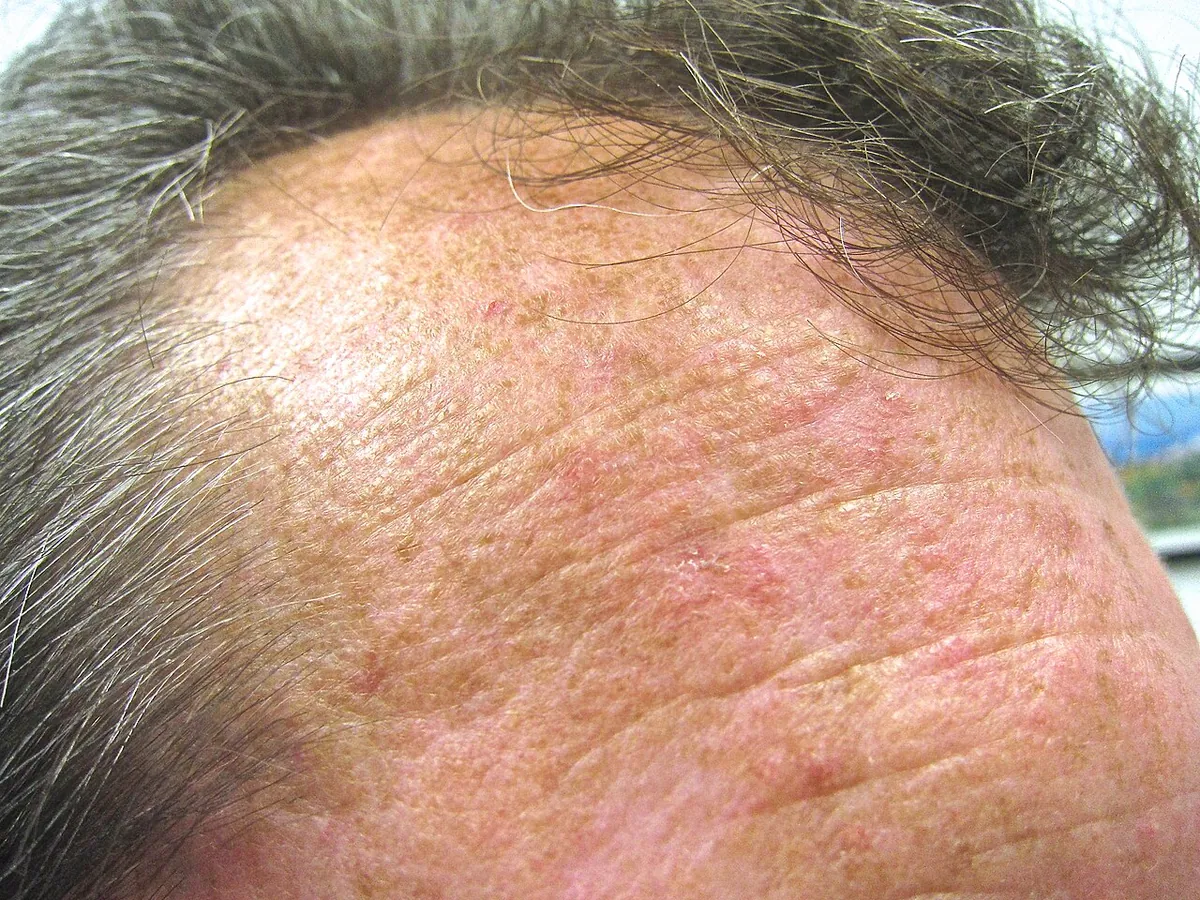
The American Academy of Dermatology (AAD) notes that you can often feel an AK before you see it: running a finger over the skin finds a small, dry, rough patch, often described as sandpaper. Over time it may become a visible scaly bump or a raised, rough patch.
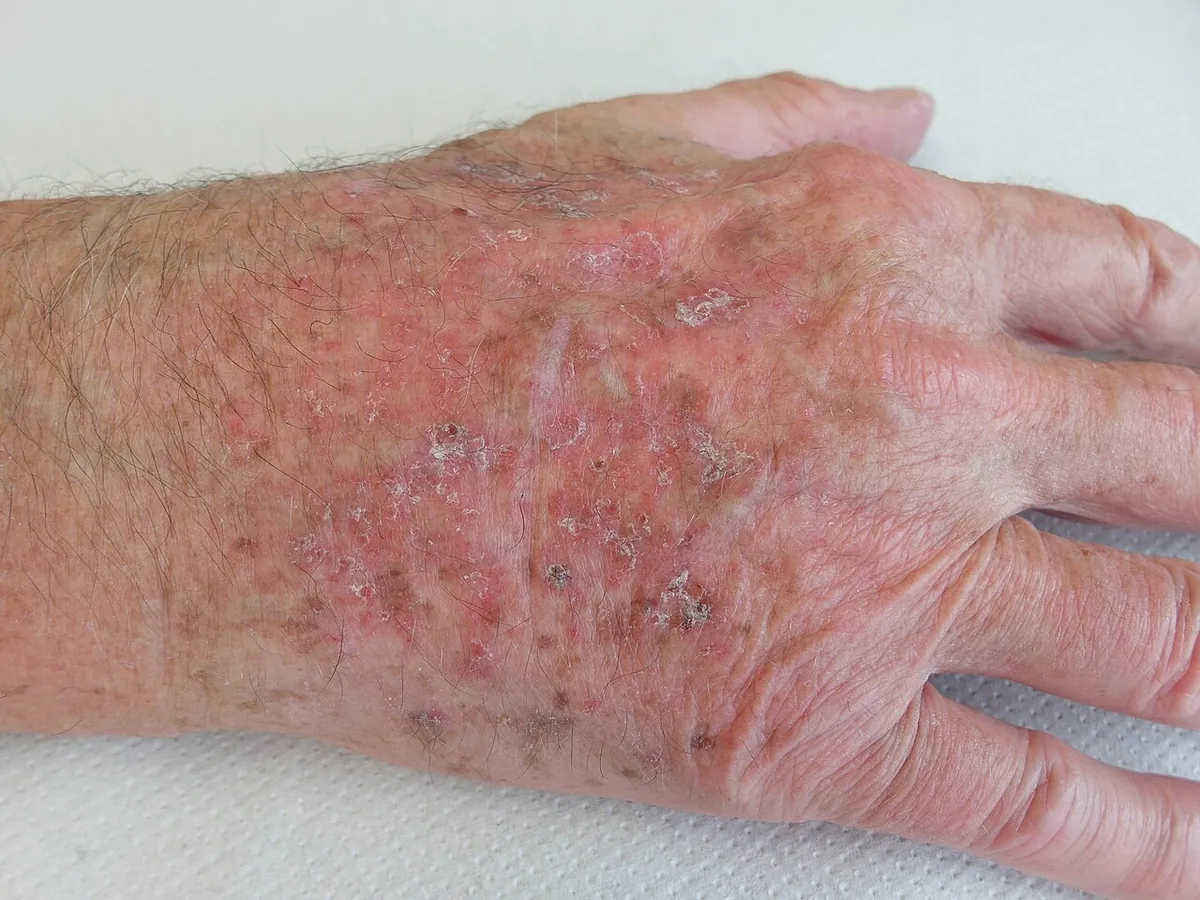
- Color: the AAD lists red or pink, skin-colored, gray, yellow, brown or tan, and white. On skin of color, AKs more commonly look like age spots.
- Feel: they can itch, burn or sting, feel tender, catch on clothing or bleed.
- Where: the AAD lists the face, ears, balding scalp, hands, neck, or lips, the places that get the most sun.
Some AKs look like a pimple, a patch of irritated skin or a new age spot, so they are easy to dismiss. A rough patch that keeps coming back in the same place is a common story.
What about the lips?
The same sun damage on the lips is called actinic cheilitis. The AAD describes a dry, scaly lip that doesn't heal, scaly white patches, or loss of color in the lip. It can look like a badly chapped lip that never gets better.
Is an actinic keratosis cancer?
No, it is precancerous. The AAD says some AKs and actinic cheilitis turn into a type of skin cancer called squamous cell carcinoma. The risk for one AK is low. DermNet, the dermatology reference run by New Zealand dermatologists, says a single AK rarely becomes cancer, and that for people with more than 10 AKs the lifetime risk of squamous cell carcinoma is thought to be about 10 to 15%. Some AKs even fade with regular sunscreen use.
Because no one can tell in advance which AK will progress, dermatologists usually treat them. DermNet lists the changes that suggest an AK may be turning into cancer: a tender, thickened, ulcerated, or enlarging actinic keratosis. A horn-like growth is another warning sign; the AAD says a dermatologist should examine it as soon as possible. Our guide to skin cancer signs shows what squamous cell carcinoma looks like.
Who gets actinic keratoses?
They are very common. The AAD estimates that more than 40 million Americans develop actinic keratoses (AKs) each year. DermNet lists the main risk factors:
- fair skin with a history of sunburn;
- many hours outdoors, for work or for sport;
- older age; DermNet notes that up to 25% of people aged 60 and over in parts of Ireland and England have at least one;
- a weakened immune system, for example after an organ transplant;
- visible signs of sun damage, such as wrinkles, sun spots and uneven texture.
The AAD adds tanning beds and sunlamps to the list and notes that many people who develop AKs are otherwise healthy. They are less common on brown and black skin, but they do occur, and there they often look like age spots. AKs are not contagious. If you're not sure what years of sun have done to your face, see our guide to signs of sun damage on the face.
What can be mistaken for an actinic keratosis?
Several common spots look similar. A dermatologist can usually tell them apart by looking and feeling, sometimes with a dermatoscope, and may take a small biopsy if a spot looks thick or does not respond to treatment.
| Condition | What it looks like | How it differs from an AK |
|---|---|---|
| Sun spot (solar lentigo) | Flat tan or brown spot | Smooth; no rough scale |
| Seborrheic keratosis | Waxy brown bump that looks stuck on | Raised and greasy or warty, not sandpaper-like; harmless |
| Squamous cell carcinoma | Thick, scaly growth or sore | Thicker, tender, growing or bleeding; may start from an AK |
| Basal cell carcinoma | Pearly bump or scaly pink patch | Shiny edge or tiny blood vessels; a sore that heals and returns |
| Eczema or seborrheic dermatitis | Red, flaky patches | Itchy, larger, comes and goes and responds to moisturizer or anti-dandruff care |
For stuck-on bumps, see seborrheic keratosis. For flat brown spots, see melasma vs sun spots. For flaky red patches, see seborrheic dermatitis and eczema on the face.
How are actinic keratoses treated?
The AAD says usually, treatment is recommended, and the choice depends on how many AKs you have, where they are, how they look and your health history. Treatments fall into two groups: destroying a single spot in the office, or treating a whole area of sun-damaged skin at home.
In-office treatments for single spots
- Cryotherapy: liquid nitrogen freezes the AK, which crusts or blisters and falls off after a few days.
- Curettage: scraping off a very thick AK, sometimes followed by heat to destroy remaining cells.
- Chemical peel or laser resurfacing: medical-grade versions remove the top layers of skin; the AAD lists laser as an option for lip AKs.
Field treatments for many AKs
When an area has many AKs, the skin around them usually has damage you cannot yet see. Field treatments cover the whole area.
- Prescription creams and gels: 5-fluorouracil (5-FU) cream, imiquimod cream, diclofenac gel and tirbanibulin ointment. The AAD notes that 5-FU can harm an unborn baby, that diclofenac tends to cause less skin reaction than 5-FU, and that tirbanibulin is used for five days in a row on the face or scalp. Redness, crusting and peeling are expected with most of them and usually mean the medicine is working.
- Photodynamic therapy (PDT): a light-sensitizing solution is applied and then activated with blue or red light. The AAD says most people need two sessions about three weeks apart and must avoid daylight for 48 hours after each.
What to expect after treatment
Treated skin looks worse before it looks better. After freezing, the AAD says you may see crusting or a blister, which is normal. After a medical chemical peel the skin is red, swollen and sore for a while, and after laser resurfacing of the lip it heals in one to two weeks. With creams, redness, crusting and peeling build up over the course of treatment and then settle. Some people need more than one round, and new AKs can appear in the same sun-damaged area over the years, which is why follow-up matters. If you use diclofenac gel, the AAD advises protecting the treated skin from the sun.
Two practical points from the AAD: don't calm treated skin with hydrocortisone or other steroid creams, because they will prevent your AK treatment from working, and keep your follow-up visits. Some people need a skin check once or twice a year, and people with a weakened immune system may need visits every few months. DermNet also notes that nicotinamide, a form of vitamin B3, can reduce the number of new AKs in people who get many; ask your dermatologist whether it suits you.
How can you prevent new actinic keratoses?
AKs are a sign of past sun exposure, so protecting your skin now helps prevent new ones and may help existing ones fade. The AAD recommends:
- seeking shade, especially between 10 a.m. and 2 p.m.;
- wearing sun-protective clothing, such as a lightweight long-sleeved shirt;
- using a broad-spectrum, water-resistant sunscreen with an SPF of 30 or higher and reapplying every two hours outdoors;
- avoiding tanning beds;
- checking your skin regularly.
DermNet suggests a broad-spectrum SPF 50+ sunscreen applied at least daily, year-round, to areas with AKs. Don't forget the ears, the scalp if your hair is thin, the backs of the hands and the lips. Our guides on how much sunscreen to use, zinc oxide sunscreen and why tanning harms skin cover the details.
When should you see a dermatologist about a rough spot?
Book a visit for any rough, scaly spot that does not go away within a few weeks. Go sooner if a spot:
- becomes thick, tender or painful;
- grows quickly, bleeds or turns into an open sore;
- forms a hard, horn-like growth;
- is on your lip and does not heal;
- appears while you take medicines that weaken the immune system.
The AAD says squamous cell carcinoma can look like a rough, scaly patch or a sore that doesn't heal, so a dermatologist should look at anything that changes. Find a dermatologist near you, and ask for a full skin check, since people with one AK often have others.
Frequently asked questions
What does an actinic keratosis feel like?
It usually feels like a small rough, dry patch, often compared to sandpaper. You can often feel it before you can see it, and it may itch, sting or catch on clothing.
Is an actinic keratosis cancer?
No, it is precancerous. Most AKs never become cancer, but some turn into squamous cell carcinoma, so dermatologists usually treat them and check the skin regularly.
Can actinic keratosis go away on its own?
Some do fade, especially with daily sunscreen, but many persist or come back. Because no one can predict which will progress, it is best to have them checked and treated.
How do dermatologists remove actinic keratoses?
Single spots are often frozen with liquid nitrogen or scraped off. Areas with many AKs are treated with prescription creams such as 5-fluorouracil, imiquimod, diclofenac or tirbanibulin, or with photodynamic therapy.
Can people with dark skin get actinic keratosis?
Yes, though it is less common. On skin of color, AKs more often look like age spots, so a rough patch on sun-exposed skin is still worth showing a dermatologist.
How do I prevent actinic keratosis?
Limit sun exposure: seek shade at midday, wear a hat and long sleeves, use broad-spectrum SPF 30 or higher every day and reapply outdoors, and avoid tanning beds.
Sources
- American Academy of Dermatology: Actinic keratosis overview
- American Academy of Dermatology: Actinic keratosis signs and symptoms
- American Academy of Dermatology: Actinic keratosis treatment
- American Academy of Dermatology: How to prevent skin cancer
- American Academy of Dermatology: Squamous cell carcinoma signs and symptoms
- DermNet: Actinic keratosis
Pori is a wellness and skincare education app, not a medical device. This article is for general information and isn't medical advice. For anything that worries you, see a dermatologist.