Pori

- Common non-acne bumps are milia, closed comedones, sebaceous hyperplasia, keratosis pilaris, folliculitis, flat warts and fungal acne.
- Milia are hard pearly white dots; sebaceous hyperplasia is yellowish with a central dent; flat warts are flat-topped and often in lines; fungal acne itches and looks uniform.
- Do not squeeze milia, warts or sebaceous hyperplasia: it scars the skin or spreads warts.
- Have a dermatologist check any single shiny bump that grows, bleeds or does not heal.
Small bumps on the face that are not acne are usually milia, closed comedones, sebaceous hyperplasia, keratosis pilaris, folliculitis, flat warts or fungal acne. The quickest clues are color and shape: hard pearly white dots are milia, yellowish bumps with a tiny central dent are sebaceous hyperplasia, flat-topped bumps in a line are flat warts, and itchy, same-sized bumps along the hairline or forehead suggest fungal acne. Most are harmless, and several clear up only with the right treatment, so naming them matters.
Below is a visual guide with a photo for most of them and a comparison table. Pori does not diagnose skin conditions; its selfie scans and photo diary in Pori can help you keep dated, consistent photos to show a dermatologist and see whether treatment is working.
What are these small bumps on my face if they are not acne?
Acne has a mix of blackheads, whiteheads, red papules and pus-filled spots that come and go. The bumps in this guide tend to look more uniform, last longer in one place, or behave in ways acne does not, such as itching, lining up along a shaving path or staying rock hard. Here is how they compare.
| Bump | Looks like | Where | Who gets it | Best clue |
|---|---|---|---|---|
| Milia | Hard, pearly white dots, 1 to 2 mm | Eyelids, under the eyes, cheeks, nose | All ages, very common in newborns | Firm, never red or inflamed, cannot be squeezed out like a pimple |
| Closed comedones | Small skin-colored or whitish bumps with no opening | Forehead, chin, nose | Teens and adults with acne-prone skin | Clusters that feel like texture; a form of mild acne |
| Sebaceous hyperplasia | Soft yellowish or skin-colored bumps, 2 to 6 mm, with a central dent | Forehead, cheeks, nose | Middle-aged and older adults | The tiny dip in the middle, like a doughnut |
| Keratosis pilaris | Tiny rough bumps, sometimes with redness | Cheeks in children; upper arms and thighs in adults | Children and people with dry skin or eczema | Sandpaper feel; worse in winter |
| Folliculitis | Red bumps or pus spots centered on hairs | Beard area, anywhere with hair | People who shave, wax or wear tight gear | Each spot sits around a hair, often after shaving |
| Flat warts | Smooth, flat-topped bumps, skin-colored, pink or brown | Forehead, cheeks, chin, beard area | Children and adults; spread by shaving | Often in lines or groups; contagious |
| Fungal acne (Malassezia folliculitis) | Small, same-sized itchy bumps and pustules | Hairline, forehead, chest, upper back | Teens and young adults, hot humid climates | Itch, uniform size and no blackheads |
Are tiny hard white bumps milia?
If they are pearly white, firm and pinhead-sized, they very likely are. Cleveland Clinic describes milia as small white bumps (cysts) under the surface of your skin formed by trapped dead skin cells. They are common on the eyelids, under the eyes, on the cheeks, forehead and nose. Milia are not acne, are not contagious, and are never red or sore.
Primary milia appear on their own. Secondary milia form after skin damage from burns, blisters or sun exposure, and Cleveland Clinic notes they can also form as a reaction to a heavy skin cream. DermNet adds that primary milia may clear within a few weeks or persist for months. Do not squeeze them: Cleveland Clinic warns that picking can scar or cause infection. A dermatologist can lift them out with a sterile needle, and a retinoid such as adapalene can help prevent new ones. More in our guide to milia under the eyes.
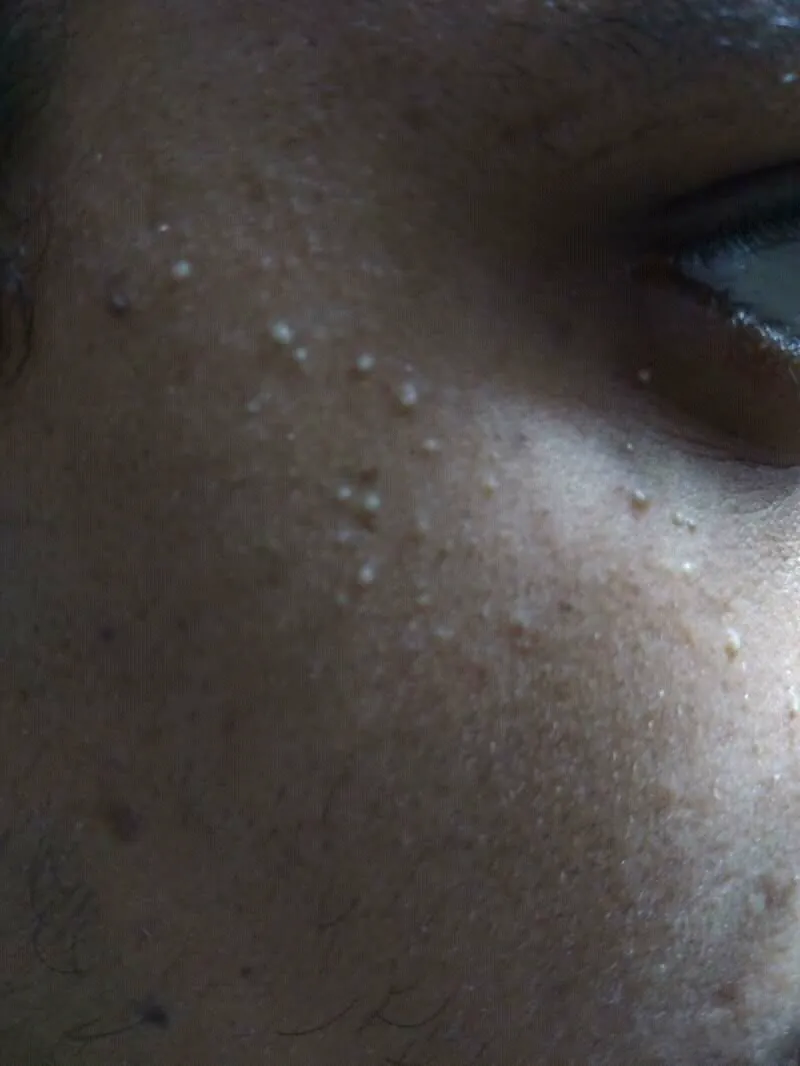
Are skin-colored bumps on my forehead closed comedones?
Often, yes. Closed comedones are whiteheads: pores that are completely blocked, so no dark opening shows. DermNet describes comedones as skin-colored, small bumps frequently found on the forehead and chin. They are technically acne, though many people don't recognize them as such because they rarely turn red.
Triggers include oily hair products and cosmetics, humid conditions and squeezing. DermNet lists comedolytic treatments such as salicylic acid, azelaic acid, benzoyl peroxide, glycolic acid and retinoids, and says improvement can take weeks to months. See closed comedones on the forehead and how to get rid of whiteheads.
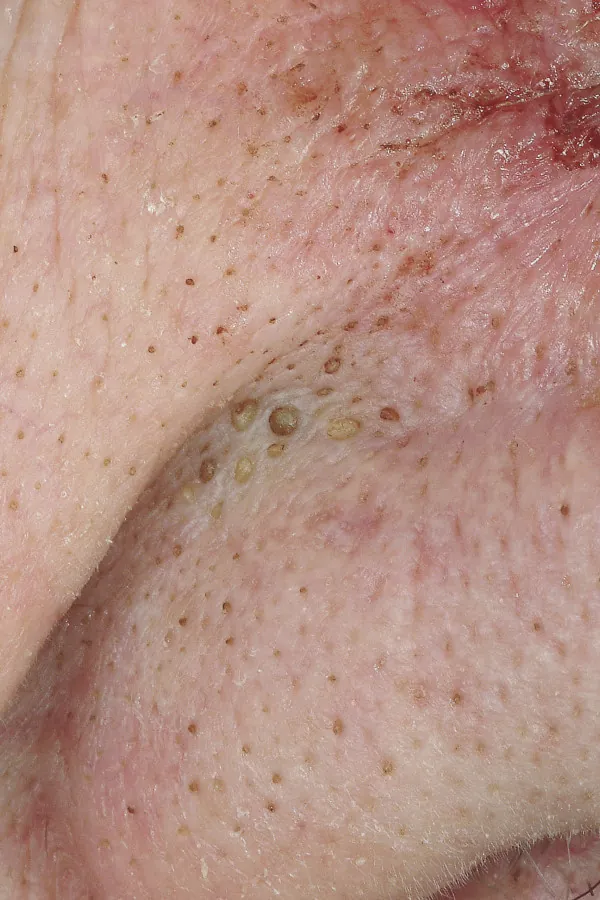
What are yellowish bumps with a dent in the middle?
That pattern is typical of sebaceous hyperplasia, an overgrowth of oil glands. Cleveland Clinic describes the bumps as about 3 mm, usually ranging from 2 to 6 mm, skin-colored, yellow or brown with a little dent in the center, most often on the cheeks, chin, forehead and nose. They are more common from middle age and are not cancer.
The one reason to show them to a doctor is that a shiny bump with a dip in the middle can occasionally be a basal cell carcinoma. Cleveland Clinic notes that a biopsy is rarely needed but is sometimes done to rule that out. Sebaceous hyperplasia does not need treatment. If it bothers you, Cleveland Clinic says in-office procedures such as curettage, or prescription medicines such as isotretinoin, can help, though new bumps can form later. Our sebaceous hyperplasia vs acne guide has more.
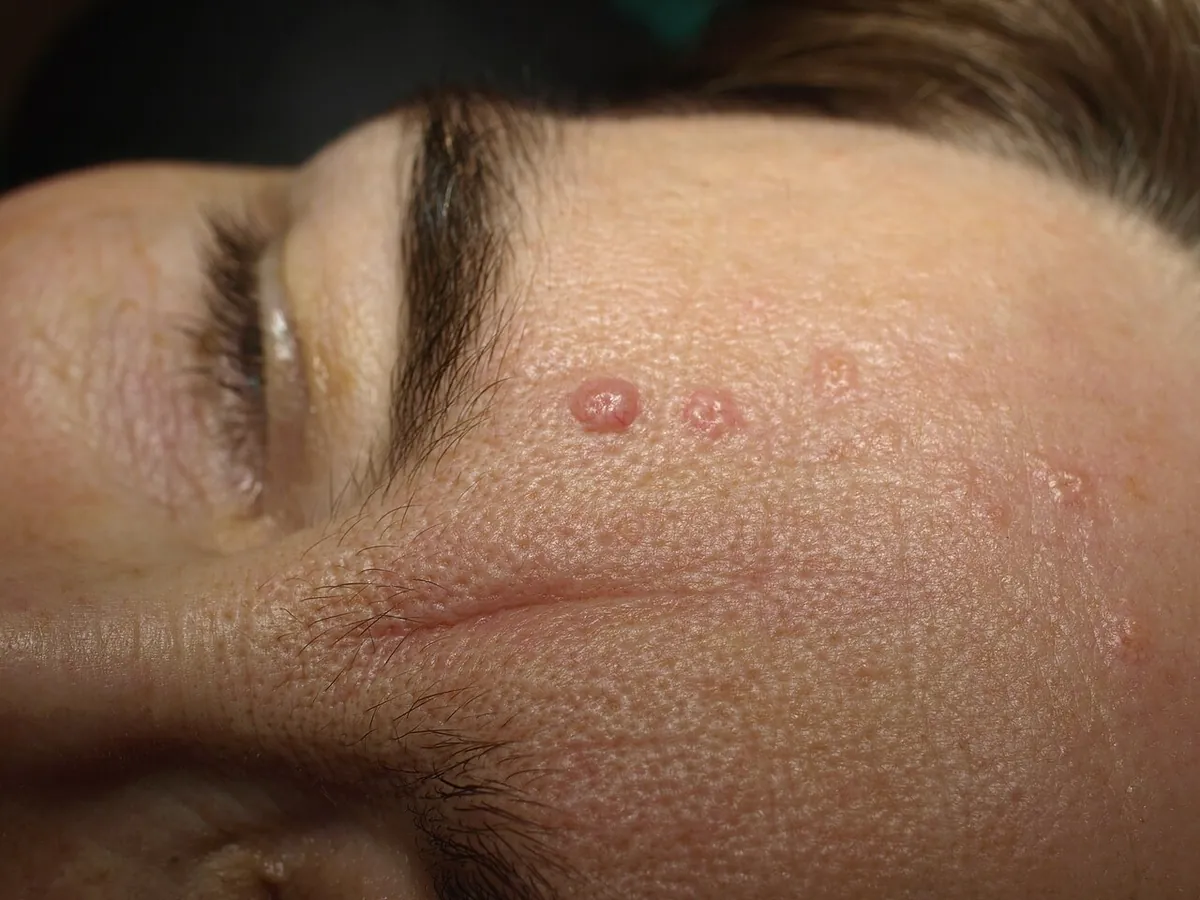
Can keratosis pilaris show up on the face?
Yes, mainly in children. The AAD describes keratosis pilaris as rough-feeling bumps that are plugs of dead skin cells, often mistaken for small pimples or goosebumps. They appear most often on the upper arms and front of the thighs, and the AAD notes that children may have them on their cheeks, where they often sit on slightly red skin.
Keratosis pilaris is harmless and not contagious. Dry skin makes it more noticeable, so many people see it fade in summer and return in winter. Moisturizers with urea or lactic acid smooth it over time. On the face, use them gently and keep away from the eyes. Read more in our keratosis pilaris guide.
Are red bumps in my beard area folliculitis?
If each bump sits around a hair and the breakout followed shaving, waxing or a sweaty workout, folliculitis is likely. The AAD explains that it usually looks like a sudden acne breakout, with a red ring around each spot, and can itch or hurt. It starts when a damaged hair follicle gets infected, often by Staph bacteria that live on the skin.
Shaving, plucking and waxing, tight clothing and gear, and sitting in a poorly maintained hot tub are common causes. Mild folliculitis often clears once you stop what caused it. Razor bumps (pseudofolliculitis barbae) look similar and are common in people with curly hair. See razor bumps vs acne, ingrown hairs after shaving and folliculitis vs acne.
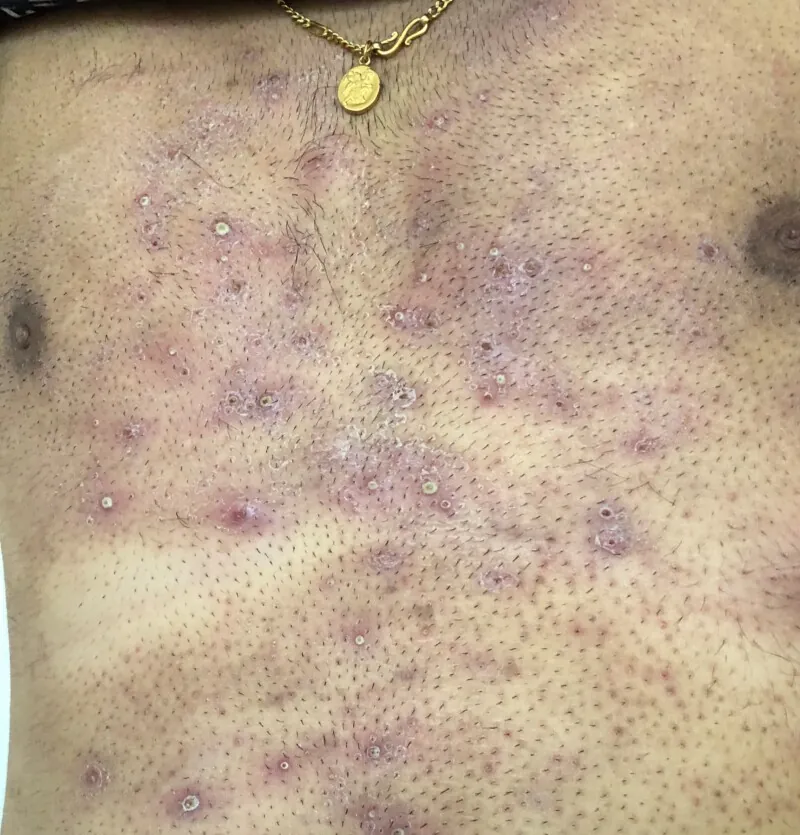
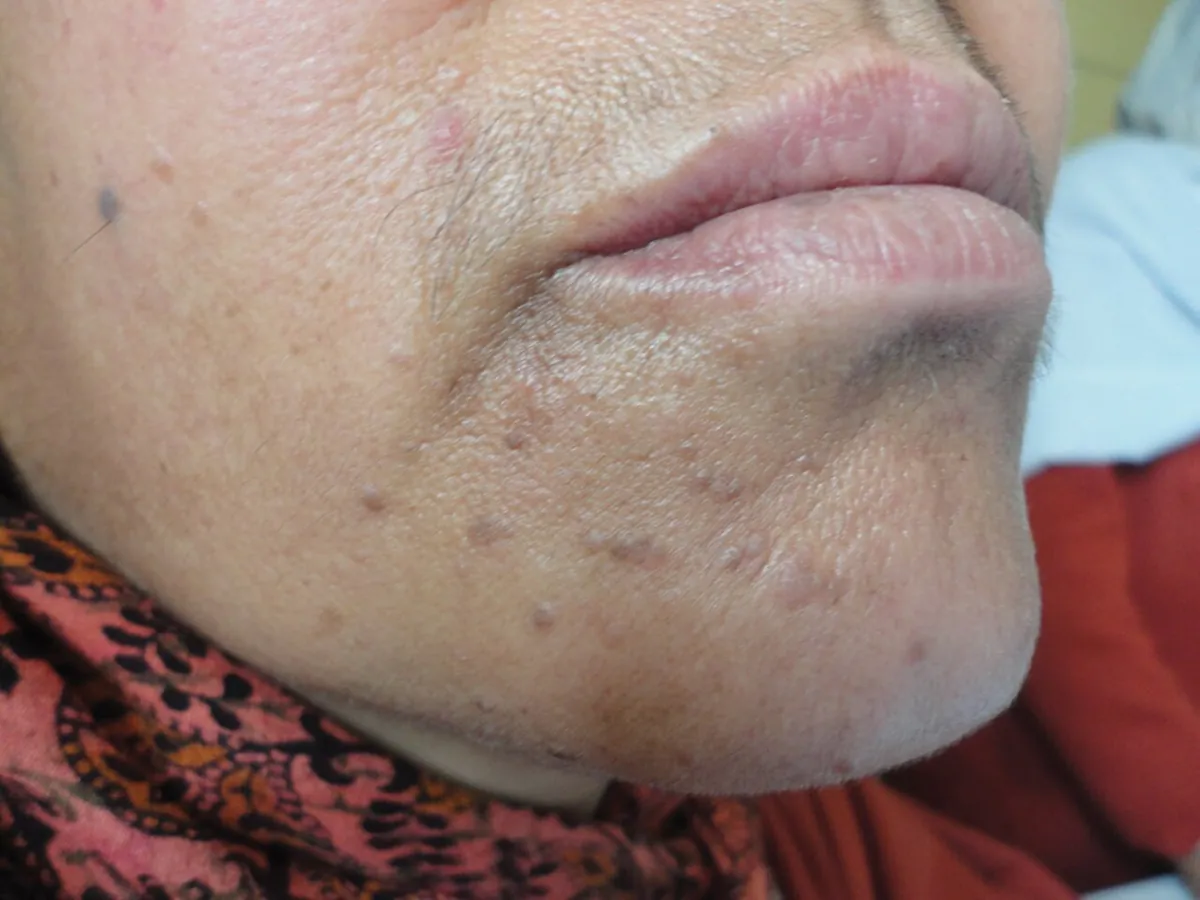
Could flat bumps on my face be warts?
Yes. Flat warts (plane warts) are caused by the human papillomavirus (HPV). DermNet describes them as multiple small flat-topped skin-colored papules, most common on the face, hands and shins, and notes that in the beard area the virus is often spread by shaving, producing many warts. They can look tan or brown on darker skin and are easy to mistake for acne or tiny moles.
Warts are contagious. The AAD says they can spread to other people and other parts of your body and can last months or years without treatment. Avoid shaving over them and do not pick. On the face, skip strong over-the-counter wart acids meant for hands and feet, and ask a dermatologist about treatment.
How do I know if I have fungal acne?
Fungal acne is the common name for Malassezia (pityrosporum) folliculitis, an overgrowth of yeast in the hair follicles. DermNet describes small, uniform, itchy papules and pustules, mainly on the upper back and chest, and sometimes on the forehead, hairline and chin. There are no blackheads or whiteheads, which helps set it apart from acne.
DermNet lists a hot humid climate, heavy sweating, occlusive moisturizers and sunscreens, antibiotic use and steroid use as risk factors. That is why fungal acne may get worse on antibiotics that are meant for acne. Antifungal treatments such as selenium sulfide or ketoconazole are the usual fix, and it tends to recur. Compare the two in fungal acne vs regular acne.
Are any bumps on the face a warning sign?
Most of the bumps in this guide are harmless. A few features deserve a dermatologist's look, because some skin cancers start as small bumps:
- A single shiny, pearly or pink bump that grows, bleeds, crusts or does not heal within a few weeks.
- A bump with rolled edges or fine blood vessels on its surface.
- A bump that changes color, shape or size quickly.
- Painful, spreading redness, fever or pus, which can mean a deeper infection.
Also see a doctor if bumps spread to new areas, keep coming back after treatment, or if you are not sure what they are before you try to remove them. If you need one, find a dermatologist near you.
What should I avoid doing with bumps on my face?
A few habits make almost all of these worse:
- Squeezing. Milia, sebaceous hyperplasia and warts do not pop like pimples, and pressing them can scar the skin or spread warts.
- Treating everything as acne. Antibiotic acne creams do not help milia, warts or fungal acne, and may make fungal acne worse.
- Heavy, greasy layers. Thick creams and oily hair products can feed milia, comedones and fungal acne.
- Harsh scrubbing. Rough exfoliation irritates folliculitis and keratosis pilaris and can leave dark marks on brown and black skin.
- Shaving over bumps. It spreads flat warts and worsens folliculitis.
If you are trying a new product for texture, change one thing at a time and take photos every week or two in the same light. Texture changes slowly, and side-by-side photos show what a mirror misses. For pore-related texture, see blackheads vs sebaceous filaments.
Frequently asked questions
What are tiny bumps on my face that are not pimples?
The most common are milia, closed comedones (whiteheads), keratosis pilaris, sebaceous hyperplasia, flat warts, folliculitis and fungal acne. Color, shape, itch and location usually tell them apart.
How do I tell milia from whiteheads?
Milia are hard, pearly white cysts that do not get red and cannot be squeezed out like a pimple. Whiteheads are softer, blocked pores that often come with other acne.
Why do I have small itchy bumps on my forehead?
Small, same-sized itchy bumps on the forehead and hairline can be fungal acne (Malassezia folliculitis), especially in hot, humid weather or after antibiotics. A dermatologist can confirm it with a skin scraping.
Are flat bumps on my face contagious?
If they are flat warts, yes. They are caused by HPV and can spread to other areas, often along a shaving line, and to other people. Most other bumps in this guide are not contagious.
Should I worry about yellow bumps on my face?
Soft yellowish bumps with a small central dent are usually sebaceous hyperplasia, which is harmless. Because it can resemble a basal cell carcinoma, show a dermatologist any bump that grows, bleeds or does not heal.
Can I remove bumps on my face at home?
It is safer not to. Squeezing or scraping milia, warts or sebaceous hyperplasia can scar the skin or cause infection. A dermatologist can remove them with sterile tools.
Sources
- Cleveland Clinic: Milia
- DermNet: Milium (milia)
- DermNet: Comedonal acne
- Cleveland Clinic: Sebaceous hyperplasia
- American Academy of Dermatology: Keratosis pilaris: Overview
- American Academy of Dermatology: Acne-like breakouts could be folliculitis
- DermNet: Viral warts
- American Academy of Dermatology: Warts: FAQs
- DermNet: Malassezia (pityrosporum) folliculitis
Pori is a wellness and skincare education app, not a medical device. This article is for general information and isn't medical advice. For anything that worries you, see a dermatologist.