Pori

- Sebaceous hyperplasia is a harmless enlargement of oil glands: soft yellowish or skin-colored bumps, usually 2 to 6 mm, with a small dip in the center.
- Unlike acne, the bumps have no head, can't be squeezed out, aren't inflamed and stay the same for months or years.
- Basal cell carcinoma can also have a central dip; a shiny pink, brown or black bump that grows, bleeds, crusts or won't heal needs a dermatologist.
- Treatment is optional: clinic procedures such as electrocautery, lasers or photodynamic therapy, or prescription isotretinoin; bumps can return or new ones can form.
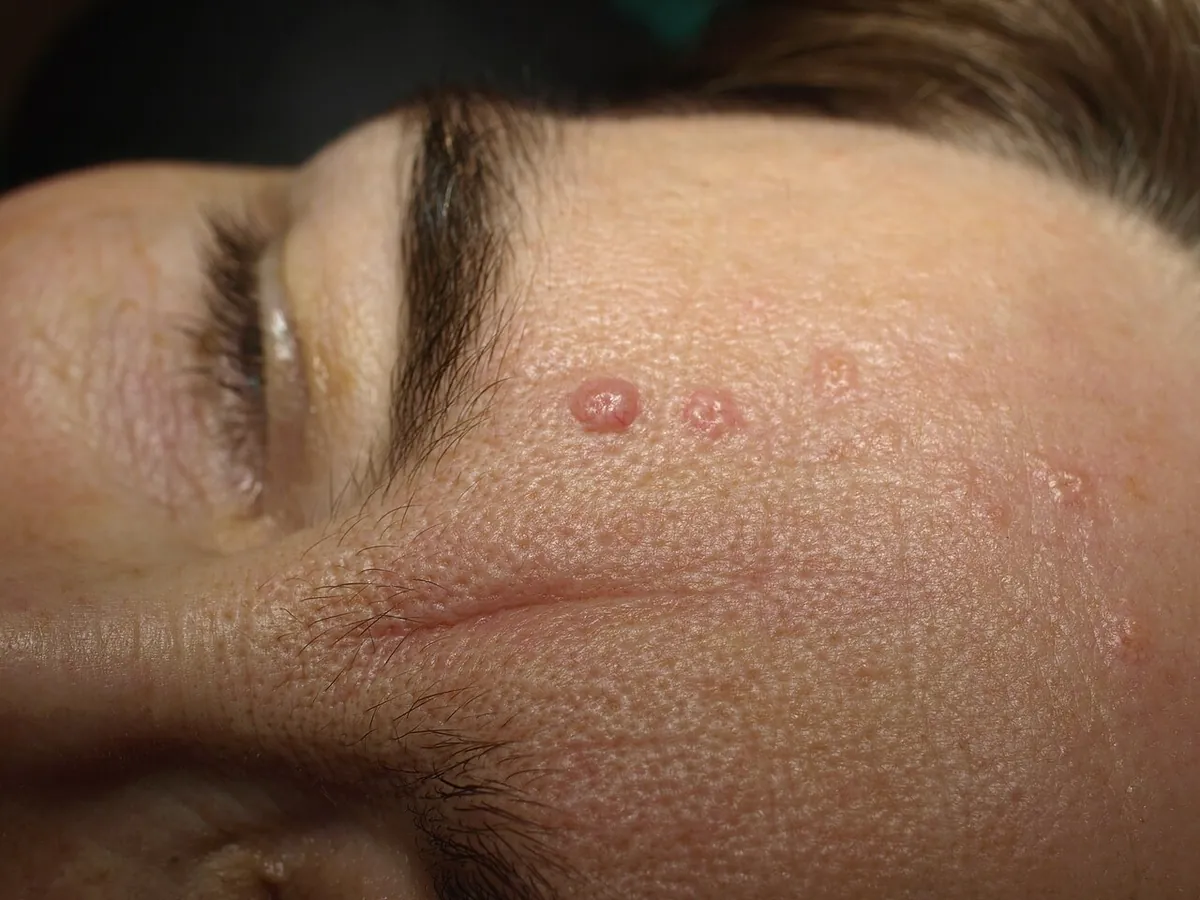
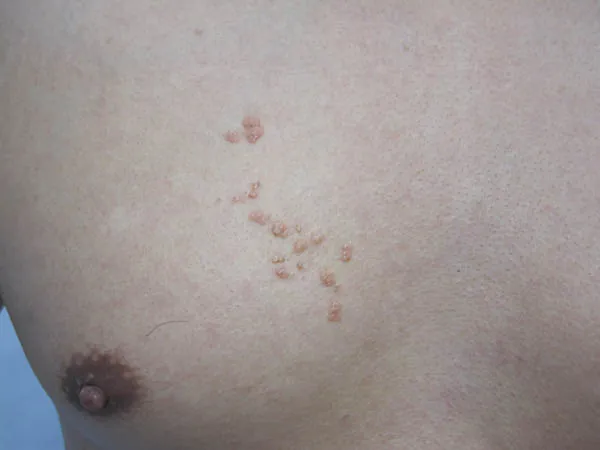
Sebaceous hyperplasia is a harmless overgrowth of oil glands that forms small, soft, yellowish or skin-colored bumps, usually 2 to 6 mm, with a tiny dip in the center, mostly on the forehead, nose and cheeks of adults in midlife and later. Unlike acne, the bumps have no whitehead or blackhead, can't be squeezed empty, and stay put for months or years. A shiny, pink bump that bleeds or won't heal is a different matter: it can be basal cell carcinoma and needs a dermatologist.
Pori does not diagnose skin conditions. Its selfie scans and photo diary can help you keep dated, consistent photos to show a dermatologist and to see whether a treatment is working.
What does sebaceous hyperplasia look like?
Cleveland Clinic describes the bumps as usually about 3 mm across (range 2 to 6 mm), skin-colored, yellow or brown, often with a small dent in the center. DermNet adds that a close look shows a central hair follicle surrounded by yellowish lobules, and that small blood vessels are often visible under magnification. Up close, a bump can look like a tiny doughnut or a pale flower with a pore in the middle.
- Where: most often the cheeks, chin, forehead and nose, and sometimes the upper chest.
- Texture: soft and smooth, with no scale or crust.
- How long it lasts: each bump tends to stay the same for a long time. They don't come to a head, drain or fade in a week the way a pimple does.
- On brown and black skin: Cleveland Clinic notes the bumps can be brown as well as yellow, and a 2024 case report in Cureus describes blackish-brown facial lesions that turned out to be sebaceous hyperplasia. On darker skin the yellow tone can be harder to see, which is one more reason to have a new bump examined.
Who gets it, and what causes it?
Cleveland Clinic estimates it affects about 1% of healthy people and is more common in newborns, in middle-aged and older adults, in people taking drugs that suppress the immune system (such as organ transplant recipients), and in people with rare genetic syndromes such as Muir-Torre syndrome, a form of Lynch syndrome. The Cureus report gives a prevalence of 10% to 16% in people on long-term immunosuppressants such as cyclosporine.
The main driver is hormonal. Cleveland Clinic explains that as androgen levels fall with age, oil-gland cells turn over more slowly and build up, so the gland enlarges. It is not caused by dirt, poor hygiene or a particular product, and it is not contagious. DermNet places it in middle-aged and older people, which is why many people first notice it in their 40s or 50s and assume it is adult acne.
If you have many of these bumps at a young age, or alongside other unusual skin growths, mention it to your doctor, since a small number of people with sebaceous growths have an inherited syndrome worth checking for.
How is it different from acne?
The quickest test is time: a pimple changes within days, while sebaceous hyperplasia looks the same next month. The bump is the enlarged gland itself, so there is no plug to extract, and squeezing only bruises and irritates the skin. This table compares it with the bumps it is most often mistaken for.
| Bump | What it looks like | Key difference |
|---|---|---|
| Sebaceous hyperplasia | Soft yellowish or skin-colored bump, 2 to 6 mm, central dip | Lasts months to years; no head; not inflamed |
| Whitehead (closed comedone) | Small skin-colored or white bump | Clogged pore that can come and go; often with other acne |
| Papule or pustule | Red or dark, tender bump, sometimes with pus | Inflamed and sore; heals within days to weeks |
| Milia | Firm, pearly-white dot, 1 to 2 mm | Hard like a grain of sand; no central dip |
| Basal cell carcinoma | Shiny, pearly pink bump, or brown to black on dark skin; may have a dip in the center | Slowly grows, bleeds, crusts or won't heal; needs a doctor |
Our guides to closed comedones on the forehead, papules vs pustules and milia under the eyes cover the other bumps in detail. If you mostly see tiny dots in your pores, our article on blackheads vs sebaceous filaments may be the better fit.
When could it be basal cell carcinoma instead?
Basal cell carcinoma (BCC) is the most common skin cancer, and it likes the same sun-exposed facial skin. It can also have a central dip: the AAD lists a circle with a dip in the center among its possible looks. DermNet notes that sebaceous hyperplasia is sometimes confused with basal cell carcinoma, and the Cureus authors point out that both can be umbilicated (dimpled) and show small visible blood vessels. Our guide to skin cancer signs with pictures shows how BCC and other skin cancers can look.
These signs point toward BCC and mean you should book a dermatologist:
- A shiny, pearly, pink or red bump on lighter skin, or a brown, black, bluish or gray raised growth on darker skin.
- A sore that doesn't heal, or heals and comes back.
- A bump that bleeds, crusts or breaks open, sometimes after only minor rubbing.
- A single bump that keeps growing while your other bumps stay the same. Cleveland Clinic also says to see a provider for bumps that keep growing or open wounds that won't heal.
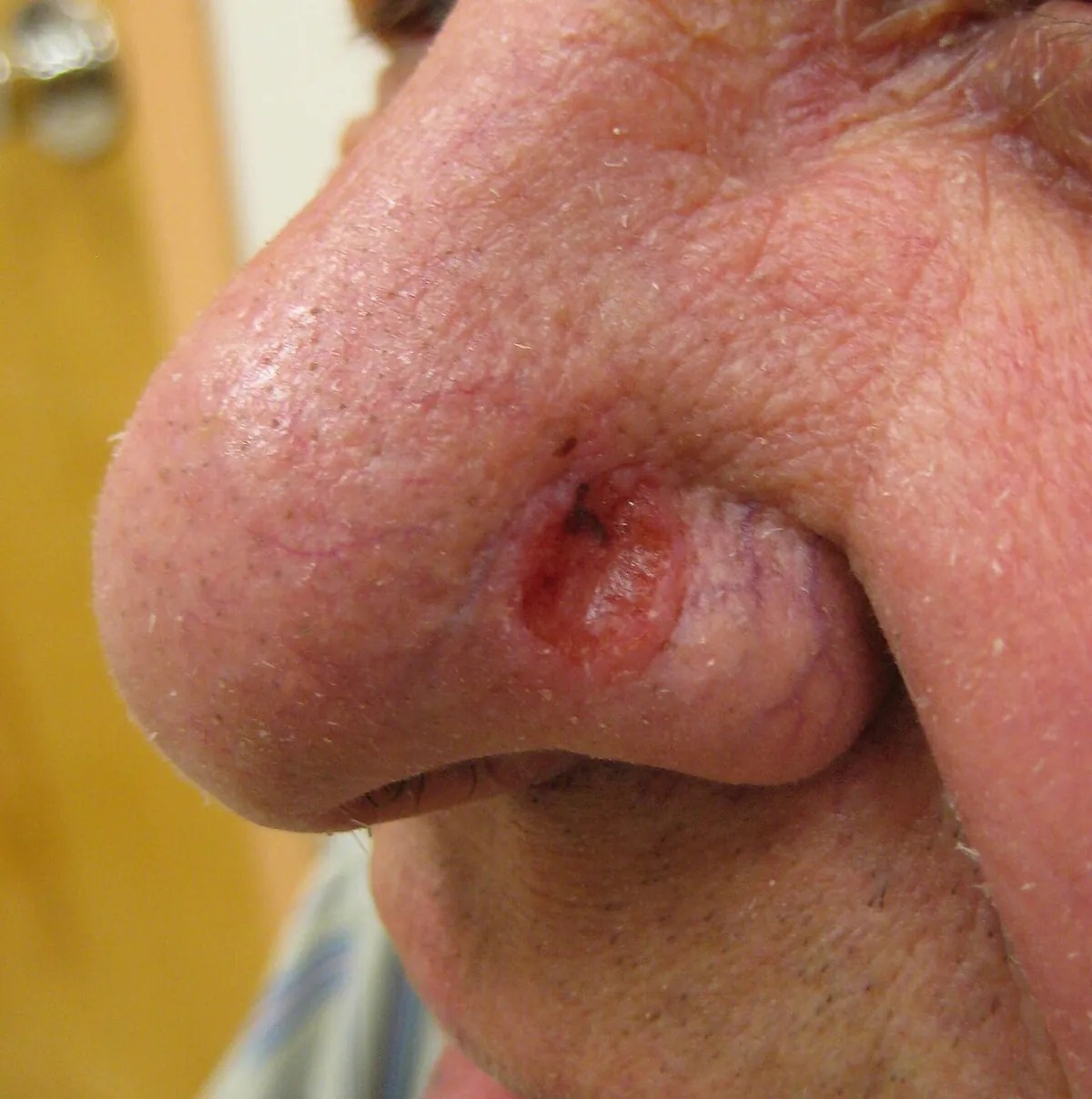
A dermatologist can usually tell the two apart with a dermatoscope: sebaceous hyperplasia shows yellowish lobules with a ring of vessels around them, while BCC has its own vessel pattern. When there is doubt, a quick biopsy settles it. Cleveland Clinic notes a biopsy is only rarely needed. If you have a bump you aren't sure about, find a dermatologist near you.
How is sebaceous hyperplasia treated?
It doesn't need treatment. DermNet calls it harmless, and treatment is cosmetic or for bumps that get irritated. Options fall into two groups.
Procedures in a clinic
Cleveland Clinic lists cauterization, cryotherapy, excision, laser skin resurfacing, photodynamic therapy, shaving and curettage, and DermNet mentions light electrocautery and laser vaporization for single bumps. A 2015 literature review in the Journal of the European Academy of Dermatology and Venereology found that photodynamic therapy, lasers and combinations of the two offered alternatives to conventional methods, though the authors asked for larger studies. Any destructive method can leave a small scar or a lighter or darker mark, a bigger concern on brown and black skin, so ask about that risk before you choose.
Prescription medicines
- Oral isotretinoin: shrinks oil glands and can clear many bumps at once. DermNet notes they may recur after stopping, and it is reserved for severe or widespread cases. Isotretinoin can cause serious birth defects and comes with strict pregnancy rules; our guide to skincare on Accutane covers what to expect.
- Antiandrogens: DermNet and Cleveland Clinic mention them as an option for women.
- Topical acids: Cleveland Clinic lists trichloroacetic acid applied by a clinician.
Procedures can remove a bump for good, but Cleveland Clinic notes that new ones may form elsewhere, and bumps treated with medicine can return once you stop.
Can skincare help?
Skincare won't remove existing bumps. Cleveland Clinic says the condition can't be prevented, but that niacinamide, retinol and salicylic acid may reduce the chance of developing new ones. A nightly retinol or adapalene, a niacinamide serum and daily sunscreen are reasonable habits for oily, aging skin anyway. Introduce one at a time; our guide to retinol for beginners explains how.
Why you shouldn't try to remove it at home
Needles, extraction tools, "mole pens" and high-strength acids sold online can burn, scar and darken the skin. Cleveland Clinic advises against trying removal procedures at home. The AAD adds that removing a growth yourself is essentially performing at-home surgery, and if the bump is a skin cancer, removal at home can leave cancer cells behind and delay the diagnosis.
How can a photo diary help?
Because sebaceous hyperplasia barely changes, a dated photo is a simple test. If a bump looks identical in photos taken weeks apart, that fits sebaceous hyperplasia; if one grows, bleeds or crusts, that is the photo to show your dermatologist. Take pictures in the same light and at the same angle; our guide to lighting for skin photos has tips.
Pori's photo diary keeps those dated selfies in one place, and its ingredient scanner can check whether a retinoid or niacinamide product suits your skin type. It can't tell sebaceous hyperplasia from acne or skin cancer; a dermatologist makes that call.
Frequently asked questions
What does sebaceous hyperplasia look like?
It looks like small, soft, yellowish, skin-colored or brown bumps, usually about 3 mm, often with a tiny dent in the center. They appear mostly on the forehead, nose and cheeks and stay the same for a long time.
Is sebaceous hyperplasia acne?
No. It is an enlarged oil gland, not a clogged or inflamed pore. It has no whitehead or blackhead, doesn't hurt, and doesn't come and go within days the way pimples do.
Can I squeeze sebaceous hyperplasia?
Squeezing won't help. The bump is the gland itself, so there is nothing to push out, and pressing on it can bruise, irritate or scar the skin. A dermatologist can remove bumps that bother you.
How do I know if it's sebaceous hyperplasia or basal cell carcinoma?
Both can be dimpled bumps on the face. Basal cell carcinoma tends to be shiny, pearly pink or red, or brown to black on darker skin, and it grows, bleeds, crusts or won't heal. A dermatologist can usually tell them apart with a dermatoscope and may do a biopsy if unsure.
What is the best treatment for sebaceous hyperplasia?
There is no single best option. Dermatologists use electrocautery, lasers, photodynamic therapy, cryotherapy or shaving for individual bumps, and oral isotretinoin for many bumps. Treated bumps can return and new ones can form, and procedures can leave marks, especially on darker skin.
Does retinol get rid of sebaceous hyperplasia?
Retinol won't remove existing bumps. Cleveland Clinic says niacinamide, retinol and salicylic acid may lower the chance of developing new ones, but removal of existing bumps needs a clinic procedure or prescription medicine.
Sources
- Cleveland Clinic: Sebaceous Hyperplasia
- DermNet: Sebaceous hyperplasia
- Sebaceous Hyperplasia of the Face: A Case Report. Cureus, 2024
- American Academy of Dermatology: Basal cell carcinoma: Signs and symptoms
- Simmons BJ et al. Light and laser therapies for the treatment of sebaceous gland hyperplasia: a review of the literature. JEADV, 2015
- American Academy of Dermatology: 5 reasons to see a dermatologist for mole, skin tag removal
Pori is a wellness and skincare education app, not a medical device. This article is for general information and isn't medical advice. For anything that worries you, see a dermatologist.