Pori

- Most facial rashes are eczema, rosacea, seborrheic dermatitis, contact dermatitis, perioral dermatitis or hives.
- Location is the best clue: eyelids suggest eczema or contact dermatitis, the nose folds and brows suggest seborrheic dermatitis, the center of the face suggests rosacea, and a ring around the mouth suggests perioral dermatitis.
- On darker skin many rashes look brown, purple, gray or lighter than the surrounding skin instead of red.
- Get emergency help for hives with lip, tongue or throat swelling or trouble breathing, and see a doctor for a cheek rash with joint pain, fever or fatigue.
A rash on the face is most often eczema, rosacea, seborrheic dermatitis, contact dermatitis, perioral dermatitis or hives. Where it sits and how it feels narrow it down fast: itchy dry patches around the eyes point to eczema, flushing with pimple-like bumps on the cheeks and nose to rosacea, greasy flakes in the brows and nose folds to seborrheic dermatitis, and welts that move within hours to hives. Less often, a rash across the cheeks and nose with joint pain or fatigue is a sign of lupus and needs a doctor.
This guide is a visual map of those causes, with a photo of each and a comparison table. Pori does not diagnose skin conditions; its selfie scans and photo diary in Pori can help you keep dated, consistent photos to show a dermatologist and see whether treatment is working.
What are the most common causes of a rash on the face?
Six conditions account for most facial rashes in adults. They overlap, and you can have two at once. Each section says where the rash usually appears, what it looks like on lighter and darker skin, and the clue that sets it apart.
| Cause | Where on the face | What it looks like | Itch or feel | Best clue |
|---|---|---|---|---|
| Eczema (atopic dermatitis) | Eyelids, around the eyes, cheeks | Dry, scaly patches; red on light skin, brown, purple or gray on dark skin | Intense itch | Flares and calms in the same spots; often a history of eczema, asthma or hay fever |
| Rosacea | Center of the face: nose, cheeks, chin, forehead | Flushing, lasting redness or violet-brown color, visible vessels, pimple-like bumps | Warmth, burning or stinging | No blackheads; triggered by heat, sun, alcohol, spicy food |
| Seborrheic dermatitis | Brows, sides of the nose, beard, hairline, ears | Red or pink patches with greasy yellow or white flakes; can look lighter on dark skin | Mild itch | Dandruff on the scalp at the same time |
| Contact dermatitis | Wherever a product or object touched | Itchy rash, sometimes blisters, dry and cracked skin | Itch or burning | Appears hours to days after a new product, and has edges that match where it was applied |
| Perioral dermatitis | Around the mouth, nostrils, sometimes eyes | Clusters of tiny red or skin-colored bumps | Burning or tightness | A clear rim of skin next to the lips; often follows steroid cream |
| Hives | Anywhere, including lips and eyelids | Raised welts that match skin tone on dark skin, pink or red on light skin | Intense itch | Each welt fades within 24 hours as new ones appear |
| Lupus (less common) | Across the cheeks and bridge of the nose | A butterfly-shaped rash, often after sun exposure | Can itch | Comes with other symptoms like joint pain, fever or fatigue |
Is it eczema on my face?
Eczema usually starts with itch. The American Academy of Dermatology (AAD) calls atopic dermatitis "the itch that rashes": the skin itches first, and scratching brings out the rash. On lighter skin the patches look red or pink. On darker skin the AAD describes dark brown, purple or grayish patches, sometimes with small rough bumps. In adults the eyelids and the skin around the eyes are a classic spot, and long scratching can thicken the skin until it looks leathery.
Eczema is not contagious. It tends to come back in the same places, and fragrance, harsh cleansers, cold dry air and stress are common triggers. Our guide to eczema on the face covers a gentle routine and when it needs a prescription.
Could the red rash on my cheeks and nose be rosacea?
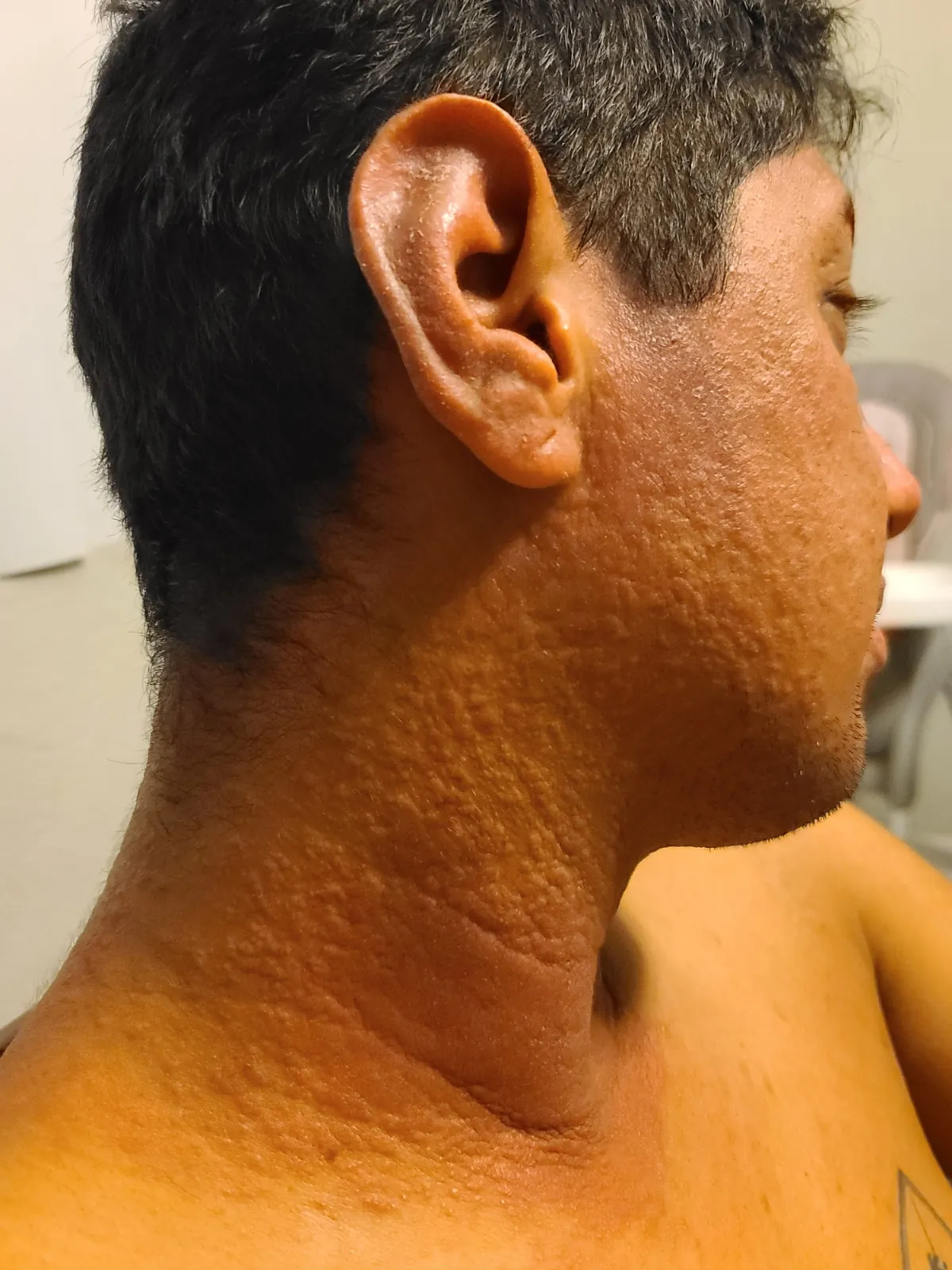
Rosacea is the likeliest cause of a red face that comes and goes in adults. The AAD lists the early signs as flushing easily, redness in the center of the face on lighter skin or a brown or violet color on darker skin, acne-like breakouts that won't clear and visible blood vessels. It usually develops across the nose and cheeks and can spread to the forehead, chin and ears. On darker skin, the AAD notes, the only sign of flushing may be a warm feeling on the cheeks.
The bumps of rosacea can look like acne, but there are no blackheads or whiteheads. The NHS adds that rosacea skin often burns or stings when you use water or skincare products. Heat, sun, alcohol and spicy food are common triggers; our list of rosacea triggers and the comparison of rosacea vs acne go deeper.
What does seborrheic dermatitis on the face look like?
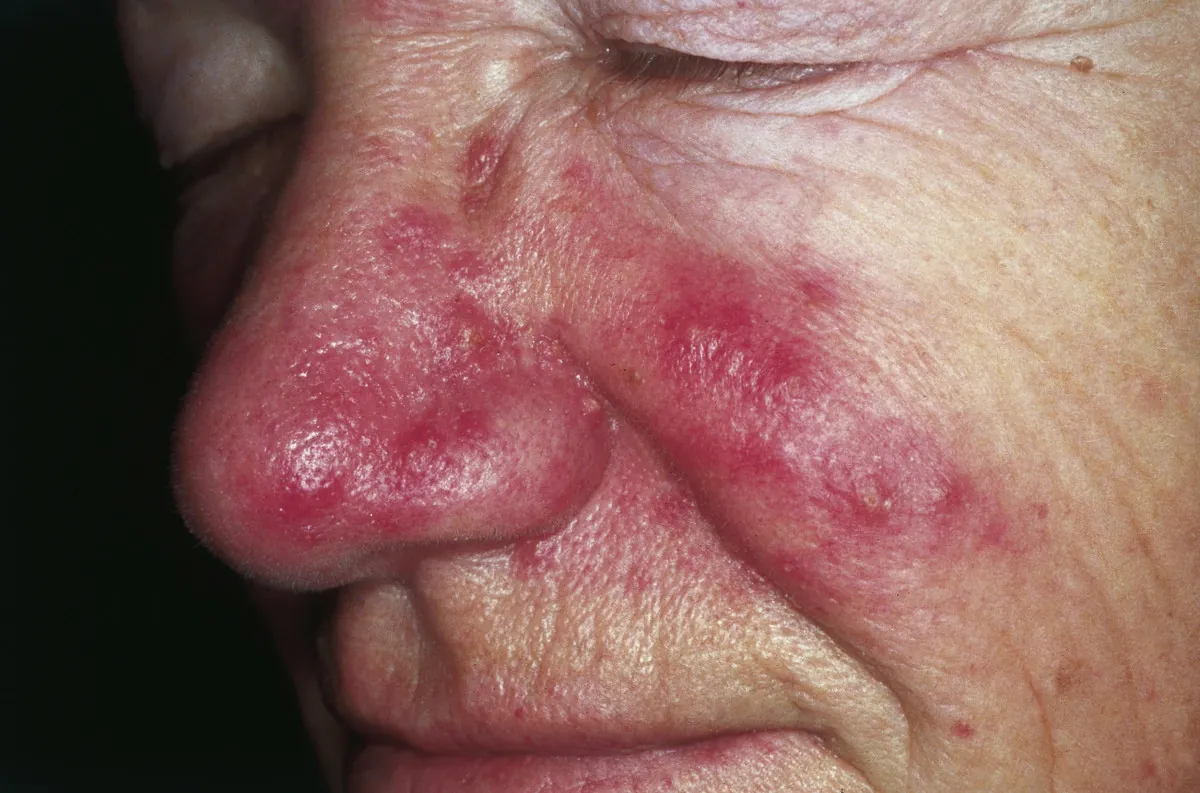
Seborrheic dermatitis is a flaky rash in the oily parts of the face. The AAD says that, unlike plain dandruff, it can appear on the ears, eyebrows, beard or skin around the nostrils, with white-to-yellowish scale that may be dry or greasy. People with lighter skin tend to get a red, raised rash; on darker skin the AAD says it often looks pink, slightly purple or lighter than the surrounding skin.
It is not contagious and often comes with dandruff. In adults it most often starts in the 30s or later. The AAD notes that flare-ups often come in winter and early spring and with stress. See our guide to seborrheic dermatitis on the face.
Could a new skincare product cause a rash on my face?
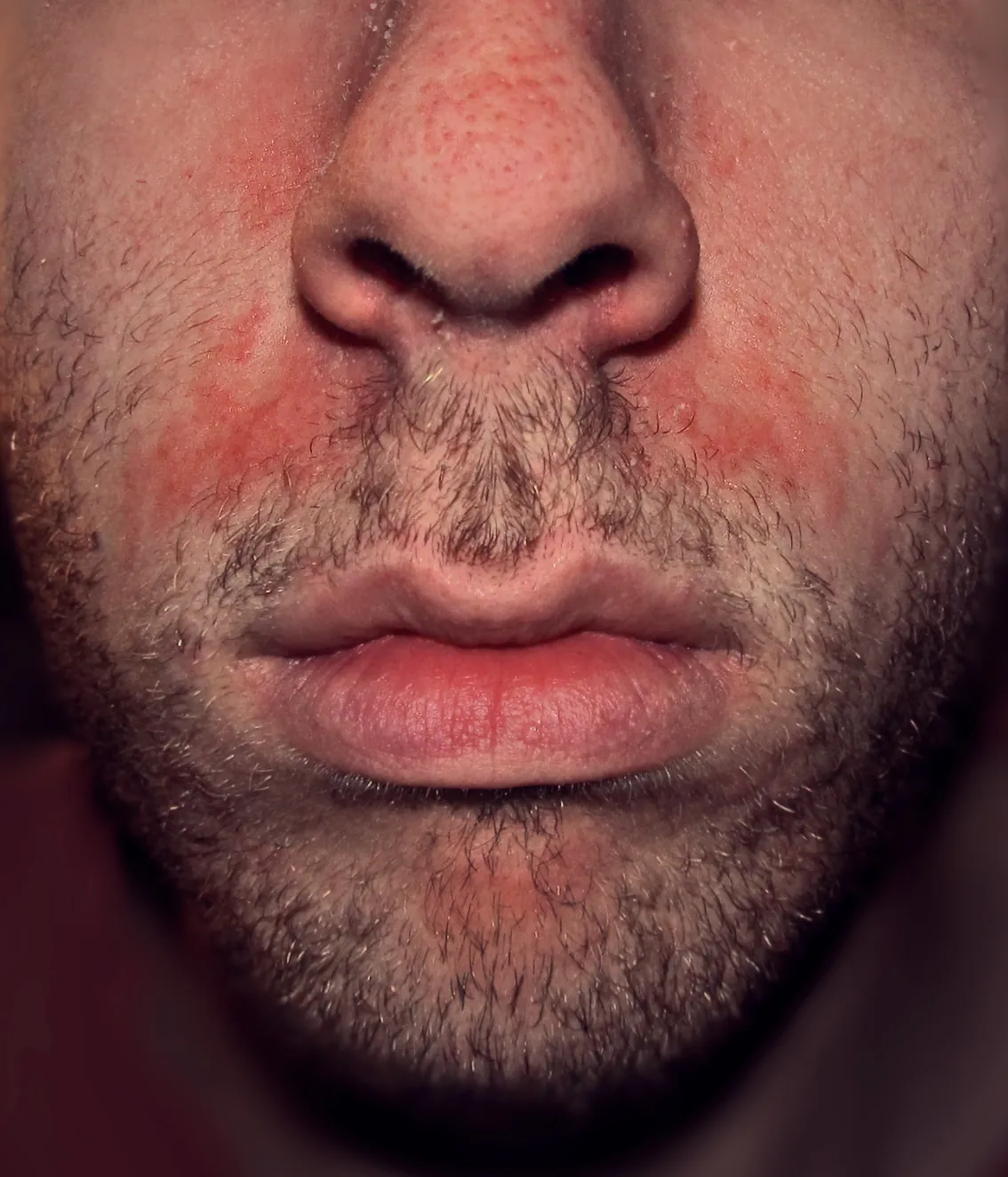
Yes. That is contact dermatitis, and it comes in two forms. Irritant contact dermatitis happens when something damages the outer layer of the skin, such as soap, solvents or too much exfoliating acid. Allergic contact dermatitis is an immune reaction to an ingredient. The NHS says contact dermatitis makes the skin itchy, blistered, dry and cracked, red on lighter skin and dark brown, purple or gray on darker skin, usually within a few hours or days of contact.
The AAD notes that more than 15,000 things can cause an allergic skin reaction, with fragrance and nickel among the most common. On the face, think about new moisturizers, sunscreens, hair dye, nail polish (touching your eyelids), glasses frames and earrings. A rash whose edges follow where you applied something is a strong hint. A dermatologist can run patch testing to find the allergen; before trying a new product, a patch test at home lowers the risk. More in our guide to contact dermatitis on the face.
Why do I have small red bumps around my mouth?
Tiny red or skin-colored bumps around the mouth, often with a band of clear skin right next to the lips, are typical of perioral dermatitis. The AAD describes it as small, red, acne-like breakouts on lighter skin and skin-colored breakouts on skin of color, sometimes with dry, flaky skin. It can also appear beside the nose and around the eyes.
Steroid creams on the face, including over-the-counter hydrocortisone, are the best-known trigger, and heavy creams can make it worse. Using more steroid cream can briefly calm it and then make it flare, so stop guessing and ask a dermatologist. Our perioral dermatitis guide explains the "zero therapy" approach dermatologists often start with.
Are raised itchy welts on my face hives?
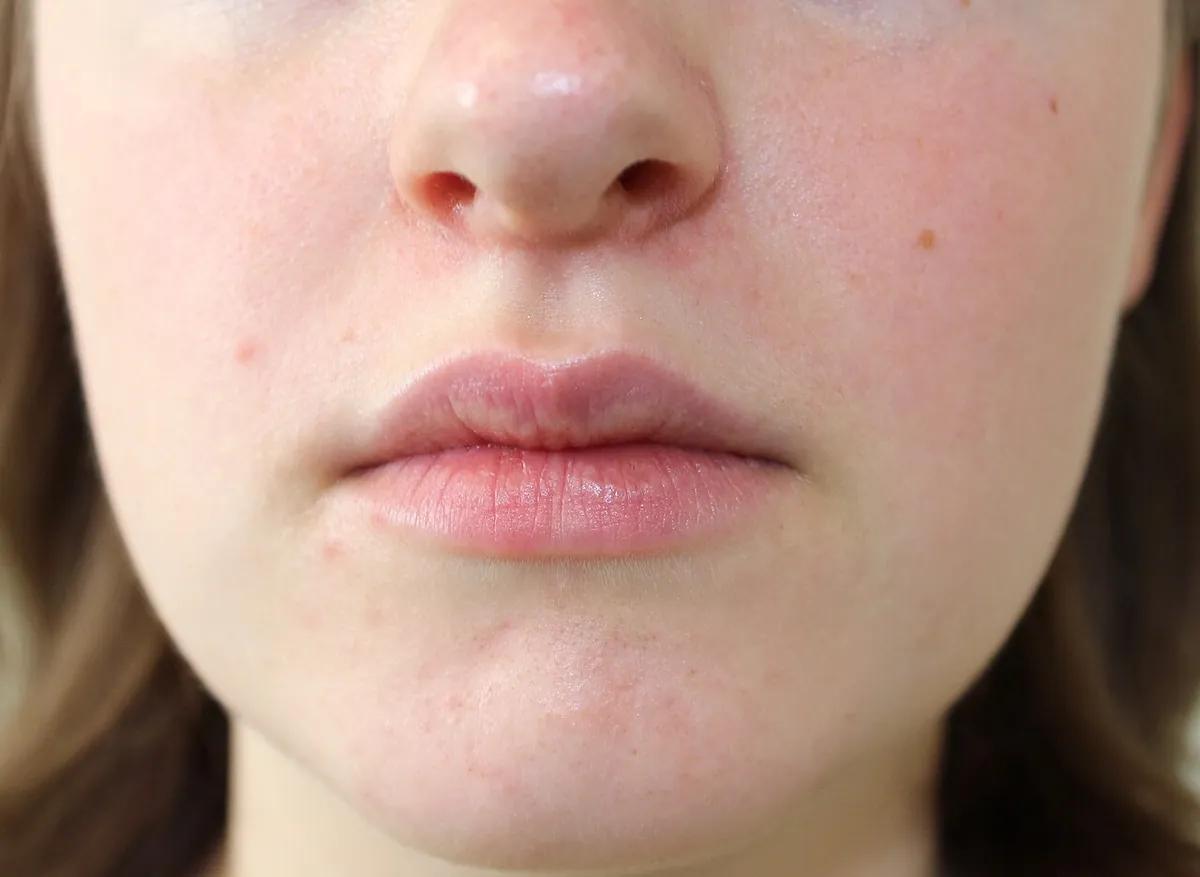
Hives (urticaria) are raised bumps or patches that appear suddenly and itch intensely. The AAD says an individual hive tends to go away within 24 hours, but new ones can appear, and a case usually lasts a few days to a few weeks. On lighter skin they look pink or red; on darker skin they often match the skin tone, which makes them harder to spot. Hives that keep coming back for 6 weeks or longer are called chronic hives.
Hives are not contagious, though an infection such as a cold or strep throat can set them off. Foods, medicines, insect stings, heat, cold and pressure are other triggers. Swelling deeper in the skin, often of the lips or eyelids, is called angioedema. See hives on the face for triggers and treatment.
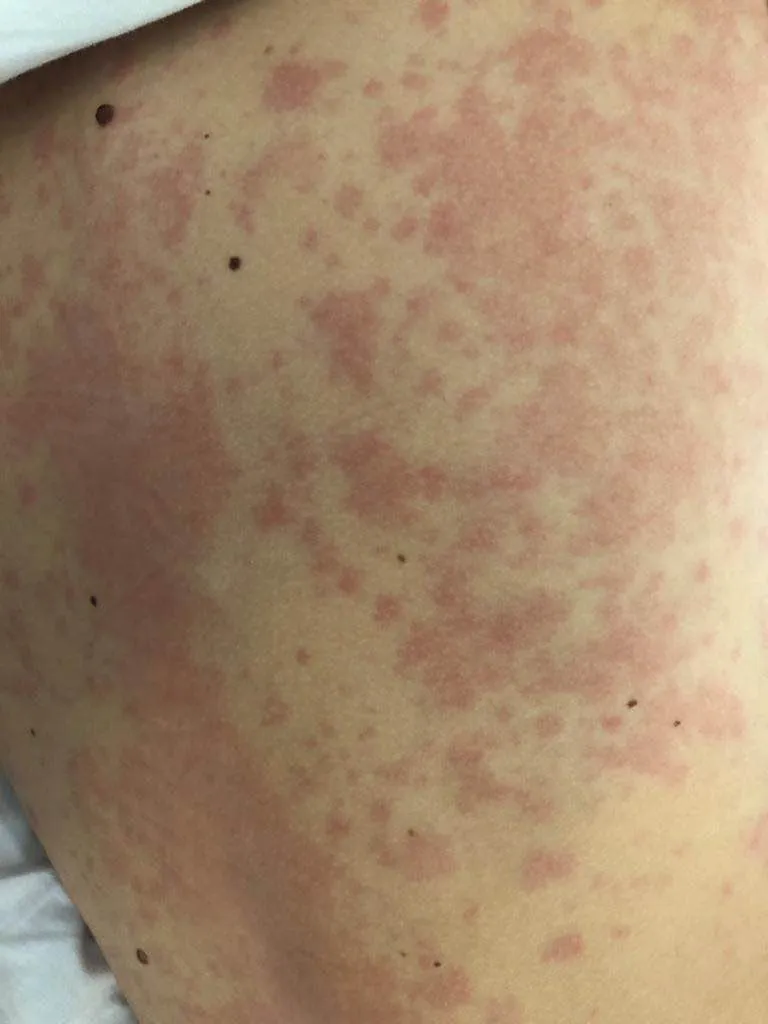
Get emergency help right away if hives come with swelling of the lips, mouth, tongue or throat, trouble breathing or swallowing, or feeling faint. The NHS lists these as signs to call an ambulance.
Could a rash on my face be lupus?
Sometimes, and it is worth knowing the pattern without jumping to it. Lupus is an autoimmune disease, and one of its skin signs is the butterfly (malar) rash. The AAD describes it as a rash that spreads out across the nose and cheeks, often in the shape of a butterfly, and often appears after time in the sun. Lupus can also make the skin very sensitive to sunlight.
A red face on its own is far more likely to be rosacea or seborrheic dermatitis. What raises the question of lupus is a rash that comes with other symptoms. The National Institute of Arthritis and Musculoskeletal and Skin Diseases lists painful or swollen joints, fevers, fatigue, hair loss, sun sensitivity and mouth or nose sores. If you have a cheek rash and any of these, see a doctor. Only a doctor can diagnose lupus, usually after an exam and lab tests, and never from a photo.
How can I tell these face rashes apart at home?
A few simple questions narrow the list before you see anyone:
- Does it move? Welts that fade in one spot and appear in another within a day suggest hives. The other rashes stay put for days or weeks.
- Is there itch or burning? Strong itch points to eczema, contact dermatitis or hives. Burning and stinging with flushing points to rosacea.
- Where exactly is it? Eyelids suggest eczema or contact dermatitis. Brows and nose folds suggest seborrheic dermatitis. A ring around the mouth that spares the lip line suggests perioral dermatitis.
- What changed? A new product, a new medicine, a steroid cream, sun exposure or an illness in the days before the rash is a useful clue for the doctor.
- Are there flakes? Greasy yellow flakes suggest seborrheic dermatitis; fine dry scale suggests eczema. Thick, well-defined scaly plaques can be psoriasis on the face, which is less common.
Rashes change from day to day, so photos taken in the same light help. For a broader look at redness, see why your face is red.
What can I do at home for a rash on my face?
While you work out the cause, keep things simple. These steps help most facial rashes and rarely make any of them worse:
- Stop any new product you started in the past few weeks, and pause exfoliating acids and retinoids.
- Wash with lukewarm water and a gentle, fragrance-free cleanser, then pat dry.
- Use a plain, fragrance-free moisturizer. A short ingredient list makes it easier to spot a culprit.
- Protect the skin from the sun, which worsens rosacea and lupus rashes.
- Do not put steroid cream on your face without a doctor's advice, because steroids on facial skin can trigger perioral dermatitis and rosacea-like rashes.
Doctors treat each cause differently: anti-inflammatory creams for eczema, rosacea creams and sometimes antibiotic pills or lasers, antifungal creams or shampoos for seborrheic dermatitis, antihistamines for hives, and finding and avoiding the trigger for contact dermatitis. That is why getting the cause right matters more than any single product.
When should I see a doctor about a facial rash?
Book an appointment if a rash lasts longer than two weeks despite gentle care, keeps coming back, affects your sleep, or sits on your eyelids or near your eyes. Go sooner, the same day if you can, for:
- Swelling of the lips, tongue, eyes or throat, or any trouble breathing or swallowing (emergency).
- Fever, feeling unwell, or a rash that spreads quickly.
- Blisters, crusting, oozing, pus or pain, which can mean infection.
- A rash across the cheeks with joint pain, fatigue, fever or mouth sores.
- Eye pain, redness or blurred vision with a facial rash.
A board-certified dermatologist can usually name the rash in one visit and, if needed, do patch testing, a skin scraping or a biopsy. If you need one, find a dermatologist near you.
Frequently asked questions
What is the most common cause of a rash on the face?
In adults, the most common causes are eczema, rosacea, seborrheic dermatitis and contact dermatitis from a product. Where the rash sits and whether it itches, burns or flakes usually points to one of them.
How do I know if my face rash is an allergic reaction?
An allergic contact rash usually itches and appears hours to days after a new product touches the skin, with edges that match where it was applied. Hives from an allergy appear as raised welts that come and go within a day. Swelling of the lips or throat needs emergency care.
Why is the rash on my face red and burning?
Burning and stinging with flushing on the cheeks and nose is typical of rosacea. Irritation from a harsh product or too much exfoliation can also burn. Stop new products and see a dermatologist if it lasts.
Is a red rash across my cheeks and nose lupus?
Usually not; rosacea and seborrheic dermatitis are far more common. A butterfly-shaped rash with joint pain, fever, fatigue or mouth sores should be checked by a doctor, who can test for lupus.
Can I put hydrocortisone on a rash on my face?
Ask a doctor first. Steroid creams on the face can trigger perioral dermatitis and rosacea-like rashes, and they make some rashes harder to diagnose.
When is a face rash an emergency?
Call emergency services for swelling of the lips, tongue or throat, trouble breathing or swallowing, or feeling faint. See a doctor the same day for fever, a fast-spreading rash, or blisters and crusting.
Sources
- American Academy of Dermatology: Atopic dermatitis: Signs and symptoms
- American Academy of Dermatology: Rosacea: Signs and symptoms
- American Academy of Dermatology: Seborrheic dermatitis: Overview
- American Academy of Dermatology: Eczema types: Contact dermatitis
- NHS: Contact dermatitis
- American Academy of Dermatology: Red rash around your mouth could be perioral dermatitis
- American Academy of Dermatology: Hives: FAQs
- NHS: Hives
- American Academy of Dermatology: Lupus and your skin: Signs and symptoms
- NIAMS: Lupus
Pori is a wellness and skincare education app, not a medical device. This article is for general information and isn't medical advice. For anything that worries you, see a dermatologist.