Pori

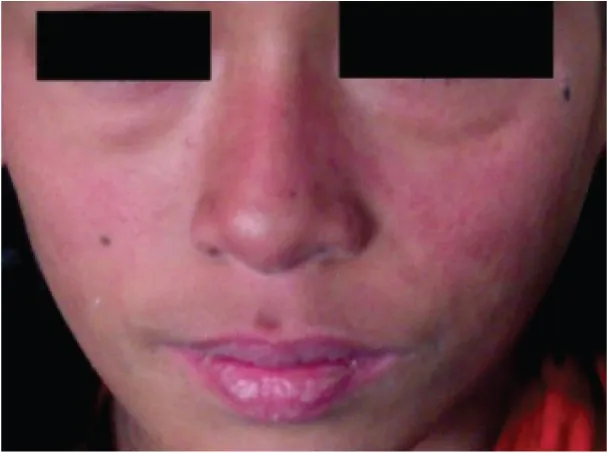
- A lupus malar rash covers both cheeks and the bridge of the nose and usually spares the folds running from nose to mouth.
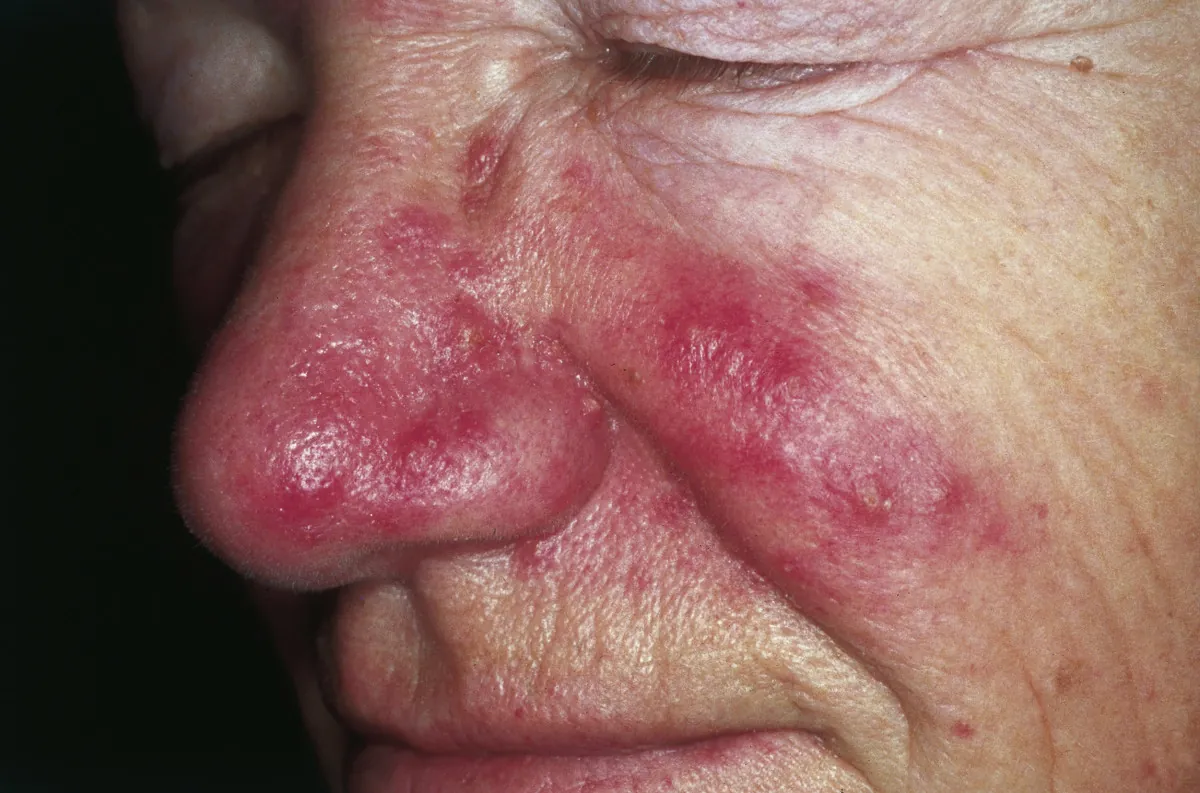
- Rosacea tends to bring flushing, bumps and visible vessels, and stays in the skin and eyes.
- A butterfly rash with joint pain, fevers, tiredness, mouth sores or hair loss needs a doctor and blood tests such as ANA.
- A positive ANA alone does not mean lupus; diagnosis combines history, exam, blood and urine tests, and sometimes a skin biopsy.
A lupus malar rash is a red or darker, sometimes raised and scaly rash across both cheeks and the bridge of the nose that usually spares the folds running from the sides of the nose to the corners of the mouth. Rosacea also reddens the cheeks and nose, but it tends to come with flushing, bumps and visible blood vessels, and it does not cause the joint pain, fevers, mouth sores or tiredness that can come with lupus. Most facial redness is not lupus, and only a doctor, with an exam and blood tests, can tell for sure.
Pori does not diagnose skin conditions; its selfie scans and photo diary in Pori can help you keep dated, consistent photos to show a dermatologist and see whether treatment is working.
What does a lupus malar rash look like?
The malar rash is also called the butterfly rash, because it spans both cheeks and the bridge of the nose like a butterfly's wings. The Johns Hopkins Lupus Center describes it as red, elevated, and sometimes scaly, and says it can be told apart from other rashes because it spares the nasal folds, the creases just beside the nose. The Lupus Foundation of America says it looks like a sunburn.
- Where: cheeks and bridge of the nose, sometimes the forehead and chin; the folds from nose to mouth usually stay clear.
- How it feels: it can burn or itch, though it may not bother you at all.
- How long: DermNet says the rash of acute cutaneous lupus can last from hours to days; Cleveland Clinic says lupus rashes in general can last days to weeks. It comes and goes.
- What sets it off: it can appear on its own or after sun exposure, and it may signal a lupus flare.
MedlinePlus says about half of people with systemic lupus develop this rash, and that it gets worse in sunlight.
What does it look like on brown and black skin?
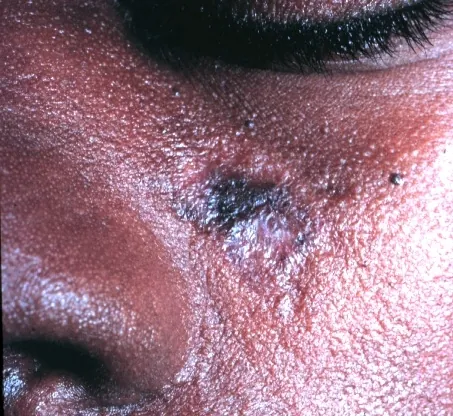
On darker skin, Cleveland Clinic says lupus rashes may look purple or brown rather than red, and healed patches can leave lighter or darker marks. Texture helps: look for raised, scaly or swollen skin over the cheeks, and note whether it appeared after time in the sun. NIAMS says lupus is more common in African American, American Indian and Asian people than in White people, so a butterfly-shaped rash on dark skin deserves a proper look.
How can you tell a malar rash from rosacea?
Several clues point one way or the other. None of them is proof on its own.
| Clue | Lupus malar rash | Rosacea |
|---|---|---|
| Folds beside the nose | Usually spared | Redness often reaches into the folds beside the nose |
| Bumps | Flat or slightly raised, sometimes scaly; no pus-filled spots | Often red bumps and pus-filled spots |
| Visible small vessels | Not typical | Common on lighter skin |
| Flushing | Not the usual pattern | Flushes with heat, hot drinks, alcohol, spicy food, exercise |
| Sun | Often triggered by sun or UV light | Sun is a common trigger too |
| Eyes | Swelling around the eyes can occur | Gritty, dry, sore eyes in about half of people at some point |
| Rest of the body | Often joint pain, fevers, tiredness, mouth sores, hair loss | Skin and eyes only |
Sun is the tricky one, because it can set off both conditions. The NHS lists lupus among the conditions that can look like rosacea, and DermNet includes systemic lupus in its list of rosacea look-alikes. Our guide to the types of rosacea describes rosacea's signs in detail, and rosacea vs acne covers the bumps.
The other strong clue is how you feel overall. Rosacea stays in the skin and eyes. Lupus is an autoimmune disease that can affect many parts of the body, so a facial rash with other symptoms matters more than the exact shape of the rash.
Which other lupus signs mean you should see a doctor?
NIAMS lists these common lupus symptoms. If you have a butterfly-shaped rash and any of them, book an appointment rather than treating the rash as a skin problem alone:
- Joint pain, swelling and morning stiffness.
- Fevers and frequent tiredness.
- Hair loss.
- Painless sores in the mouth or nose, often on the roof of the mouth.
- Fingers or toes that change color in the cold or with stress (Raynaud's phenomenon).
- Swollen glands, or swelling in the legs or around the eyes.
- Chest pain when breathing deeply or lying down.
- Rashes on other sun-exposed skin, or round scaly patches elsewhere on the body.
Get urgent care for chest pain, shortness of breath, confusion or seizures, or sudden swelling of the legs. NIAMS notes that lupus can affect the kidneys, heart and blood, which is why it needs proper testing.
Lupus most often starts between ages 15 and 45, and NIAMS says women get it about nine times more often than men. Rosacea, by contrast, usually begins after 30.
What other lupus rashes can show up on the face?
The malar rash belongs to acute cutaneous lupus. The Lupus Foundation of America says most people with lupus have skin problems, and that sometimes lupus affects only the skin. The other forms look different:
- Discoid lupus (chronic cutaneous lupus): round, disc-shaped, scaly patches, usually on the face and scalp, that can scar and leave lighter or darker skin.
- Subacute cutaneous lupus: red, scaly or ring-shaped patches on sun-exposed skin such as the neck and arms, which may return each summer.
Cleveland Clinic says cutaneous lupus is two to three times more common than systemic lupus, and that it can sometimes be the first sign of systemic disease.
How do doctors check for lupus?
There is no single test. NIAMS explains that doctors combine your history, family history and an exam with lab tests, and that a positive ANA does not mean you have lupus. MedlinePlus lists the tests usually ordered:
- ANA (antinuclear antibody): nearly everyone with systemic lupus tests positive, but many healthy people do too.
- Anti-double-stranded DNA antibodies and other specific antibodies, if the ANA is positive.
- Complement levels (C3 and C4).
- A complete blood count and kidney function tests.
- A urine test to look for protein.
For the skin, a dermatologist may take a small biopsy. Cleveland Clinic describes a direct immunofluorescence test on the sample, sometimes called the lupus band test, and notes that blood tests alone can't diagnose lupus. Most people with lupus are looked after by a rheumatologist, with a dermatologist for the skin.
How are a malar rash and rosacea treated?
Treatment depends on the diagnosis, which is the main reason to get one.
- Lupus skin rashes: strict sun protection, including broad-spectrum sunscreen, a hat and covering clothing; topical steroids or tacrolimus ointment; and antimalarial medicines such as hydroxychloroquine, which Cleveland Clinic says are the oral medicines used most often. Systemic lupus may need steroids, immunosuppressants or biologic drugs chosen by a rheumatologist.
- Rosacea: trigger control, gentle skincare and prescription creams or pills for redness and bumps. See rosacea triggers, the best face wash for rosacea and the best moisturizer for rosacea.
Don't start a steroid cream on a red face without a diagnosis. It can calm a lupus rash, but used for weeks on rosacea it can make things worse; our guide to steroid-induced rosacea explains why. Daily sunscreen helps both conditions; our guide to mineral sunscreen for sensitive skin covers gentle options.
What else can cause a red rash on the cheeks?
| Condition | How it differs |
|---|---|
| Seborrheic dermatitis | Greasy flakes in the folds beside the nose, eyebrows and hairline |
| Sunburn | Follows sun exposure, peels, and fades within days without other symptoms |
| Contact dermatitis | Itchy rash where a product touched the skin |
| Eczema | Itchy, dry patches, often with eczema elsewhere |
| Dermatomyositis | An autoimmune disease of the skin and muscles; facial redness comes with muscle weakness |
For more possibilities, see why is my face red and rash on face causes.
When should you see a doctor about a butterfly rash?
- A rash across both cheeks that spares the folds beside the nose, especially after sun exposure.
- Any facial rash with joint pain, fever, tiredness, mouth sores or hair loss.
- Swollen legs or puffiness around the eyes, which NIAMS lists among lupus symptoms.
- A rash that lasts for weeks, keeps returning, scars, or doesn't respond to treatment.
- You already have lupus and your symptoms change or a new one appears, as MedlinePlus advises.
Start with your primary care doctor or a dermatologist; you can find a dermatologist near you. They will refer you to a rheumatologist if tests point to lupus.
How can photos help at your appointment?
Facial rashes often fade before the appointment. Photos taken in daylight at the same distance, on the day the rash appears and a few days later, show its shape and whether it spared the folds beside the nose. Note what came before it, such as time in the sun, and any joint pain, fever or mouth sores, so your doctor sees the full picture.
Frequently asked questions
What does a lupus butterfly rash look like?
A red or darker rash across both cheeks and the bridge of the nose, sometimes raised and scaly, that usually spares the folds from the nose to the corners of the mouth. It can look like a sunburn and often appears after sun exposure.
How can I tell if my red cheeks are lupus or rosacea?
Rosacea often brings flushing, bumps and visible vessels and stays in the skin and eyes. Lupus usually spares the folds beside the nose and can come with joint pain, fevers, tiredness, mouth sores or hair loss. A doctor confirms it with an exam and blood tests.
Does a butterfly rash always mean lupus?
No. Rosacea, seborrheic dermatitis, sunburn, eczema and contact dermatitis can all cause redness across the cheeks. A rash that spares the nasal folds and comes with other symptoms is the one to get checked promptly.
What blood tests check for lupus?
Usually an ANA test, then specific antibodies such as anti-double-stranded DNA, complement levels (C3 and C4), a complete blood count, kidney tests and a urine test. A positive ANA alone does not mean lupus.
Can rosacea turn into lupus?
No. They are separate conditions. Rosacea is a long-term inflammatory skin condition, while lupus is an autoimmune disease that can affect many organs.
Does a lupus rash itch?
It can burn or itch, though some people feel nothing. Itch alone does not tell you which condition you have.
Sources
- Johns Hopkins Lupus Center: Skin and lupus
- NIAMS: Lupus
- NIAMS: Lupus diagnosis, treatment and steps to take
- MedlinePlus: Systemic lupus erythematosus
- Lupus Foundation of America: How lupus affects the skin
- Cleveland Clinic: Lupus rash
- Cleveland Clinic: Cutaneous lupus
- DermNet: Cutaneous lupus erythematosus
- NHS: Rosacea
Pori is a wellness and skincare education app, not a medical device. This article is for general information and isn't medical advice. For anything that worries you, see a dermatologist.