Pori

- Heat rash (miliaria) happens when sweat ducts block and sweat leaks into the skin, causing tiny bumps or clear blisters that prickle or itch.
- Crystallina is clear superficial blisters, rubra is red itchy prickly heat, and profunda is rare, deep, skin-colored bumps; on brown and black skin the rash can look grey or white.
- Babies get it easily, often from overdressing, on the neck folds, chest, back, hairline and diaper area.
- Cooling is the treatment: a cool room, loose cotton, cool showers and no heavy ointments; see a doctor for fever, pus or a rash that lasts beyond 3 days.
Heat rash, or miliaria, is a rash of tiny bumps or clear blisters that appears when sweat ducts get blocked and sweat leaks into the skin. It shows up after heat, humidity or heavy sweating, often on the neck, chest, back and skin folds, and it usually prickles or itches. Most heat rash fades within a day or two once the skin cools down.
Pori does not diagnose skin conditions; its selfie scans and photo diary in Pori can help you keep dated, consistent photos to show a dermatologist and see whether treatment is working.
What are the types of heat rash?
Doctors sort miliaria by how deep in the skin the sweat duct is blocked. DermNet describes four types. The deeper the block, the more inflamed and longer-lasting the rash.
| Type | Where the block is | What you see | Who gets it |
|---|---|---|---|
| Miliaria crystallina | The very top layer of skin | Clear, 1 to 2 mm blisters that break easily, with little or no redness | Most often newborns |
| Miliaria rubra (prickly heat) | Deeper in the outer skin | Red, 2 to 4 mm bumps that prickle and itch; the most common type | Babies, children and adults in hot, humid weather |
| Miliaria pustulosa | Same as rubra | Prickly heat with small pus-filled spots | A variant of prickly heat |
| Miliaria profunda | At the border of the outer and deeper skin | Firm, skin-colored bumps that often do not itch; the skin there may stop sweating | Rare; mainly adult men after repeated prickly heat in the tropics |
What does heat rash look like on light and dark skin?
The NHS describes small raised spots, an itchy or prickly feeling and mild swelling. On white skin the spots are red. On brown and black skin the NHS says the rash can be harder to see and may look grey or white. Feel for tiny bumps, and look at where they sit: in skin folds and under clothing that held sweat.
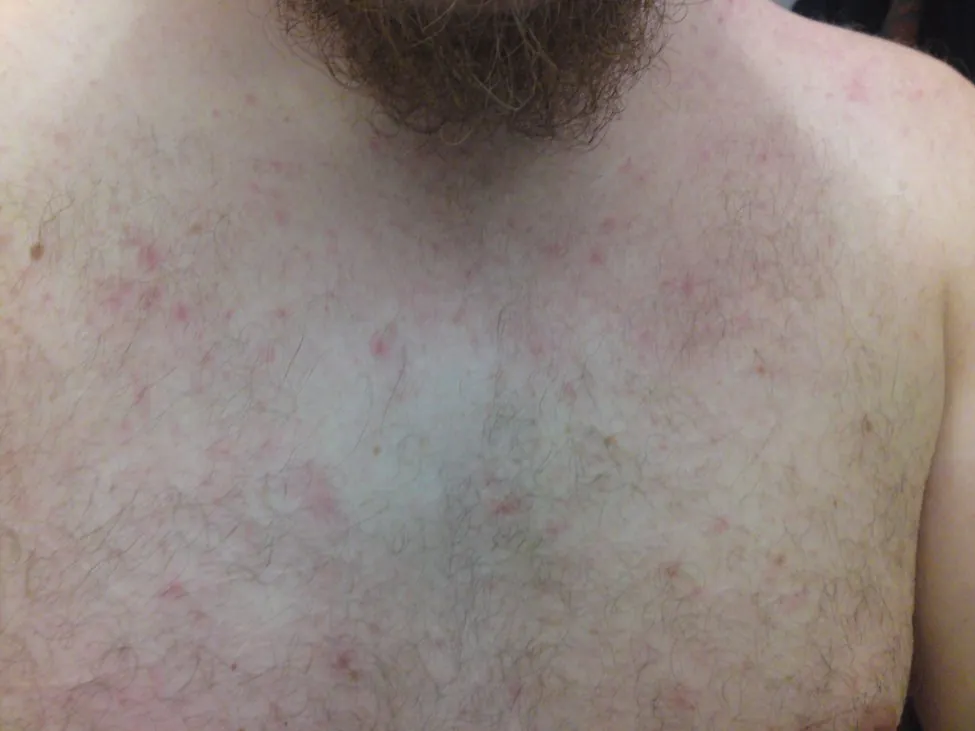
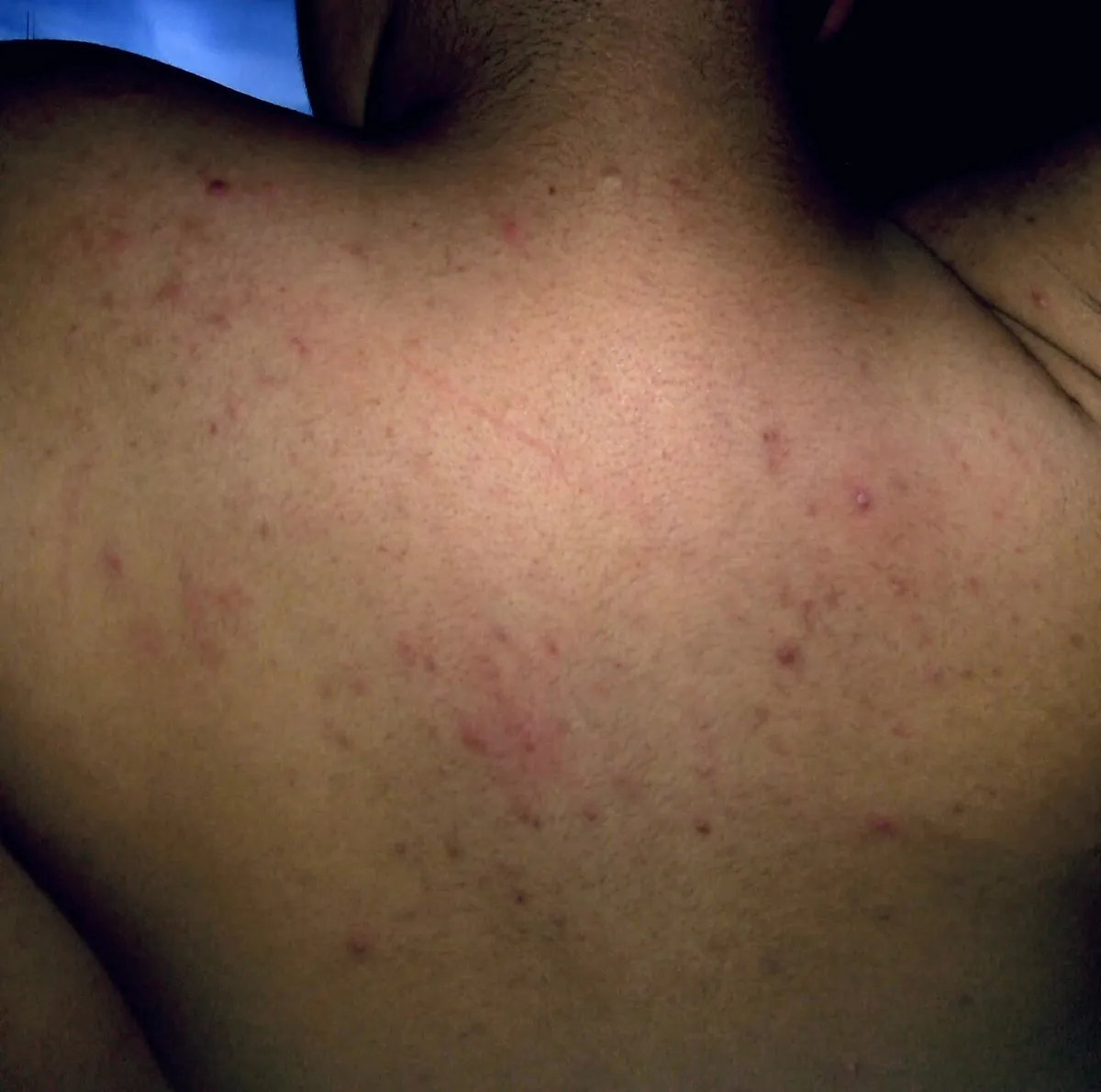
The CDC's workplace safety agency, NIOSH, describes it as red clusters of pimples or small blisters, usually on the neck, upper chest, groin, under the breasts and in elbow creases. On the forehead it can pass for a breakout.
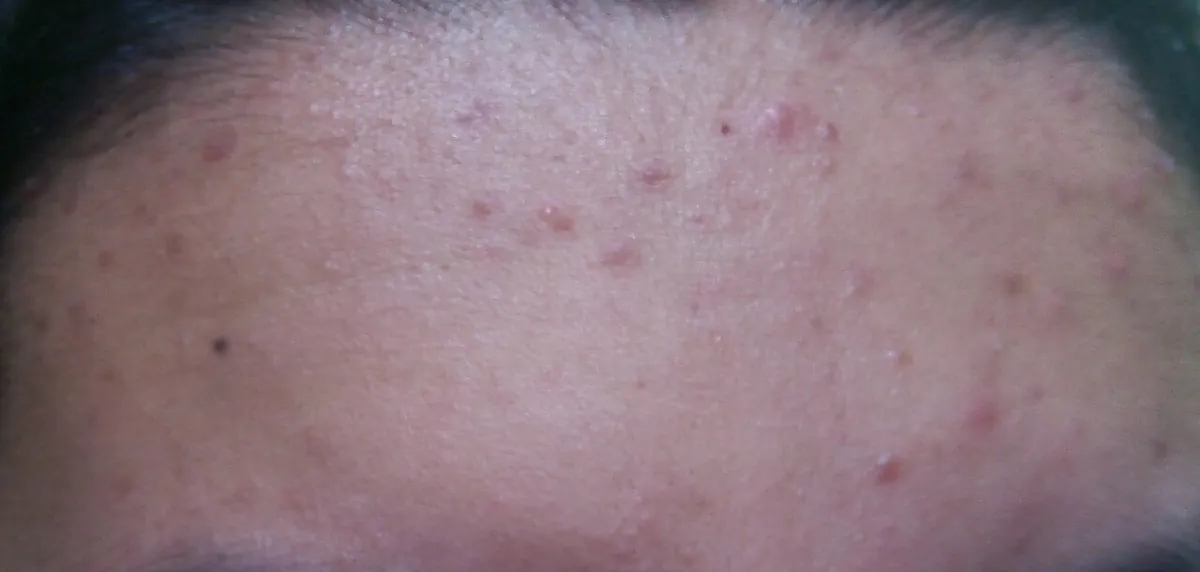
What causes heat rash?
DermNet defines miliaria as blockage or inflammation of the eccrine sweat ducts, the glands that cool you down. When sweat cannot reach the surface, it leaks into the surrounding skin and causes the bumps. Common triggers include:
- Hot, humid weather, especially soon after moving somewhere warmer. DermNet says up to 30% of adults who move to a hot, humid climate may develop prickly heat.
- Heavy exercise and fever.
- Tight or synthetic clothing, bandages and dressings that trap sweat. The friction and occlusion behind acne mechanica play a part here too.
- Long periods in bed, especially on waterproof mattresses or mattress protectors.
- Thick creams, oils and ointments. The AAP's heat rash symptom checker notes that hair oils can cause it on the forehead and menthol chest rubs on the chest, even in winter.
Heat rash is not an infection and is not contagious, the NHS says, even when it spreads across the body.
How is heat rash different in babies and adults?
Heat rash in babies
Babies get heat rash more easily. The NHS explains that their temperature control is less developed than an adult's. DermNet says miliaria crystallina affects up to 9% of newborns, at an average age of one week.
The American Academy of Pediatrics says heat rash is common in the first weeks of life and shows up on the upper chest and back, the neck fold, around the hair line or under the diaper. The usual cause is too many layers or blankets. An itchy baby may be extra wiggly or fussy.
A baby with heat rash should otherwise act normally. Cleveland Clinic notes that the child should not have a fever or other signs of illness. Babies also get other rashes in the first weeks, such as newborn acne and toxic erythema of the newborn, so ask your pediatrician if you are unsure.
Heat rash in adults
In adults, DermNet says heat rash tends to appear on the upper trunk, scalp, neck and skin folds, especially where clothing rubs. Athletes, outdoor workers, people in hot kitchens or warehouses, and travelers to the tropics are at higher risk. Adults are also the ones who can get the rare deep type, miliaria profunda. Because skin with profunda may stop sweating, DermNet advises learning the signs of heat exhaustion.
What else could it be?
Several rashes look like heat rash at first glance. Timing helps most: heat rash appears with heat and sweat and fades quickly once you cool down.
| Condition | How it differs from heat rash |
|---|---|
| Folliculitis | Each bump sits around a hair, often with a pus head, and it does not clear when you cool down. See folliculitis vs acne. |
| Acne or fungal acne | Blackheads and whiteheads, or uniform itchy bumps on the forehead and chest that last for weeks. See fungal acne vs regular acne. |
| Hives | Raised welts that move around within hours and can appear anywhere. See hives on the face. |
| Contact dermatitis | An itchy rash in the exact area a product or material touched, often with dry or scaly skin. See contact dermatitis. |
| Cold sores | A small cluster of blisters at the lip, with tingling first. See cold sore stages. |
For more bumps that are not acne, see bumps on the face that aren't acne.
How do you treat heat rash?
Cooling the skin is the treatment. DermNet says most cases resolve within a day or two after moving to a cooler environment, without any medicine.
Cool down
- Move to an air-conditioned room or use a fan. NIOSH advises working in a cooler, less humid place when you can.
- Take a cool bath or shower, then pat the skin completely dry.
- Wear loose cotton clothes and use light bedding, as the NHS suggests, and change out of damp clothes quickly.
- Drink enough fluids.
Ease the itch
- The NHS suggests a cold damp cloth or an ice pack wrapped in a tea towel for up to 20 minutes, and tapping or patting the rash instead of scratching.
- Avoid perfumed shower gels and creams.
- A pharmacist may suggest calamine lotion (made with zinc oxide), antihistamine tablets or hydrocortisone cream. The NHS says hydrocortisone is not for children under 10 without a doctor's advice. DermNet notes that calamine can dry the skin.
- Skip heavy ointments. NIOSH says not to use ointments and creams on heat rash, and the AAP warns that thick, greasy ointments can block sweat glands. Cleveland Clinic says a child's heat rash needs no lotions, oils, creams or ointments at all.
Cooling a baby
The AAP suggests a cool bath or cool, moist cloths, drying the skin fully, leaving the rash uncovered when you can, and dressing your baby in thin, loose cotton. A fan or air conditioning helps. Take off a layer rather than adding one.
What a doctor may prescribe
If heat rash is very itchy or does not settle, a doctor may suggest a mild steroid cream. If the bumps become infected, DermNet says antiseptics or antibiotics that target staph bacteria are used. Our skincare routine for humid climates and post-workout skincare guides cover lighter products for hot weather.
When should you see a doctor about heat rash?
For a baby or child, the AAP says to call the doctor if:
- The rash looks infected, with tenderness or pus.
- Your child has a fever.
- Your child is eating less or is less active.
- The rash is not gone after 3 days of home care, or gets worse over 24 hours.
The AAP says to seek care right away if your child has a fever with spreading redness or pus, or looks or acts very sick. Cleveland Clinic adds chills, pain, swelling, warmth, and swollen lymph nodes in the armpit, neck or groin as reasons to get care promptly.
For adults, the NHS says to see a doctor if the rash does not improve after a few days. Get help sooner for signs of infection or fever, or for firm, skin-colored bumps where you no longer sweat. Heat rash can come with overheating. Treat these as signs of heat exhaustion, which NIOSH lists as headache, nausea, dizziness, weakness, irritability, thirst, heavy sweating, raised body temperature and passing less urine: stop, move somewhere cool and drink fluids. Confusion, slurred speech, fainting, seizures or a very high temperature can mean heat stroke: NIOSH says to call 911 and cool the person quickly while you wait.
If a rash keeps coming back or you are not sure it is heat rash, a dermatologist near you can tell it apart from its look-alikes.
How can you prevent heat rash?
- Dress in loose, breathable fabrics such as cotton, and do not overdress babies.
- Keep bedrooms cool and well ventilated during heat waves.
- Shower and change after exercise or sweaty work.
- Use light, non-greasy products in hot weather. Our summer skincare routine has ideas.
- Build up to exercise slowly when you arrive somewhere hot.
Frequently asked questions
How long does heat rash last?
Most heat rash clears within a day or two once the skin cools down, according to DermNet. In babies, the AAP says to call the doctor if it is not gone after 3 days of home care.
Is heat rash contagious?
No. Heat rash comes from blocked sweat ducts, not an infection, and the NHS says it is not contagious even when it spreads across the body.
What does heat rash look like on a baby?
Tiny red bumps or clear dots on the neck fold, upper chest and back, around the hairline or under the diaper, usually after the baby was dressed too warmly. On darker skin the bumps can look grey or white.
Should I put cream on heat rash?
Usually not. NIOSH advises against ointments and creams, and the AAP says thick, greasy ointments can block sweat glands. Calamine lotion can ease itch, and the NHS says hydrocortisone cream is not for children under 10 without a doctor's advice.
What is the difference between miliaria crystallina and miliaria rubra?
Crystallina is a block at the very surface, giving clear blisters like sweat beads that do not itch. Rubra is a deeper block that causes red, itchy, prickly bumps and is the common prickly heat.
When is heat rash serious?
See a doctor for fever, pus, spreading redness, swollen glands, a baby who is feeding less or less active, or a rash that does not improve after a few days. Dizziness, nausea or headache in the heat can mean heat exhaustion.
Sources
Pori is a wellness and skincare education app, not a medical device. This article is for general information and isn't medical advice. For anything that worries you, see a dermatologist.