 Pori

- The four classic types of rosacea are erythematotelangiectatic (redness), papulopustular (bumps), phymatous (thickened skin) and ocular (eyes).
- Since 2017 the National Rosacea Society describes rosacea by its individual signs, or phenotypes, because most people have a mix.
- On brown and black skin, redness can look violet or brown or be hard to see, so bumps, burning and stinging are often the first clues.
- Treatment is matched to each sign; see a doctor urgently for eye pain, blurred vision or light sensitivity.
Rosacea has traditionally been sorted into four types: erythematotelangiectatic (redness and visible blood vessels), papulopustular (red bumps and pus-filled spots), phymatous (thickened skin, usually on the nose) and ocular (eye symptoms). Since 2017, the National Rosacea Society has described rosacea by its individual signs, called phenotypes, because most people have a mix of features that do not fit neatly into one type. On brown and black skin, the redness can look violet or brown or be hard to see, so bumps, burning and stinging are often the first clues.
Pori does not diagnose skin conditions; its selfie scans and photo diary in Pori can help you keep dated, consistent photos to show a dermatologist and see whether treatment is working.
What are the four types of rosacea?
The four subtypes come from the National Rosacea Society's first standard classification, published in 2002. Many health sites still use them, and they are a useful vocabulary. Cleveland Clinic describes them like this in its rosacea guide:
| Subtype | Main signs | Where |
|---|---|---|
| Erythematotelangiectatic (ETR) | Flushing, persistent redness, visible small blood vessels; skin may burn, sting or feel dry | Cheeks, nose, chin, forehead |
| Papulopustular | Red bumps (papules) and pus-filled bumps (pustules) on red skin, sometimes with swelling; no blackheads | Center of the face |
| Phymatous | Skin thickens and becomes bumpy; on the nose this is called rhinophyma | Mostly the nose; sometimes chin, forehead, ears, eyelids |
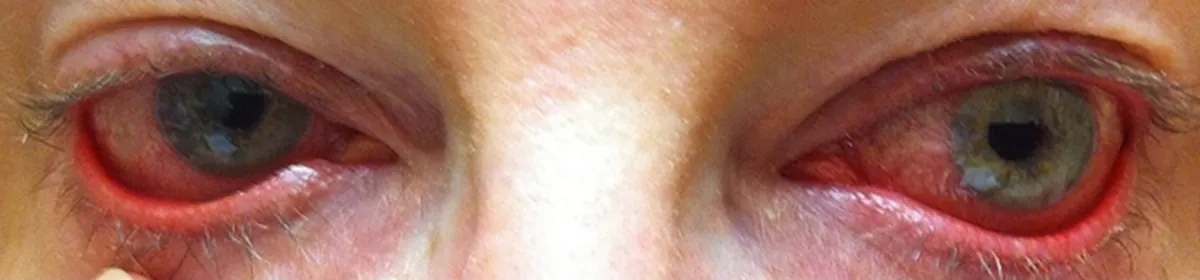
| Ocular | Dry, gritty, burning or watery eyes, red eyelid rims, styes, light sensitivity | Eyes and eyelids |
Erythematotelangiectatic rosacea
This is the redness type. The AAD says flushing is often where rosacea begins, and that over time the flush can last longer until the color stays for weeks, months or longer. Small visible blood vessels are common on lighter skin, especially on the cheeks and nose. Many people with this type also notice that products, or even water, burn or sting. Our guide to rosacea triggers covers the heat, sun, drinks and foods that set off flushing.
Papulopustular rosacea
This type brings breakouts that look like acne on top of central redness. The AAD notes that the bumps occur on all skin tones. The key difference from acne is that rosacea does not cause blackheads or whiteheads; our rosacea vs acne guide walks through the rest.
Phymatous rosacea
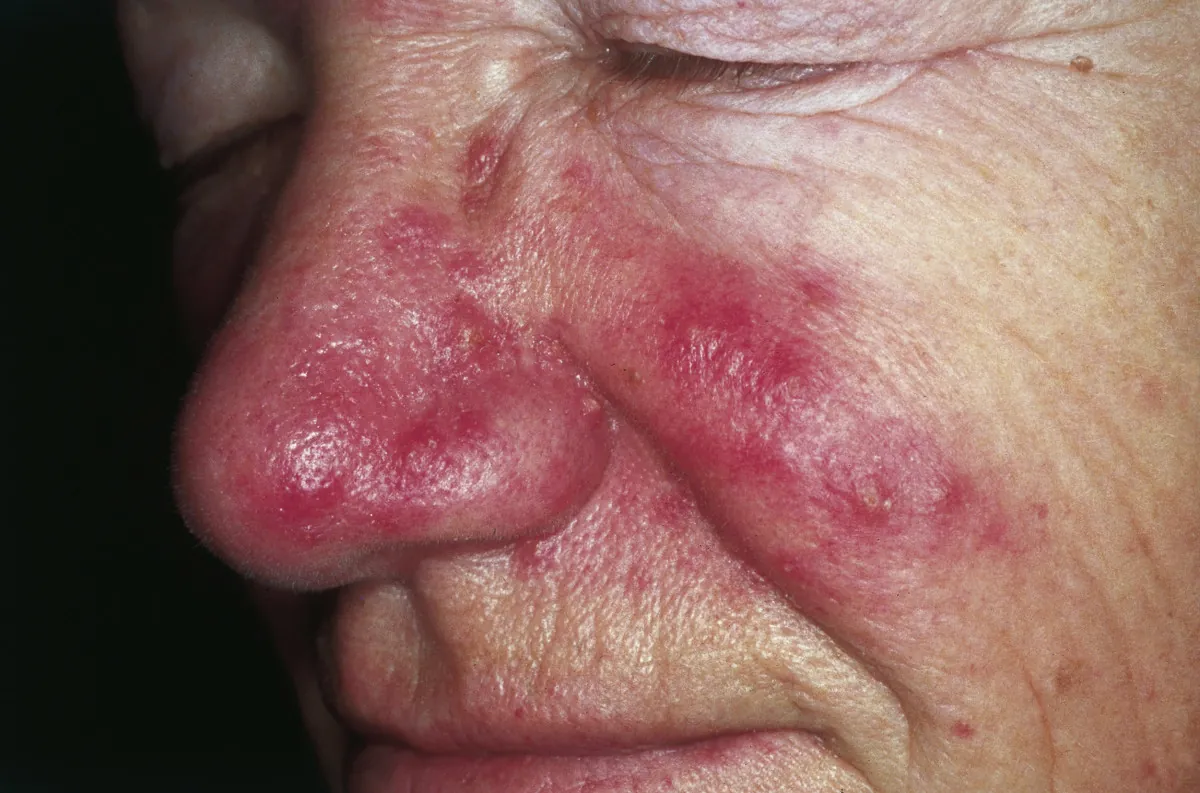
Here the skin thickens. DermNet explains that it comes from overgrowth and scarring of the oil glands, that the nose is most often affected, and that it is more common in men. The AAD says thickened skin is less common and typically develops after years without treatment. It can also affect the chin, ears, forehead or eyelids.
Ocular rosacea
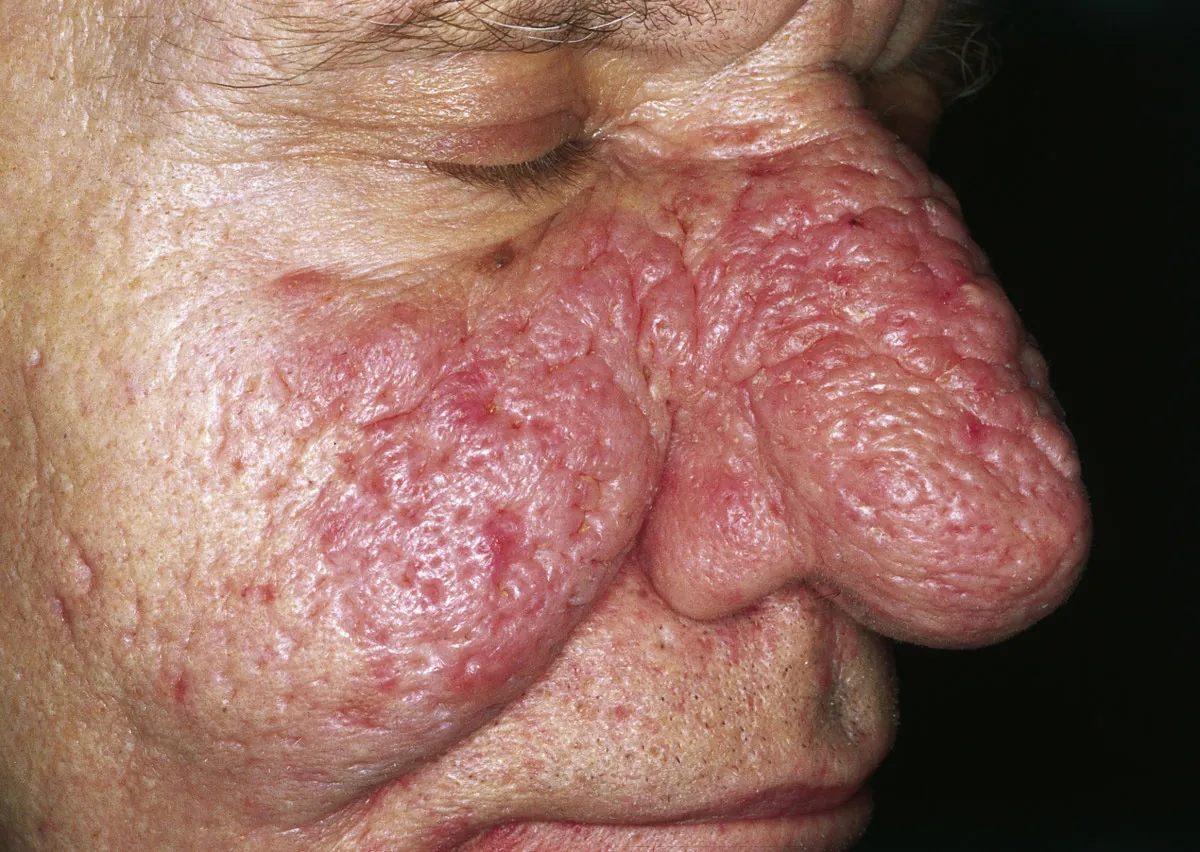
Rosacea can affect the eyes even when the skin is mild. The AAD estimates that 50% of people who have rosacea will have a flare-up that affects their eyes. Signs include gritty, dry or itchy eyes, tearing, burning, light sensitivity, red eyes, crusts on the lashes and small cysts on the eyelids. The National Rosacea Society warns that severe cases can damage the cornea and affect vision without medical care.
What changed with the 2017 phenotype approach?
In 2017 a committee of 28 rosacea experts convened by the National Rosacea Society updated the classification. Their paper, published in the Journal of the American Academy of Dermatology in 2018, says research over the previous 15 years pointed to one consistent disease process underneath rosacea's different signs. So instead of assigning each person a subtype, the update describes rosacea by the signs it produces, called phenotypes. A person with redness, bumps and sore eyes is simply described as having those three phenotypes.
The update sorts the phenotypes into three levels, as summarized at its release:
- Diagnostic: persistent redness of the central face that can flare with triggers, or, less commonly, phymatous thickening. Either one alone is enough for a diagnosis.
- Major: flushing, papules and pustules, visible blood vessels (telangiectasia) and certain eye signs, such as small vessels on the eyelid margin and bloodshot eyes. Two or more major phenotypes are also enough for a diagnosis.
- Secondary: burning or stinging, swelling and a dry appearance. These count only alongside a diagnostic or major phenotype.
A global panel called ROSCO adopted a similar sign-based approach the same year, and DermNet uses its criteria: one diagnostic feature or two major features. The committee called its system provisional, open to change as the causes of rosacea become clearer.
Why does the phenotype approach matter to you?
It matches treatment to what you actually see and feel. Redness, bumps, visible vessels, thickened skin and eye symptoms each respond to different treatments, so a dermatologist builds a plan sign by sign. It also explains why you may have read that your "type" changed: most people never fit one box. When you see a dermatologist, describing each sign separately (how often you flush, whether the redness fades, whether you get bumps, whether your eyes are sore) is more useful than naming a subtype.
What does rosacea look like on brown and black skin?
Rosacea happens on every skin tone, and it is easier to miss on darker skin. The AAD describes how it can look:
- Redness may look red, violet or brown on the nose and cheeks.
- Flushing may show only as warmth on the cheeks.
- Acne-like bumps may be the first visible sign.
- Darker patches of hyperpigmentation can appear alongside breakouts.
- Small blood vessels are hard to see.
A 2018 review led by dermatologist Andrew Alexis found that rosacea in skin of color is likely underdiagnosed. The National Rosacea Society's summary says darker skin tones make persistent redness more difficult to detect, that post-inflammatory hyperpigmentation can mask it, and that rosacea is often not diagnosed until later stages. The authors suggest paying close attention to burning or stinging, changes in the skin's appearance and a history of skin problems. DermNet adds that clinicians may weigh burning, stinging, swelling and dryness more heavily in darker skin.
If your skin stings with products, feels hot after a hot drink, and breaks out on the cheeks without blackheads, mention all of it, even if nobody can see redness. Our guide to a skincare routine for dark skin covers gentle basics and sun protection.
Who gets rosacea, and is it contagious?
Cleveland Clinic says rosacea affects more than 14 million people in the US, most often women and people with fair skin, usually starting after age 30. You are more likely to have it if a family member does. Men may have more severe symptoms, partly because they tend to delay treatment, and thickened skin is more common in men. Rosacea is not contagious, and the NHS says it is not caused by poor hygiene. The cause is not fully known.
What else can look like rosacea?
The NHS lists acne, dermatitis, lupus and keratosis pilaris as conditions that can look similar. These are the usual ones:
| Condition | How it differs |
|---|---|
| Acne | Blackheads and whiteheads; often on the chest and back; no flushing pattern |
| Seborrheic dermatitis | Greasy yellow or white flakes in the eyebrows, beside the nose and along the hairline |
| Perioral dermatitis | Tiny bumps around the mouth, nose or eyes, often with a clear band of skin at the lip line |
| Steroid-induced rosacea | Starts after weeks of a steroid cream on the face and can flare when it is stopped |
| Lupus malar rash | Butterfly rash that usually spares the folds from nose to mouth, often with other symptoms such as joint pain or fatigue |
| Contact dermatitis | Itchy rash where a product touched the skin; clears when you stop it |
For a wider look at causes of facial redness, see why is my face red.
How is each type of rosacea treated?
There is no cure, but treatment controls symptoms, and the NHS says rosacea can get worse without it. Every plan starts with the same base: knowing your triggers, a gentle routine and daily sun protection. Our roundups of the best face wash for rosacea and the best moisturizer for rosacea cover product choices. DermNet, drawing on the ROSCO recommendations, lists treatments by sign:
- Flushing and persistent redness: prescription creams or gels that narrow blood vessels (brimonidine, oxymetazoline), and vascular laser or intense pulsed light. Some people are offered oral medicines for flushing.
- Papules and pustules: topical azelaic acid, ivermectin or metronidazole; oral antibiotics from the tetracycline family, such as doxycycline, for more widespread bumps; low-dose isotretinoin for stubborn cases.
- Visible blood vessels: vascular laser, intense pulsed light or electrodesiccation. Creams do not remove them.
- Phymatous changes: doxycycline or isotretinoin while the skin is inflamed; laser, radiofrequency or surgery to reshape thickened tissue.
- Ocular rosacea: warm compresses and gentle lid cleansing, plus prescription eye treatments or oral antibiotics, often with an eye doctor involved.
DermNet also advises avoiding exfoliants, alcohol-based products and topical steroids, which can make rosacea worse. The AAD says topical medicine for bumps may bring a slight improvement in 3 or 4 weeks, with a noticeable difference usually taking 2 to 3 months; redness and vessels often need procedures. Dosing and choice of medicine are for your clinician.
When should you see a doctor about rosacea?
- Any eye symptoms. The NHS advises an urgent appointment for a painful eye, blurred vision, light sensitivity, a red eye or a gritty feeling, which can be signs of keratitis.
- Your nose or other skin is thickening. Early treatment can slow it.
- Redness stays most of the time, or flushing is getting longer.
- Acne products made your face redder or more sensitive.
- The rash comes with joint pain, fever or tiredness, or you are not sure it is rosacea.
You can find a dermatologist near you. Bring photos of a flare, because redness may have faded by the day of your visit.
How can photos help you describe your rosacea?
Because the phenotype approach looks at each sign, a photo log is useful. Take a picture in the same light, at the same distance and time of day, a few times a week and during flares. Note what came before each flare and whether your eyes felt sore. Over a month or two, that record shows your dermatologist which signs you have and whether treatment is working, especially on darker skin, where redness can be hard to judge in a single visit.
Frequently asked questions
What are the 4 types of rosacea?
Erythematotelangiectatic (redness and visible blood vessels), papulopustular (red bumps and pus-filled spots), phymatous (thickened skin, usually on the nose) and ocular (eye symptoms). These subtypes date from the National Rosacea Society's 2002 classification.
Are rosacea subtypes still used?
Many sites still use them, but in 2017 the National Rosacea Society moved to a phenotype approach that describes each sign separately, because most people have a mix of features. Treatment is matched to each sign.
Can you have more than one type of rosacea?
Yes. Many people have redness, bumps and eye symptoms at the same time, which is one reason the 2017 update describes rosacea by individual signs instead of one subtype per person.
What does rosacea look like on black skin?
Redness may look violet or brown, or be hard to see, and flushing may feel only like warmth. Acne-like bumps, darker patches, burning and stinging are often the first clues, according to the AAD.
Which type of rosacea is the most serious?
Ocular rosacea needs the quickest attention, because untreated eye inflammation can damage the cornea. See a doctor urgently for eye pain, blurred vision, light sensitivity or a red, gritty eye.
Can rosacea turn into rhinophyma?
Thickened skin is less common and usually develops after years without treatment, more often in men. Treating rosacea early and seeing a dermatologist if your nose starts to thicken can help.
Sources
- American Academy of Dermatology: Rosacea signs and symptoms
- National Rosacea Society: Classification of rosacea (2017 update)
- Practical Dermatology: NRS introduces new standard classification and pathophysiology of rosacea
- National Rosacea Society: Rosacea may be underdiagnosed in skin of color
- National Rosacea Society: All about rosacea
- DermNet: Rosacea
- Cleveland Clinic: Rosacea
- NHS: Rosacea
Pori is a wellness and skincare education app, not a medical device. This article is for general information and isn't medical advice. For anything that worries you, see a dermatologist.