Pori

- Hidradenitis suppurativa (HS) is a long-term inflammatory disease that causes painful, deep lumps that keep returning where skin touches skin: armpits, groin, under the breasts and buttocks.
- It is not caused by poor hygiene and is not contagious; it starts in clogged hair follicles, runs in families, and smoking and extra weight make it worse.
- Hurley stages I to III track the move from single lumps to tunnels and scars; on brown and black skin lumps may look brown rather than red, and diagnosis is often delayed.
- Treatment includes antimicrobial washes, antibiotics, hormonal therapy, steroid injections, biologics (adalimumab, secukinumab, bimekizumab), laser hair removal and surgery; see a dermatologist early.
Hidradenitis suppurativa (HS) is a long-term inflammatory skin disease that causes painful lumps like deep pimples or boils in the armpits, groin, under the breasts and on the buttocks. The lumps keep coming back in the same areas, can break open and drain, and over time can leave tunnels under the skin and scars. It is not caused by poor hygiene and is not contagious, and a dermatologist can treat it, so see one early, ideally while the lumps are still few.
Pori does not diagnose skin conditions. The photo diary in Pori can help you keep dated, consistent photos to show a dermatologist and to see whether treatment is working. If you think you have HS, you can find a board-certified dermatologist near you; early treatment is the single most useful step.
This guide explains what HS looks like at each stage, why it happens, the conditions it is confused with, and the treatments that work, including the newer biologic medicines.
What are the first signs of hidradenitis suppurativa?
The American Academy of Dermatology (AAD) says that before a lump appears, an area of skin may feel tender or painful and may swell. Some people notice burning, itching or heavy sweating. The first visible sign is often a painful lump that looks like a deep pimple, acne cyst or boil.
What makes HS different from an ordinary boil is the pattern. The lumps:
- Come back again and again, often in the same spots
- Appear where skin touches skin
- Sit deep under the skin and feel sore
- May join together, fill with fluid and break open, draining blood and pus that can smell and stain clothing
- Leave small blackhead-like spots in more advanced disease
If you have had more than a couple of painful lumps in your armpits or groin, especially ones that return, it is worth asking a dermatologist about HS.
Where does HS appear on the body?
The AAD says HS usually develops on parts of the body where skin touches skin. The NHS lists the groin, bottom, breasts and armpits as the usual places, and also the back of the neck, the waistband and the inner thighs.
- Armpits: a common area.
- Groin and inner thighs: lumps in the folds where the leg meets the body.
- Under the breasts: in the fold where skin rests on skin.
- Buttocks and the area between them.
- Less often: near the ear, around the belly button, the back of the neck, the face or the back.
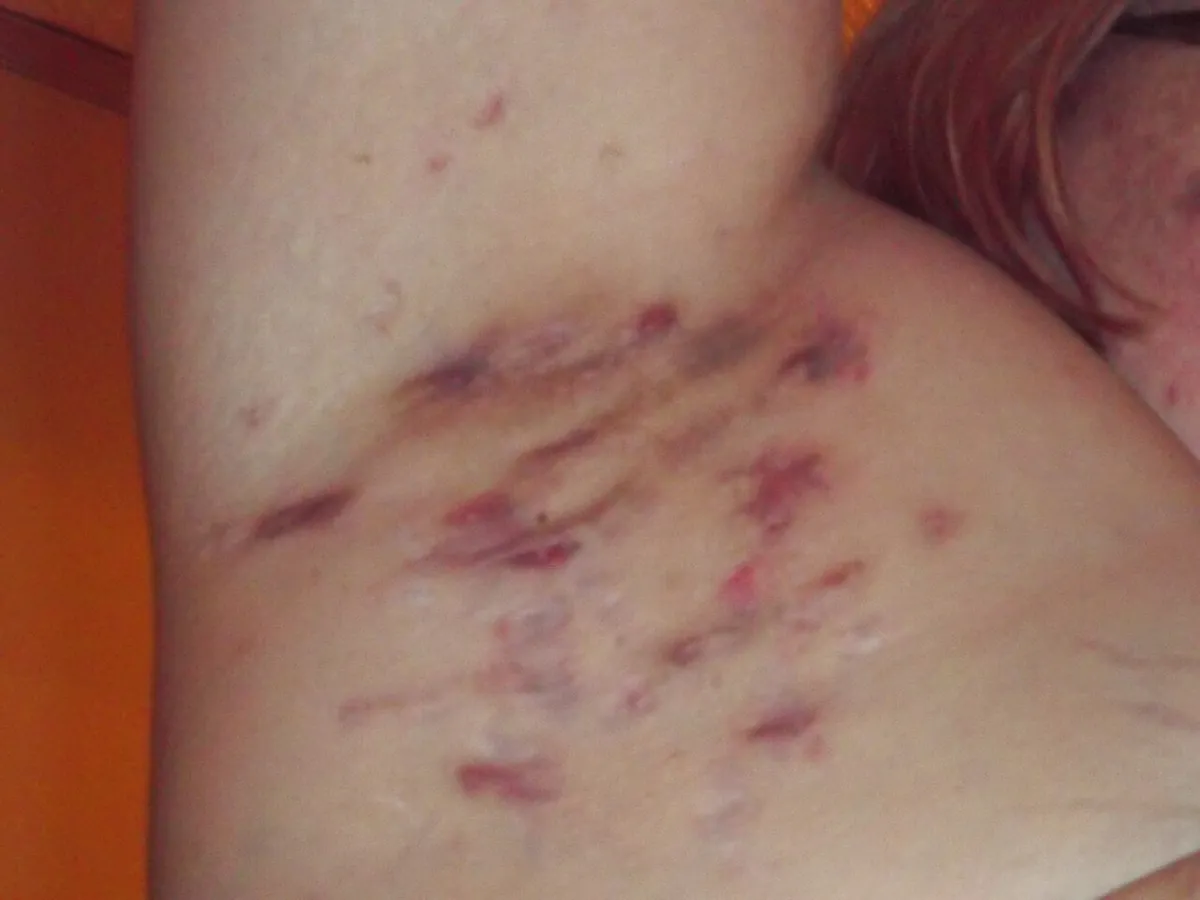
The photos in this guide show the armpit only. The same kinds of lumps, drainage and scars occur in the groin and other folds.
What does HS look like at each stage?
Doctors often grade HS with the Hurley stages, which describe how far the disease has gone in an area. DermNet defines them as:
| Stage | What it means | What you might see |
|---|---|---|
| Hurley I (mild) | Single or multiple abscesses without tunnels or scarring | One or a few sore lumps that come and go |
| Hurley II (moderate) | Recurring abscesses with tunnels (sinus tracts) and scarring | Lumps separated by normal skin, with some scars and draining spots |
| Hurley III (severe) | Many interconnected tunnels and abscesses across the whole area | Linked lumps, constant drainage and rope-like scars across the area |
The point of staging is practical: tunnels and scars are harder to treat and often need procedures. The NHS says it is important to recognise and diagnose the condition in its early stages to prevent it getting worse.
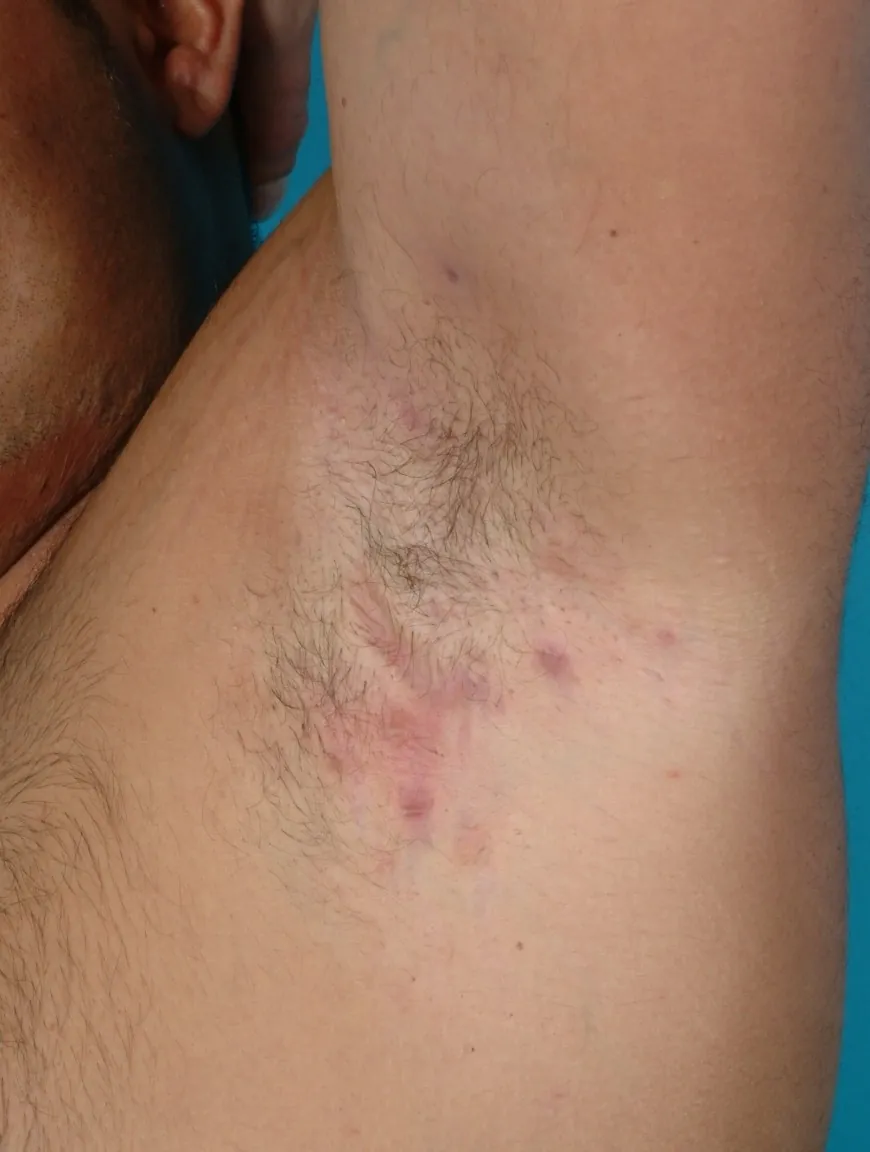
How does HS look on brown and black skin?
On lighter skin, inflamed lumps look red or pink. On darker skin the redness can be hard to see. Speaking at a Skin of Color Society session in 2026, dermatologist Julia Riley described inflamed lesions in skin of color as often appearing hyperpigmented or brown, and advised doctors to feel for warmth and tenderness. After flares, dark patches often remain, and people with brown and black skin have a higher risk of thick, raised keloid scars at HS sites.
This matters because HS is common in these groups. The AAD says that in the US, young women who are African American or biracial are most likely to get HS. Yet in a 2022 study of 953 patients at a US academic center, diagnosis took longer for Black patients: 4.8 years on average, versus 3.2 years for white patients.
What causes HS? Is it a hygiene problem?
No. The NHS states plainly that HS is not infectious and isn't linked to poor hygiene, and DermNet says the same. The AAD advises against scrubbing the skin.
The AAD explains that HS starts in hair follicles that become clogged and then burst under the skin, setting off inflammation. The exact cause is still a bit of a mystery, but several factors are known:
- Family history: DermNet says about one in three people with HS has a parent, brother or sister with it.
- Sex and age: HS is more common in women and usually starts between puberty and age 40.
- Smoking: the AAD calls it the most common trigger, and the NHS says smoking and obesity are both strongly associated with HS.
- Weight: the AAD says being overweight also seems to trigger HS.
The NHS estimates HS affects about 1 in 100 people. You cannot catch it from anyone or pass it on.
What conditions travel with HS?
DermNet lists metabolic syndrome, inflammatory bowel disease, and depression and anxiety among conditions that occur more often with HS. The NHS notes the lumps can become infected and need antibiotics. If you also have joint pain, tell your dermatologist, as the AAD advises.
What else can look like hidradenitis suppurativa?
| Condition | How it differs from HS |
|---|---|
| Single boil (abscess) | One hot, painful lump that drains and heals; it does not keep returning in the same folds |
| Folliculitis | Many small, shallow pus bumps around hairs; no deep lumps or tunnels |
| Razor bumps and ingrown hairs | Small bumps after shaving, often with a visible hair; ease when you stop shaving |
| Skin cyst | Usually a single smooth lump that stays in one place |
| Cystic acne | Deep lumps on the face, chest and back rather than the armpits and groin |
HS is often mistaken for repeated boils for years. A dermatologist usually diagnoses it from how the lumps look, where they are and how often they return.
How is hidradenitis suppurativa treated?
Treatment can reduce flares, pain and drainage. The AAD says an accurate diagnosis and an individualized plan can help prevent this condition from worsening. Most people need a mix of the options below.
Skin care and self-care
The AAD's tips for patients include:
- Wash with an antimicrobial wash, and stop scrubbing
- Wear looser clothing to cut friction
- Avoid waxing and take care when shaving; laser hair removal can reduce flares
- Use a mild antiperspirant without alcohol, baking soda, parabens, dyes or fragrance
- Ease a painful lump with a warm, clean washcloth for 10 minutes, several times a day
- Stop smoking, and lose weight if you are overweight
Don't squeeze or try to drain lumps yourself. If a lump needs draining, a dermatologist can do it safely.
Prescription medicines
- Antibiotics: the AAD notes HS is not an infection, but antibiotics are often used for their anti-inflammatory effect, such as topical clindamycin for mild disease or antibiotic pills for more.
- Hormonal treatment: for some women, spironolactone or certain birth control pills can help; spironolactone can't be used in pregnancy.
- Retinoids: the NHS lists them among the medicines used for HS.
- Steroid injections: a corticosteroid injected into a painful lump that is not infected can calm the inflammation.
Biologics
Biologics are injected medicines that block specific parts of the immune response that drive HS. The AAD lists three that the FDA has approved for moderate to severe HS:
- Adalimumab (Humira and other brands): the first approved, for people 12 years of age and older.
- Secukinumab (Cosentyx): reduces painful nodules and abscesses.
- Bimekizumab (Bimzelx): approved for adults; it targets two immune proteins.
All three are self-injected at home after training. DermNet notes biologics are used when other treatments do not control the disease well enough.
Procedures and surgery
Laser hair removal is usually given every 4 to 6 weeks, and the AAD says it may take months to see improvement. For lumps and tunnels that keep coming back, a dermatologist can open and clean out the tunnel in the office (often called deroofing) or remove the affected skin. The NHS notes surgery may be needed in severe or persistent cases.
When should you see a dermatologist about HS?
Earlier is better. See a dermatologist if:
- You have a tender, deep lump in the armpit, groin, under the breasts or on the buttocks, especially if it comes back
- Lumps keep returning in the same areas, or you have been treated for "boils" more than once
- Lumps drain, leave scars or form tunnels under the skin
- Pain makes it hard to walk, raise your arms or work
- You also have joint pain or bowel symptoms
- The condition is affecting your mood; the NHS notes HS can lead to depression, and help is available
Get medical care quickly for a lump with spreading redness, fever or feeling unwell, which can mean infection.
Frequently asked questions
What does hidradenitis suppurativa look like at first?
Usually a tender, painful lump like a deep pimple or boil in the armpit, groin, under the breasts or on the buttocks. The skin may feel sore, itchy or burning before the lump appears. The key sign is that lumps keep coming back in the same areas.
Is hidradenitis suppurativa caused by poor hygiene?
No. HS is not caused by being unclean and is not contagious. It starts in clogged hair follicles that burst under the skin. Gentle antimicrobial washing helps, but scrubbing harder does not.
What are the Hurley stages of HS?
Hurley I is one or more abscesses without tunnels or scars. Hurley II is recurring abscesses with some tunnels and scars. Hurley III is many connected tunnels and abscesses across an area.
Can hidradenitis suppurativa be treated?
Yes. Options range from antimicrobial washes and antibiotics to biologic injections and surgery. Diagnosing and treating it early helps keep it from getting worse.
What biologics are approved for HS?
In the US, the FDA has approved adalimumab, secukinumab and bimekizumab for moderate to severe HS. They are injected at home and are usually used when other treatments are not enough.
Who should I see for hidradenitis suppurativa?
A board-certified dermatologist. HS is often mistaken for repeated boils, so mention that the lumps keep coming back in the same areas.
Sources
- American Academy of Dermatology: Hidradenitis suppurativa: Signs and symptoms
- American Academy of Dermatology: Hidradenitis suppurativa: Causes
- American Academy of Dermatology: Hidradenitis suppurativa: Diagnosis and treatment
- American Academy of Dermatology: Hidradenitis suppurativa: Tips dermatologists give their patients
- NHS: Hidradenitis suppurativa
- DermNet: Hidradenitis suppurativa
- Serrano L et al. Racial disparities of delay in diagnosis and dermatologic care for hidradenitis suppurativa. J Natl Med Assoc, 2022 (PubMed)
- HCPLive: Tips for Recognizing Hidradenitis Suppurativa in Skin of Color, With Julia Riley, MD (2026)
- Alikhan A et al. North American clinical management guidelines for hidradenitis suppurativa, Part II. J Am Acad Dermatol, 2019 (PMC)
Pori is a wellness and skincare education app, not a medical device. This article is for general information and isn't medical advice. For anything that worries you, see a dermatologist.