 Pori

- About half of people with psoriasis get it on the face at some point, most often at the hairline, eyebrows, ears and the folds beside the nose.
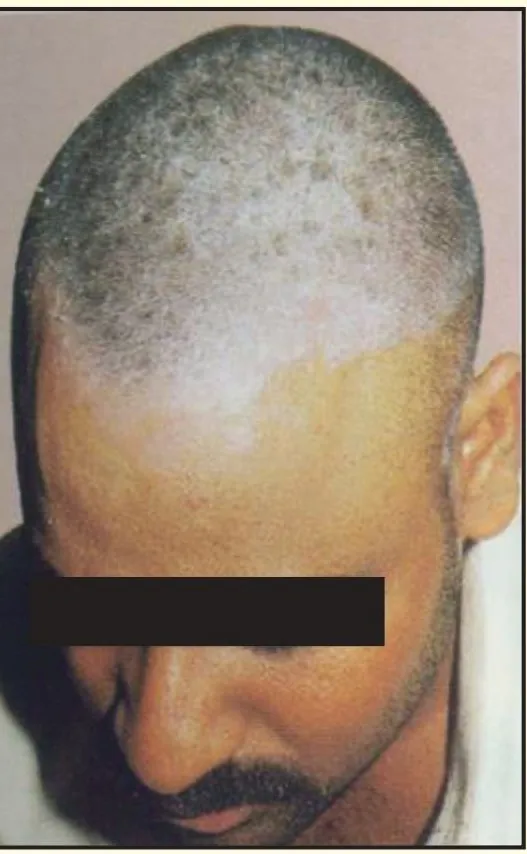
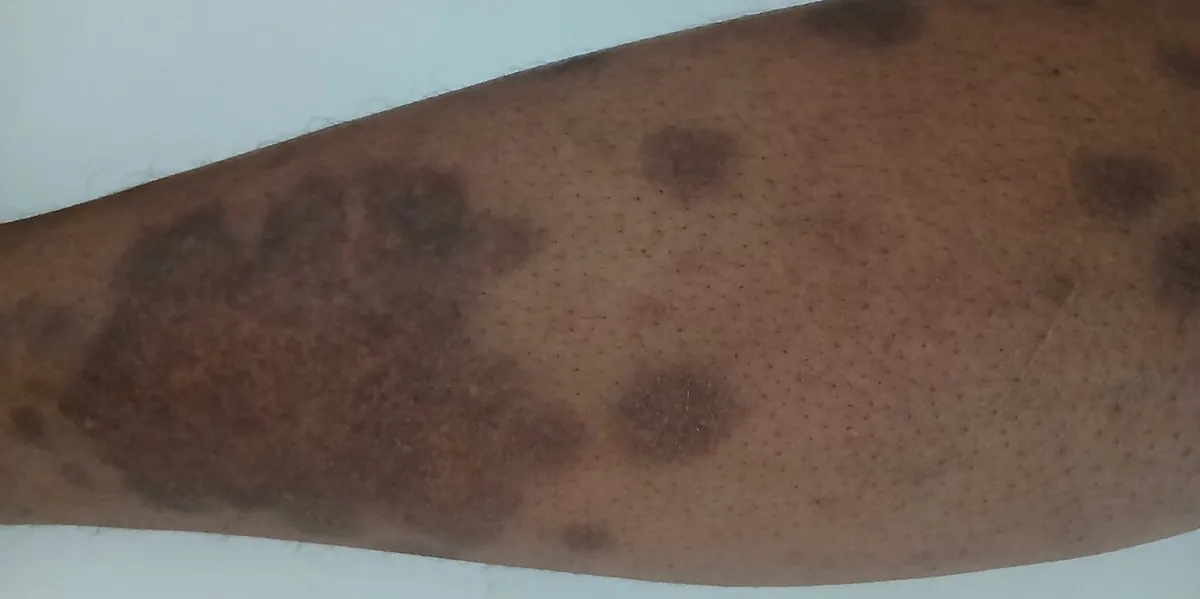
- Plaques look pink or red with silvery scale on lighter skin and purple, gray or dark brown on darker skin, and they can leave dark marks after they clear.
- Sebopsoriasis sits between psoriasis and seborrheic dermatitis: thinner, salmon-pink plaques with finer, greasier scale in the same oily zones.
- Facial skin is thin, so doctors favor mild steroids for short periods, calcineurin inhibitors and other nonsteroid creams; it isn't contagious, and joint pain or sudden widespread redness needs a doctor.
Psoriasis on the face is a chronic immune-driven rash that forms sharply outlined, scaly plaques, usually at the hairline, on the forehead, in the eyebrows, around the ears and in the folds beside the nose. The plaques look pink or red with silvery-white scale on lighter skin and purple, gray or dark brown on darker skin. DermNet notes it usually comes with psoriasis elsewhere, such as the scalp, ears, elbows or knees.
Pori does not diagnose skin conditions. The selfie scans and photo diary in Pori can help you keep dated, consistent photos of your face to show a dermatologist and to see whether a treatment is working.
Below we cover what facial psoriasis looks like on different skin tones, how it differs from seborrheic dermatitis and the overlap called sebopsoriasis, what triggers it, how it's treated on thin facial skin, and the signs that mean you should see a doctor soon.
What does psoriasis on the face look like?
It looks like raised, well-defined patches with dry scale. The National Psoriasis Foundation (NPF) describes plaques as "raised, inflamed, and scaly patches of skin" and says roughly 50% of people living with psoriasis have it on their face. DermNet, the New Zealand dermatology reference, describes three patterns on the face:
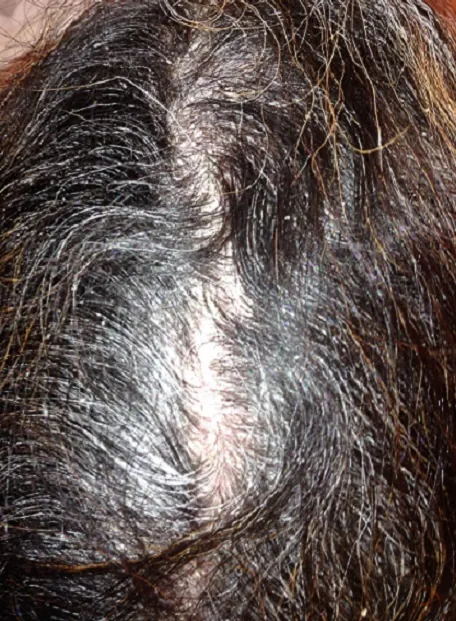
- Hairline psoriasis: scalp psoriasis that spills past the hairline onto the forehead, temples and the skin around the ears, with thick plaques and white scale.
- Sebopsoriasis: thin, salmon-pink plaques with fine, bran-like scale on the eyebrows, eyelids, nose folds and beard area, usually alongside scalp psoriasis.
- True facial psoriasis: sharply outlined, red, scaly plaques that can appear anywhere on the face, often on both sides, and usually with psoriasis on other parts of the body.
The NPF lists the upper and lower forehead, eyebrows, eyelids, the skin around the nose, the ears and the skin around the mouth as places it shows up. It also notes that facial psoriasis is more common in people who have had psoriasis for a long time, have a family history of it, or have more severe disease. It can itch, sting or feel sore, and DermNet points out that visible plaques often cause real distress.
How psoriasis looks on brown and black skin
Color is the biggest difference. The NPF says plaques on darker skin "may appear darker, thicker, and more of a purple or grayish color or darker brown". The NHS describes patches on brown and black skin as gray and warns they can leave dark marks after they clear. Because the redness that textbooks describe may be hard to see, the scale and the sharp border are often the better clues. The dark marks fade slowly, which is one reason to treat early and to protect the area from sun.
Psoriasis around the eyes and ears
Psoriasis on the eyelids is uncommon. The NPF says it is rare but can cause redness or discoloration and dryness, and in some cases can affect vision, so any rash on the lids or around the eyes belongs with a doctor. Scale in and around the ears is more common and often comes with scalp psoriasis.
What causes facial psoriasis, and is it contagious?
Psoriasis comes from the immune system and genes. The American Academy of Dermatology (AAD) explains that immune cells mistakenly attack skin cells, so new cells form too fast and pile up into scaly plaques. A family history raises the risk, though most people also need a trigger for it to appear.
It is not contagious. The AAD states plainly that "Psoriasis is not contagious": you cannot catch it by touch, in a pool or from sharing a towel.
Common triggers named by the AAD and the NHS include:
- Stress
- Skin injury, including cuts, scratches and bad sunburn (new plaques can form where skin is hurt)
- Infections such as strep throat
- Some medicines, including lithium, prednisone and hydroxychloroquine
- Cold, dry weather
- Smoking and heavy drinking
Triggers vary from person to person, so a simple diary of flares, weather, stress and new products is often more useful than a generic list.
Is it psoriasis or seborrheic dermatitis?
Both like the hairline, eyebrows and nose folds, and both scale, so they are easy to mix up. Classic psoriasis has thicker plaques, a sharper edge and dry, silvery scale. Seborrheic dermatitis has softer edges and flakes that are greasy and white to yellowish, and it is linked to Malassezia yeast; we cover it in detail in our guide to seborrheic dermatitis on the face.
Sebopsoriasis is the overlap. It has features of both: thin pink plaques, fine or slightly greasy scale and the same oily locations. The UK Primary Care Dermatology Society says facial psoriasis and seborrheic dermatitis can be "very difficult to tell apart", which is why the overlap has its own name. Thick plaques on the elbows, knees or scalp make psoriasis more likely.
| Condition | Typical look on the face | Key differences from psoriasis |
|---|---|---|
| Seborrheic dermatitis | Greasy white or yellowish flakes in nose folds, brows, beard | Thinner, softer-edged patches; greasy scale; often improves with antifungal washes |
| Sebopsoriasis | Thin salmon-pink plaques with fine scale in the same zones | Overlap of both; often comes with scalp psoriasis |
| Eczema (atopic dermatitis) | Itchy, dry patches, often on eyelids | Itch comes first; borders are blurry; scale is fine rather than thick and silvery |
| Rosacea | Flushing, redness and bumps on cheeks and nose | Little or no scale; flushes with heat, alcohol or spicy food |
| Perioral dermatitis | Small bumps and scaling around mouth and nose | Tiny bumps rather than plaques; often follows steroid creams on the face |
Because the face has many look-alikes, DermNet and the AAD both stress a dermatologist's diagnosis before treatment. Occasionally a small skin biopsy is needed.
How is psoriasis on the face treated?
Facial skin is thin and absorbs medicine more easily, so treatment is gentler than on the elbows or knees. DermNet calls the face "a therapeutic challenge" for this reason.
Gentle daily care
Basic care helps every treatment work better and keeps irritation from making plaques worse:
- Wash with a mild, fragrance-free, non-soap cleanser and lukewarm water.
- Moisturize at least once or twice a day with a fragrance-free cream; thicker creams calm scale better than light gels.
- Soften scale before you remove it. Picking or scrubbing can injure the skin and trigger new plaques.
- Use sunscreen on the face daily. Small amounts of sun can help psoriasis, but sunburn is a known trigger and darker marks fade faster when protected.
These are fragrance-free basics from our catalogue that suit sensitive, plaque-prone facial skin:
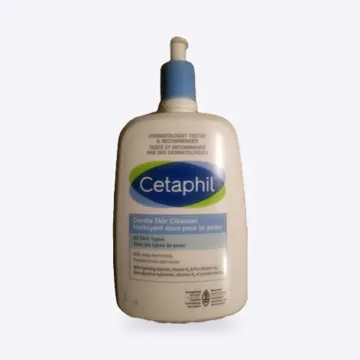
Gentle Skin Cleanser
The default gentle cleanser most dermatologists start people on.
Suits: Dry, Normal, Sensitive skin
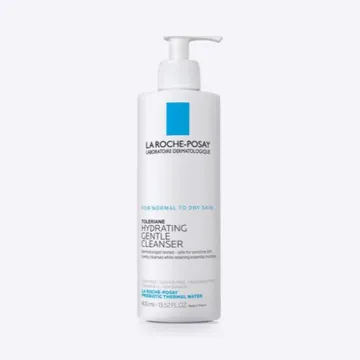
Toleriane Hydrating Gentle Cleanser
Milky cleanser built for reactive, tight-feeling skin.
Suits: Dry, Sensitive, Normal skin
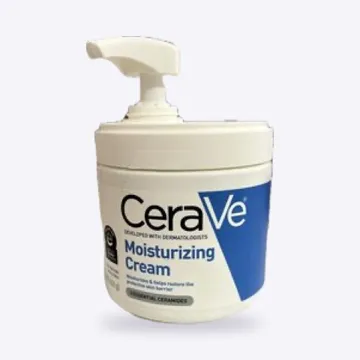
Moisturizing Cream
Thick ceramide cream for skin that dries out by midday.
Suits: Dry, Normal, Sensitive skin
From Pori's catalogue. Amazon links carry our Associates tag: Pori earns from qualifying purchases, at no cost to you. No brand pays to be listed. Photos: Open Beauty Facts contributors, CC BY-SA 3.0.
Over-the-counter psoriasis products often contain salicylic acid, which loosens scale, or coal tar, which the NHS lists among standard treatments. Both can sting or irritate the face, and coal tar can stain, so test them on a small area and keep them away from the eyes. You can scan a product's barcode or label with the ingredient scanner in Pori to check it against your skin type before you try it.
What a doctor may prescribe
- Topical corticosteroids: low-strength creams for short periods. The AAD warns that strong steroids on thin skin such as the face can cause spider veins, stretch marks and other side effects, and the NPF cautions against using steroids on the face without a doctor's plan. Use them only where and for as long as your dermatologist directs.
- Topical calcineurin inhibitors: tacrolimus ointment and pimecrolimus cream. The AAD notes they can be applied to sensitive areas, such as the face; DermNet says they are especially useful on eyelid skin, and the Primary Care Dermatology Society calls tacrolimus ointment the most effective active treatment for the face. For psoriasis this use is off-label in the US.
- Other nonsteroid creams: vitamin D analogues such as calcipotriene, which can irritate the face, and roflumilast cream, a PDE-4 inhibitor approved for plaque psoriasis.
- Treatment for the scalp: because hairline and sebopsoriasis usually come with scalp psoriasis, medicated shampoos and scalp solutions are often part of the plan.
- Light therapy and systemic medicine: phototherapy, pills or biologic injections are reserved for more widespread or stubborn psoriasis. They treat the whole body, including the face.
How long does treatment take?
Psoriasis has no cure, and flares come and go. The NHS notes treatment aims to control symptoms, and many people need more than one approach. Dark marks on brown and black skin can take months to fade after the plaque itself settles. Taking photos in the same light every week or two makes slow change easier to judge than memory.
When should you see a doctor about psoriasis on your face?
See a dermatologist if a scaly rash on your face is new and you are not sure what it is, if over-the-counter care hasn't helped after a few weeks, or if treatment causes thinning, burning or new redness. If you need one, you can find a dermatologist near you. Book sooner for:
- A rash on the eyelids or any change in your eyes or vision
- Joint pain, stiffness or swelling, which the NHS lists as a reason to see a doctor because it can signal psoriatic arthritis
- Skin that thins, looks shiny or develops visible blood vessels after steroid use
- Plaques that crack, bleed or show signs of infection
Get urgent care if your skin quickly turns red over large areas, develops pus-filled bumps, or you have a fever, chills or a fast heartbeat. The NHS lists these as emergency signs.
Frequently asked questions
What does psoriasis on the face look like?
It forms raised, sharply outlined patches with dry scale, most often at the hairline, on the forehead, in the eyebrows, around the ears and beside the nose. On lighter skin the patches look pink or red with silvery scale; on darker skin they look purple, gray or dark brown.
What is sebopsoriasis?
Sebopsoriasis is an overlap of psoriasis and seborrheic dermatitis. It shows up as thin, salmon-pink plaques with fine or slightly greasy scale on the eyebrows, eyelids, nose folds and beard area, usually together with scalp psoriasis.
How can I tell psoriasis from seborrheic dermatitis on my face?
Psoriasis plaques are thicker, have a sharp edge and dry silvery scale, and often appear elsewhere on the body too. Seborrheic dermatitis has softer edges and greasy white or yellowish flakes. Because they overlap, a dermatologist should confirm which one you have.
Is psoriasis on the face contagious?
No. Psoriasis is driven by the immune system and genes. You cannot catch it from touching someone, sharing a towel or swimming in the same pool.
Can I use hydrocortisone on facial psoriasis?
Low-strength steroid creams are sometimes used on the face for short periods, but facial skin thins easily. Ask a dermatologist before using any steroid on your face, and follow their directions on how long to use it.
Does facial psoriasis leave dark spots?
It can, especially on brown and black skin. Dark marks often remain after plaques clear and can take months to fade. Treating flares early and using sunscreen daily helps.
Sources
- National Psoriasis Foundation: Psoriasis on the Face
- DermNet: Facial psoriasis
- American Academy of Dermatology: Psoriasis causes
- American Academy of Dermatology: Psoriasis treatment: Corticosteroids you apply to the skin
- American Academy of Dermatology: Psoriasis treatment: Tacrolimus ointment and pimecrolimus cream
- NHS: Psoriasis
- Primary Care Dermatology Society: Psoriasis: facial psoriasis
Pori is a wellness and skincare education app, not a medical device. This article is for general information and isn't medical advice. For anything that worries you, see a dermatologist.