Pori

- Most dry facial patches are plain dry skin or eczema; seborrheic dermatitis, psoriasis, perioral dermatitis, tinea faciei and actinic keratosis are the other common causes.
- Location helps: nose folds and eyebrows suggest seborrheic dermatitis, around the mouth suggests perioral dermatitis, a spreading ring-edged patch suggests fungus, a sandpaper spot on sun-damaged skin suggests actinic keratosis.
- Plain dryness clears within days with short warm showers and a fragrance-free cream; hydrocortisone can worsen perioral dermatitis and tinea, so identify the patch first.
- See a doctor for a patch that spreads, bleeds, stays rough for weeks, sits near the eye, or does not improve after about two weeks.
Dry patches on the face are most often plain dry skin or eczema, but seborrheic dermatitis, psoriasis, perioral dermatitis, a fungal infection (tinea) and, on sun-damaged skin, actinic keratosis can all look like a flaky spot that will not go away. Where the patch sits, whether it itches, whether the flakes are greasy, and whether moisturizer helps are the fastest clues. A patch that does not improve after two weeks of gentle care is worth showing to a doctor.
Pori does not diagnose skin conditions; its selfie scans and photo diary in Pori can help you keep dated, consistent photos to show a dermatologist and see whether treatment is working.
This guide is a map of the common causes, with a photo and a short description of each, a comparison table, and what to try at home before you book an appointment. Each cause links to our full article on it.
What causes dry patches on the face?
Here are the usual suspects, roughly from most to least common.
- Dry skin (xerosis): tight, dull, flaky skin, usually on the cheeks, worse in winter, after hot showers or with harsh cleansers. It clears with moisturizer within days.
- Eczema (atopic dermatitis): itchy, dry patches, often on the eyelids, around the eyes and mouth, or on the cheeks.
- Seborrheic dermatitis: greasy, yellowish or white flakes in oily areas: beside the nose, in the eyebrows, at the hairline and in the beard.
- Psoriasis: thicker, sharply edged plaques with silvery scale, often at the hairline, ears and eyebrows.
- Perioral dermatitis: tiny bumps and fine flaking around the mouth, nose or eyes, often after using steroid creams.
- Tinea faciei (ringworm of the face): a fungal infection that makes a spreading patch with a scaly, raised edge, usually on one side.
- Actinic keratosis: a small, rough, sandpaper-like spot on skin with years of sun exposure. It is precancerous.
- Contact dermatitis: a dry or red patch where a product, fragrance, nickel or hair dye touched the skin.
- Pityriasis alba: pale, slightly scaly patches on children's cheeks, more noticeable on darker skin.
How can you tell the causes apart?
| Cause | Where on the face | What it looks and feels like | Itch | Helps or hurts |
|---|---|---|---|---|
| Dry skin | Cheeks, around the mouth | Tight, dull, fine flakes, no clear edge | Mild | Moisturizer clears it in days |
| Eczema | Eyelids, around eyes and mouth, cheeks | Dry, rough, red on light skin; brown, gray or purple on dark skin | Strong | Comes and goes in flares; triggered by fragrance, heat, stress |
| Seborrheic dermatitis | Nose folds, eyebrows, hairline, beard, ears | Greasy yellowish or white flakes on pink or discolored skin | Mild to moderate | Moisturizer alone rarely clears it; antifungal washes help |
| Psoriasis | Hairline, forehead, ears, eyebrows | Thick, sharp-edged plaques with silvery scale | Variable | Often psoriasis elsewhere: scalp, elbows, knees, nails |
| Perioral dermatitis | Around mouth, nose, eyes; spares the lip line | Tiny bumps with fine flaking | Burning more than itch | Steroid creams make it worse after a brief improvement |
| Tinea faciei | Usually one side of the face | Round or oval patch, scaly raised edge, clearer center | Often | Steroid creams make it spread |
| Actinic keratosis | Forehead, nose, cheeks, ears, scalp | Small rough spot, felt more than seen | Rarely | Comes back after picking; needs a doctor |
Is it eczema on my face?
Eczema patches itch, often a lot, and they come and go. On lighter skin they look pink or red and dry; on brown and black skin, the AAD says they can look dark brown, purple, or grayish. In adults, the eyelids and the skin around the eyes are common sites. Rubbing and scratching can thicken the skin over time. Most people with facial eczema have dry skin elsewhere too, or a history of eczema, asthma or hay fever. See our guides to eczema on the face and eczema on dark skin.
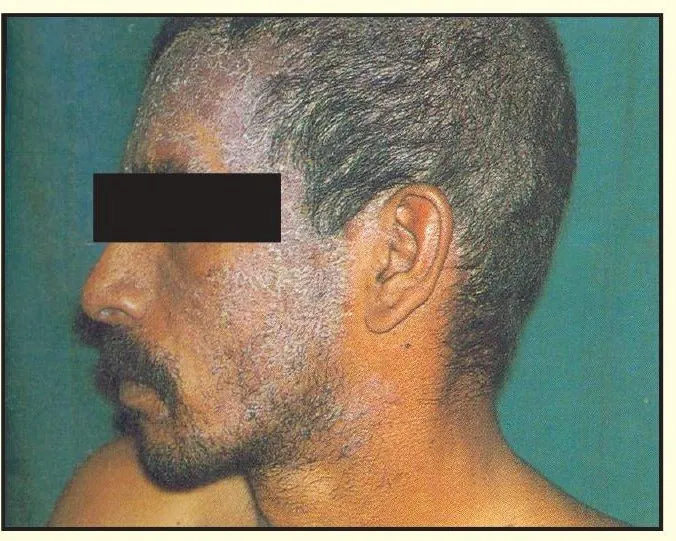
Could flaky patches by my nose and eyebrows be seborrheic dermatitis?
If the flakes sit in the creases beside your nose, in the eyebrows, at the hairline, in the beard or behind the ears, seborrheic dermatitis is likely. The flakes look oily or yellowish, and the skin under them is pink on light skin or lighter or darker on brown skin. It is linked to Malassezia yeast, flares with stress and cold weather, and usually comes with dandruff. Moisturizer alone does little; cleansers with zinc pyrithione or ketoconazole are the usual first step. Our seborrheic dermatitis guide covers how to use them.
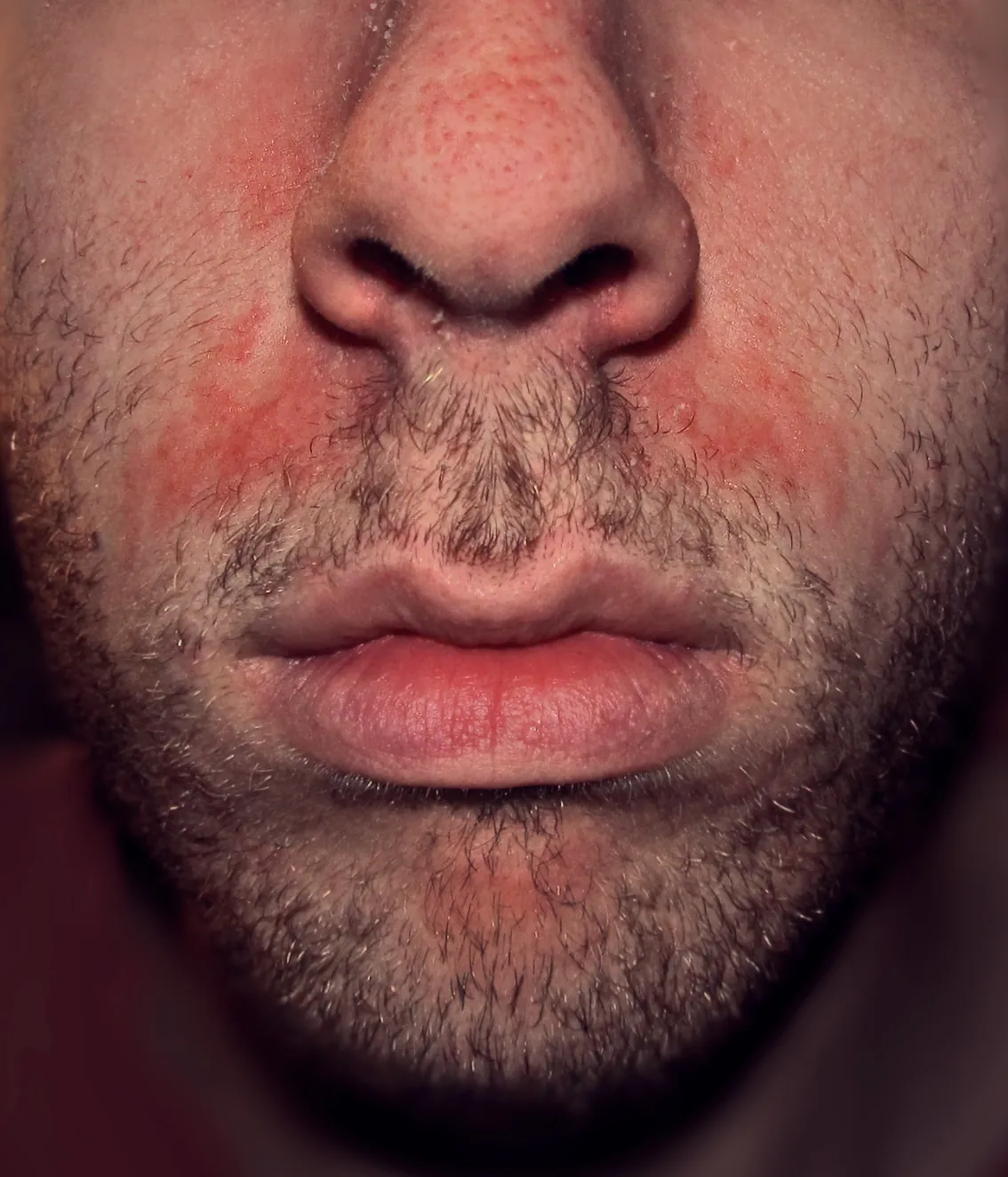
Could a dry patch on my face be psoriasis?
Facial psoriasis usually shows up at the hairline, where scalp psoriasis spills onto the forehead, and around the ears and eyebrows. Plaques are thicker than eczema, with a sharp edge and silvery scale; on darker skin they look purple, gray or dark brown. Facial psoriasis often comes with plaques elsewhere, so check your scalp, elbows, knees and nails. A mix of psoriasis and seborrheic dermatitis, sometimes called sebopsoriasis, is common on the face. See psoriasis on the face.
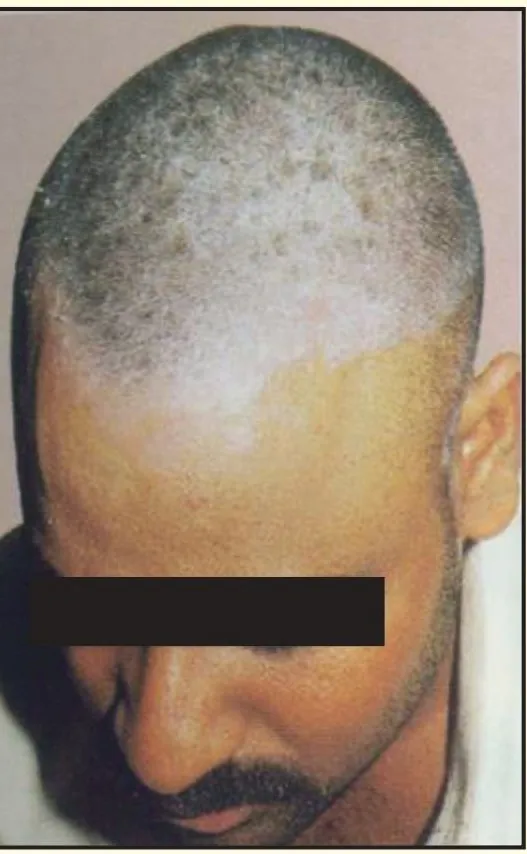
What about dry, bumpy skin around the mouth?
Fine flaking with clusters of tiny red or skin-colored bumps around the mouth, nose or eyes is typical of perioral dermatitis. A narrow band of clear skin right next to the lips is a clue. Steroid creams, including over-the-counter hydrocortisone, are the best-known trigger, and heavy creams, some toothpastes and fragrance can aggravate it. That is why rubbing in a rich moisturizer or hydrocortisone, which helps other dry patches, can make this one worse. Our perioral dermatitis guide explains the zero-therapy approach and treatment.
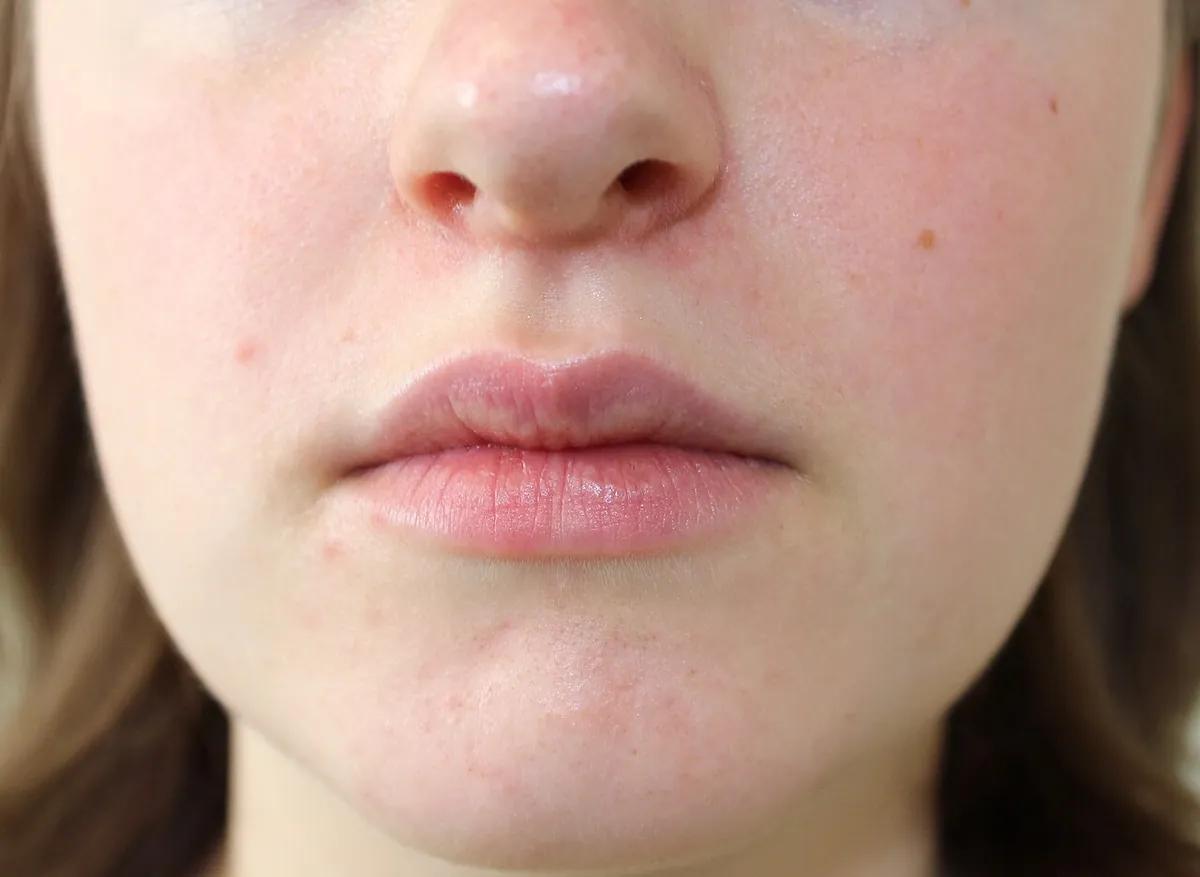
Could it be ringworm (a fungal infection) on my face?
Ringworm of the face, called tinea faciei, is a fungal skin infection. DermNet describes it as round or oval red scaly patches, often less red and scaly in the middle, usually on one side of the face. The AAD says ringworm patches are red or pink on light skin and usually brown or gray on skin of color, and can be intensely itchy. It can come from a pet, especially cats and dogs, from farm animals, or from your own feet or nails.
Tinea on the face is often mistaken for eczema, seborrheic dermatitis or psoriasis. DermNet notes misdiagnosis is particularly common when it has been treated with steroid creams, which hide the edge and let the fungus spread. If a dry patch keeps growing outward with a ring-like edge, or got worse on hydrocortisone, ask a doctor to check for fungus. A quick skin scraping confirms it, and antifungal creams usually clear it; stubborn cases may need tablets. In the beard area, a similar infection is called tinea barbae.
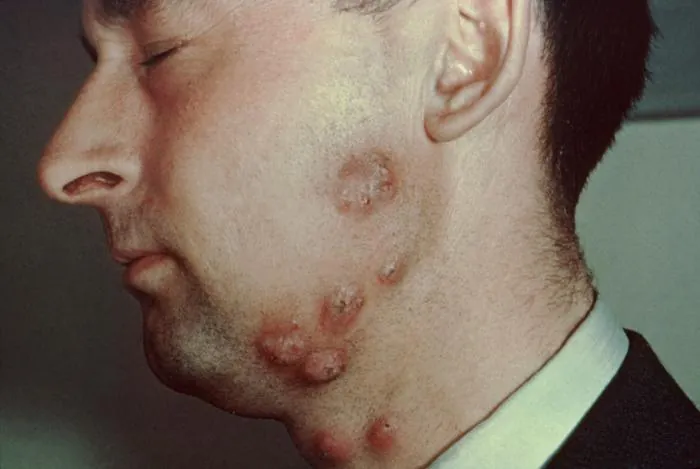
Could a rough spot on my face be actinic keratosis?
If you have had years of sun or tanning beds, a small rough patch that feels like sandpaper on your forehead, nose, cheeks, ears or scalp may be an actinic keratosis. It often feels rougher than it looks, may be pink, red, tan or skin-colored, and returns after you scratch the scale off. Actinic keratoses are precancerous: the risk for any single spot is low, but some turn into squamous cell carcinoma, so dermatologists usually treat them. Moisturizer will not fix this kind of patch. See our actinic keratosis guide.
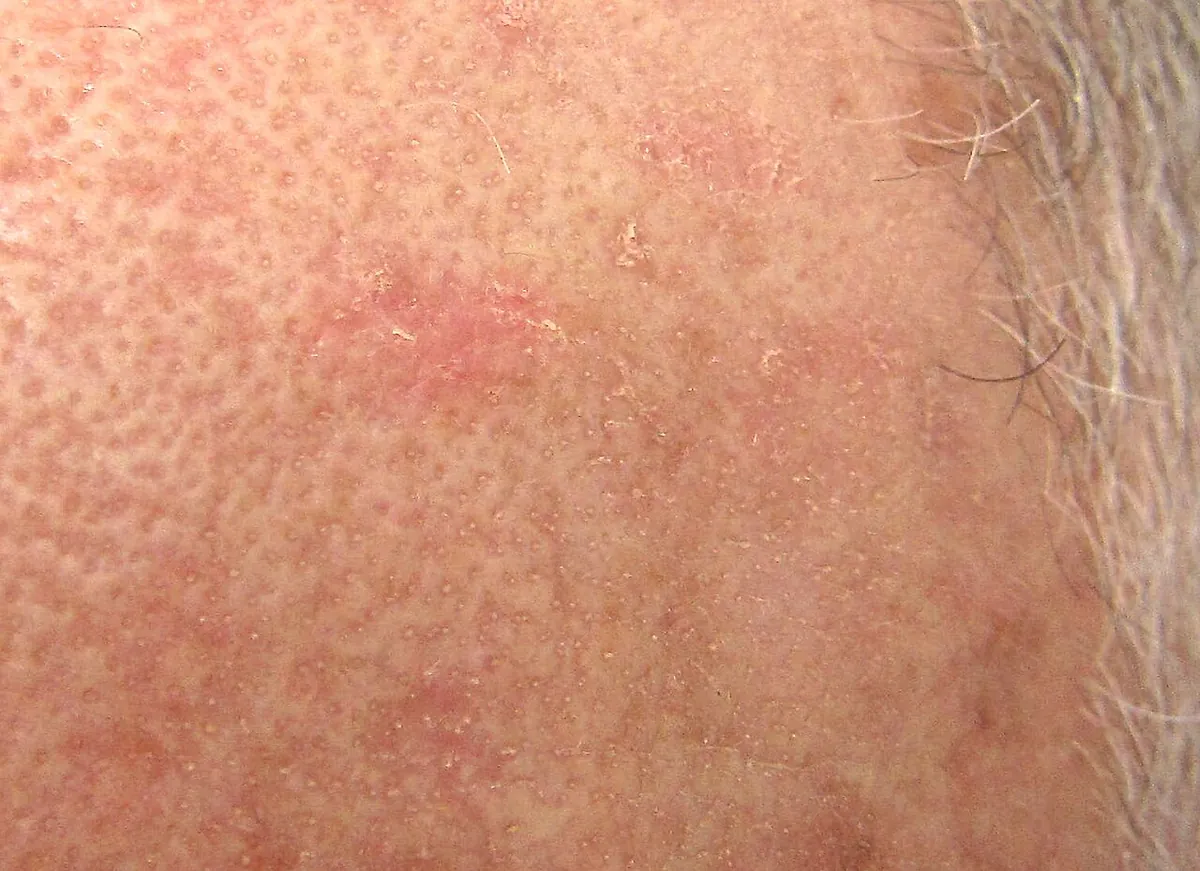
What else can cause a dry patch on the face?
- A product reaction: a new cleanser, retinoid, acid or fragrance can cause dry, irritated patches, and an allergy can cause a rash shaped like what touched the skin. See contact dermatitis on the face and peeling from retinol.
- Over-exfoliation: too many acids or scrubs leave shiny, tight, flaky skin that stings.
- Pityriasis alba: pale, scaly patches on children's cheeks. DermNet says it often occurs with dry skin and atopic dermatitis and the colour gradually returns completely to normal.
- Lupus: rarely, a rash across the cheeks and nose that comes with joint pain or fatigue is lupus and needs a doctor. See our rash on face guide.
None of these patches is contagious except ringworm, which can spread by touch and from pets.
What can you do at home for dry patches on your face?
For plain dry skin and mild eczema, the AAD's dry skin advice works:
- Keep showers to five to ten minutes, using warm water, and pat dry.
- Apply moisturizer while skin is still damp. Creams and ointments hold more water than lotions.
- Look for glycerin, hyaluronic acid, ceramides, petrolatum, dimethicone or shea butter.
- Choose products labeled "fragrance-free". The AAD notes "unscented" can still contain masking chemicals.
- Run a humidifier in the bedroom in winter.
- Pause exfoliating acids, scrubs and retinoids until the patch heals.
A plain, fragrance-free ceramide cream is a reasonable first step for most dry patches. You can scan your current moisturizer or cleanser with the ingredient scanner in Pori to check it for fragrance and other common irritants. Our list of moisturizers for dry skin has more options.
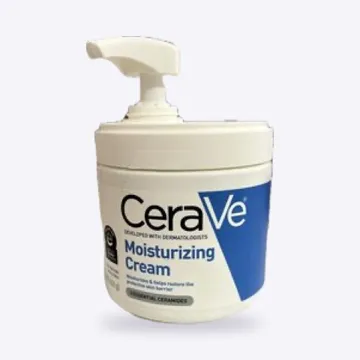
Moisturizing Cream
Thick ceramide cream for skin that dries out by midday.
Suits: Dry, Normal, Sensitive skin
From Pori's catalogue. Amazon links carry our Associates tag: Pori earns from qualifying purchases, at no cost to you. No brand pays to be listed. Photos: Open Beauty Facts contributors, CC BY-SA 3.0.
Be careful with hydrocortisone. A short course can calm mild eczema, but it worsens perioral dermatitis, rosacea and tinea, so do not use it on a patch you have not identified, and ask a doctor before using it on your face for longer than the label allows.
If a patch does not improve within about two weeks of gentle care, or improves and keeps coming back in the same place, it probably is not simple dryness.
When should you see a doctor about a dry patch on your face?
- The patch keeps growing, has a ring-like edge, or spread after hydrocortisone
- A rough or scaly spot stays in the same place for weeks, bleeds, or feels tender or thick
- It is itchy enough to disturb sleep, or keeps flaring
- It cracks, oozes, crusts or hurts, which can mean infection
- It is close to the eye
- You also have joint pain, fatigue, or a rash across the cheeks and nose
- Two weeks of gentle care has not helped
A dermatologist can often tell these patches apart by looking, and can confirm with a quick skin scraping or a small biopsy. You can find a dermatologist near you.
Frequently asked questions
Why do I have dry patches on my face?
The most common causes are dry skin from weather, hot water or harsh products, and eczema. Seborrheic dermatitis, psoriasis, perioral dermatitis, a fungal infection and, in sun-damaged skin, actinic keratosis can also cause dry or scaly patches.
How do I know if a dry patch on my face is fungal?
Fungal patches (tinea faciei) are often round or oval with a scaly, raised edge and a clearer center, usually on one side of the face, and they slowly grow outward. They often get worse with steroid creams. A doctor can confirm it with a skin scraping.
Should I put hydrocortisone on a dry patch on my face?
Only if you know what it is. Hydrocortisone can help mild eczema, but it can worsen perioral dermatitis, rosacea and fungal infections. Ask a doctor before using it on your face for longer than the label allows.
Why won't the dry patch on my face go away with moisturizer?
Patches that do not respond to moisturizer are often seborrheic dermatitis, psoriasis, a fungal infection or actinic keratosis. If two weeks of gentle care has not helped, see a doctor.
Are dry patches on the face contagious?
Most are not. Dry skin, eczema, seborrheic dermatitis, psoriasis, perioral dermatitis and actinic keratosis cannot spread to other people. Ringworm (tinea) can spread by touch and from pets.
Can a dry patch on the face be skin cancer?
A rough, scaly spot on sun-damaged skin can be an actinic keratosis, which is precancerous. A spot that bleeds, grows, feels thick or tender, or does not heal should be checked by a dermatologist.
Sources
- American Academy of Dermatology: Dermatologists' tips for relieving dry skin
- American Academy of Dermatology: Atopic dermatitis: Signs and symptoms
- American Academy of Dermatology: Seborrheic dermatitis: Overview
- American Academy of Dermatology: Red rash around your mouth could be perioral dermatitis
- National Psoriasis Foundation: Psoriasis on the Face
- DermNet: Tinea faciei
- American Academy of Dermatology: Ringworm: Signs and symptoms
- American Academy of Dermatology: Actinic keratosis overview
- DermNet: Pityriasis alba
Pori is a wellness and skincare education app, not a medical device. This article is for general information and isn't medical advice. For anything that worries you, see a dermatologist.