Pori

- Lichen planus causes shiny, flat-topped, itchy bumps on the wrists, forearms, shins and back; they look purple-red on light skin and violet, gray or brown on darker skin.
- In the mouth it forms lacy white lines (Wickham striae) or painful red sores; oral lichen planus carries a small cancer risk and needs regular checks.
- Lichen planus pigmentosus, mostly on darker skin, causes gray-brown patches on the face and neck with little itch; ordinary lichen planus also often leaves dark marks.
- It is not contagious; steroid creams are the usual treatment, and skin cases often clear in about 9 to 18 months while mouth cases last longer.
Lichen planus is an immune-related rash that causes shiny, flat-topped, itchy bumps, usually on the wrists, forearms, shins and lower back, and lacy white lines inside the mouth. On light skin the bumps look purple-red; on brown and black skin they often look violet, gray or dark brown, and they tend to leave dark marks. It is not contagious, and skin lichen planus usually clears within a year or two.
Pori does not diagnose skin conditions; its selfie scans and photo diary in Pori can help you keep dated, consistent photos to show a dermatologist and see whether treatment is working.
This guide covers what lichen planus looks like on the skin and in the mouth, the white lines called Wickham striae, lichen planus pigmentosus on darker skin, what can trigger it, the look-alikes, and how it is treated.
What does lichen planus look like on the skin?
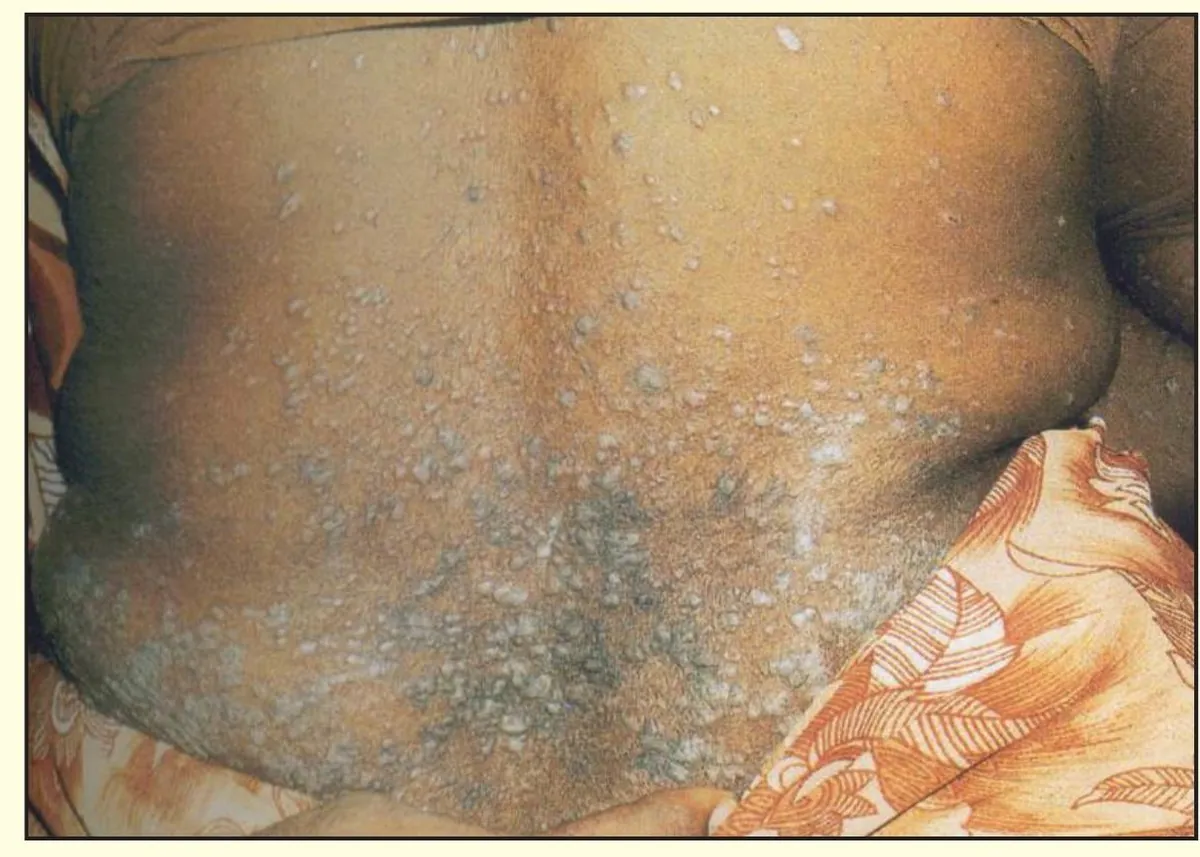
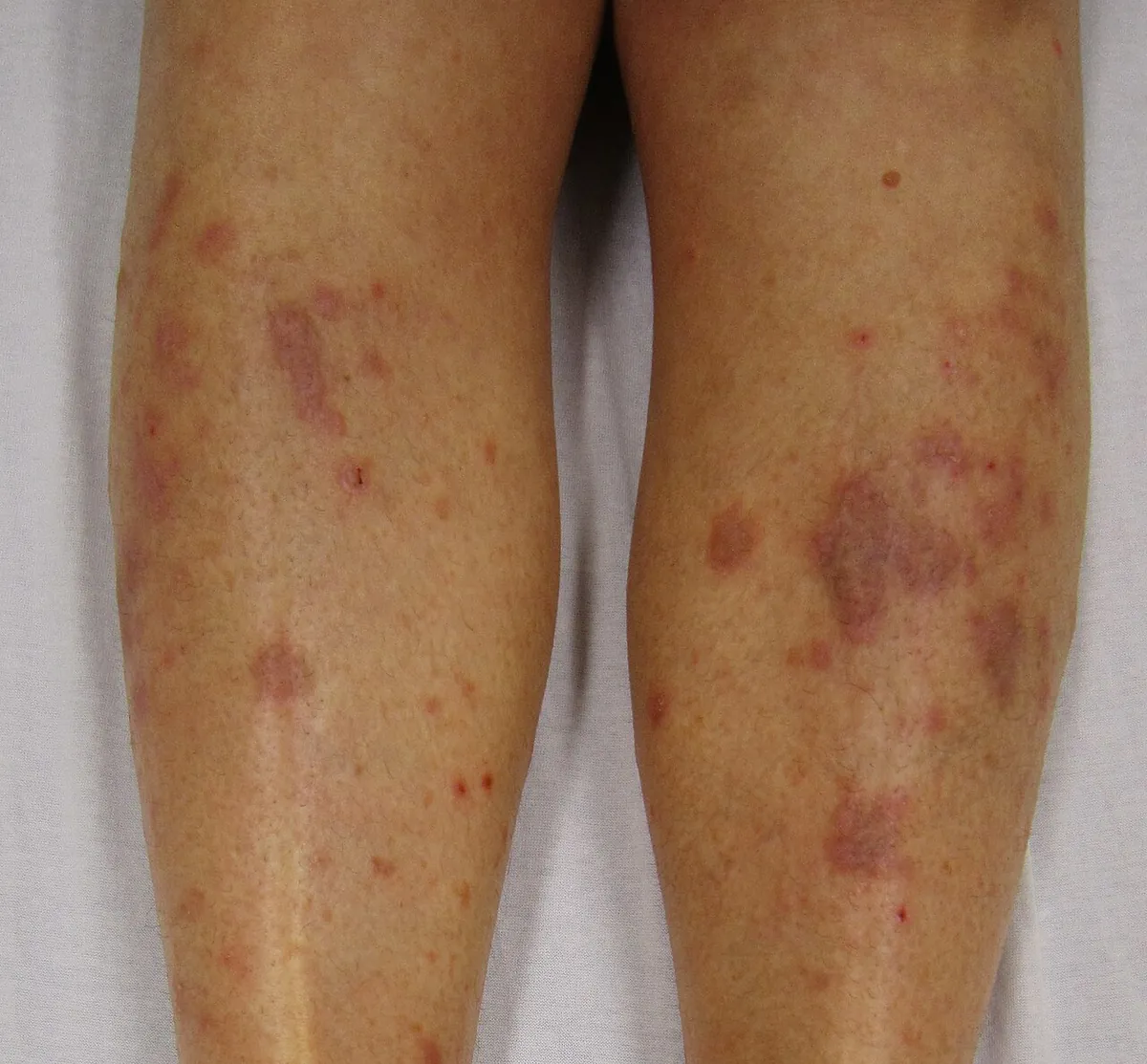
The classic sign is a cluster of small, firm bumps with flat, shiny tops and angular edges. The NHS describes shiny, raised, purple-red blotches, sometimes with fine white lines on them, and notes the rash can be harder to see on brown or black skin. Bumps can join into larger patches. Most people find them itchy, sometimes intensely, though not everyone does.
Common places are the insides of the wrists, the forearms, the shins and ankles, and the lower back. The NHS also lists the scalp, nails and genitals.
Lichen planus on brown and black skin
The AAD says that on darker skin tones people may have purple, gray, or brown bumps. They are often very shiny. DermNet notes that a thick, scaly form called hypertrophic lichen planus, usually on the shins, is more common in darker skin. And after the bumps clear, gray-brown marks often remain; DermNet says they may take a year or longer to fade. For many people with brown skin, those marks are the most visible part of the condition. See post-inflammatory hyperpigmentation for how dark marks behave.
What are Wickham striae?
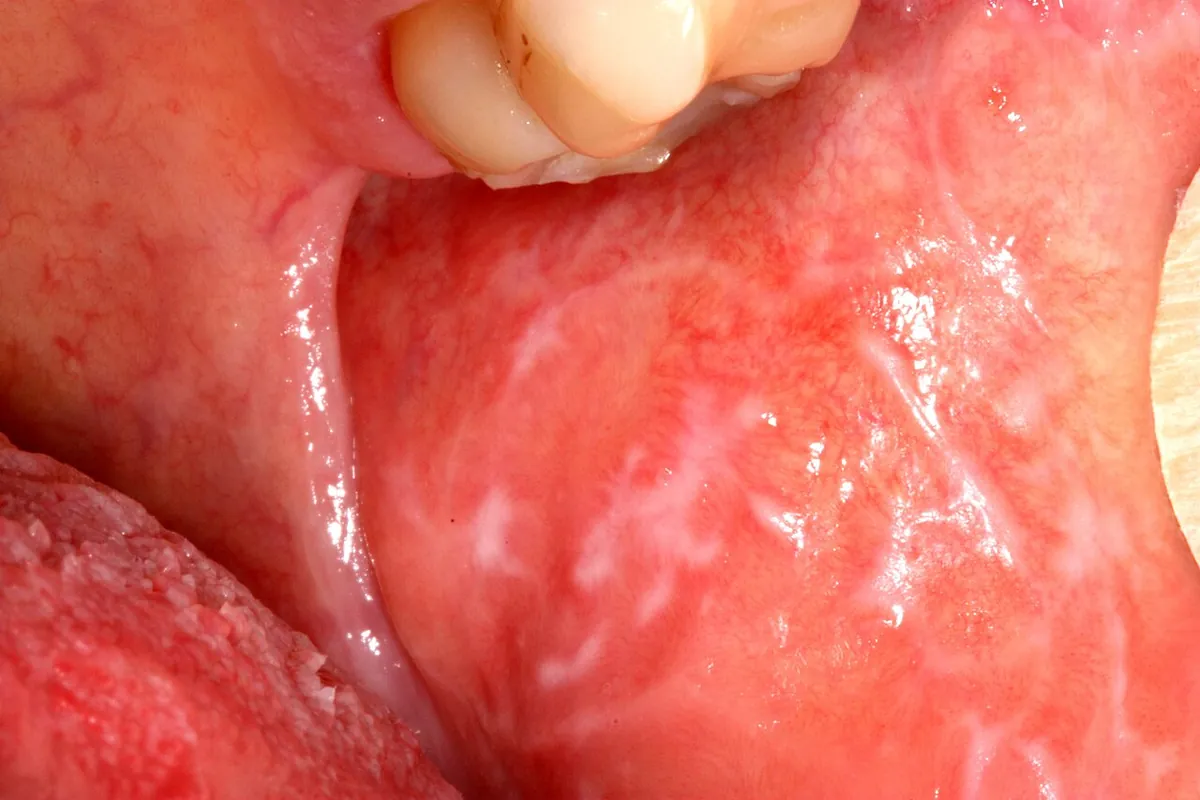
Wickham striae are fine, lacy white lines on the surface of lichen planus bumps or in the mouth. DermNet describes the skin bumps as crossed by fine white lines called Wickham striae. On the skin you may need good light or a magnifier to see them; a dermatologist often looks with a dermatoscope. In the mouth they form a white net pattern on the inside of the cheeks and are a strong clue to the diagnosis.
Why does it appear in lines?
New bumps can form along a scratch, a cut or other skin injury, so you may see them in a straight line. This is called the Koebner phenomenon, and it is one reason scratching tends to spread the rash.
What does lichen planus in the mouth look like?
Oral lichen planus can occur with or without the skin rash. It has two main forms:
- Reticular (lacy): painless white streaks in a net pattern, usually on the inside of the cheeks and the tongue. Because it often does not hurt, it may first be spotted at a dental check.
- Erosive: red, raw areas and sores that burn or sting, especially with spicy, acidic or hot food. DermNet describes painful and persistent erosions and ulcers.
The gums can also become red and peel. The NHS says mouth lichen planus can cause burning and stinging when eating or drinking, and that it can last several years.
Oral lichen planus needs regular checks. The AAD notes a slightly increased risk of mouth cancer, with sores that do not heal as a warning sign. DermNet says long-standing erosive lichen planus can lead to squamous cell carcinoma, most often in the mouth or genitals, and that the risk is higher in smokers. The risk for any one person is small, but it is why your dentist or dermatologist will want to monitor you even when symptoms are mild.
Where else can lichen planus appear?
- Nails: thinning, ridges, grooves, splitting or darkening; rarely the nail is lost.
- Scalp: a form called lichen planopilaris causes redness and scale around hair follicles and patchy hair loss. DermNet notes this scarring hair loss is permanent, so early treatment matters.
- Genitals: sore red patches on the vulva, or ring-shaped purple or white patches on the penis, according to the NHS. These need a doctor.
What is lichen planus pigmentosus?
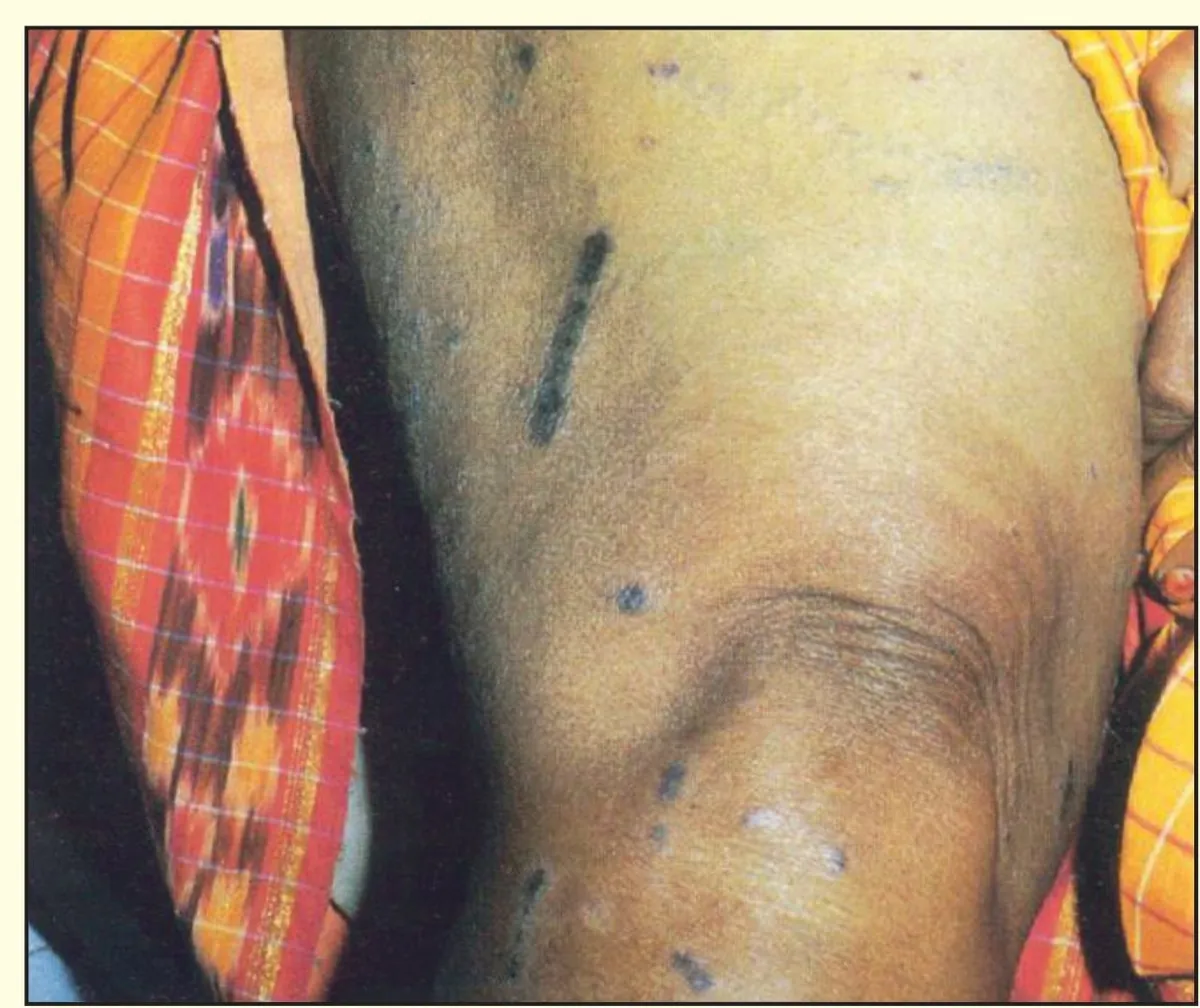
Lichen planus pigmentosus is a variant that causes flat gray-brown or dark brown patches instead of itchy bumps. It mainly affects people with darker skin, and it has been reported most from India, the Middle East, Latin America, Japan and Korea. A review in the Indian Journal of Dermatology describes small, oval brown spots that merge into gray or brown patches, usually starting on the face and neck in adults over 30, then sometimes spreading to the arms and trunk. DermNet describes ill-defined oval, greyish brown marks that can also appear in skin folds such as the armpits.
Itch is usually minimal, and there is often no rash before the color appears, so it is easy to mistake for melasma or for dark marks from something else. Suggested triggers include sunlight, mustard and amla hair oils, some cosmetics and hair dyes, though none has been proven. It tends to last a long time and is hard to treat. Dermatologists may use sun protection, topical tacrolimus, steroid creams or other medicines, with mixed results, and they usually confirm it with a small biopsy.
What causes lichen planus, and is it contagious?
Lichen planus happens when the immune system attacks cells of the skin or the lining of the mouth. The AAD says the exact cause is still unknown, but several things are linked to it:
- Hepatitis C: some people with hepatitis C also have lichen planus, so a dermatologist may test for it.
- Medications: some drugs, including certain diuretics, pain relievers and antimalarials, can cause a lichen planus-like rash that slowly clears after the drug is stopped.
- Dental fillings: rarely, a metal filling causes an allergic lichen planus-like reaction in the mouth next to it.
- Family history: it can run in families.
Anyone can get it, but it is most common in middle-aged adults and uncommon in children. It is not contagious; the NHS says plainly that you cannot catch lichen planus.
Could it be something else?
| Condition | How it differs from lichen planus |
|---|---|
| Psoriasis | Larger plaques with thick silvery scale on elbows, knees and scalp; no lacy white lines |
| Eczema | Dry, scaly, ill-defined patches in creases; on dark skin a lichenoid form can look similar |
| Keratosis pilaris | Tiny rough bumps at hair follicles on the upper arms and thighs, not flat-topped or shiny |
| Melasma | Brown patches on both cheeks and forehead; a look-alike for lichen planus pigmentosus |
| Post-inflammatory hyperpigmentation | Dark marks that follow a known pimple, rash or injury |
| Cold sores | Blisters on or near the lip that crust and heal within weeks; no lacy white pattern |
How is lichen planus treated?
Skin lichen planus often clears on its own, so treatment aims to calm the itch and speed things up. The NHS says it usually clears in about 9 to 18 months, and the AAD says many people see clearing after one year. Mouth lichen planus lasts longer, often years.
For the skin
Corticosteroid creams or ointments are the usual first step, and thick bumps may be injected with a steroid. The AAD also lists tacrolimus or pimecrolimus, antihistamine pills for itch, light therapy, acitretin, and steroid pills for widespread or severe cases. At home, a fragrance-free moisturizer can ease dryness, and avoiding scratching helps prevent new bumps along scratch lines.
For the mouth
Treatment includes corticosteroid gels, ointments or mouth rinses, and for severe symptoms, steroid or retinoid pills. Good oral hygiene matters. The AAD suggests brushing twice a day with a soft-bristle toothbrush, flossing daily with unflavored floss, and dental cleanings every 3 or 4 months. It also lists possible triggers to avoid, including stress, acidic, spicy or crunchy food, alcohol and flavored toothpaste. Smoking raises the cancer risk, which is one more reason to stop.
For dark marks afterward
Gray-brown marks fade slowly once the rash is gone. Daily broad-spectrum sunscreen helps them fade and keeps them from darkening; see our guide to fading dark spots for ingredients, and ask your dermatologist before starting acids or retinoids on skin that is still healing.
When should you see a doctor about lichen planus?
- You have shiny, itchy purple, gray or brown bumps and do not know why
- White lines or sore red patches in your mouth, or burning when you eat
- A mouth sore that does not heal, a lump, or a sore with a thick edge
- Patchy hair loss with redness or scale on the scalp
- Nail changes such as ridges, splitting or thinning
- Sore patches on the genitals
- A new rash after starting a medicine
- Gray-brown patches on the face or neck that keep spreading
A dermatologist can usually diagnose lichen planus by looking and may take a small biopsy to confirm it. For mouth symptoms, a dentist or oral medicine specialist can help too. You can find a dermatologist near you.
Frequently asked questions
What does lichen planus look like?
Small, shiny, flat-topped bumps that are purple-red on light skin and violet, gray or brown on darker skin. They often itch and may have fine white lines on top. In the mouth it looks like a lacy white pattern or red sores.
Is lichen planus contagious?
No. Lichen planus is an immune reaction and cannot be passed from person to person.
How long does lichen planus last?
On the skin it usually clears in about 9 to 18 months, according to the NHS. Lichen planus in the mouth can last several years. Dark marks left on the skin can take a year or longer to fade.
What are Wickham striae?
They are fine, lacy white lines on lichen planus bumps or inside the mouth. They are a strong clue to the diagnosis.
What is lichen planus pigmentosus?
It is a variant, mainly in people with darker skin, that causes flat gray-brown patches on the face, neck and skin folds with little or no itch. It is often mistaken for melasma and usually needs a dermatologist to confirm.
Can oral lichen planus turn into cancer?
Rarely. Long-standing erosive oral lichen planus carries a slightly increased risk of mouth cancer, higher in smokers, so a dentist or dermatologist should check it regularly. A sore that does not heal needs prompt attention.
Sources
- American Academy of Dermatology: Lichen planus: Overview
- American Academy of Dermatology: Lichen planus: Causes
- American Academy of Dermatology: Lichen planus: Diagnosis and treatment
- NHS: Lichen planus
- DermNet: Lichen planus
- Ghosh A, Coondoo A. Lichen planus pigmentosus: the controversial consensus. Indian J Dermatol, 2016 (PMC)
Pori is a wellness and skincare education app, not a medical device. This article is for general information and isn't medical advice. For anything that worries you, see a dermatologist.