Pori

- The main serum types are hydrating, vitamin C, retinoid, exfoliating acid, brightening, peptide, soothing and oil.
- Pick by concern: hydration for tightness, retinoids for lines and texture, niacinamide or azelaic acid for marks, vitamin C for sun damage.
- Serums go after cleansing and before moisturizer, thinnest first; retinoids and acids go at night on different nights.
- Use one strong active per routine, build up slowly, and wear SPF 30 or higher every morning.
The main types of face serum are hydrating, antioxidant (usually vitamin C), retinoid, exfoliating acid, brightening, peptide, soothing and oil serums. Each is a light, concentrated layer built around one job: hydrating serums add water, vitamin C and retinoid serums target sun damage and fine lines, acid serums smooth texture, brightening serums fade marks, and soothing serums calm redness. Most people need one or two, picked by their main concern, applied after cleansing and before moisturizer.
Before you buy, you can scan a serum's barcode or label with the ingredient scanner in Pori to check its ingredients against your skin type. It reads the formula; it doesn't diagnose skin conditions.
Below is a table of every serum type, how to choose by skin type and concern, where serums go in a routine, the mistakes that cause most irritation, and one or two example products per type. This guide is based on dermatology guidance, published research and each brand's ingredient list; we did not test these products on skin. If you're still unsure how a serum differs from an essence or a moisturizer, start with serum vs. moisturizer vs. essence.
What is a face serum?
A serum is a thin, water- or oil-based liquid that carries a higher share of active ingredients than a moisturizer and less of the oils and waxes that seal moisture in. That's why it goes on early in a routine and why it rarely replaces moisturizer. Cleveland Clinic's guide to product order puts serum right after cleansing in the morning and says a routine should run from lightest to heaviest. At night, it suggests a retinoid in place of a serum.
The word "serum" describes a texture, and no rule sets what goes in one. Two bottles called "brightening serum" can contain completely different actives at very different strengths, so the ingredient list tells you more than the name.
What are the different types of serum?
| Type | What it does | Key ingredients | Best for | Skip if |
|---|---|---|---|---|
| Hydrating | Draws water into the top layer of skin | Hyaluronic acid, glycerin, panthenol | Every skin type, especially tight or dehydrated skin | Rarely; pair it with moisturizer in dry air |
| Antioxidant (vitamin C) | Neutralizes free radicals, supports collagen, fades sun spots | L-ascorbic acid, ascorbyl glucoside, ethyl ascorbic acid, vitamin E, ferulic acid | Dullness, sun damage, morning routines | Low-pH L-ascorbic acid stings your skin |
| Retinoid | Speeds cell turnover, smooths lines and texture, helps acne | Retinol, retinal, retinyl esters, hydroxypinacolone retinoate, adapalene | Fine lines, texture, acne, uneven tone | Pregnant, very sensitive or actively irritated skin |
| Exfoliating acid | Loosens dead cells on the surface | Glycolic, lactic or mandelic acid; salicylic acid; PHAs | Rough texture, dullness, clogged pores | Sensitive skin, or the same night as a retinoid |
| Brightening | Fades dark marks and evens tone | Niacinamide, azelaic acid, tranexamic acid, alpha arbutin | Post-acne marks, melasma, uneven tone | You expect results in days |
| Peptide | Signals skin to make collagen; supports firmness | Palmitoyl pentapeptide-4, acetyl hexapeptide-8, copper tripeptide-1 | Early lines, people who can't use retinoids | You want proven, fast anti-aging results |
| Soothing | Calms redness and supports the barrier | Centella asiatica, panthenol, allantoin, beta-glucan, niacinamide | Sensitive, redness-prone or over-exfoliated skin | It contains fragrance or essential oils |
| Oil serum | Softens and seals in water | Squalane, plant oils, vitamin E | Dry skin, cold weather | Oily or acne-prone skin that clogs easily |
Hydrating serums
Hydrating serums are the gentlest and most universally useful type. They are built on humectants such as hyaluronic acid, glycerin and panthenol, which bind water. A review of moisturizers in Clinical Medicine & Research notes that humectants can also pull water from deeper skin layers toward the surface, where it can evaporate, so always put a moisturizer on top. The Ordinary Hyaluronic Acid 2% + B5 is a short, fragrance-free example, and L'Oréal Paris Revitalift 1.5% Pure Hyaluronic Acid Serum is a fragrance-free drugstore option. Our best hyaluronic acid serums compares more.
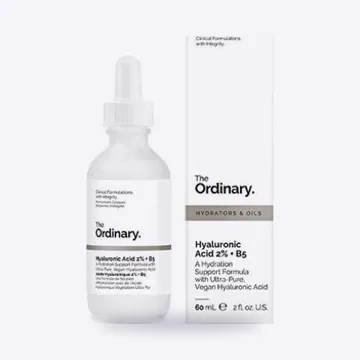
Hyaluronic Acid 2% + B5
Water-binding layer under moisturiser for tight, thirsty skin.
Suits: Dry, Normal, Combination, Oily, Sensitive skin
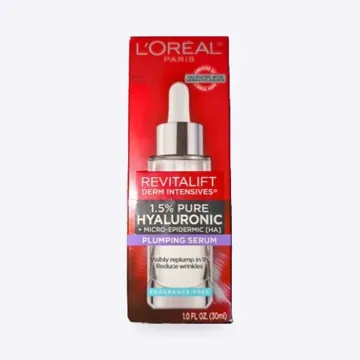
Revitalift 1.5% Pure Hyaluronic Acid Serum for Face
Serum with ascorbyl glucoside, hyaluronic acid and glycerin. Fragrance-free.
Suits: Normal, Dry, Oily, Combination, Sensitive skin
From Pori's catalogue. Amazon links carry our Associates tag: Pori earns from qualifying purchases, at no cost to you. No brand pays to be listed. Photos: Open Beauty Facts contributors, CC BY-SA 3.0.
Antioxidant and vitamin C serums
Vitamin C is the best-studied antioxidant serum. A review in the Indian Dermatology Online Journal explains that pure L-ascorbic acid needs a pH below 3.5 to stay stable and get into skin, that benefits rise with concentration only up to about 20%, and that adding vitamin E and ferulic acid makes it work better. It also notes vitamin C doesn't absorb UV light, so it supports sunscreen and never replaces it. Derivatives such as ascorbyl glucoside and ethyl ascorbic acid are more stable and less stinging, with less evidence behind them. Ole Henriksen Banana Bright Vitamin C Serum uses ethyl ascorbic acid with gluconolactone, a gentle PHA. For choosing a form and strength, see our vitamin C serum guide and vitamin C serums for beginners.
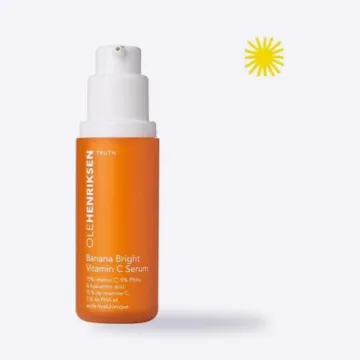
Banana Bright Vitamin C Serum
Serum with 3-O-Ethyl ascorbic acid, gluconolactone and ascorbic acid.
Suits: Normal, Dry, Oily, Combination skin
From Pori's catalogue. Amazon links carry our Associates tag: Pori earns from qualifying purchases, at no cost to you. No brand pays to be listed. Photos: Open Beauty Facts contributors, CC BY-SA 3.0.
Retinoid serums
Retinoids are vitamin A derivatives and the most proven over-the-counter option for fine lines and texture. The AAD explains that retinol is one type of retinoid sold without a prescription, that adapalene is available over the counter for acne, and that tretinoin, tazarotene and trifarotene need a prescription. Its dermatologists advise using the least-intense formula every other night to start, applying retinoids at night because they increase sun sensitivity, and not using them during pregnancy. Retinal (retinaldehyde) is one conversion step closer to the active form than retinol, so it's stronger; see retinal vs. retinol.
CeraVe Resurfacing Retinol Serum pairs encapsulated retinol with niacinamide and ceramides, The Ordinary Granactive Retinoid 2% Emulsion uses hydroxypinacolone retinoate in squalane, and Olay Regenerist Retinol24 Night Serum is a fragrance-free retinol with niacinamide. If you're new to retinoids, read retinol for beginners first.
Resurfacing Retinol Serum
Buffered retinol aimed at post-acne marks and rough texture.
Suits: Oily, Combination, Normal skin
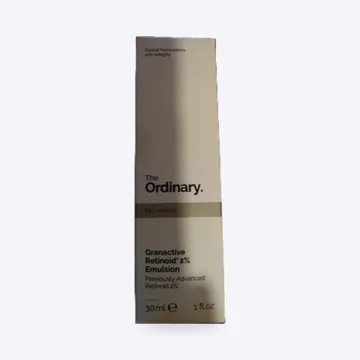
Granactive Retinoid 2% Emulsion
Retinoid for fine lines that irritates less than classic retinol.
Suits: Normal, Dry, Combination, Oily skin
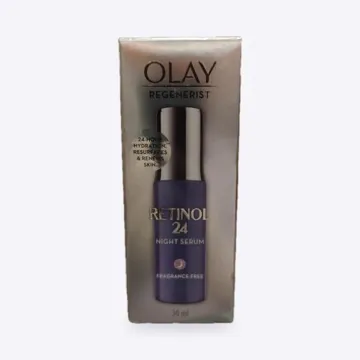
Regenerist Retinol24 Night Serum
Overnight retinol with the moisture cushion built in.
Suits: Normal, Dry, Combination skin
From Pori's catalogue. Amazon links carry our Associates tag: Pori earns from qualifying purchases, at no cost to you. No brand pays to be listed. Photos: Open Beauty Facts contributors, CC BY-SA 3.0.
Exfoliating acid serums
Acid serums are leave-on exfoliants in serum form. Alpha hydroxy acids (AHAs) such as glycolic, lactic and mandelic acid work on the surface; salicylic acid also reaches into oily pores. The FDA reports that its industry safety panel considers glycolic and lactic acid products safe for consumers at 10% or less with a final pH of 3.5 or higher, with daily sun protection. The Ordinary Lactic Acid 10% + HA sits at that upper limit. Our types of exfoliants guide covers acids in depth.
Brightening serums
Brightening serums aim at dark marks and uneven tone. Niacinamide is the easiest to tolerate: Cleveland Clinic notes it may help regulate oil, calm redness and support the barrier, and that some research suggests formulas with 5% niacinamide can help lighten dark spots. Azelaic acid treats acne and post-acne marks; a Cochrane review rated the evidence for it in acne as moderate quality, the best rating among the six topical treatments it assessed. Tranexamic acid and alpha arbutin are other common choices. The Ordinary Niacinamide 10% + Zinc 1% is the budget pick, and Paula's Choice 10% Azelaic Acid Booster is a fragrance-free azelaic option. See the best dark spot serums and niacinamide serums for more.
Niacinamide 10% + Zinc 1%
The cheapest proven way to calm shine and blur pore appearance.
Suits: Oily, Combination, Normal skin
10% Azelaic Acid Booster
Works on redness and post-acne marks at the same time.
Suits: Sensitive, Combination, Oily, Normal skin
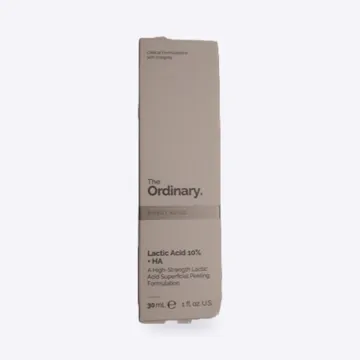
Lactic Acid 10% + HA
Leave-on exfoliant with lactic acid, hyaluronic acid and glycerin. Fragrance-free.
Suits: Normal, Dry, Oily, Combination skin
From Pori's catalogue. Amazon links carry our Associates tag: Pori earns from qualifying purchases, at no cost to you. No brand pays to be listed. Photos: Open Beauty Facts contributors, CC BY-SA 3.0.
Peptide serums
Peptides are short chains of amino acids. A 2020 review in Frontiers in Chemistry sorts cosmetic peptides into signal peptides, carrier peptides and neurotransmitter inhibitors. Palmitoyl pentapeptide-4 (sold as Matrixyl) is a signal peptide with a placebo-controlled study in 93 women, copper tripeptide-1 is a carrier, and acetyl hexapeptide-3 (Argireline) is meant to relax expression lines, though the authors say it works less well than botulinum toxin. They also note that some peptides have only manufacturer data. Peptide serums are gentle, which makes them a reasonable choice if you can't tolerate retinoids, but expect smaller results. The Ordinary Multi-Peptide + HA Serum is a widely sold example; our best peptide serums and peptides in skincare go further.
Soothing serums
Soothing serums use calming, barrier-supporting ingredients such as centella asiatica, panthenol, allantoin and beta-glucan. They suit sensitive skin, rosacea-prone skin and skin recovering from too much exfoliation. Purito Wonder Releaf Centella Serum Unscented and SKIN1004 Madagascar Centella Ampoule are two short-list examples; see the best centella products. Check the list for fragrance and essential oils, which are common in "calming" products.
Oil serums
Oil serums are light oils or oil blends, often squalane, that soften skin and slow water loss. Cleveland Clinic's dermatologist doesn't recommend face oils unless you have dry skin, and places them just before moisturizer. Our types of face oils guide compares them by skin type.
Which serum should you use for your skin type and concern?
- Oily or acne-prone: niacinamide, salicylic acid or azelaic acid in a water-based serum; a retinoid at night. See the best serum for oily skin.
- Dry or dehydrated: a hydrating serum under a richer moisturizer; lactic acid if skin is rough.
- Sensitive or rosacea-prone: a soothing or hydrating serum first; azelaic acid or a PHA only once your skin is calm.
- Fine lines: a retinoid at night and vitamin C in the morning, with sunscreen every day.
- Dark marks or melasma: niacinamide, azelaic acid, tranexamic acid or vitamin C, plus daily sunscreen. The AAD advises people with darker skin to start retinoids slowly, since irritation can cause new dark marks.
- Dull or rough texture: an AHA serum two or three nights a week.
Browse the serum catalogue to filter by skin type and concern.
Where do serums go in a skincare routine?
Serums go after cleansing and any toner, and before eye cream, moisturizer and, in the morning, sunscreen. Apply the thinnest first. A typical split looks like this:
- Morning: cleanser, vitamin C or a hydrating serum, moisturizer, sunscreen.
- Night: cleanser, a retinoid or an acid serum (on different nights), a hydrating or soothing serum if needed, moisturizer.
Low-pH products such as L-ascorbic acid and acids go on clean, dry skin. For two or more serums, our guide on how to layer serums covers order and pairings, and skincare routine order covers the whole routine.
What are the most common serum mistakes?
- Stacking too many actives. A retinoid, an acid and pure vitamin C in one routine is the most common route to stinging and peeling. Use one strong active per routine.
- Starting too strong. Begin a retinoid or acid two or three nights a week and build up over several weeks. See peeling from retinol if you've already overdone it.
- Skipping moisturizer. A serum alone rarely holds water in, especially a hyaluronic acid serum in dry air.
- Skipping sunscreen. Retinoids and acids increase sun sensitivity, and dark-spot serums can't keep up with daily UV.
- Judging too early. Brightening and retinoid serums usually need two to three months before you can judge them.
- Buying by the name. "Brightening," "glow" and "repair" aren't standard terms; read the first five to seven ingredients.
Frequently asked questions
What are the main types of face serum?
Hydrating, antioxidant (usually vitamin C), retinoid, exfoliating acid, brightening, peptide, soothing and oil serums. Each is built around one job, so most people need only one or two.
Which serum is best for beginners?
A hydrating serum with hyaluronic acid or glycerin, or a niacinamide serum. Both are gentle and suit most skin types. Add a retinoid or acid later, a few nights a week.
Can I use vitamin C and retinol together?
Yes, in different routines. Use vitamin C in the morning under sunscreen and retinol at night. Putting both in the same routine raises the risk of irritation.
How many serums should I use?
One or two is enough for most people. More layers add little and make irritation more likely, especially when several are acids or retinoids.
Do I still need moisturizer if I use a serum?
Usually, yes. Serums carry actives but little of the oils that seal water in. Hyaluronic acid serums in particular work best under a moisturizer.
Are peptide serums as good as retinol?
The evidence is thinner. Some peptides, such as palmitoyl pentapeptide-4, have small placebo-controlled studies, while retinoids have decades of data. Peptides are gentler, so they suit people who can't tolerate retinoids.
Sources
- Cleveland Clinic: The Correct Order for Skin Care Products
- American Academy of Dermatology: Retinoid or retinol?
- Telang PS. Vitamin C in dermatology. Indian Dermatol Online J, 2013 (PMC)
- U.S. Food and Drug Administration: Alpha Hydroxy Acids
- Cleveland Clinic: Niacinamide
- Liu H et al. Topical azelaic acid, salicylic acid, nicotinamide, sulphur, zinc and fruit acid (alpha-hydroxy acid) for acne. Cochrane Database Syst Rev, 2020 (PubMed)
- Errante F et al. Cosmeceutical Peptides in the Framework of Sustainable Wellness Economy. Front Chem, 2020 (PMC)
- Purnamawati S et al. The Role of Moisturizers in Addressing Various Kinds of Dermatitis: A Review. Clin Med Res, 2017 (PubMed)
Pori is a wellness and skincare education app, not a medical device. This article is for general information and isn't medical advice. For anything that worries you, see a dermatologist.