Pori
- Physical exfoliants (scrubs, washcloths, brushes) use friction; chemical exfoliants (AHAs, BHA, PHAs, enzymes) dissolve the bonds between dead cells.
- Glycolic is the strongest AHA, lactic is milder and hydrating, mandelic is slower; salicylic acid works inside pores; PHAs are gentlest.
- At home, keep AHAs at 10% or less with a pH of 3.5 or higher, and salicylic acid at 0.5% to 2%.
- Start one exfoliant once or twice a week, cut back if you use a retinoid, and wear SPF 30 or higher daily.
Exfoliants come in two families. Physical exfoliants remove dead skin by friction: scrubs, washcloths, brushes and pads. Chemical exfoliants dissolve the bonds between dead cells: alpha hydroxy acids (glycolic, lactic, mandelic), the beta hydroxy acid salicylic acid, polyhydroxy acids (PHAs) and enzymes. Retinoids aren't exfoliants in the strict sense, but they speed up cell turnover and count toward how much your skin can handle. Most people do best with one gentle exfoliant one to three times a week.
When you're comparing products, you can scan a barcode or label with the ingredient scanner in Pori to check the acid, the strength and the rest of the formula against your skin type. It reads ingredients; it doesn't diagnose skin conditions.
Below is a table of every exfoliant type, what strengths mean, how often to use each, how to choose by skin type, where exfoliants sit in a routine, and examples for each type. This guide is based on dermatology guidance, published research and each brand's ingredient list; we did not test these products on skin. For a head-to-head of the two families, read physical vs. chemical exfoliants; for the two main acids, AHA vs. BHA.
What are the main types of exfoliant?
The American Academy of Dermatology (AAD) describes two methods. Mechanical exfoliation uses a tool, such as a brush, pad or sponge, or a scrub; chemical exfoliation uses acids such as alpha and beta hydroxy acids to dissolve dead skin cells. Cleveland Clinic adds enzyme powders and cleansing gels and retinol products to the chemical group.
| Type | What it does | Key ingredients | Best for | Skip if |
|---|---|---|---|---|
| Scrub | Grains buff off dead cells | Cellulose, jojoba beads, sugar, walnut shell, salt | Oily, thick skin that likes the feel | Acne, rosacea, sensitive or darker skin prone to dark marks |
| Tools | Friction from fabric, bristles or silicone | Washcloth, brush, sponge, pad | A washcloth suits most skin | Brushes on sensitive skin or on acid nights |
| Enzyme | Proteins digest surface keratin | Papain (papaya), bromelain (pineapple) | People who want something mild | You want proven results |
| AHA: glycolic | Smallest AHA; strongest surface exfoliation | Glycolic acid | Dullness, rough texture, sun damage | Sensitive or dry skin |
| AHA: lactic | Exfoliates and draws in water | Lactic acid | Dry, rough skin; first-time acid users | Very reactive skin |
| AHA: mandelic | Larger molecule; slower, gentler | Mandelic acid | Sensitive skin, darker skin tones | You need a strong peel effect |
| BHA | Oil-soluble; works inside pores | Salicylic acid, betaine salicylate, willow bark | Blackheads, oily and acne-prone skin | Very dry or easily irritated skin |
| PHA | Largest molecules; gentle exfoliation plus hydration | Gluconolactone, lactobionic acid | Sensitive and rosacea-prone skin | You want a fast, strong result |
| Retinoids (related) | Speed cell turnover from within | Retinol, retinal, adapalene, tretinoin | Lines, texture, acne | Pregnancy; nights you use an acid |
What are physical exfoliants?
Scrubs
Scrubs use grains in a cream or gel base. Grain shape matters: smooth, round particles such as cellulose or jojoba beads are gentler than crushed shells or salt. Plastic microbeads are gone from US rinse-off products after the Microbead-Free Waters Act. The AAD says dry, sensitive or acne-prone skin may find mechanical exfoliation too irritating, while oily, thicker skin may tolerate it. Neutrogena Deep Clean Invigorating Foaming Scrub is a mild cellulose scrub in a foaming wash, with fragrance. St. Ives' acne-prone apricot scrub, sold on older retailer pages as Blemish Control, combines walnut shell powder with 2% salicylic acid and fragrance. Our best face scrubs and St. Ives review cover more.
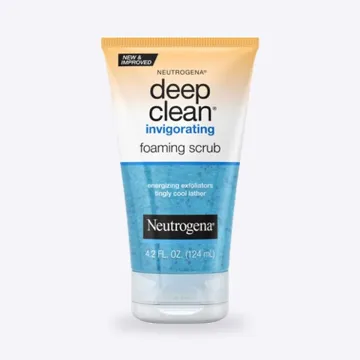
Deep Clean Invigorating Foaming Scrub
Exfoliant with glycerin.
Suits: Normal, Dry, Oily, Combination skin
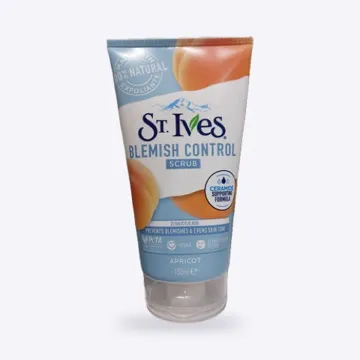
Blemish Control Scrub Apricot
Exfoliant with salicylic acid and glycerin.
Suits: Normal, Oily, Combination skin
From Pori's catalogue. Amazon links carry our Associates tag: Pori earns from qualifying purchases, at no cost to you. No brand pays to be listed. Photos: Open Beauty Facts contributors, CC BY-SA 3.0.
Tools
A soft washcloth is the mildest physical exfoliant, and the AAD suggests a washcloth with a mild chemical exfoliant for dry, sensitive or acne-prone skin. Cleansing brushes, silicone pads and sponges add more friction; use short, light strokes. Cleveland Clinic lists microdermabrasion and dermaplaning as in-office physical methods; see skincare after dermaplaning.
Enzymes
Enzyme exfoliants use proteases such as papain from papaya and bromelain from pineapple to digest the proteins that hold dead cells together. They're often sold as the mildest option, but the evidence is thin: a review found only 11 relevant studies, few of them clinical trials, and called for more robust research before enzymes can be recommended as a safe treatment. Enzymes are also fragile, so formulation matters. Mario Badescu Enzyme Cleansing Gel is a gentle daily wash with papaya and grapefruit extracts; it also contains fragrance and parabens.
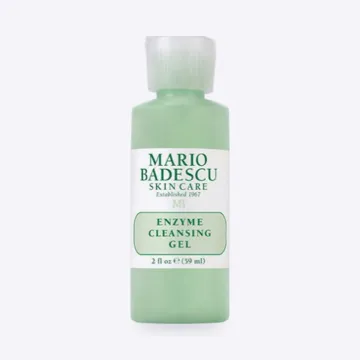
Enzyme Cleansing Gel
Face cleanser with glycerin.
Suits: Normal, Dry, Oily, Combination skin
From Pori's catalogue. Amazon links carry our Associates tag: Pori earns from qualifying purchases, at no cost to you. No brand pays to be listed. Photos: Open Beauty Facts contributors, CC BY-SA 3.0.
What are chemical exfoliants?
AHAs: glycolic, lactic and mandelic acid
Alpha hydroxy acids are water-soluble and work on the skin surface, which makes them best for dullness, rough texture and uneven tone. Their size changes how they feel. A 2026 review of hydroxy acids gives the molecular weight of glycolic acid as 76, lactic acid 90 and mandelic acid 152; smaller molecules penetrate faster and tend to sting more.
- Glycolic acid is the strongest per percent. The Ordinary Glycolic Acid 7% Exfoliating Toner is a common example; see our glycolic acid guide.
- Lactic acid is milder and also acts as a humectant. The Ordinary Lactic Acid 10% + HA sits at the top of the consumer range; see lactic acid for dry skin.
- Mandelic acid is larger and slower. Paula's Choice 6% Mandelic Acid + 2% Lactic Acid Liquid Exfoliant is fragrance-free; see mandelic acid for acne and dark skin.
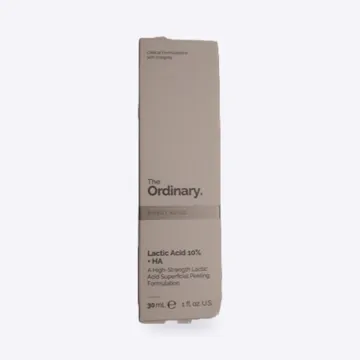
Lactic Acid 10% + HA
Leave-on exfoliant with lactic acid, hyaluronic acid and glycerin. Fragrance-free.
Suits: Normal, Dry, Oily, Combination skin
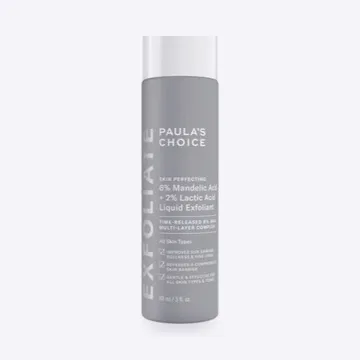
Skin Perfecting 6% Mandelic Acid + 2% Lactic Acid Liquid Exfoliant
Exfoliant with mandelic acid and lactic acid. Fragrance-free.
Suits: Normal, Dry, Oily, Combination, Sensitive skin
From Pori's catalogue. Amazon links carry our Associates tag: Pori earns from qualifying purchases, at no cost to you. No brand pays to be listed. Photos: Open Beauty Facts contributors, CC BY-SA 3.0.
BHA: salicylic acid
Salicylic acid is oil-soluble, so it can work inside pores, which is why it's the first choice for blackheads and oily skin. The FDA notes that, chemically, it isn't a true BHA, though companies call it one, and advises sun protection with BHA products. US rules allow 0.5% to 2% in over-the-counter acne products. Leave-on liquids such as Paula's Choice 2% BHA work longer than washes; see our best BHA exfoliants. A salicylic wash is a gentler start: CeraVe Renewing SA Cleanser pairs it with ceramides and niacinamide.
PHAs: gluconolactone and lactobionic acid
Polyhydroxy acids are the gentlest acids. A review by researchers at NeoStrata, a company that makes PHA products, reports that PHAs give effects similar to AHAs without the sensory irritation, and that they've been found compatible with sensitive skin, including rosacea and atopic dermatitis. They also act as humectants. Gluconolactone is the one you'll see most. Cetaphil Gentle Exfoliating SA Cleanser combines salicylic acid with gluconolactone and is fragrance-free. Our PHA guide goes further.
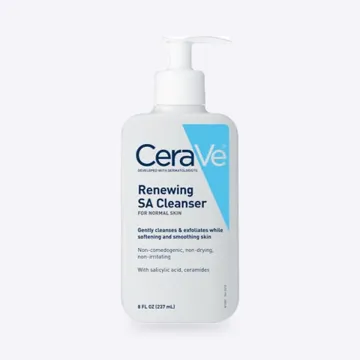
Renewing SA Cleanser
Face cleanser with niacinamide, gluconolactone and salicylic acid. Fragrance-free.
Suits: Normal, Oily, Combination, Sensitive skin
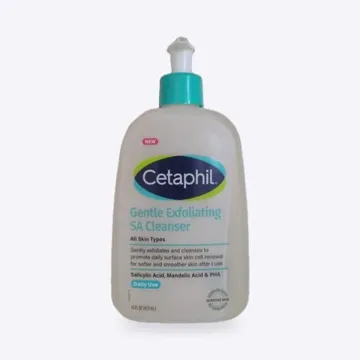
Gentle Exfoliating SA Cleanser
Face cleanser with gluconolactone, salicylic acid and niacinamide. Fragrance-free.
Suits: Normal, Oily, Combination, Sensitive skin
From Pori's catalogue. Amazon links carry our Associates tag: Pori earns from qualifying purchases, at no cost to you. No brand pays to be listed. Photos: Open Beauty Facts contributors, CC BY-SA 3.0.
Retinoids: a related step
Retinoids work by changing how skin cells behave, which speeds turnover and leads to the peeling many people mistake for exfoliation. They count toward your total load: the AAD warns that exfoliating while using retinoids, retinol or benzoyl peroxide may worsen dry skin or even cause breakouts. If you use one, cut other exfoliants back or keep them to separate nights. See retinol for beginners and types of serums.
What strength should you choose, and how often should you exfoliate?
Strength depends on the acid, its percentage and the product's pH. The FDA reports that its safety panel considers glycolic and lactic acid products safe for consumers at 10% or less with a final pH of 3.5 or higher. Leave-on products work longer than rinse-off washes at the same strength. Peels well above these ranges belong in a dermatologist's office.
| Exfoliant | Typical at-home strength | Starting frequency |
|---|---|---|
| Scrub | Fine, round grains | Once a week; never daily |
| Washcloth | Soft cotton | A few times a week |
| Enzyme wash or mask | Rarely stated | Per label; often daily washes, weekly masks |
| Glycolic acid | 5% to 10% | 2 to 3 evenings a week |
| Lactic acid | 5% to 10% | 2 to 3 evenings a week |
| Mandelic acid | 5% to 10% | 2 to 3 evenings a week |
| Salicylic acid | 0.5% to 2% | Every other day, building up |
| PHA | Varies | 2 to 3 times a week, building up |
Cleveland Clinic suggests exfoliating the face once or twice a week, more for oily skin and less for dry or sensitive skin. The AAD's rule is that the more aggressive the method, the less often you use it. Our how often to exfoliate guide has a full chart by skin type.
Which exfoliant suits your skin type?
- Oily or blackhead-prone: salicylic acid, leave-on or in a wash. See exfoliants for oily skin.
- Dry: lactic acid or a PHA, followed by moisturizer. See exfoliants for dry skin.
- Sensitive or rosacea-prone: a PHA or mandelic acid once a week, or none. See the best exfoliator for sensitive skin.
- Combination: salicylic acid on the T-zone, lactic acid or nothing on the cheeks.
- Darker skin tones: the AAD advises avoiding strong chemical or mechanical exfoliation if you get dark spots after acne, burns or bug bites, since aggressive exfoliation can increase pigmentation. Mandelic acid and PHAs are gentler starts.
The full exfoliant catalogue lets you filter by type and skin.
Where does an exfoliant go in your routine?
A scrub or acid wash replaces your cleanser that day; Cleveland Clinic advises using an exfoliator or a cleanser, not both. A leave-on acid goes on clean, dry skin before serums and moisturizer, usually at night. Don't follow a chemical exfoliant with a physical one, which Cleveland Clinic warns can increase sensitivity, and use one kind at a time with rest days between. Wear broad-spectrum SPF 30 or higher every morning: the FDA reports that four weeks of AHA use raised sensitivity to UV reddening by 18%.
What are the most common exfoliating mistakes?
- Stacking exfoliants. An acid toner, a scrub and a retinoid in the same week adds up fast.
- Exfoliating broken or sunburned skin. The AAD says never to exfoliate open cuts, wounds or sunburn.
- Scrubbing hard. Use light pressure for about 30 seconds and rinse with lukewarm water, as the AAD advises.
- Ignoring the warning signs. Redness, stinging from a plain moisturizer, or a tight, shiny look means stop for a week.
- Using a body scrub on your face. Facial skin is thinner.
- Skipping moisturizer and sunscreen. Exfoliating dries skin and raises sun sensitivity.
Frequently asked questions
What are the types of exfoliants?
Physical exfoliants, such as scrubs, washcloths, brushes and pads, and chemical exfoliants, such as AHAs (glycolic, lactic, mandelic acid), the BHA salicylic acid, PHAs (gluconolactone, lactobionic acid) and enzymes (papain, bromelain).
Which type of exfoliant is the gentlest?
A soft washcloth among physical options, and PHAs or mandelic acid among chemical ones. PHAs have large molecules that penetrate slowly and also hold water in the skin.
Is a chemical or physical exfoliant better?
For most skin, a mild chemical exfoliant is easier to control because the formula sets the dose. Scrubs suit oily, thick skin that tolerates friction, used once or twice a week.
What percentage of glycolic acid is safe to use at home?
The FDA reports that its safety panel considers glycolic and lactic acid products safe for consumers at 10% or less with a final pH of 3.5 or higher, used with daily sun protection.
Is retinol an exfoliant?
Not strictly. Retinoids speed up cell turnover, which causes peeling and adds to irritation, so cut back on other exfoliants while you use one.
Do enzyme exfoliants work?
They can loosen dead cells, but the evidence is thin. A review published in 2021 found only 11 relevant studies and called for more robust trials, so treat enzymes as a mild option.
Sources
- American Academy of Dermatology: How to safely exfoliate at home
- Cleveland Clinic: How To Exfoliate Safely and Effectively
- U.S. Food and Drug Administration: Alpha Hydroxy Acids
- U.S. Food and Drug Administration: Beta Hydroxy Acids
- eCFR: 21 CFR 333.310, Acne active ingredients
- Szewczyński J et al. From acidification to multi-targeted cellular modulation: dual impact of hydroxy acids on the skin microbiota and the epidermal barrier. Front Cell Infect Microbiol, 2026 (PMC)
- Grimes PE et al. The use of polyhydroxy acids (PHAs) in photoaged skin. Cutis, 2004 (PubMed)
- Trevisol TC et al. An overview of the use of proteolytic enzymes as exfoliating agents. J Cosmet Dermatol, 2022 (PubMed)
- U.S. Food and Drug Administration: The Microbead-Free Waters Act FAQs
Pori is a wellness and skincare education app, not a medical device. This article is for general information and isn't medical advice. For anything that worries you, see a dermatologist.