Pori
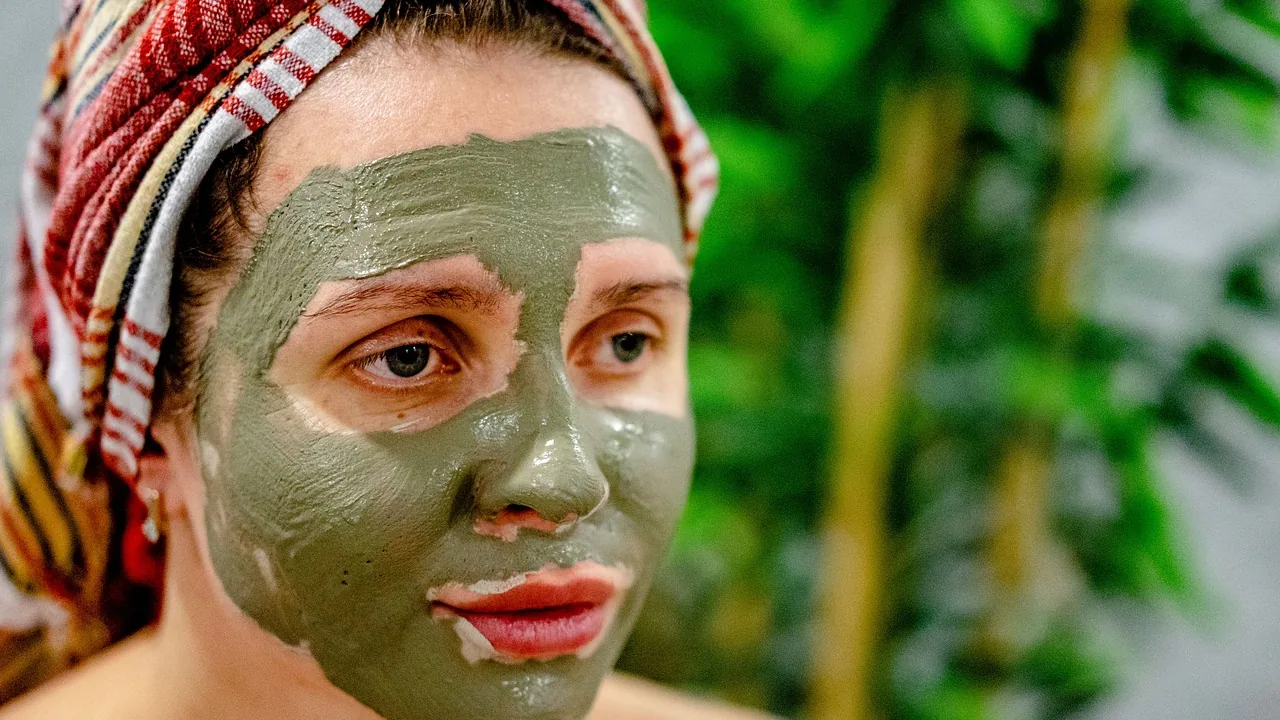
- Oily skin: clay or charcoal once or twice a week. Dry skin: cream, sheet or sleeping masks. Sensitive skin: fragrance-free gel or sheet masks.
- Sheet masks hydrate best when worn under 25 minutes; a 2024 study found longer wear increased dryness and redness.
- Peel-off masks remove part of the outer skin layer along with blackheads; keep them to the T-zone and skip them on sensitive skin.
- Exfoliating and enzyme masks start at once a week, never on the same night as a retinoid or another acid.
The main types of face mask are clay or charcoal, sheet, cream, gel, sleeping (overnight), exfoliating and peel-off, and enzyme masks. Clay and charcoal masks soak up surface oil and suit oily skin; sheet, cream, gel and sleeping masks add water and softness and suit dry, dehydrated or sensitive skin; exfoliating, peel-off and enzyme masks remove dead cells and need the most care. Most people need a mask once or twice a week at most, and none of them replaces a cleanser, moisturizer and sunscreen.
Before you buy, you can scan a mask's barcode or label with the ingredient scanner in Pori to check its ingredients against your skin type. Pori flags ingredients; it doesn't diagnose skin conditions.
Below we explain what each type does, who it suits, how often to use it and what the evidence actually shows. This guide is based on dermatology guidance, published studies and brand ingredient lists; we did not test these products on skin.
Do face masks actually work?
They do a few modest things well. The American Academy of Dermatology (AAD) says dermatologists find masks can help moisturize, support the skin barrier and address some signs of aging, but that a mask can't replace treatment for conditions such as eczema or acne, and it isn't a substitute for your daily routine. A 2018 review in the Journal of Cosmetic Dermatology sorts masks into four groups (sheet, peel-off, rinse-off and hydrogel) and concludes that better clinical trials are still needed.
Much of the short-term effect comes from occlusion. Covering skin for 10 to 20 minutes slows water loss, so the outer layer swells with water and looks smoother and plumper. That effect is real and fades within hours. Lasting change comes from the active ingredients in the mask, and those work the same way in a serum or moisturizer you leave on every day.
Types of face masks at a glance
| Type | What it does | Best for | Typical frequency |
|---|---|---|---|
| Clay or charcoal | Absorbs surface oil; temporary matte finish | Oily, combination (T-zone), acne-prone | 1 to 2 times a week |
| Sheet | Serum-soaked cloth or hydrogel holds water against skin | Dry, dehydrated, dull, most skin types | 1 to 3 times a week, under 20 minutes |
| Cream | Rich emollients and humectants | Dry, mature, wind- or cold-chapped skin | 1 to 2 times a week |
| Gel | Light, water-based, often cooling | Oily but dehydrated, sensitive, sunburn-tight skin | 1 to 3 times a week |
| Sleeping (overnight) | A leave-on layer that seals in moisturizer | Dry or dehydrated skin, dry climates | 1 to 3 nights a week |
| Exfoliating (acid or scrub) | AHAs, BHA or grains loosen dead cells | Rough texture, dullness, clogged pores | Once a week to start |
| Peel-off | Film dries and is pulled away | Occasional use on an oily T-zone | Rarely; skip on sensitive skin |
| Enzyme | Fruit enzymes digest surface proteins | Sensitive skin wanting gentle exfoliation | Once a week |
What do clay and charcoal masks do?
Clay masks use kaolin, bentonite or other clays that absorb oil as they dry. Your face looks less shiny for a few hours and feels very clean. The AAD lists clay among the ingredients that suit oily or acne-prone skin. The evidence is thin: the best-known study is an open pilot in which 194 people with acne-prone skin used a clay and jojoba oil mask two or three times a week for six weeks, and those who sent complete counts reported about 54% fewer blemishes. There was no control group, so treat that as a promising signal and nothing more.
Charcoal is added for the same oil-absorbing job. Activated charcoal binds substances in the gut, but there is little evidence it pulls anything special out of pores during a 10-minute mask, so "detox" is marketing language. If your skin is dry, apply clay only to the oily zones and rinse it off before it cracks, since a fully dried mask pulls moisture from the skin too.
Freeman Polishing Charcoal + Black Sugar Gel Mask + Scrub is a budget example that combines charcoal with sugar granules, so it also works as a physical scrub; the ingredient list we found includes fragrance. Garnier's Pure Charcoal sheet mask, sold in the UK, Ireland and Australia, puts charcoal, black algae and hyaluronic acid on a single-use tissue, which makes it a hydrating pick for oily skin. For more, browse masks for oily skin.
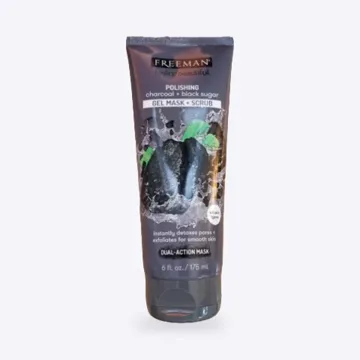
Polishing Charcoal + Black Sugar Gel Mask + Scrub
Face mask with charcoal powder and kaolin.
Suits: Normal, Oily, Combination skin
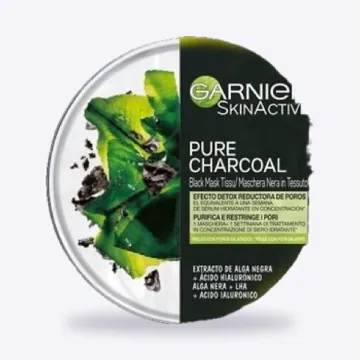
Pure Charcoal Mask
Face mask with glycerin.
Suits: Normal, Dry, Oily, Combination skin
From Pori's catalogue. Amazon links carry our Associates tag: Pori earns from qualifying purchases, at no cost to you. No brand pays to be listed. Photos: Open Beauty Facts contributors, CC BY-SA 3.0.
Are sheet masks worth it?
Sheet masks are a cotton, cellulose or hydrogel sheet soaked in a watery serum, usually with glycerin, hyaluronic acid or niacinamide. The sheet slows evaporation so the serum stays on your face longer. They suit almost every skin type and are a fast fix before an event.
Timing matters. In a 2024 randomized study from West China Hospital, sheet masks worn for less than 25 minutes improved skin hydration and reduced redness, while longer wear increased dryness and redness, especially with plain water masks. So follow the label, usually 10 to 20 minutes, and take the mask off before it dries. Pat the leftover serum in, then follow with a moisturizer to seal it. Fragrance is common in sheet masks, so check the label if your skin is reactive.
Cream, gel or sleeping mask: which one hydrates best?
- Cream masks are thick emulsions with oils, butters such as shea butter and humectants. They suit dry, mature or weather-chapped skin. Leave them on 10 to 15 minutes and tissue off the excess, or follow the label.
- Gel masks are lighter and water-based, often with aloe, glycerin or hyaluronic acid. They feel cooling and suit oily skin that is also dehydrated, and sensitive skin that dislikes heavy textures. See oily but dehydrated skin if your face is shiny and tight at once.
- Sleeping masks are leave-on gels or creams applied as the last step at night. Functionally they are a richer moisturizer with more occlusive ingredients, so they help most in dry weather or on skin that wakes up tight. Our guide to types of moisturizers explains humectants, emollients and occlusives.
For dry or sensitive skin, the AAD suggests looking for hyaluronic acid, ceramides, glycerin, colloidal oatmeal and green tea extract, and avoiding fragrance, essential oils and drying alcohol. Hydrating masks are the safest type to use more often, because they remove nothing from the skin.
How do exfoliating masks work, and how often should you use them?
Exfoliating masks remove dead cells in one of two ways. Acid masks use glycolic, lactic or salicylic acid to loosen the bonds between cells. Scrub masks use grains such as sugar, jojoba beads or crushed shells. The AAD names exfoliating masks as the type most likely to cause irritation, dryness or breakouts when used too often, and warns against walnut shell and apricot kernel scrubs, which can cause small tears.
Start once a week, on a night when you skip other acids and retinoids. The AAD specifically advises against a mask that repeats an active you already use, such as retinol or an acid. AHAs also raise sun sensitivity: the FDA found that four weeks of AHA use made skin about 18% more prone to UV redness, reversible within a week of stopping, so wear sunscreen daily. If you want to understand which acid to pick, see AHA vs BHA and how often to exfoliate your face.
Are peel-off masks bad for your skin?
Peel-off masks are safe for most people, and they are also the type to use most carefully. Peel-off masks are usually based on polyvinyl alcohol (PVA), which dries into a film. A small 2014 study found a PVA peel-off mask raised skin hydration more than a lotion over three hours, an effect the authors linked to occlusion. The problem is removal. Cleveland Clinic dermatologist Melissa Piliang has explained that the film sticks to skin and fine hair as well as blackheads, so peeling it away takes off part of the outermost skin layer and its oils, which is why it can feel like waxing.
- Skip peel-off masks if you have sensitive skin, rosacea, eczema, active acne, a sunburn or broken skin, or if you use a retinoid.
- Apply them only to the T-zone or blackhead-prone areas, away from eyebrows, hairline and the eye area.
- Peel slowly from the edges. If it sticks, soften it with warm water first.
- Wash with a gentle cleanser and apply a non-comedogenic moisturizer afterward.
Don't expect a peel-off mask to clear blackheads for good. The strings you see on the film are mostly sebum and hair, and pores refill within days. Salicylic acid used regularly does more; see salicylic acid for blackheads and blackheads vs sebaceous filaments.
What is an enzyme mask?
Enzyme masks use proteases, usually papain from papaya or bromelain from pineapple, to break down the proteins that hold dead surface cells together. They are often marketed as the gentlest exfoliating mask for sensitive skin. A 2021 review of proteolytic enzymes as exfoliants found only 11 relevant studies, few of them clinical trials; enzymes did exfoliate skin, but the authors said more robust studies are needed before they can be recommended as a safe treatment. Enzymes can also lose activity in the jar and can irritate, so patch test and stick to once a week. Our guide to the best exfoliators for sensitive skin compares enzymes with PHAs and mandelic acid.
Which face mask is best for my skin type?
- Oily or acne-prone: clay or charcoal once or twice a week, or a salicylic acid mask. Add a gel mask if your skin also feels tight.
- Dry: cream, sheet or sleeping masks. Avoid clay on the cheeks.
- Combination: multi-mask. Clay on the T-zone and a hydrating mask on the cheeks at the same time. See oily T-zone, dry cheeks.
- Sensitive: fragrance-free gel or sheet masks; skip peel-offs and grainy scrubs, and introduce acid or enzyme masks slowly.
- Normal: almost any type; rotate based on the season.
Not sure which you are? Start with how to find your skin type, and browse the full mask catalogue, including masks for combination skin and masks for normal skin.
How do you use a face mask without irritating your skin?
- Patch test a new mask on a small area first, as the AAD advises. Our guide on how to patch test skincare walks through it.
- Cleanse first so the mask sits on clean skin.
- Follow the label's timing. Longer is not better, and leaving masks on too long can cause side effects.
- Rinse off right away if you feel itching, burning or stinging.
- Moisturize afterward, and keep up your usual cleanser, moisturizer and daily sunscreen.
If your skin keeps reacting, or a mask seems to make acne or redness worse, see a board-certified dermatologist.
Frequently asked questions
How often should you use a face mask?
Most people need a mask once or twice a week. Hydrating sheet, gel and sleeping masks can be used up to three times a week. Exfoliating, enzyme and peel-off masks should start at once a week or less.
What face mask is best for oily skin?
A clay or charcoal mask once or twice a week absorbs surface oil, and a salicylic acid mask helps with clogged pores. If oily skin also feels tight, add a light gel mask.
Are peel-off masks bad for your skin?
They are safe for most people but can irritate. The film sticks to skin and fine hair, so peeling it away removes part of the outer skin layer and its oils. Use them only on the T-zone and skip them if your skin is sensitive or you use a retinoid.
How long should you leave a sheet mask on?
Follow the label, usually 10 to 20 minutes. A 2024 randomized study found sheet masks worn under 25 minutes improved hydration, while longer wear increased dryness and redness. Take it off before it dries.
Can a sleeping mask replace my night moisturizer?
It can on some nights. A sleeping mask is essentially a richer leave-on moisturizer with more occlusive ingredients, so it helps most in dry weather. On other nights, a regular moisturizer is enough.
Do charcoal masks detox your skin?
There is little evidence that charcoal pulls toxins from pores during a short mask. Like clay, it absorbs surface oil, which leaves skin looking matte for a few hours.
Sources
- American Academy of Dermatology: Do facial masks work, and should I add one to my skin care routine?
- Nilforoushzadeh MA et al. Skin care and rejuvenation by cosmeceutical facial mask. J Cosmet Dermatol, 2018 (PubMed)
- Wang Y et al. Short-term skin reactions and changes in stratum corneum following different ways of facial sheet mask usage. J Tissue Viability, 2024 (PubMed)
- Velasco MV et al. Short-term clinical of peel-off facial mask moisturizers. Int J Cosmet Sci, 2014 (PubMed)
- Meier L et al. Clay jojoba oil facial mask for lesioned skin and mild acne: a prospective, observational pilot study. Forsch Komplementmed, 2012 (PubMed)
- Trevisol TC et al. An overview of the use of proteolytic enzymes as exfoliating agents. J Cosmet Dermatol, 2022 (PubMed)
- TIME (Health.com): The Internet Is Obsessed With This Charcoal Face Mask, But Is It Safe?
- American Academy of Dermatology: How to safely exfoliate at home
- U.S. Food and Drug Administration: Alpha hydroxy acids
Pori is a wellness and skincare education app, not a medical device. This article is for general information and isn't medical advice. For anything that worries you, see a dermatologist.