Pori
- AHAs (glycolic, lactic) are water-soluble and work on the surface: best for dullness, rough texture and dry or sun-damaged skin.
- BHA (salicylic acid) is oil-soluble and gets into pores: best for blackheads, clogged pores and oily or acne-prone skin.
- You can use both once each is tolerated: alternate nights, split by face zone, or pick a combined product.
- AHAs raise sun sensitivity, and the FDA advises sun protection with either, so wear SPF daily.
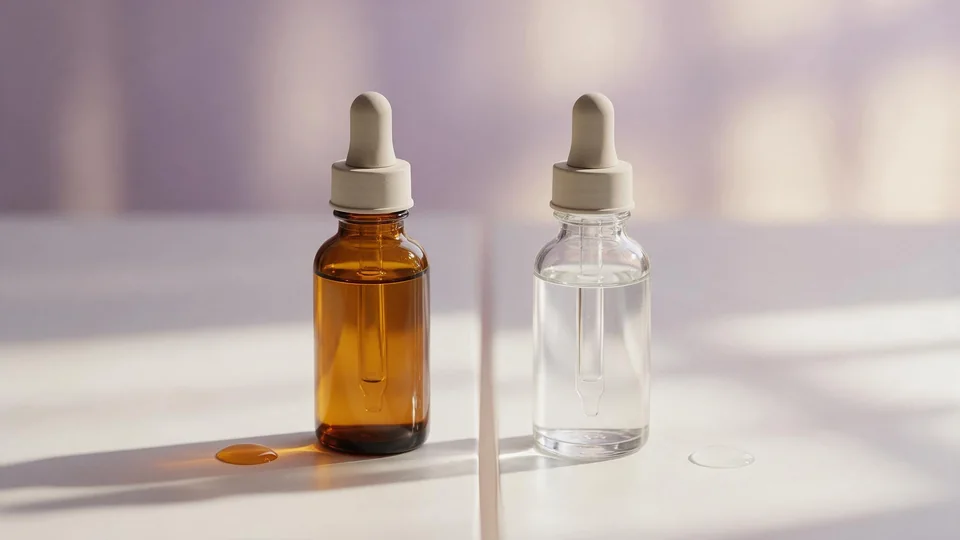
AHA vs BHA comes down to where each acid works. AHAs such as glycolic and lactic acid dissolve in water and exfoliate the surface, so they suit dullness, rough texture and dry or sun-damaged skin. BHA (salicylic acid) dissolves in oil and gets into pores, so it suits blackheads, clogged pores and oily or acne-prone skin. Many people do best with one, and some alternate both.
Below we compare how each acid works, what it does for pores, texture and dullness, how strong over-the-counter products get, a decision table by skin type, and whether you can use AHA and BHA together. If you've never used an acid before, start with our exfoliating acids for beginners guide, which covers the first few weeks.
What is the difference between AHA and BHA?
The core difference is solubility: AHAs are water-soluble and BHAs are oil-soluble. Cleveland Clinic explains that AHAs dissolve in water, not oil, and typically work best on the surface of your skin. Salicylic acid is lipophilic, which a review in Clinical, Cosmetic and Investigational Dermatology credits for its ability to concentrate in the pilosebaceous apparatus, the hair follicle and its oil gland.
Both families loosen dead cells so they shed. The FDA notes that the extent of exfoliation depends on the type and concentration of the acid, its pH and the other ingredients, which is why two products with the same acid can feel very different.
- Common AHAs: glycolic acid and lactic acid are the most common in cosmetics, according to the FDA, followed by citric acid and others. Mandelic acid is another AHA commonly used in dermatology.
- Common BHA: the FDA lists salicylic acid as the BHA most commonly used in cosmetics, sometimes appearing as salicylate, sodium salicylate or willow extract. Chemists don't consider it a true BHA, the FDA adds, but the label has stuck.
AHA vs BHA at a glance
| AHA (glycolic, lactic, mandelic) | BHA (salicylic acid) | |
|---|---|---|
| Dissolves in | Water | Oil |
| Where it works | Mainly the skin surface | Surface plus inside oily pores |
| Best at | Dullness, rough texture, uneven tone, dry or sun-damaged skin | Blackheads, whiteheads, clogged pores, oily and acne-prone skin |
| Extra effects | Lactic acid is gentler and linked to higher ceramide levels | Anti-inflammatory; can reduce oil |
| Usual OTC strength | Up to 10% at pH 3.5 or higher in cosmetics | 0.5% to 2% in OTC acne products |
| Sun sensitivity | Raises it; FDA advises sunscreen during use and for a week after | Less evidence of a rise; FDA still advises sun protection |
| Main caution | Stinging and irritation on sensitive or dry skin | Dryness, especially with other acne treatments |
The strength limits come from two places. The Cosmetic Ingredient Review panel, as reported by the FDA, considers glycolic and lactic acid products safe when the AHA concentration is 10% or less and the final pH is 3.5 or greater. For acne products sold over the counter in the US, the FDA's rules allow salicylic acid at 0.5 to 2 percent. Stronger concentrations of both are used in in-office peels; DermNet lists glycolic and salicylic acid among the agents in superficial chemical peels.
Is AHA or BHA better for blackheads and clogged pores?
BHA is the better choice for blackheads and clogged pores, because it can reach the oil inside the pore. DermNet explains that in acne, salicylic acid slows the shedding of cells inside the follicle, preventing clogging, and helps break down blackheads and whiteheads. The Arif review describes salicylic acid as comedolytic and able to decrease sebum secretion in people with acne; our salicylic acid guide covers strengths and formats. A 2026 review of hydroxy acids adds that, owing to its lipophilicity, salicylic acid penetrates selectively and easily along the pilosebaceous units.
AHAs can still help pores look clearer by smoothing the surface around them. Cleveland Clinic lists cleaning out clogged pores and preventing blackheads among glycolic acid's benefits. But because AHAs stay largely in water-based layers, they're a weaker tool for oil-filled pores. Before treating "blackheads" on your nose, check whether they're actually sebaceous filaments, which are normal; our guide to blackheads vs sebaceous filaments shows the difference.
Is AHA or BHA better for acne?
For acne, BHA is usually the first acid to try, though an acid alone rarely clears more than mild acne. The AAD lists salicylic acid among acne treatments and says it opens clogged pores and exfoliates the skin. The Arif review notes salicylic acid's anti-inflammatory action is most pronounced between 0.5% and 5%, which overlaps the over-the-counter range.
AHAs have a place for the marks acne leaves behind. Cleveland Clinic says glycolic acid can lighten dark spots that result from mild sun damage or acne, though it may take several months to see more even pigmentation.
Give any acne routine time before you judge it. The AAD says it takes at least 6 to 8 weeks before you start to see fewer breakouts. If you have painful, deep or scarring acne, see a dermatologist; prescription treatment works better than stacking acids.
Is AHA or BHA better for texture and dullness?
AHAs are generally the stronger choice for rough texture and dullness on the surface. The FDA notes AHA products are marketed for smoothing fine lines and surface wrinkles and improving texture and tone. Cleveland Clinic says glycolic acid helps improve the tone and texture of your skin and stimulates collagen production; see our glycolic acid guide for strengths. Glycolic acid is the smallest AHA, so it penetrates the skin more easily than other acids; the 2026 review gives its molecular weight as 76 daltons against 90 for lactic acid and 152 for mandelic acid.
BHAs also smooth skin, and the FDA reports it has been claimed that BHAs improve texture without the occasional irritation associated with AHAs. That is a marketing claim the FDA reports, and how well you tolerate either acid depends heavily on the product and your skin.
Is AHA or BHA better for dry skin?
For dry skin, a gentle AHA such as lactic acid is usually the better fit. Cleveland Clinic notes that lactic acid peels are gentler and increase ceramides in your skin. The AAD suggests that people with dry, sensitive or acne-prone skin may prefer a mild chemical exfoliant to scrubs. Salicylic acid can be drying, and DermNet lists irritation and stinging among its possible side effects. Whichever you choose, follow it with moisturizer.
Which exfoliant is right for your skin type?
Use the table below as a starting point, then adjust to what your skin tells you. The AAD advises that the exfoliation method should be guided by your skin type.
| Skin type or concern | Better fit | Notes |
|---|---|---|
| Oily, shiny, enlarged-looking pores | BHA | Oil-soluble, reaches into pores |
| Blackheads and whiteheads | BHA | Comedolytic; confirm they're not sebaceous filaments |
| Mild acne | BHA | Give it 6 to 8 weeks; see a dermatologist for painful or scarring acne |
| Dry, flaky, dull | AHA (lactic) | Gentler AHA; moisturize after |
| Sun-related texture, uneven tone, fine lines | AHA (glycolic) | Use at night; daily SPF is essential |
| Dark marks after acne | AHA | Results take months; go slowly on deeper skin tones |
| Combination | BHA on the T-zone, AHA or nothing on cheeks | Treat zones separately if needed |
| Sensitive or rosacea-prone | Neither to start; ask a dermatologist | A PHA is the gentler option |
Two groups need extra care. For darker skin tones, the AAD advises avoiding strong chemical or mechanical exfoliation, because aggressive exfoliation can lead to more dark spots, and DermNet notes that lighter peels are used on darker skin because of the risk of postinflammatory pigmentation. For rosacea, the AAD's skin care tips list glycolic acid and lactic acid among ingredients to avoid and advise that if you exfoliate, you stop. If you're sensitive, our guide to PHAs for sensitive skin covers the gentlest acids.
Can you use AHA and BHA together?
Yes, many people can, but not on day one and not by layering two strong products. The FDA notes that BHAs and combinations of AHAs and BHAs appear in skin care products, so pre-mixed formulas exist. A Cleveland Clinic dermatologist recommends that when you're first starting out, you avoid using glycolic acid with other exfoliants like lactic and salicylic acids, to limit irritation and to know which product is responsible if a reaction happens.
Once each acid is well tolerated on its own, there are three common ways to use both:
- Alternate nights. BHA one evening, AHA another, with plain moisturizer nights in between. This keeps the total amount of exfoliation modest.
- Split by zone. BHA on the oily T-zone and AHA on drier cheeks, in the same evening.
- Use a combined product. One formula with both acids, at the frequency on the label, in place of two separate acid steps.
Avoid adding a scrub on acid nights; Cleveland Clinic warns that using a physical exfoliant after a chemical exfoliant can make skin more sensitive. And watch what else is in your routine. The AAD notes that exfoliating while using retinoids, retinol or benzoyl peroxide may worsen dryness or even cause acne breakouts. The AAD's general rule applies here too: the more aggressive the exfoliation, the less often it needs to be done.
Do AHA and BHA make your skin sensitive to the sun?
AHAs clearly do, and the evidence for BHA is weaker, but sunscreen is advised for both. FDA research found that after four weeks of AHA use, sensitivity to UV-induced reddening rose 18 percent and returned to normal about a week after stopping. A study described in a review of hydroxy acids found 10% glycolic acid increased skin's sensitivity to simulated sunlight while 2% salicylic acid did not. Even so, the FDA advises sun protection if you use a BHA product.
A note for pregnancy: Cleveland Clinic says glycolic acid is generally safe in pregnancy in low concentrations but to check with your provider, and DermNet advises discussing salicylic acid with your doctor if you're pregnant or breastfeeding because it can be absorbed through the skin.
How can an ingredient scanner help you choose?
Acids hide in more places than the bottle labeled "exfoliant": cleansers, toners, moisturizers and spot treatments can all contain them, which makes doubling up easy. Pori's ingredient scanner (part of Pro) reads a product's barcode or a photo of its label and flags each ingredient as beneficial, use with caution or avoid for your skin type, so you can spot salicylic or glycolic acid before you stack a second one. A selfie scan gives a Pores & Texture score you can compare over the weeks you test an acid.
An app looks at appearance and ingredient lists, and an app is not a diagnosis, so see a dermatologist for persistent acne, redness or irritation.
Frequently asked questions
Is AHA or BHA better for acne?
BHA (salicylic acid) is usually the better first choice for acne because it is oil-soluble and works inside clogged pores. AHAs can help fade the dark marks acne leaves. See a dermatologist for painful or scarring acne.
Is AHA or BHA better for blackheads?
BHA. Salicylic acid dissolves in oil, so it reaches into pores and helps break down blackheads and whiteheads. AHAs mostly work on the surface.
Can you use AHA and BHA together?
Yes, once your skin tolerates each one alone. Alternate them on different nights, use BHA on the T-zone and AHA on the cheeks, or choose a product that combines both.
Is AHA or BHA better for dry skin?
A gentle AHA such as lactic acid usually suits dry skin better. Salicylic acid can be drying, so if you use it, follow with a moisturizer.
Which is gentler, AHA or BHA?
It depends on the acid, strength and formula. Lactic acid is considered a gentler AHA, and some claim BHAs irritate less than AHAs, but a PHA is the gentlest option for sensitive skin.
Do I need sunscreen with BHA?
Yes. The FDA advises sun protection with BHA products, and AHAs are known to increase sunburn risk, so wear broad-spectrum sunscreen every morning.
Sources
- U.S. Food and Drug Administration: Alpha Hydroxy Acids
- U.S. Food and Drug Administration: Beta Hydroxy Acids
- Arif T. Salicylic acid as a peeling agent: a comprehensive review. Clin Cosmet Investig Dermatol, 2015 (PMC)
- Szewczyński J et al. From acidification to multi-targeted cellular modulation: dual impact of hydroxy acids on the skin microbiota and the epidermal barrier. Front Cell Infect Microbiol, 2026 (PMC)
- Cleveland Clinic: Glycolic Acid: Benefits for Skin and How To Use
- American Academy of Dermatology: How to safely exfoliate at home
- DermNet: Salicylic acid
- eCFR: 21 CFR 333.310, Acne active ingredients
Pori is a wellness and skincare education app, not a medical device. This article is for general information and isn't medical advice. For anything that worries you, see a dermatologist.