Pori

- Physical exfoliants scrub dead cells off with grains or tools; chemical exfoliants (AHA, BHA, PHA, enzymes) loosen them with acids or enzymes.
- The AAD says dry, sensitive and acne-prone skin usually does better with a mild chemical exfoliant; oily, thicker skin can tolerate a scrub.
- The St. Ives micro-tears class action was dismissed in December 2018; the judge noted that every exfoliant is necessarily abrasive.
- Start either type once a week, don't stack them on the same night, and wear SPF daily when using AHAs.
Physical exfoliants remove dead skin by friction, using grains, brushes, sponges or a washcloth. Chemical exfoliants loosen it with acids or enzymes, such as AHAs (glycolic, lactic, mandelic), BHA (salicylic acid) and PHAs. For most faces a mild chemical exfoliant is the more controllable choice, and the American Academy of Dermatology (AAD) says dry, sensitive and acne-prone skin usually does better with one, while oily, thicker skin can tolerate a scrub.
If you're comparing two products, you can scan each barcode or label with the ingredient scanner in Pori to check its ingredients against your skin type. Pori flags ingredients; it doesn't diagnose skin conditions.
Below we compare the two families side by side, explain which suits which skin, and cover what happened in the St. Ives Apricot Scrub lawsuit. We compared published ingredient lists, brand claims, dermatology guidance and court summaries; we did not test these products on skin. Prices are as of November 2026.
What is the difference between physical and chemical exfoliants?
The AAD describes two methods. Mechanical, or physical, exfoliation uses a tool such as a brush, pad or sponge, or a scrub, to rub dead cells away. Chemical exfoliation uses acids, such as alpha and beta hydroxy acids, to dissolve the bonds that hold dead cells to the surface so they shed. Enzyme exfoliants sit with the chemical group, since they digest surface proteins with no grit involved.
The practical difference is control. With a scrub, the result depends on your hand: how hard you press, how long you rub and how sharp the grains are. With an acid, the formula sets the dose, so the same bottle behaves the same way each night. That makes acids easier to start low and build up, which is why dermatologists tend to suggest them first for reactive skin.
Physical vs chemical exfoliants at a glance
| Physical (scrubs, tools) | Chemical (acids, enzymes) | |
|---|---|---|
| How it works | Friction from grains, bristles or fabric | Loosens the bonds between dead cells |
| Examples | Walnut shell, sugar, jojoba or cellulose beads, coffee grounds, brushes, washcloths | Glycolic, lactic, mandelic acid (AHA); salicylic acid (BHA); gluconolactone (PHA); papain, bromelain |
| Results | Instant smoothness; surface only | Builds over weeks; BHA also works inside pores |
| Best for | Oily, thicker skin that likes a polished feel | Most skin types, including dry, sensitive and acne-prone at low strength |
| Main risk | Irritation from pressure, sharp grains and overuse | Stinging, dryness, sun sensitivity (AHAs) |
| Typical frequency | 1 to 2 times a week | 1 to 3 times a week to start; some gentle formulas daily |
Are face scrubs bad for your skin?
Many people use them without trouble, and they are still the easier type to overdo. The AAD's guidance on facial masks warns against walnut shell and apricot kernel scrubs because they can cause small tears, and its acne advice notes that scrubbing can irritate skin and make acne flare. Grain shape matters: smooth, round particles such as jojoba or cellulose beads are gentler than jagged crushed shells or salt. Plastic microbeads, once the smoothest option, are gone from US rinse-off cosmetics; the Microbead-Free Waters Act of 2015 banned their manufacture from July 2017 for environmental reasons.
Tools count as physical exfoliation too. A soft washcloth is the mildest. Cleansing brushes and silicone pads add more friction than most people expect, so use short, light strokes, as the AAD advises, and skip them on days you use an acid.
Three scrubs in our catalogue show the range:
- Neutrogena Deep Clean Gentle Scrub (US) uses cellulose beads and lists a small amount of salicylic acid as an ingredient, so it is a hybrid. It is oil-free and suits oily or combination skin.
- St. Ives Fresh Skin Apricot Scrub is the UK and Commonwealth version of the classic. Its grit is walnut shell powder, and it is the most abrasive of the three. Our St. Ives Apricot Scrub review covers the US formulas, their fragrance and their label frequency of two to three times a week.
- UpCircle Coffee Face Scrub Herbal Blend (UK) uses recycled coffee grounds with shea butter, coconut oil and rosemary, thyme, petitgrain and tea tree essential oils. It is aimed at oily and combination skin; the essential oils make it a poor fit for fragrance-sensitive skin.
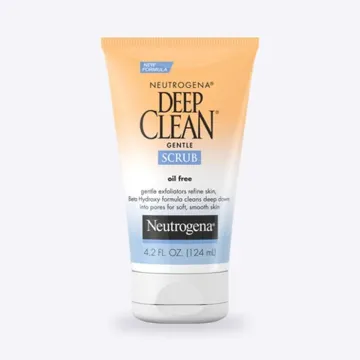
Deep Clean Gentle Facial Scrub
Exfoliant with salicylic acid and glycerin.
Suits: Normal, Oily, Combination skin
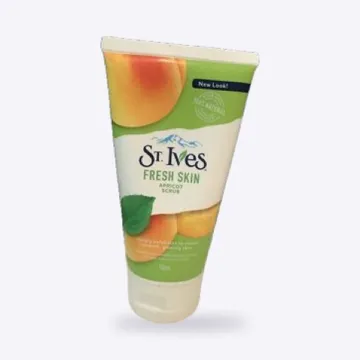
Apricot Facial Scrub Fresh Skin
Exfoliant with glycerin.
Suits: Normal, Dry, Oily, Combination skin
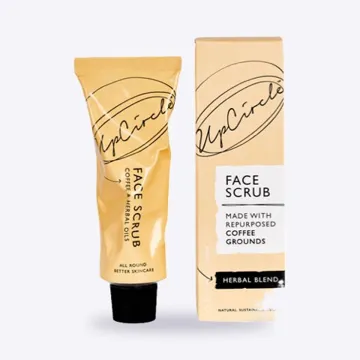
Coffee Face Scrub Herbal Blend For Oily And Combination Skin
Exfoliant with shea butter and tea tree oil.
Suits: Normal, Dry, Combination skin
From Pori's catalogue. Amazon links carry our Associates tag: Pori earns from qualifying purchases, at no cost to you. No brand pays to be listed. Photos: Open Beauty Facts contributors, CC BY-SA 3.0.
What happened in the St. Ives Apricot Scrub lawsuit?
A group of consumers filed a proposed class action, Browning v. Unilever, in federal court in California. They alleged that the walnut shell powder in St. Ives Apricot Scrub caused "micro-tears" that sped up skin aging, and that Unilever should have disclosed this. On December 17, 2018, Judge Andrew Guilford granted Unilever summary judgment and dismissed all the claims.
The court found the plaintiffs had not shown a safety hazard Unilever was required to disclose. Their expert dermatologist said he wouldn't advise using the scrub, but his study had only fifteen participants, lasted two weeks and did not rule out other causes. The judge also wrote that the scrub "is an exfoliant and like all such products is necessarily abrasive." Neither named plaintiff said the scrub had harmed their own face.
So the case settled a legal question, and it says little about skin either way. The dermatology guidance above is the better guide: any scrub can irritate if you press hard or use it often, and crushed-shell scrubs are the ones the AAD names.
Which chemical exfoliant should you choose?
Pick by your main concern. Our AHA vs BHA guide goes deeper, and exfoliating acids for beginners has a week-by-week starting plan.
- AHAs are water-soluble and work on the surface, so they suit dullness, rough texture and dry or sun-damaged skin. Glycolic acid is the smallest and strongest. Lactic acid is milder and also hydrates; see lactic acid for dry skin. Mandelic acid is a larger molecule that penetrates more slowly, which makes it a common pick for sensitive or darker skin; see mandelic acid for acne and dark skin.
- BHA means salicylic acid. It is oil-soluble, so it works inside pores and suits blackheads, clogged pores and oily skin. See salicylic acid for blackheads.
- PHAs such as gluconolactone and lactobionic acid are larger still and among the gentlest. See PHAs for sensitive skin.
- Enzymes such as papain and bromelain are often sold as the mildest option. A 2021 review found only 11 relevant studies and called for more robust trials before enzymes can be recommended as a safe treatment, so treat their benefits as modest.
Strength and pH matter as much as the acid. The Cosmetic Ingredient Review panel, cited by the FDA, considers glycolic and lactic acid safe for consumer use at 10% or less with a final pH of 3.5 or higher, alongside sun protection. AHAs raise sun sensitivity: in FDA-cited studies, four weeks of AHA use made skin about 18% more prone to UV redness, and the effect faded within a week of stopping. Wear SPF 30 or higher every morning.
Which chemical exfoliants are good to start with?
Four products in our catalogue cover the main routes:
- Paula's Choice Skin Perfecting 6% Mandelic Acid + 2% Lactic Acid Liquid Exfoliant is a fragrance-free leave-on AHA built for gentler exfoliation, a good first acid for sensitive or uneven skin. Our Paula's Choice guide covers the rest of the range.
- The Ordinary Lactic Acid 10% + HA ($9.20 for 30 ml at theordinary.com) is stronger, with a pH of about 3.6 to 3.8. The brand says not to use it on sensitive, peeling or compromised skin and suggests applying it once a day, in the evening; our full review explains when the 5% version is the better start.
- CeraVe Renewing SA Cleanser pairs salicylic acid with ceramides and niacinamide in a rinse-off wash, a low-commitment way to try BHA.
- Cetaphil Gentle Exfoliating SA Cleanser combines salicylic acid with gluconolactone and niacinamide and is fragrance-free.
Rinse-off acids are gentler than leave-on ones because they stay on your skin for under a minute. For more picks, see the best exfoliators for sensitive skin or browse all exfoliants.
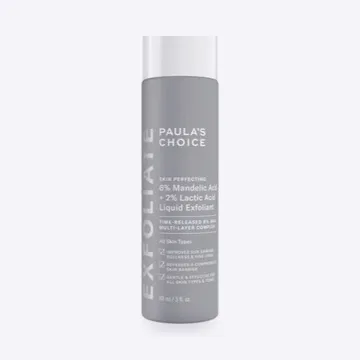
Skin Perfecting 6% Mandelic Acid + 2% Lactic Acid Liquid Exfoliant
Exfoliant with mandelic acid and lactic acid. Fragrance-free.
Suits: Normal, Dry, Oily, Combination, Sensitive skin
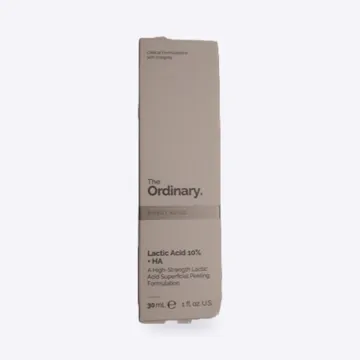
Lactic Acid 10% + HA
Leave-on exfoliant with lactic acid, hyaluronic acid and glycerin. Fragrance-free.
Suits: Normal, Dry, Oily, Combination skin
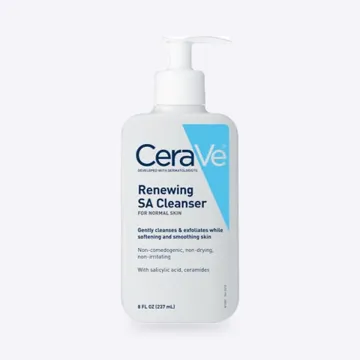
Renewing SA Cleanser
Face cleanser with niacinamide, gluconolactone and salicylic acid. Fragrance-free.
Suits: Normal, Oily, Combination, Sensitive skin
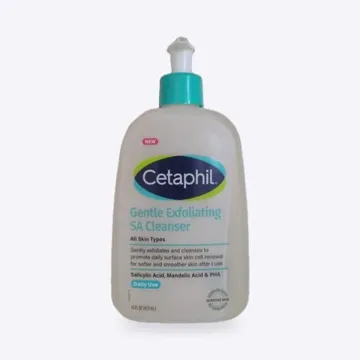
Gentle Exfoliating SA Cleanser
Face cleanser with gluconolactone, salicylic acid and niacinamide. Fragrance-free.
Suits: Normal, Oily, Combination, Sensitive skin
From Pori's catalogue. Amazon links carry our Associates tag: Pori earns from qualifying purchases, at no cost to you. No brand pays to be listed. Photos: Open Beauty Facts contributors, CC BY-SA 3.0.
Is physical or chemical exfoliation better for my skin type?
- Oily or thick skin: either works. Salicylic acid treats pores; a smooth-bead scrub once or twice a week is fine if you like it. See exfoliants for oily skin.
- Dry skin: lactic or mandelic acid, with a washcloth at most. See exfoliants for dry skin.
- Combination skin: BHA on the T-zone, a mild AHA or nothing on the cheeks. See exfoliants for combination skin.
- Sensitive skin: a PHA, mandelic acid or a rinse-off acid cleanser, once a week to start. Skip scrubs and brushes.
- Acne-prone skin: salicylic acid. The AAD warns that scrubbing can make acne flare.
- Darker skin tones or dark marks: the AAD advises avoiding strong chemical or mechanical exfoliation, because aggressive exfoliation can increase pigmentation. Choose gentle, low-strength acids.
- Normal skin: almost anything gentle works. See exfoliants for normal skin.
How often should you use each type?
The AAD's rule is simple: the more aggressive the method, the less often you should use it. Start once a week with either kind, apply scrubs or acids in small circles for about 30 seconds with lukewarm water, and moisturize right after. Never exfoliate over cuts, open wounds or sunburn. Our how often to exfoliate chart breaks frequency down by skin type and product.
Can you use physical and chemical exfoliants together?
You can, though rarely on the same day. Using both doubles the irritation risk, and the AAD notes that retinoids, retinol and benzoyl peroxide already make skin more sensitive, so exfoliating on top can worsen dryness or breakouts. If you use both, alternate them on different nights, or keep the scrub to the T-zone. Stop everything and let your skin recover if you notice stinging with plain moisturizer, new redness, tight shiny skin or flaking; see signs of a damaged skin barrier.
Frequently asked questions
Is a physical or chemical exfoliant better?
For most faces, a mild chemical exfoliant is easier to control because the formula sets the dose. The AAD says dry, sensitive and acne-prone skin usually does better with one, while oily, thicker skin can tolerate a scrub.
Are face scrubs bad for your skin?
Many people use them without trouble, and they are easy to overdo. The AAD warns that walnut shell and apricot kernel scrubs can cause small tears and that scrubbing can make acne flare. Smooth beads and light pressure once or twice a week are gentler.
What happened with the St. Ives Apricot Scrub lawsuit?
In Browning v. Unilever, plaintiffs claimed the walnut shell grit caused micro-tears. A federal judge in California dismissed all claims on December 17, 2018, finding no proven safety hazard Unilever had to disclose.
Is an enzyme exfoliant physical or chemical?
Chemical. Enzymes such as papain and bromelain digest the proteins that hold dead cells together, with no grit involved. They are usually mild, though a 2021 review found few clinical studies.
Can I use a scrub and an acid on the same day?
It's best not to. Alternate them on different nights or keep the scrub to the T-zone, and skip both on nights you use a retinoid or benzoyl peroxide.
Which exfoliant is best for dark skin tones?
Gentle, low-strength acids such as mandelic acid or a PHA. The AAD advises people with darker skin or dark marks to avoid strong chemical or mechanical exfoliation, which can increase pigmentation.
Sources
- American Academy of Dermatology: How to safely exfoliate at home
- American Academy of Dermatology: Do facial masks work, and should I add one to my skin care routine?
- American Academy of Dermatology: 10 skin care habits that can worsen acne
- Proskauer: Failure to disclose claims washed away in facial scrub case (Browning v. Unilever, C.D. Cal. 2018)
- U.S. Food and Drug Administration: The Microbead-Free Waters Act FAQs
- U.S. Food and Drug Administration: Alpha hydroxy acids
- Kornhauser A, Coelho SG, Hearing VJ. Applications of hydroxy acids: classification, mechanisms, and photoactivity. Clin Cosmet Investig Dermatol, 2010 (PMC)
- Trevisol TC et al. An overview of the use of proteolytic enzymes as exfoliating agents. J Cosmet Dermatol, 2022 (PubMed)
- The Ordinary: Lactic Acid 10% + HA
Pori is a wellness and skincare education app, not a medical device. This article is for general information and isn't medical advice. For anything that worries you, see a dermatologist.