Pori

- Moisturizers use humectants (draw water in), emollients (soften) and occlusives (seal water in); most combine all three.
- Textures run from gel and gel-cream to lotion, cream, balm and ointment, with more oil and more sealing as they get thicker.
- Oily skin suits gels or light lotions; dry skin suits creams or ointments; combination skin can moisturize only the dry areas.
- A day moisturizer with SPF counts as sunscreen only if it is broad-spectrum SPF 30 or higher and reapplied; a night cream is optional.
Moisturizers come in two overlapping sets of types. By ingredient, they use humectants that draw water in, emollients that soften, and occlusives that seal water in, and most products combine all three. By texture, they run from light to heavy: gel, gel-cream, lotion, cream, balm and ointment. As a rule, oily skin does best with gels and light lotions, and dry skin with creams and ointments.
To see which ingredient types a product relies on, you can scan its barcode or label with the ingredient scanner in Pori and check it against your skin type. It reads the formula; it doesn't diagnose skin conditions.
Below we explain the three ingredient types, each texture, which suits which skin type, and how a day cream with SPF differs from a night cream.
What are the three types of moisturizer ingredients?
A 2017 review of moisturizers in Clinical Medicine & Research groups moisturizing ingredients into humectants, emollients and occlusives, and notes that most moisturizers combine all three. Cleveland Clinic uses the same terms. Knowing which ones lead an ingredient list tells you more than the word on the jar.
Humectants: draw water in
Humectants attract and bind water. Cleveland Clinic lists glycerin, hyaluronic acid, propylene glycol and urea as examples, and notes that they feel less greasy than occlusives but wash off more easily. The 2017 review adds panthenol, honey, sorbitol and alpha hydroxy acids such as lactic acid.
There's a catch. The same review explains that humectants can pull water from deeper skin layers up to the surface, where it evaporates. That's why they work best paired with an occlusive. A hyaluronic acid serum on its own, in dry winter air, may leave skin feeling tighter than with a moisturizer on top. Our guides to glycerin and hyaluronic acid go deeper.
Emollients: soften and smooth
Emollients make the skin surface feel softer, smoother and more flexible. They include fatty acids, fatty alcohols such as cetearyl alcohol, plant butters and oils, squalane and ceramides. Cleveland Clinic points out that "emollient" is often used loosely: it describes the softening ingredient in a moisturizer, while the moisturizer as a whole contains other ingredients that bring water in. Our ceramides guide explains why barrier lipids get so much attention.
Occlusives: seal water in
Occlusives form a water-repelling film that slows evaporation. The review calls petrolatum the most effective classic occlusive: at 5% or more it can reduce transepidermal water loss by more than 98%. Lanolin, mineral oil and silicones such as dimethicone reduce it by 20% to 30%. Occlusives work best on damp skin. Their downside is a greasy feel, and Cleveland Clinic notes that heavy occlusives like oils and petroleum jelly may cause breakouts in acne-prone skin. See petrolatum and slugging and silicones in skincare for the details.
What are the different moisturizer textures?
Texture mostly reflects the balance of water and oil. The review describes lotions as oil-in-water emulsions that spread easily and aren't greasy, creams as heavier, and ointments as roughly 80% oil and 20% water. The AAD explains the practical result: a cream is thicker and has more oil than a lotion or gel, so it hydrates more, and an ointment is the thickest of all and the most effective for dry skin.
| Texture | Feel | Best for | Notes |
|---|---|---|---|
| Gel | Water-based, light, absorbs fast | Oily, acne-prone, humid climates | Mostly humectants; little sealing |
| Gel-cream | Bouncy, light, a little more cushion | Combination, oily-dehydrated, normal | A gel with some emollients |
| Lotion | Thin, fluid emulsion | Normal, combination, daytime | Easy under sunscreen and makeup |
| Cream | Thicker, richer | Dry, normal-to-dry, night | More emollients and occlusives |
| Balm | Dense, little or no water | Very dry or chapped patches | Oils, butters and waxes |
| Ointment | Greasy, heavy | Very dry or cracked skin | Most occlusive; can feel heavy on the face |
Gels and gel-creams
Gels are water-based and the lightest option. The review describes hydrophilic gels as easily absorbed, well accepted on the face and non-comedogenic. A gel-cream adds a little more softness. Clinique Moisture Surge 100H is an oil-free gel-cream with aloe and hyaluronic acid. Isntree Onion Gel Cream is a fragrance-free gel-cream with niacinamide.
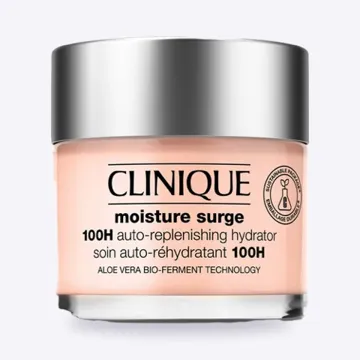
Moisture Surge 100 Hour Auto-Replenishing Hydrator
Moisturizer with magnesium ascorbyl phosphate, aloe vera and green tea extract. Fragrance-free.
Suits: Normal, Dry, Oily, Combination, Sensitive skin
From Pori's catalogue. Amazon links carry our Associates tag: Pori earns from qualifying purchases, at no cost to you. No brand pays to be listed. Photos: Open Beauty Facts contributors, CC BY-SA 3.0.
Lotions and creams
Lotions suit normal and combination skin and work well in the morning under sunscreen. Creams carry more oil and suit dry skin or nighttime. CeraVe PM Facial Moisturizing Lotion is a light, oil-free lotion with niacinamide and ceramides. Kiehl's Ultra Facial Cream is a mid-weight cream with squalane and glycerin, and CeraVe Moisturizing Cream is a richer cream with ceramides, hyaluronic acid and petrolatum. More options are in the moisturizers catalogue.
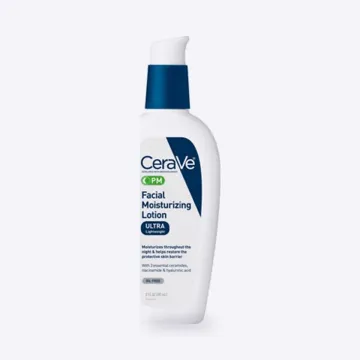
PM Facial Moisturizing Lotion
Light night lotion that hydrates without feeding shine.
Suits: Normal, Combination, Oily skin
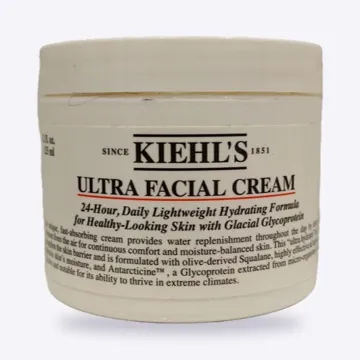
Ultra Facial Cream
Classic 24-hour cream when the drugstore texture is the dealbreaker.
Suits: Dry, Normal, Combination skin
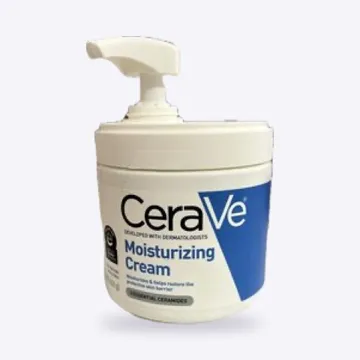
Moisturizing Cream
Thick ceramide cream for skin that dries out by midday.
Suits: Dry, Normal, Sensitive skin
From Pori's catalogue. Amazon links carry our Associates tag: Pori earns from qualifying purchases, at no cost to you. No brand pays to be listed. Photos: Open Beauty Facts contributors, CC BY-SA 3.0.
Balms and ointments
Balms and ointments are the heaviest textures. Products sold as balms are usually built from oils, butters and waxes with little or no water. Ointments sit at the top of the scale: the AAD advises people with very dry skin to use an ointment such as petroleum jelly or a thick cream. On the face, most people use them at night, on dry patches, or as a thin final layer in cold weather. The review warns that ointments are a poor choice for skin folds and moist areas.
If an ointment feels too heavy, a rich barrier cream is the middle ground. First Aid Beauty Ultra Repair Cream combines colloidal oatmeal, shea butter and ceramides, and CeraVe Skin Renewing Night Cream pairs niacinamide and ceramides with shea butter. Both are fragrance-free.
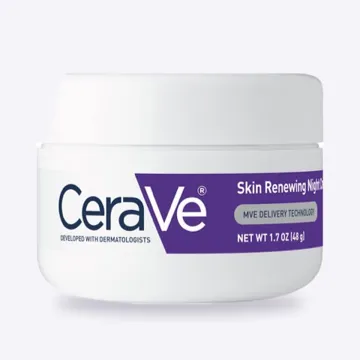
Skin Renewing Night Cream
Moisturizer with niacinamide, ceramides and shea butter. Fragrance-free.
Suits: Normal, Dry, Combination, Sensitive skin
From Pori's catalogue. Amazon links carry our Associates tag: Pori earns from qualifying purchases, at no cost to you. No brand pays to be listed. Photos: Open Beauty Facts contributors, CC BY-SA 3.0.
Which moisturizer type is best for your skin type?
- Oily skin: the AAD says you can skip moisturizer or choose a gel, which is lighter than other types. Look for "oil-free" or "non-comedogenic." If you use acne treatments, the AAD notes that a daily moisturizer can help your skin tolerate them. See our best moisturizer for oily skin and the oily-skin moisturizers list.
- Dry skin: per the AAD, start with a cream or ointment and bypass lotions altogether. Useful ingredients on the AAD's list include petrolatum, glycerin, dimethicone, shea butter, lanolin and hyaluronic acid. See best moisturizer for dry skin and moisturizers for dry skin.
- Combination skin: the AAD suggests moisturizing the dry areas and skipping the oily ones, treating your face "as though it's two faces." A gel-cream or light lotion all over often works too. Browse moisturizers for combination skin.
- Normal skin: a lotion is usually enough. The AAD notes that people who are perimenopausal or over 50 may do better with a cream.
- Sensitive skin: Cleveland Clinic suggests a hypoallergenic or sensitive-skin formula with only a few ingredients, and avoiding fragrance, dyes, essential oils and alcohol. See best moisturizer for sensitive skin and moisturizers for sensitive skin.
Dehydrated skin is a separate issue from dry skin, and it can happen in oily skin too. If your skin is shiny but feels tight, read dry vs. dehydrated skin before you switch to a heavier cream.
Day cream with SPF vs. night cream: do you need both?
Day and night creams have different jobs. Cleveland Clinic dermatologist Melissa Piliang says a day cream should help protect your skin from outside elements, while at night you want something that helps repair it. Night creams are usually thicker.
Day cream with SPF
A moisturizer with sunscreen can replace a separate sunscreen in your morning routine. The AAD's condition is that it is broad-spectrum with SPF 30 or higher, and that you reapply every two hours outdoors or after swimming or sweating. Most people apply less than they need, so use a generous amount. Two fragrance-free examples: CeraVe AM Facial Moisturizing Lotion SPF 30, which CeraVe lists for normal to dry skin, and La Roche-Posay Toleriane Double Repair Face Moisturizer UV SPF 30. For long days outside, a dedicated sunscreen is easier to apply thickly; see sunscreen for your skin type.
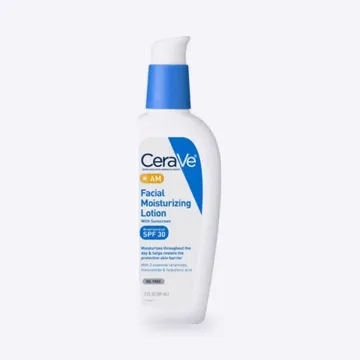
AM Facial Moisturizing Lotion SPF 30
SPF 30 sunscreen with niacinamide, homosalate and octinoxate. Fragrance-free.
Suits: Normal, Dry, Oily, Combination, Sensitive skin
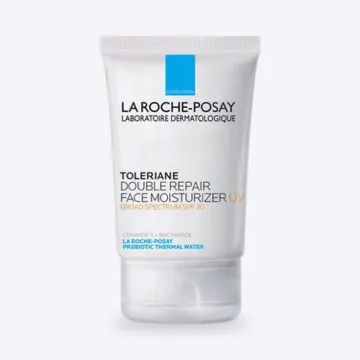
Toleriane Double Repair Face Moisturizer UV SPF 30
SPF 30 sunscreen with niacinamide, avobenzone and homosalate. Fragrance-free.
Suits: Normal, Dry, Oily, Combination, Sensitive skin
From Pori's catalogue. Amazon links carry our Associates tag: Pori earns from qualifying purchases, at no cost to you. No brand pays to be listed. Photos: Open Beauty Facts contributors, CC BY-SA 3.0.
Night cream
A night cream has no sunscreen and can be richer, since you're not wearing makeup over it. It's also where many people use retinol, which Cleveland Clinic's article notes can irritate, so start slowly. A separate night cream is optional. If one fragrance-free moisturizer feels right morning and night, use it twice and add SPF in the morning. The review notes that only about half of a moisturizer remains on the skin after eight hours, so applying once or twice a day, or up to three times for very dry skin, makes sense.
The simplest rule: pick a texture your skin feels comfortable in, check that the main ingredients match your needs, and wear SPF 30 or higher every morning. Our serum vs. moisturizer vs. essence guide shows where moisturizer sits in the rest of your routine.
Frequently asked questions
What are the three types of moisturizers?
Humectants, emollients and occlusives. Humectants such as glycerin and hyaluronic acid draw water in, emollients such as squalane and ceramides soften the skin, and occlusives such as petrolatum and dimethicone slow water loss. Most moisturizers combine all three.
Is a gel or cream moisturizer better?
Gels suit oily and acne-prone skin and humid weather because they are light and water-based. Creams contain more oil and suit dry skin or nighttime. Combination skin often does well with a gel-cream.
What is the difference between a lotion and a cream?
A lotion is a thin, oil-in-water emulsion that spreads easily and feels light. A cream is thicker and contains more oil, so it hydrates and seals more. The AAD recommends creams or ointments over lotions for dry skin.
Is petroleum jelly a good face moisturizer?
It is one of the most effective occlusives and helps very dry or irritated skin. It feels greasy, and heavy occlusives may cause breakouts in acne-prone skin, so many people use it only at night or on dry patches.
Can I use a moisturizer with SPF instead of sunscreen?
Yes, if it is broad-spectrum with SPF 30 or higher and you apply enough. Reapply every two hours outdoors or after swimming or sweating; for long days outside a dedicated sunscreen is easier.
Do I really need a separate night cream?
No. A night cream is usually richer and has no sunscreen, which can help dry skin. If one fragrance-free moisturizer feels comfortable morning and night, you can use it twice a day and add SPF in the morning.
Sources
- Purnamawati S et al. The Role of Moisturizers in Addressing Various Kinds of Dermatitis: A Review. Clin Med Res, 2017 (PubMed)
- American Academy of Dermatology: How to pick the right moisturizer for your skin
- American Academy of Dermatology: Dermatologists' top tips for relieving dry skin
- American Academy of Dermatology: Moisturizer: Why you may need it if you have acne
- American Academy of Dermatology: Skin care on a budget
- Cleveland Clinic: Emollients
- Cleveland Clinic: What To Look for in a Day and Night Face Cream
- Clinique: Moisture Surge 100H Auto-Replenishing Hydrator
- CeraVe: AM Facial Moisturizing Lotion SPF 30
Pori is a wellness and skincare education app, not a medical device. This article is for general information and isn't medical advice. For anything that worries you, see a dermatologist.