Pori

- Oily skin suits gels and light foams; dry and sensitive skin suits creams, lotions and milks.
- Oils and balms remove water-resistant sunscreen and makeup best; micellar water is gentle but removes less.
- Acid and clay washes are add-ons for blackheads, texture and shine, often a few times a week rather than daily.
- Syndet bars sit near skin pH; true soap (pH 8.5 to 11) can be harsh on the face.
The main types of face cleanser are gel, foaming, cream or lotion, oil, balm, micellar water, clay, exfoliating (acid) washes and bars. As a rule, oily skin does best with a gel or light foam, dry and sensitive skin with a cream or lotion, and anyone wearing heavy makeup or water-resistant sunscreen with an oil, balm or micellar water first. Acid and clay washes are add-ons for specific problems, and bars vary widely depending on whether they are true soap.
Once you've narrowed it down, you can scan a product's barcode or label with the ingredient scanner in Pori to check its ingredients against your skin type.
Below we explain how each type cleans, who it suits, which products in our catalogue are good examples, and how to combine two types in a double cleanse. This guide is based on dermatology guidance, published research on cleansers and each brand's ingredient list; we did not test these products on skin.
What actually makes a cleanser gentle or harsh?
Every cleanser works with surfactants, molecules that let water carry away oil, sunscreen and dirt. How much surfactant a product carries, which kind it uses and the product's pH decide how your skin feels afterward. A review by Unilever researchers explains that harsh surfactants can damage skin proteins and lipids, leading to tightness, dryness, irritation and itch, and that cleansers close to the skin's pH of about 5.5 are likely less damaging.
Texture is a rough proxy for strength. Foams and gels usually carry more surfactant, creams and milks less, and oils and balms clean mostly by dissolving oily residue. The American Academy of Dermatology (AAD) advises a gentle, non-abrasive, alcohol-free cleanser, used with fingertips and lukewarm water, twice a day and after sweating. Whatever the type, a squeaky, tight feeling after rinsing means it is too strong for you. If you are unsure of your skin type, start with how to find your skin type.
Types of face cleansers at a glance
| Type | How it cleans | Best for | Use with care if |
|---|---|---|---|
| Gel | Clear gel with light to moderate lather | Oily, combination, normal | Very dry skin |
| Foaming | More surfactant, rich lather | Oily skin, sweat, sunscreen | Dry or sensitive skin |
| Cream or lotion (milk) | Little or no foam; fatty alcohols, oils and humectants soften the wash | Dry, sensitive, mature skin | Heavy makeup, very oily skin |
| Oil | Oils dissolve makeup and sunscreen; emulsifiers let it rinse off | First step for makeup and water-resistant SPF | Acne-prone skin if you skip the second wash |
| Balm | Solid oil that melts on skin | Dry skin, heavy makeup | Fragrance-sensitive skin (many contain essential oils) |
| Micellar water | Low dose of mild surfactant on a cotton pad | Sensitive skin, quick mornings, eye makeup | Water-resistant sunscreen |
| Clay | Cleanser plus kaolin or other clays that absorb oil | Oily skin, congested T-zone | Dry or flaky skin |
| Exfoliating (acid) wash | Cleanser with salicylic, glycolic, mandelic acid or PHA | Blackheads, rough texture, mild acne | Sensitive skin or when using retinoids |
| Bar | Soap (alkaline) or syndet (near skin pH) | Syndet bars suit most skin types | True soap on dry or sensitive skin |
Gel vs foaming cleanser: what's the difference?
A gel cleanser is clear and slippery and usually lathers lightly. A foaming cleanser, which may start as a gel, cream or pump foam, builds more lather and usually contains more surfactant. Both suit oily and combination skin. The AAD's advice for oily skin is to choose a mild product, because a face wash that is too harsh can irritate skin and trigger more oil.
Good examples skip strong sulfates and add something that offsets the wash. CeraVe Foaming Facial Cleanser pairs mild surfactants with ceramides and niacinamide. La Roche-Posay Toleriane Purifying Foaming Cleanser uses coco-betaine and sodium cocoyl glycinate with ceramide NP and glycerin, which makes it a good fit for oily skin that is also sensitive. Cetaphil Daily Facial Cleanser is a gel-to-foam wash for combination to oily skin; pick its Fragrance Free version if scent bothers you. Our CeraVe Foaming vs Hydrating comparison shows how much the texture changes the feel, and our guide to sulfates in face wash explains which surfactants to watch.
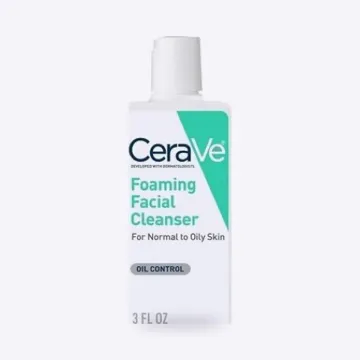
Foaming Facial Cleanser
Gel-to-foam wash that clears excess oil without stripping.
Suits: Oily, Combination, Normal skin
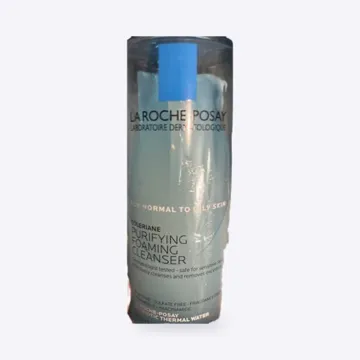
Toleriane Purifying Foaming Cleanser
Foaming wash for oily skin that still reacts to strong cleansers.
Suits: Oily, Combination, Sensitive skin
From Pori's catalogue. Amazon links carry our Associates tag: Pori earns from qualifying purchases, at no cost to you. No brand pays to be listed. Photos: Open Beauty Facts contributors, CC BY-SA 3.0.
Who should use a cream or lotion cleanser?
Cream, lotion and milk cleansers are for dry, sensitive or easily irritated skin. They carry less detergent and more softening ingredients, so they clean without leaving your face tight. The AAD's tips for dry skin suggest using enough cleanser to remove dirt and oil but not so much that you see a thick lather, and choosing fragrance-free products.
CeraVe Hydrating Facial Cleanser is the classic example. Its list relies on fatty alcohols and a mild emulsifier rather than a conventional foaming surfactant, with glycerin, three ceramides and hyaluronic acid. La Roche-Posay Toleriane Hydrating Gentle Cleanser is a milky, fragrance-free option with ceramide NP and niacinamide. Cetaphil Gentle Skin Cleanser is the simplest of the three, with ten ingredients and a small amount of sodium cocoyl isethionate. The trade-off is weak makeup removal. For more options, see the best cleanser for dry skin and the best cleanser for sensitive skin.
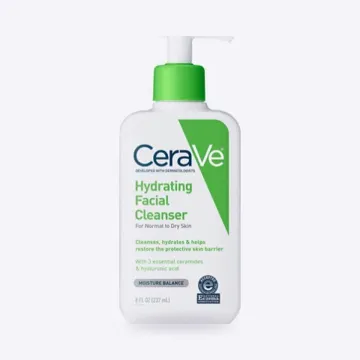
Hydrating Facial Cleanser
Creamy non-foaming wash that leaves the moisture barrier intact.
Suits: Dry, Normal, Sensitive, Combination skin
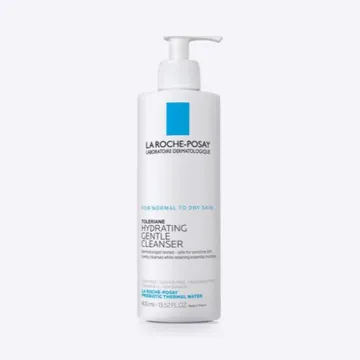
Toleriane Hydrating Gentle Cleanser
Milky cleanser built for reactive, tight-feeling skin.
Suits: Dry, Sensitive, Normal skin
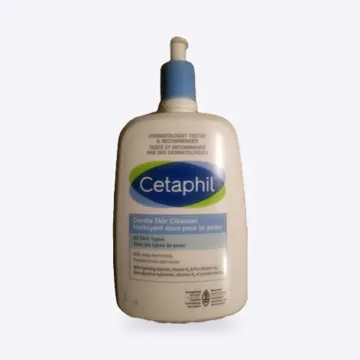
Gentle Skin Cleanser
The default gentle cleanser most dermatologists start people on.
Suits: Dry, Normal, Sensitive skin
From Pori's catalogue. Amazon links carry our Associates tag: Pori earns from qualifying purchases, at no cost to you. No brand pays to be listed. Photos: Open Beauty Facts contributors, CC BY-SA 3.0.
Cleansing oil, balm or micellar water: which removes makeup best?
For water-resistant sunscreen and long-wear makeup, an oil or balm removes the most. In a small study of 20 volunteers, about 37% of a water-resistant sunscreen remained after a foaming cleanser, compared with about 6% after a cleansing oil. With an ordinary sunscreen, the two performed about the same.
- Cleansing oils are oils plus emulsifiers. You massage them onto dry skin, then add water so they turn milky and rinse off. Kiehl's Midnight Recovery Botanical Cleansing Oil is a typical example, built on ethylhexyl palmitate and plant oils, though it also contains lavender oil.
- Balms are the same idea in solid form, often richer. Elemis Pro-Collagen Cleansing Balm combines sweet almond oil and other plant oils with shea butter, and it contains essential oils, so it suits dry skin that tolerates fragrance.
- Micellar water is water with a low dose of mild surfactants that cluster into micelles. Bioderma Sensibio H2O is a short, unfragranced formula, and Garnier Micellar Cleansing Water All-in-1 is the budget pick. It's gentle and convenient, but it removes less than an oil, so follow it with a rinse-off wash on sunscreen days.
The AAD tells people with oily skin to avoid oil-based cleansers, which can irritate. If your skin is oily or acne-prone and you still want an oil to remove makeup, keep it brief, emulsify it fully and follow with a gel cleanser. Our picks for cleansing oils for makeup removal and micellar water compare formulas in detail.
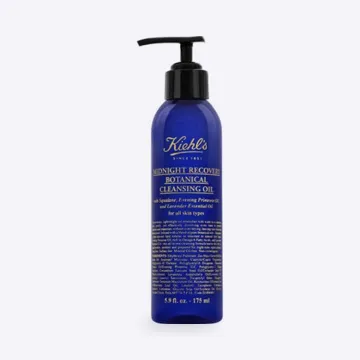
Midnight Recovery Botanical Cleansing Oil
Face cleanser with squalane and tocopherol.
Suits: Normal, Dry, Oily, Combination skin
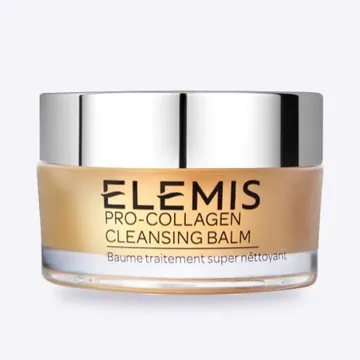
Pro-Collagen Cleansing Balm
Face cleanser with shea butter, glycerin and tocopherol.
Suits: Normal, Dry, Oily, Combination skin
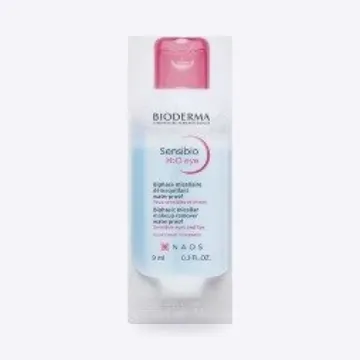
Sensibio H₂O Micellar Water
Face cleanser. Fragrance-free.
Suits: Normal, Dry, Oily, Combination, Sensitive skin
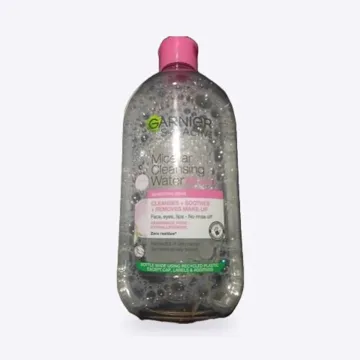
Micellar Cleansing Water All-in-1
Face cleanser with glycerin. Fragrance-free.
Suits: Normal, Dry, Oily, Combination, Sensitive skin
From Pori's catalogue. Amazon links carry our Associates tag: Pori earns from qualifying purchases, at no cost to you. No brand pays to be listed. Photos: Open Beauty Facts contributors, CC BY-SA 3.0.
Are clay and exfoliating cleansers worth using?
They can be, for specific problems and not necessarily every day. Clay cleansers add kaolin, bentonite or other clays, which soak up some surface oil. First Aid Beauty Pure Skin Deep Cleanser with Red Clay and Kiehl's Ultra Facial Oil-Free Cleanser, which pairs kaolin with a soap base, are made for oily skin. Dry skin rarely needs them.
Exfoliating washes add an acid. Salicylic acid is oil-soluble and works best on blackheads and whiteheads; US rules allow 0.5% to 2% in over-the-counter acne products. Neutrogena Oil-Free Acne Wash uses the 2% maximum. CeraVe Renewing SA Cleanser and Cetaphil Gentle Exfoliating SA Cleanser combine salicylic acid with gentler acids such as gluconolactone and add niacinamide, which makes them better starting points for sensitive skin. Glycolic acid washes target dullness and rough texture. Because a wash is rinsed off quickly, its effect is modest. Start a few times a week, and don't pair it with a leave-on acid or retinoid on the same night at first. See the best face wash for acne if breakouts are your main concern.
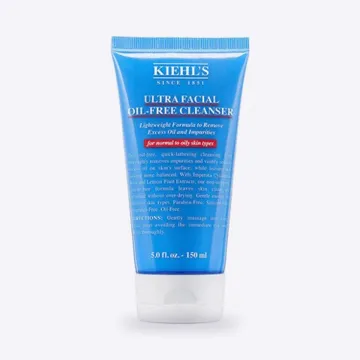
Ultra Facial Oil-Free Cleanser
Face cleanser with kaolin and glycerin. Fragrance-free.
Suits: Normal, Oily, Combination, Sensitive skin
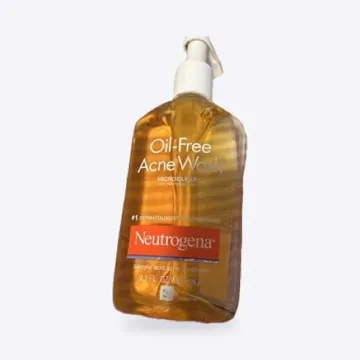
Oil-Free Acne Wash
Acne face wash with 2% salicylic acid, aloe vera and glycerin.
Suits: Normal, Oily, Combination skin
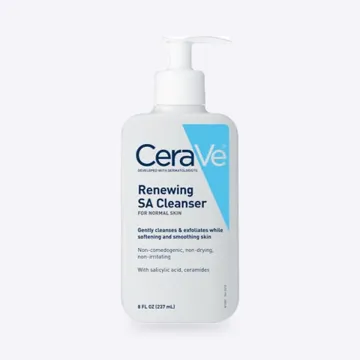
Renewing SA Cleanser
Face cleanser with niacinamide, gluconolactone and salicylic acid. Fragrance-free.
Suits: Normal, Oily, Combination, Sensitive skin
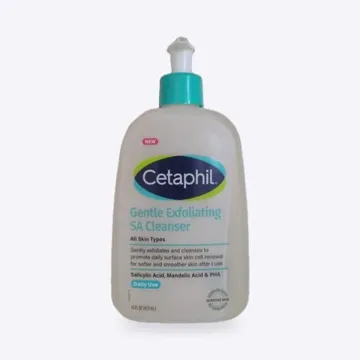
Gentle Exfoliating SA Cleanser
Face cleanser with gluconolactone, salicylic acid and niacinamide. Fragrance-free.
Suits: Normal, Oily, Combination, Sensitive skin
From Pori's catalogue. Amazon links carry our Associates tag: Pori earns from qualifying purchases, at no cost to you. No brand pays to be listed. Photos: Open Beauty Facts contributors, CC BY-SA 3.0.
Is bar soap bad for your face?
True soap often is too harsh for the face, and a syndet bar is usually fine. A 2022 review of soaps and syndets puts the pH of soap at 8.5 to 11 and the pH of synthetic-detergent (syndet) cleansers at 5.5 to 7. Highly alkaline cleansers make skin proteins swell and can pull out more of the skin's own lipids. Check the ingredient list: sodium tallowate, sodium cocoate or fatty acids neutralized with sodium or potassium hydroxide signal soap, while sodium cocoyl isethionate signals a syndet. The same chemistry applies to some liquid washes, which is worth knowing if a foaming cleanser leaves you tight.
How do you choose a face cleanser for your skin type?
- Oily: a gel or light foam; add a salicylic acid or clay wash a few times a week if you get clogged pores. Browse cleansers for oily skin or read the best cleanser for oily skin.
- Dry: a cream, lotion or milk, plus an oil or balm on makeup days. See cleansers for dry skin.
- Combination: a gentle gel that doesn't tighten your cheeks; use the exfoliating wash only on the T-zone if needed. See cleansers for combination skin.
- Sensitive: a fragrance-free cream or micellar water, and introduce acids slowly. See cleansers for sensitive skin.
- Normal: almost any mild gel or cream works. See cleansers for normal skin.
Many people do well with two cleansers: a gentle one for the morning and a stronger one, or a double cleanse, in the evening. Our full cleanser catalogue lets you filter by type and skin.
Which cleanser types go together in a double cleanse?
Double cleansing means an oil, balm or micellar water first, then a water-based gel, foam or cream. Cleveland Clinic describes it as cleansing first with an oil-based product, then with a water-based cleanser, and notes that most people who don't wear makeup don't need it. It helps most when you wear long-wear makeup or water-resistant sunscreen.
Match the second cleanser to your skin: a gel for oily skin, a cream for dry or sensitive skin. Avoid pairing an acid wash or a strong foam with an oil every night, since overwashing can dry and irritate skin. Our step-by-step guide on how to double cleanse covers the technique.
Frequently asked questions
What type of cleanser is best for oily skin?
A gel or light foaming cleanser with mild surfactants. The AAD warns that a face wash that is too harsh can irritate skin and trigger more oil, so avoid anything that leaves your face squeaky.
What type of cleanser is best for dry skin?
A cream, lotion or milk cleanser that lathers little and contains glycerin, fatty alcohols, oils or ceramides. Use lukewarm water and choose fragrance-free products.
Is a gel or foaming cleanser better?
Gels usually lather less and feel lighter; foaming cleansers carry more surfactant and remove more oil. Both suit oily and combination skin, and a gentle gel is the safer choice if your skin also gets tight or red.
Can I use micellar water instead of a cleanser?
On mornings or makeup-free days, often yes. After water-resistant sunscreen or long-wear makeup, follow it with a rinse-off cleanser, since micellar water removes less than an oil or a full wash.
Do I need a cleansing oil or balm?
Only if you wear long-wear makeup or water-resistant sunscreen. In a small study, a cleansing oil left about 6% of a water-resistant sunscreen behind, compared with about 37% after a foaming cleanser.
Is it bad to wash your face with bar soap?
True soap has a pH of about 8.5 to 11 and can be drying. Syndet bars, made with surfactants like sodium cocoyl isethionate, sit closer to skin pH and are usually fine for the face.
Sources
- American Academy of Dermatology: Face washing 101
- American Academy of Dermatology: How to control oily skin
- American Academy of Dermatology: Dermatologists' top tips for relieving dry skin
- Ananthapadmanabhan KP et al. Cleansing without compromise: the impact of cleansers on the skin barrier and the technology of mild cleansing. Dermatol Ther, 2004 (PubMed)
- Mijaljica D, Spada F, Harrison IP. Skin cleansing without or with compromise: soaps and syndets. Molecules, 2022 (PMC)
- Chen W et al. The optimal cleansing method for the removal of sunscreen: water, cleanser or cleansing oil? J Cosmet Dermatol, 2020 (PubMed)
- Cleveland Clinic: Double Cleansing Method Explained: Should You Try It?
- CeraVe: Hydrating Facial Cleanser (ingredients)
- Electronic Code of Federal Regulations: 21 CFR 333.310, acne active ingredients
- Bioderma: Sensibio H2O Micellar Water (ingredients)
Pori is a wellness and skincare education app, not a medical device. This article is for general information and isn't medical advice. For anything that worries you, see a dermatologist.