Pori
- Korean routines layer toners, essences, serums and sheet masks; Japanese routines use one layered lotion and a milk or cream.
- Both double cleanse and end with sunscreen, and both rate UVA with PA grades up to PA++++.
- Many Korean and Japanese sunscreens use filters not allowed in the US, so buy US-labeled versions such as Bioré UV Aqua Rich SPF 50 or Round Lab SPF 45.
- Korea's MFDS reviews 'functional cosmetics'; Japan's PMD Act sets a 'quasi-drug' tier that needs ministry approval for each item.
Korean skincare layers several light, ingredient-led products and changes fast, with new extracts and formats every season. Japanese skincare uses fewer steps, built around one hydrating lotion and one sealing milk or cream, and favors refined, long-running formulas. Both start with a double cleanse and end with daily sunscreen, so the better choice is the one that fits your skin and your patience: Korean if you enjoy trying targeted products, Japanese if you want a short routine you can keep for years.
Whichever you pick, you can scan a product's barcode or label with the ingredient scanner in Pori to check it against your skin type. Pori reads ingredient lists; it doesn't diagnose skin conditions.
Below we compare the two on philosophy, routines, textures, sunscreens, brands and regulation. We compared published ingredient lists, brand claims, laws and listed prices; we did not test these products on skin. For the step-by-step routines themselves, see our Korean skincare routine steps and Japanese skincare routine guides.
Korean vs Japanese skincare at a glance
| Korean (K-beauty) | Japanese (J-beauty) | |
|---|---|---|
| Approach | Layering, trend-led, many single-purpose products | Fewer steps, refinement, long-lived formulas |
| Typical routine | Up to 10 steps; 5 to 7 in practice | 5 to 6 steps |
| Hydrating step | Toner, essence, serum or ampoule, sheet masks | One lotion, patted in two or three times |
| Sealing step | Gel-cream or cream, sometimes a sleeping mask | Milk (emulsion), with a cream on top for dry skin |
| Signature ingredients | Snail mucin, centella, heartleaf, ginseng, PDRN | Hyaluronic acid, rice and yeast ferments, gentle humectants |
| Sunscreen | SPF plus PA; dewy, moisturizer-like creams | SPF plus PA; thin, watery gels and milks |
| Who regulates | Ministry of Food and Drug Safety (MFDS) | Ministry of Health, Labour and Welfare, under the PMD Act |
How is the philosophy different?
K-beauty is built on layering and novelty. Each step targets one thing, from hydration to redness to dark spots, and brands release new formats quickly; our explainer on what K-beauty is notes that Korea exported a record $11.4 billion of cosmetics in 2025. Korean brands also draw on hanbang, Korean herbal medicine, for ingredients such as ginseng and rice.
J-beauty puts more weight on doing a few steps well. A Japanese routine typically has a cleansing oil, a gentle face wash, a lotion layered in thin coats, and a milk or cream to seal it. Big Japanese houses have long histories: Shiseido, for example, opened in 1872 as a Western-style pharmacy in Tokyo; our Shiseido guide covers its range.
How do Korean and Japanese routines compare?
Both begin the same way at night: an oil or balm to dissolve sunscreen and makeup, then a water-based cleanser. A dermatologist quoted by Cleveland Clinic says double cleansing helps if you wear makeup or waterproof sunscreen, but for most people a single mild cleanse is enough. Our double cleansing guide explains when to skip it.
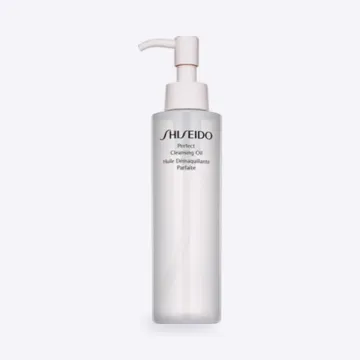
Perfect Cleansing Oil
Face cleanser with tocopherol and glycerin.
Suits: Normal, Dry, Combination skin
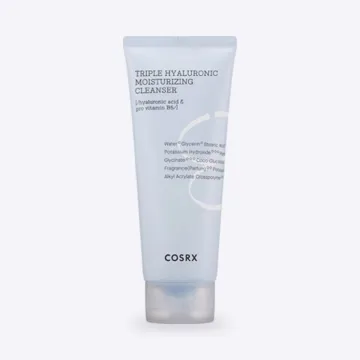
Hydrium Triple Hyaluronic Moisturizing Cleanser
Face cleanser with glycerin, panthenol and hyaluronic acid.
Suits: Normal, Dry, Oily, Combination skin
From Pori's catalogue. Amazon links carry our Associates tag: Pori earns from qualifying purchases, at no cost to you. No brand pays to be listed. Photos: Open Beauty Facts contributors, CC BY-SA 3.0.
The middle is where they split.
- Korean middle: a hydrating toner, then an essence, then a serum or ampoule for a specific concern, with a sheet mask now and then. A randomized trial found that wearing sheet masks for under 25 minutes improved hydration, while longer wear increased dryness and redness.
- Japanese middle: one lotion (keshōsui), pressed into damp skin in two or three thin layers, then a milk. Rohto's Hada Labo Gokujyun lotion is a typical example: Rohto lists four types of hyaluronic acid and no fragrance, colorant, oil or alcohol.
Both end with a moisturizer at night and sunscreen in the morning. In practice the difference is how many bottles you buy: a Japanese routine can be four or five products, while a Korean one easily reaches seven.
Which has better textures?
It depends on what you like on your skin. Korean products lean toward bouncy gels, watery essences and creams that leave a dewy, "glass skin" finish; our glass skin routine shows how that look is built. Japanese products lean toward thin lotions and light milks that sink in, plus very watery sunscreens.
- Oily or combination skin often likes Japanese watery lotions and gel sunscreens, or Korean gel-creams.
- Dry skin does well with either, as long as a cream seals the routine at night.
- Sensitive skin should judge each product by its ingredient list rather than its country. Some Japanese sunscreens list alcohol high up, and some Korean toners and cleansing oils contain fragrance or essential oils.
Which ingredients are typical of each?
The overlap is large, but each has its favorites.
- Korean favorites: snail secretion filtrate, centella, heartleaf, ginseng, propolis and, lately, PDRN. Most have small human studies or only lab work behind them; our guide to Korean skincare ingredients grades each one.
- Japanese favorites: hyaluronic acid in simple lotions and galactomyces ferment filtrate, the yeast ferment SK-II sells as Pitera. Two studies by researchers working with SK-II's owner found a galactomyces formula reduced pore area, roughness and redness against the women's own baseline, without a placebo group.
- Shared: niacinamide, glycerin and other humectants, which do much of the visible work in both.
Are Japanese or Korean sunscreens better?
Neither is better across the board, and the sunscreen you buy in the US matters more than its country of origin. Both countries label UVA protection with the PA system, PA+ to PA++++. Japan's industry introduced the top grade, PA++++, in 2013. In Korea, sunscreens are "functional cosmetics," whose UV claims the MFDS reviews.
- Japanese sunscreens are known for very thin, watery gels and milks. Bioré UV Aqua Rich Watery Essence and Anessa are the classics, and some, the Japanese Bioré among them, list alcohol high up.
- Korean sunscreens are known for creamy, moisturizer-like textures that layer well under makeup.
In the US, sunscreen is an over-the-counter drug limited to filters on the FDA's list. Many Japanese and Korean originals use filters that aren't on it, so they're sold here only as imports without a US Drug Facts label. The FDA did add bemotrizinol in a final order dated June 10, 2026, but other common Asian filters are still missing. The legal US options include Bioré UV Aqua Rich SPF 50 from Japan and, from Korea, Round Lab Birch Juice Moisturizing UVLock SPF 45 ($24.99 for 1.69 oz at Ulta as of November 2026). Our best Japanese sunscreen and best Korean sunscreen roundups go filter by filter, and Korean vs American sunscreen explains the US rules.
Which brands define each style?
A handful of large groups own many of the names you'll see in the US.
| Group | Based in | Best-known skincare brands |
|---|---|---|
| Amorepacific | Korea | Laneige, Innisfree, COSRX |
| LG Household & Health Care | Korea | belif |
| Goodai Global | Korea | Beauty of Joseon, SKIN1004's maker |
| Shiseido | Japan | Shiseido |
| Kao | Japan | Bioré |
| Rohto | Japan | Hada Labo, Skin Aqua |
| Procter & Gamble | US (brand from Japan) | SK-II |
Our guide to Korean skincare brands covers ownership in more detail; COSRX, for example, became part of Amorepacific, which raised its stake to about 93% in 2023, as our COSRX guide explains.
How do Korea and Japan regulate skincare?
Both treat most skincare as cosmetics and add a stricter tier for products that make functional claims, and both differ from the US, where sunscreens and acne treatments are drugs.
- Korea: the MFDS calls products that claim brightening, wrinkle improvement, UV protection, acne care and a few other effects "functional cosmetics", and each one needs an MFDS evaluation, or a report to the ministry, before sale. Korea's Cosmetics Act also requires the box to carry the full ingredient list, a batch number and a use-by date, and functional products must show the "functional cosmetic" wording or logo.
- Japan: the PMD Act separates "cosmetics," products with mild effects used to clean, beautify or keep skin in good condition, from "quasi-pharmaceutical products," often called quasi-drugs. Quasi-drugs, and cosmetics containing components the health ministry specifies, need ministry approval for each item unless they meet set standards.
For shoppers, the practical point is the same in both cases: the extra tier tells you a claim was reviewed in that country, and it doesn't carry over to US approval.
Should you choose Korean or Japanese skincare?
- Choose Korean if you like trying new textures and ingredients, have a specific concern you want to target with one serum, or want lots of affordable options at Ulta, Target and Olive Young's US site.
- Choose Japanese if you want the fewest steps, like watery lotions and very light sunscreens, or prefer products that rarely change.
- Mix them freely. A Japanese cleansing oil, a Korean centella serum and a US-labeled sunscreen work together fine. Add one product at a time and patch test each.
New to both? Start with our guide to Korean skincare for beginners, read up on Korean skincare ingredients, and buy from authorized sellers using our tips on spotting fake Korean skincare. The K-beauty hub has the rest.
Frequently asked questions
What is the main difference between Korean and Japanese skincare?
Korean skincare layers several light products, such as toner, essence and serum, and changes quickly with trends. Japanese skincare uses fewer steps built around one hydrating lotion and a milk or cream, with long-running formulas.
Is Japanese or Korean skincare better for oily skin?
Both work. Japanese watery lotions and gel sunscreens and Korean gel-creams all suit oily skin. Choose by the ingredient list and texture rather than the country.
Are Japanese sunscreens better than Korean sunscreens?
Neither is better overall. Japanese sunscreens tend to be thinner and more watery, Korean ones creamier. Both use the PA system for UVA, and in the US you should buy versions with a Drug Facts label.
Can you mix Korean and Japanese skincare?
Yes. A Japanese cleansing oil, a Korean serum and a US-labeled sunscreen can sit in the same routine. Add one new product at a time and patch test each for 7 to 10 days.
Is SK-II Japanese or Korean?
SK-II is a Japanese-origin brand owned by Procter & Gamble. Its signature ingredient, galactomyces ferment filtrate (Pitera), is widely copied in Korean first essences.
What is a quasi-drug in Japanese skincare?
Under Japan's PMD Act, quasi-pharmaceutical products are a tier between cosmetics and medicines with mild effects. Unless they meet set standards, each one needs approval from the health ministry before sale.
Sources
- Ministry of Food and Drug Safety (Korea): Functional cosmetics evaluation
- Japanese Law Translation: Act on Securing Quality, Efficacy and Safety of Products Including Pharmaceuticals and Medical Devices (PMD Act)
- Mizuno M. Current conditions of sun protection test methods for sunscreen products. J Soc Cosmet Chem Jpn, 2013 (J-STAGE)
- FDA: Questions and answers: FDA's regulatory actions on over-the-counter sunscreen
- Rohto Pharmaceutical: Hada Labo Gokujyun Hyaluronic Lotion product page (Japanese)
- Cleveland Clinic: Double cleansing explained
- Wang Y et al. Short-term skin reactions and changes in stratum corneum following different ways of facial sheet mask usage. J Tissue Viability, 2024 (PubMed)
- Korea Legislation Research Institute: Cosmetics Act (English translation)
- Ulta Beauty: Round Lab Birch Juice Moisturizing UVLock SPF 45
- Shiseido: The History of Shiseido in Five Minutes
Pori is a wellness and skincare education app, not a medical device. This article is for general information and isn't medical advice. For anything that worries you, see a dermatologist.