Pori
- Round Lab Birch Juice UVLock SPF 45 ($24.99 at Ulta) and Beauty of Joseon Daily Relief SPF 40 are US-only Korean formulas with Drug Facts labels.
- Imported originals such as Beauty of Joseon Relief Sun SPF 50+ use filters not on the US list and are sold without US labels.
- PA++++ is Asia's top UVA grade; US labels show UVA protection with a tested broad spectrum claim instead.
- The FDA added bemotrizinol (Tinosorb S) to US sunscreens on June 10, 2026; check Drug Facts to see when it appears.
The best Korean and Japanese sunscreens sold in the US fall into two groups. US-labeled versions, such as Round Lab Birch Juice Moisturizing UVLock SPF 45, Beauty of Joseon Daily Relief Sunscreen SPF 40 and Bioré UV Aqua Rich SPF 50, carry an FDA Drug Facts label and use FDA-listed filters. Imported originals, such as Beauty of Joseon Relief Sun SPF 50+ or the Japanese Bioré Watery Essence, use newer filters that mostly aren't allowed in US sunscreens and are sold by third-party sellers without US labels.
Whichever you're considering, you can scan its barcode or label with the ingredient scanner in Pori to check the filters and the rest of the formula against your skin type. Pori reads the label; it doesn't diagnose skin conditions or test SPF.
Below we explain why these sunscreens feel different, which ones carry a US label, what PA++++ means, why imports are a gray area, and what the FDA's June 2026 approval of bemotrizinol changes. We compared published ingredient lists, Drug Facts labels, brand claims and listed prices; we did not test these products on skin or measure their SPF. Prices are as of November 2026.
Why are Korean and Japanese sunscreens so popular?
Mostly because of texture. Many Asian sunscreens are thin, watery essences or gels that dry fast, leave no white cast and sit well under makeup, which makes them easy to wear every day. Part of that comes from their filters. Japan, Korea and Europe allow a wider range of UV filters than the US, including newer, photostable ones such as diethylamino hydroxybenzoyl hexyl benzoate (Uvinul A Plus), ethylhexyl triazone, bemotrizinol (Tinosorb S) and bisoctrizole (Tinosorb M). Our guide to chemical sunscreen filters explains each one.
In the US, sunscreens are regulated as over-the-counter drugs. The FDA's sunscreen monograph sets which active ingredients a US sunscreen may contain, and the FDA notes that the Drug Facts section is where the active ingredients and the Skin Cancer/Skin Aging alert appear. A product made for the Korean or Japanese market doesn't carry that panel, and if it uses non-US filters, it isn't a legal US sunscreen even when it's easy to buy online.
Which Korean and Japanese sunscreens can you buy in the US?
| Sunscreen | US label? | UV filters | Finish and notes | Price (November 2026) |
|---|---|---|---|---|
| Round Lab Birch Juice Moisturizing UVLock SPF 45 | Yes, broad spectrum | Avobenzone, homosalate, octisalate | Hydrating essence; fragrance-free per Ulta | $24.99 for 1.69 oz (Ulta) |
| Beauty of Joseon Daily Relief Sunscreen SPF 40 | Yes, US-only version | Avobenzone, homosalate, octisalate, octocrylene | US-only version of Relief Sun; no fragrance listed | Check the brand's US site |
| Bioré UV Aqua Rich SPF 50 (US) | Yes, broad spectrum, PA++++ | Avobenzone 3%, homosalate 10%, octisalate 5%, octocrylene 5% | Watery gel; contains alcohol and fragrance | $15.99 for 1.7 fl oz (Bioré US) |
| Bioré UV Aqua Rich Watery Essence (Japan) | No, import | Includes ethylhexyl triazone and other non-US filters | Very light, water resistant; alcohol and fragrance | Varies by importer |
| Beauty of Joseon Relief Sun: Rice + Probiotics SPF 50+ | No, import | Uvinul A Plus, ethylhexyl triazone, Tinosorb M, diethylhexyl butamido triazone | Fragrance- and essential-oil-free; withdrawn by the brand in the US | Varies by seller |
What are the best Korean sunscreens with a US label?
Several Korean brands now make separate US formulas with FDA-listed filters. Korea JoongAng Daily reported in April 2025 that Round Lab released a US-only SPF 45 and discontinued its SPF 50+ PA++++ in the US, Beauty of Joseon withdrew four sunscreens from the US market and launched two US-only versions, and SKIN1004 removed its sunscreens from its US product page. The same article notes that the 2022 cosmetics law many people blamed doesn't actually cover sunscreens, which already followed drug rules.
Round Lab Birch Juice Moisturizing UVLock SPF 45
This is the easiest one to find in a store. Ulta lists it at $24.99 for 1.69 oz, fragrance-free, with homosalate, avobenzone and octisalate as filters and niacinamide, panthenol and birch sap in the base. Its US Drug Facts label lists avobenzone 2.7%, homosalate 13.5% and octisalate 4.5% and gives a two-hour reapplication direction; it makes no water-resistance claim. Some reviewers quoted by JoongAng found the US version thicker than the old Korean one.
Beauty of Joseon Daily Relief Sunscreen SPF 40
This is the US-only counterpart to the famous Relief Sun. Its filters are avobenzone, octocrylene, homosalate and ethylhexyl salicylate (octisalate), all FDA-listed, and its ingredient list has no fragrance or parfum entry. Octocrylene causes allergy in a small number of people, mostly those already sensitized to the painkiller gel ketoprofen, as our filters guide explains, so patch test if you react easily.
Is the Japanese Bioré UV Aqua Rich the same as the US one?
No. They share a name and a watery texture, but the filters differ. Bioré's US product, listed at $15.99 for 1.7 fl oz as UV Aqua Rich SPF 50, uses avobenzone, homosalate, octisalate and octocrylene, carries a broad spectrum claim and puts PA++++ on the pack. It isn't labeled water resistant. The Japanese Watery Essence is SPF 50+ PA++++, uses newer filters including ethylhexyl triazone and bemotrizinol, and is labeled highly water resistant. Both contain alcohol and fragrance, which can sting dry or sensitive skin.
The card below is the imported Japanese formula; if you want the US version, look for the Drug Facts panel on the box. Our full Bioré Aqua Rich Watery Essence review compares the two filter by filter. If you like the weightless feel but want a US-labeled, fragrance-free alternative, Supergoop Unseen SPF 40 uses avobenzone 3%, homosalate 8%, octisalate 5% and octocrylene 4% in a clear silicone gel; see our Supergoop Unseen review. Neutrogena Invisible Daily Defense SPF 60+ is a cheaper drugstore option with a similar set of filters.
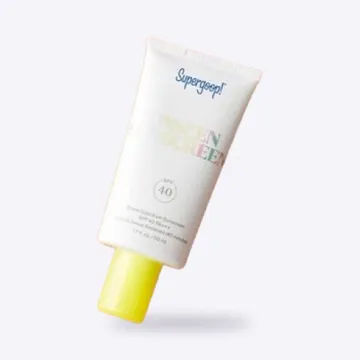
Unseen Sunscreen SPF 40
Dry, grippy finish — doubles as a primer, leaves no cast.
Suits: Oily, Combination, Normal skin
Invisible Daily Defense Sunscreen Lotion SPF 60+
Cheap, light, invisible — the one people actually reapply.
Suits: Normal, Combination, Oily, Dry skin
From Pori's catalogue. Amazon links carry our Associates tag: Pori earns from qualifying purchases, at no cost to you. No brand pays to be listed. Photos: Open Beauty Facts contributors, CC BY-SA 3.0.
Is it safe or legal to buy imported Korean sunscreen?
Imported Korean and Japanese sunscreens are widely sold through marketplaces and import shops, and the filters they use are approved and widely used in Asia and Europe. The issues are specific:
- No US label. Without a Drug Facts panel you don't get US-format directions, warnings or a broad spectrum claim tested by the US method.
- Not reviewed for the US. Filters such as Uvinul A Plus, ethylhexyl triazone and Tinosorb M haven't been added to the US monograph. That reflects the US approval process. It isn't a finding that they're unsafe.
- Harder to trace. With third-party sellers it's harder to know a tube's age, storage or authenticity. Buy from the brand's own store or an authorized retailer when you can.
- SPF claims vary. In 2020, Purito's Centella Unscented Sun, labeled SPF 50+, tested at SPF 19 in two European labs, and the brand paused sales. One product's result says nothing about other brands. It does show that a label is only as good as its testing.
Our catalogue also lists SKIN1004's Centella sun cream, but we couldn't confirm which version it matches or find a current US-labeled listing, so we've left it off the shelf here.
What does PA++++ mean on Asian sunscreens?
PA is the UVA rating used in Japan, Korea and other Asian markets. It comes from a test that measures persistent pigment darkening, the tanning response to UVA, and Japan's industry standard now references the international method ISO 24442. More plus signs mean more UVA protection, and PA++++ is the top grade, for a UVA protection factor of 16 or higher.
US labels don't use PA. Instead, a US sunscreen can say "broad spectrum" only if it passes the FDA's UVA test, which requires a mean critical wavelength of 370 nm or greater. SPF, on both systems, measures protection mainly from UVB, the rays behind sunburn. A sunscreen that says SPF 50 but has no PA grade or broad spectrum claim tells you little about UVA.
What does the FDA's bemotrizinol approval change?
It gives US sunscreens a filter that Asian and European formulas have used for years. On June 10, 2026, the FDA issued a final order (OTC000039) adding bemotrizinol to the sunscreen monograph. Bemotrizinol, sold as Tinosorb S, is a broad UVA and UVB filter; the order allows it at up to 6%, according to a regulatory summary from Freyr.
That means US brands, including Korean brands making US versions, can now use one of the filters that gives Asian sunscreens their elegant feel. It doesn't make imported originals legal, because most also use other filters still missing from the US list. The FDA hasn't said when products with bemotrizinol will reach stores, so check the active ingredients on the Drug Facts label.
How do I choose and use one?
- Want a store-bought Korean formula with a US label: Round Lab Birch Juice UVLock SPF 45, or Beauty of Joseon Daily Relief SPF 40.
- Want the cheapest watery feel: Bioré UV Aqua Rich SPF 50 (US), if alcohol and fragrance don't bother you.
- Sensitive or reactive skin: a fragrance-free formula, or mineral; see our best mineral sunscreen for sensitive skin.
- Oily skin: our best sunscreen for oily skin compares lightweight US options.
Whichever you pick, the AAD recommends a broad-spectrum, water-resistant sunscreen with SPF 30 or higher, reapplied every two hours outdoors and after swimming or sweating. None of the US Korean versions above claims water resistance, so switch to a water-resistant sunscreen for the beach or a workout. Most people also apply too little; our guide to how much sunscreen to use shows the amount for your face. For where sunscreen sits in a K-beauty routine, see Korean skincare routine steps, and browse more options in our sunscreens catalogue.
Frequently asked questions
Are Korean sunscreens legal in the US?
US-labeled versions with FDA-listed filters and a Drug Facts panel, such as Round Lab Birch Juice UVLock SPF 45, are legal US sunscreens. Imported originals that use filters not on the US list are sold online by third-party sellers. They aren't approved as US sunscreens.
Why are Korean sunscreens better?
Many feel lighter and leave no white cast, partly because Korea and Japan allow newer UV filters that the US hasn't approved. That makes them pleasant to wear daily. It doesn't make them automatically more protective.
What does PA++++ mean?
PA is the UVA rating used in Japan and Korea, based on a pigment-darkening test. PA++++ is the highest grade. US sunscreens show UVA protection with a broad spectrum claim instead.
Is Biore UV Aqua Rich from Japan the same as the US version?
No. The US version uses avobenzone, homosalate, octisalate and octocrylene and isn't labeled water resistant. The Japanese version uses newer filters and is water resistant. Both contain alcohol and fragrance.
What is bemotrizinol?
Bemotrizinol, also called Tinosorb S, is a photostable UVA and UVB filter used in Europe and Asia. The FDA added it to the US sunscreen monograph in a final order on June 10, 2026.
Is Beauty of Joseon sunscreen FDA approved?
Its US-only Daily Relief Sunscreen SPF 40 uses FDA-listed filters and carries a Drug Facts label. The original Relief Sun SPF 50+ uses filters not on the US list and was withdrawn from the US market by the brand in 2025.
Sources
- FDA: Questions and answers, FDA's regulatory actions for over-the-counter sunscreen
- Freyr: US FDA finalizes addition of bemotrizinol to OTC sunscreen monograph M020
- 21 CFR 201.327, Over-the-counter sunscreen drug products (Cornell LII)
- Korea JoongAng Daily: Explainer, Americans are hoarding Korean sunscreen. Should they? (April 2025)
- ChemLinked: Japan revises the sun protection test methods (2022)
- Ulta Beauty: Round Lab Birch Juice Moisturizing UVLock SPF 45
- Skincarisma: Beauty of Joseon Daily Relief Sunscreen SPF 40
- Bioré US: UV Aqua Rich SPF 50
- Lab Muffin Beauty Science: Purito sunscreen and SPF testing (2020)
- American Academy of Dermatology: How to apply sunscreen
Pori is a wellness and skincare education app, not a medical device. This article is for general information and isn't medical advice. For anything that worries you, see a dermatologist.