Pori
- US sunscreens are OTC drugs limited to the FDA's filter list; Korea and the EU treat sunscreen as a cosmetic and allow newer filters such as Tinosorb M and Uvinul A Plus.
- The FDA added bemotrizinol (Tinosorb S) at up to 6%, effective August 9, 2026; Korea and the EU allow it at up to 10%.
- PA++++ is Asia's top UVA grade; US labels instead say 'broad spectrum' after a UVA test, so neither label is simply better.
- Korean-market sunscreens have no US Drug Facts label; buy US versions such as Round Lab Birch UVLock SPF 45 or Beauty of Joseon Day Dew SPF 50.
Korean and American sunscreens differ mainly because of regulation. In the US, sunscreen is an over-the-counter drug, and it may only use UV filters on the FDA's short list; in Korea and the EU, sunscreen is a cosmetic, and brands can use newer filters such as Tinosorb M and Uvinul A Plus that are lighter and leave no white cast. Both can protect you well when applied generously. The FDA added bemotrizinol (Tinosorb S) in 2026, its first new filter in decades, but most Korean-market formulas still can't be sold in the US with a US label.
Whichever you pick, you can scan its barcode or label with the ingredient scanner in Pori to check the filters and the rest of the formula against your skin type. Pori reads the label; it does not test SPF or diagnose skin conditions.
We compared regulators' pages, legal summaries, published research, Drug Facts labels and listed prices; we did not test these products on skin or measure their SPF. Prices are as of November 2026, with the retailer named.
Korean vs American sunscreen at a glance
| United States | South Korea | European Union | |
|---|---|---|---|
| Legal category | Over-the-counter drug (FDA monograph M020) | Functional cosmetic, reviewed by the MFDS | Cosmetic, with a safety assessment |
| UV filters | A short list; bemotrizinol added in 2026 | Wider list, including Tinosorb S and M, Uvinul A Plus and Uvinul T 150 | Similar wide list to Korea |
| UVA label | "Broad spectrum" after a pass/fail UVA test | PA+ to PA++++ | Its own UVA rules (not covered here) |
| Typical texture | Lotions and creams; mineral formulas can leave a white cast | Often thin essences, gels and light creams | Varies |
| Label to look for | Drug Facts panel | SPF and PA grade on the pack | SPF and the full ingredient list |
We left the exact filter counts for Korea and the EU out of the table: published tallies differ by source and year. The point that matters is that both allow several modern filters the US does not.
Which UV filters can US sunscreens use?
For decades the US monograph listed 16 active ingredients. The FDA has proposed that only two, zinc oxide and titanium dioxide, are generally recognized as safe and effective, and that 12 others need more data, including avobenzone, homosalate, octisalate, octocrylene and oxybenzone. The FDA says that request for data is not a finding that they are unsafe.
Two changes came in 2026. The FDA added bemotrizinol (see below). Then, on September 10, 2026, it took final action to remove PABA and trolamine salicylate from the list, effective September 11, 2027 unless challenged, which leaves 15 active ingredients. One filter sits outside the monograph: ecamsule (Mexoryl SX), which the FDA approved in July 2006, appears in only a few US products. Our chemical sunscreen filters guide explains each US filter.
Which filters do Korean sunscreens use that the US doesn't allow?
Popular Korean formulas often combine filters that are approved in Korea and Europe but not as US sunscreen actives. The Korea Times lists Uvinul A Plus, Uvinul T 150, Tinosorb M and Uvasorb HEB as common examples.
- Diethylamino hydroxybenzoyl hexyl benzoate (Uvinul A Plus): a photostable UVA filter.
- Ethylhexyl triazone (Uvinul T 150): a strong UVB filter.
- Diethylhexyl butamido triazone (iscotrizinol, Uvasorb HEB): a UVB filter.
- Bisoctrizole (Tinosorb M): a broad-spectrum filter supplied as particles.
- Bemotrizinol (Tinosorb S): a broad-spectrum filter, now allowed in the US too.
Beauty of Joseon's Relief Sun SPF 50+ is a good example. It uses four of these filters and none from the US list, which is why the brand doesn't sell it in the US; our Relief Sun review lists the full formula. A 2025 review in Photodermatology, Photoimmunology & Photomedicine argues that newer filters used abroad, such as bemotrizinol and bisoctrizole, offer broader and more stable UV protection, and that Korea and the EU adopted them faster because they treat sunscreen as a cosmetic.
What is the status of bemotrizinol in the US?
It is approved. On June 10, 2026, the FDA issued final order OTC000039 adding bemotrizinol to the sunscreen monograph. According to a summary by the law firm Venable:
- The order took effect on August 9, 2026.
- US sunscreens may use bemotrizinol at up to 6%, for adults and children 6 months and older, alone or with other listed filters except PABA and trolamine salicylate.
- DSM, the company that requested the order, holds 18 months of exclusivity from August 9, 2026, and wider availability from other makers is expected in 2028 and later.
Korea, the EU and several other markets allow bemotrizinol at up to 10%, the same 2025 review notes. So a US formula can't simply copy a Korean one. And bemotrizinol alone doesn't make Korean sunscreens legal here: as a dermatologist told the Korea Times, brands still have to formulate, test, label and ship new US products, so don't expect them on every shelf right away. To find one, read the active ingredients in the Drug Facts panel.
PA++++ vs broad spectrum: which tells you more about UVA?
They measure UVA in different ways. PA, used in Korea and Japan, grades UVA protection from PA+ to PA++++ based on how much a sunscreen reduces persistent pigment darkening, the skin's tanning response to UVA. Japan's standard now references the international ISO 24442 method, and PA++++ means a UVA protection factor of 16 or more. Korea's MFDS requires SPF, water-resistance and PA data for sunscreen review.
A US sunscreen may say "broad spectrum" only if it passes the FDA's test, which requires a mean critical wavelength of 370 nm or more. That shows how far into the UVA range the protection reaches, but it is pass/fail, with no grades. A PA++++ product tells you more about UVA strength; a broad spectrum claim tells you the protection is spread across UVA and UVB. SPF, in both systems, mainly measures protection from UVB, the rays behind sunburn.
Why do Korean sunscreens feel so different?
The newer filters are a big part of it. The 2025 review notes that filters available in Korea and the EU are often more advanced in formulation and cosmetic appeal, which lets brands build sunscreens as thin essences, gels and light creams. US chemical sunscreens rely on avobenzone, which needs stabilizing, along with homosalate, octisalate and octocrylene, which often makes lotions feel richer. US mineral sunscreens use zinc oxide or titanium dioxide, which can leave a white cast. Korean brands also design sunscreen as a daily skincare step, often with hydrating extras such as niacinamide or rice extract. Users quoted by the Korea Times prefer Korean sunscreens for lighter, less greasy textures.
Texture isn't protection, though. The best sunscreen is the one you'll apply generously every day. For lightweight US-labeled options, these are in our catalogue: Supergoop Unseen is a clear, fragrance-free gel; Neutrogena Invisible Daily Defense is a cheaper drugstore option with avobenzone and homosalate; La Roche-Posay Toleriane Double Repair UV and CeraVe AM SPF 30 are moisturizer-sunscreens for normal to dry skin.
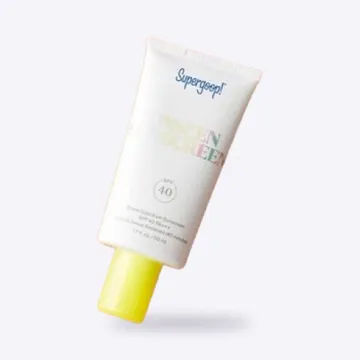
Unseen Sunscreen SPF 40
Dry, grippy finish — doubles as a primer, leaves no cast.
Suits: Oily, Combination, Normal skin
Invisible Daily Defense Sunscreen Lotion SPF 60+
Cheap, light, invisible — the one people actually reapply.
Suits: Normal, Combination, Oily, Dry skin
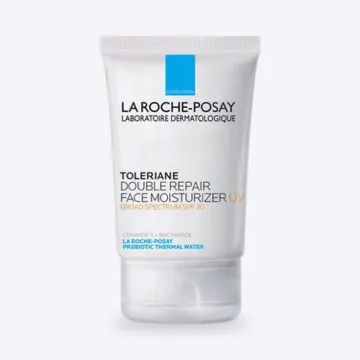
Toleriane Double Repair Face Moisturizer UV SPF 30
SPF 30 sunscreen with niacinamide, avobenzone and homosalate. Fragrance-free.
Suits: Normal, Dry, Oily, Combination, Sensitive skin
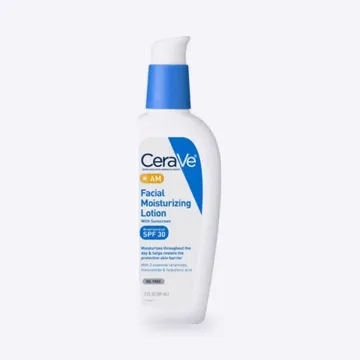
AM Facial Moisturizing Lotion SPF 30
SPF 30 sunscreen with niacinamide, homosalate and octinoxate. Fragrance-free.
Suits: Normal, Dry, Oily, Combination, Sensitive skin
From Pori's catalogue. Amazon links carry our Associates tag: Pori earns from qualifying purchases, at no cost to you. No brand pays to be listed. Photos: Open Beauty Facts contributors, CC BY-SA 3.0.
Why do Korean sunscreens leave US shelves?
Because a sunscreen sold in the US must use US-listed filters and carry a Drug Facts label. Korea JoongAng Daily reported in 2025 that Round Lab discontinued its SPF 50+ PA++++ in the US and released a US-only SPF 45, Beauty of Joseon withdrew four sunscreens and launched US versions, and SKIN1004 removed its sunscreens from its US product page. The same report notes that the 2022 US cosmetics law many people blamed doesn't cover sunscreens, which were already regulated as drugs. Retail followed: Olive Young's new US site sells only US-exclusive sunscreen formulas, as our guide to where to buy Korean skincare in the US explains.
Imported originals are still easy to buy from third-party sellers, and their filters are widely used abroad. The trade-offs are no US label, no SPF testing to US rules, and less certainty about age, storage and authenticity.
Which Korean sunscreens have a US label?
- Round Lab Birch Juice Moisturizing UVLock SPF 45: $24.99 for 1.69 oz at Ulta, fragrance-free, with avobenzone, homosalate and octisalate.
- Beauty of Joseon Day Dew Sunscreen SPF 50: $18 for 50 ml on the brand's US site, with avobenzone, homosalate, octisalate and octocrylene.
- Beauty of Joseon Daily Relief Sunscreen SPF 40: the US counterpart to Relief Sun, sold on the brand's official Amazon US store.
- COSRX Vitamin E Vitalizing Sunscreen SPF 50+: a US drug label listing avobenzone, homosalate, octisalate and octocrylene; see best COSRX products.
Octocrylene causes allergy in a small number of people, so patch test if you react easily. None of these claims water resistance, so use a water-resistant sunscreen for swimming or sports. The AAD recommends a broad-spectrum, water-resistant SPF 30 or higher outdoors, reapplied every two hours. Our best Korean sunscreen roundup compares the US-labeled options, and best Japanese sunscreen covers the other big Asian aisle. Sunscreen is the last step of a Korean routine; see Korean skincare routine steps for the rest. For more on Korean skincare, see what is K-beauty, Korean skincare brands and the K-beauty hub, or browse our sunscreens catalogue.
Frequently asked questions
Why are Korean sunscreens better than American ones?
Many feel lighter because Korea allows newer UV filters, such as Tinosorb M and Uvinul A Plus, that the US does not. Protection depends on the formula and how much you apply, so a US sunscreen you use generously works too.
Are Korean sunscreens FDA approved?
Korean-market sunscreens are not made for US sale, and many use filters the FDA does not list. Several Korean brands sell US versions with a Drug Facts label, which are legal US sunscreens.
Has the FDA approved bemotrizinol?
Yes. A final order dated June 10, 2026 added bemotrizinol at up to 6%, effective August 9, 2026. The requesting company holds 18 months of exclusivity, so wider availability is expected from 2028.
Is PA++++ the same as broad spectrum?
No. PA++++ is a graded UVA rating used in Korea and Japan; PA++++ means a UVA protection factor of 16 or more. Broad spectrum is a US pass/fail claim based on how far protection reaches into UVA.
Is it illegal to buy Korean sunscreen in the US?
Imported Korean sunscreens are widely sold by third-party sellers. They lack a US Drug Facts label and US SPF testing, and authenticity and storage are harder to check.
How many UV filters does the US allow?
The US monograph long listed 16. Bemotrizinol was added in 2026, and an order removing PABA and trolamine salicylate takes effect in September 2027, leaving 15.
Sources
- FDA: Questions and answers, FDA's regulatory actions for over-the-counter sunscreen
- Venable: FDA clears the way for bemotrizinol, first new OTC sunscreen active ingredient (June 2026)
- Personal Care Insights: US FDA eliminates outdated UV filters (September 2026)
- Turner CW, Torgerson L. Modernizing U.S. sunscreen regulations: how newer filters can improve public health. Photodermatol Photoimmunol Photomed, 2025 (PMC)
- The Korea Times: US finally approves new UV filter. Can it catch up with K-beauty? (August 2026)
- 21 CFR 201.327, Over-the-counter sunscreen drug products (Cornell LII)
- ChemLinked: Japan revises the sun protection test methods (2022)
- Ministry of Food and Drug Safety (Korea): Functional cosmetics evaluation
- Korea JoongAng Daily: Explainer, Americans are hoarding Korean sunscreen. Should they? (2025)
- D'Souza G, Evans GRD. Mexoryl: a review of an ultraviolet A filter. Plast Reconstr Surg, 2007 (PubMed)
Pori is a wellness and skincare education app, not a medical device. This article is for general information and isn't medical advice. For anything that worries you, see a dermatologist.