Pori
- K-beauty is skincare and makeup from South Korea, known for layered hydration, gentle formulas, daily sunscreen and fast product cycles.
- Korea's MFDS reviews 'functional cosmetics' such as sunscreens, whitening and anti-wrinkle products, which must show SPF and PA data for sun claims.
- Korea exported a record $11.4 billion of cosmetics in 2025, and the US became its largest buyer at $2.2 billion.
- Hydration, sunscreen and gentle cleansing are well supported; snail mucin, cica and the 10-step routine have thinner evidence than the hype.
K-beauty is the skincare and makeup made in South Korea, and the approach to skin care that comes with it: gentle cleansing, several thin layers of hydration, mild active ingredients and sunscreen every day. It is popular in the US because the products are often cheap, pleasant to use and quick to follow new ideas, from snail mucin and centella (cica) to the "glass skin" look. Some of it rests on good evidence and some on marketing, and this guide sorts out which is which.
If you are trying a Korean product for the first time, you can scan its barcode or label with the ingredient scanner in Pori to check it against your skin type. Pori reads the label; it does not diagnose skin conditions.
This is the hub page for our K-beauty articles. We compared published ingredient lists, brand claims, regulators' pages and research; we did not test these products on skin. Prices are as of November 2026, with the retailer named.
What does K-beauty mean?
"K-beauty" is shorthand for Korean beauty, in the same way K-pop means Korean pop music. In practice it covers three things: Korean brands such as COSRX, Laneige, Beauty of Joseon, Anua and SKIN1004; a style of routine built on layering light, hydrating products; and a set of ingredients that Korean brands made famous in the West, including snail secretion filtrate, centella asiatica, rice, ginseng and fermented extracts.
It is also a large export business. According to Korea's Ministry of Food and Drug Safety (MFDS), Korea exported a record $11.4 billion of cosmetics in 2025, up 11.8% on 2024, and the United States became the largest buyer for the first time, at $2.2 billion. Basic skin care made up about three quarters of those exports. Our guide to Korean skincare brands explains who owns the big names; Amorepacific, for example, owns COSRX, Laneige and Innisfree.
Where did Korean skincare come from?
Korean skin care draws on older traditions. Hanbang, Korean herbal medicine, is the source of ingredients such as ginseng and rice that brands like Beauty of Joseon still build on. The modern industry grew around large Korean groups. Amorepacific launched Laneige in 1994 and Innisfree in 2000, and newer brands such as COSRX, founded in 2013, became the first K-beauty products many Americans tried.
The routine that made K-beauty famous abroad is the multi-step routine: oil cleanser, water cleanser, exfoliant, toner, essence, serum, sheet mask, eye cream, moisturizer and sunscreen. Our guide to Korean skincare routine steps walks through each one and explains which you can skip. In 2026 K-beauty also moved firmly into US stores: Olive Young, the Korean health and beauty chain, opened its first US store in Pasadena on May 29, 2026, alongside a US online shop.
What makes Korean skincare different?
Most of the ingredients are the same ones used everywhere. The difference lies in how the products are designed and used.
- Layering. Instead of one rich cream, a Korean routine often uses several thin layers: a hydrating toner, an essence, a serum and a light moisturizer. Each adds a little water-binding ingredient, such as glycerin, hyaluronic acid or panthenol.
- Hydration first. The goal is skin that looks plump and smooth. Humectants draw water into the top layer of skin, and occlusive ingredients slow its loss, as a review of how moisturizers work explains. Well-hydrated skin reflects light more evenly, which is most of what "glow" means.
- Gentle actives. Korean products tend to use mild exfoliants, such as betaine salicylate or PHAs, and soothing ingredients like centella, more often than high-strength acids. Gentle is not guaranteed, though: some Korean products contain fragrance or essential oils, so check each label.
- Sunscreen culture. Daily sunscreen is a normal step in Korea, and Korean sunscreens are made to feel light enough to wear every day. Many use UV filters that are allowed in Korea and Europe but not in the US, which matters for US shoppers (see below).
- Fast product cycles. Korean brands launch, rename and reformulate quickly. That keeps the shelf fresh, and it also makes old reviews unreliable, so check that a product has not changed before you buy.
How does Korea regulate skincare?
In Korea, the MFDS regulates cosmetics. Most skin care can go on sale without a pre-market review, but products that make certain claims are "functional cosmetics." The MFDS lists them as products that help with whitening (brightening), wrinkle improvement, UV protection or tanning, acne, dryness from atopic-prone skin and stretch marks, plus some hair products. Their makers must either go through an MFDS evaluation, which takes about 60 days and needs safety and efficacy data, or file a report when the product uses an already-approved formula. For sunscreens, the evaluation needs SPF, water-resistance and PA (UVA) data.
This is a key difference from the US. In Korea and the EU, sunscreen is a cosmetic, and a review in Photodermatology, Photoimmunology & Photomedicine notes that this has let both use newer UV filters faster. In the US, sunscreen is an over-the-counter drug, and only filters on the FDA's list can be used. That is why Korean sunscreen and American sunscreen differ so much, and why some Korean sunscreens have left US shelves.
What are the big K-beauty trends?
Glass skin
"Glass skin" describes skin so smooth, even and hydrated that it looks almost translucent. It is a goal more than a product, and the realistic version is well-hydrated, calm skin with daily sunscreen. Our Korean glass skin routine gives an AM and PM plan, and our general glass skin routine explains what is realistic.
Skip-care
Skip-care is the reaction to the 10-step routine: fewer, multi-purpose products. For most people this is the better starting point. A cleanser, a hydrating layer, a moisturizer and sunscreen cover most needs, and every extra product is another chance for irritation.
Cica (centella asiatica)
Centella is a plant used in products for sensitive and irritated skin. In one study, creams with 5% centella extract increased skin hydration and reduced water loss. The evidence for soothing is promising but mostly small. Our centella guide covers the research, and best centella products compares the labels.
Snail mucin
Snail secretion filtrate became K-beauty's best-known ingredient through COSRX's Advanced Snail 96 Mucin Power Essence ($20.90 for 100 ml at Ulta). A 2024 review found that most studies of snail extract were preclinical or small clinical studies. See our COSRX Snail 96 review, snail mucin benefits and best snail mucin products.
Toners, essences and sheet masks
Hydrating toners such as Anua Heartleaf 77% ($23 for 250 ml at anua.com; see our Anua toner review), essences (best essence) and sheet masks (best sheet masks) are the "hydration layers" of a Korean routine. Sheet masks help when worn briefly: in one study, masks worn for under 25 minutes improved hydration, while longer wear increased dryness and redness.
Here are some Korean products from our catalogue that show the style: a gentle hydrating cleanser, a cleansing oil, a fragrance-free toner and a light gel cream.
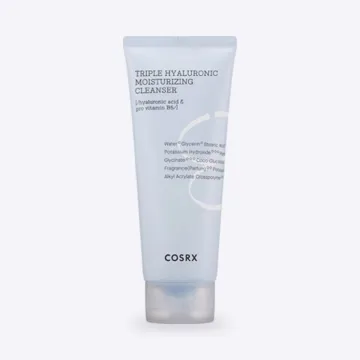
Hydrium Triple Hyaluronic Moisturizing Cleanser
Face cleanser with glycerin, panthenol and hyaluronic acid.
Suits: Normal, Dry, Oily, Combination skin
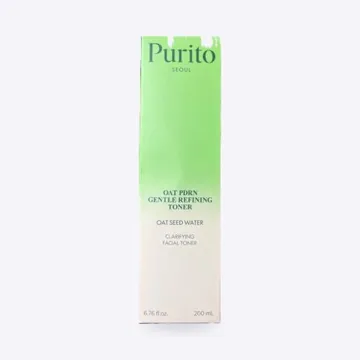
Purity Oat PDRN Gentle refining toner
Toner with panthenol, dipotassium glycyrrhizate and Beta-Glucan. Fragrance-free.
Suits: Normal, Dry, Oily, Combination, Sensitive skin
From Pori's catalogue. Amazon links carry our Associates tag: Pori earns from qualifying purchases, at no cost to you. No brand pays to be listed. Photos: Open Beauty Facts contributors, CC BY-SA 3.0.
One note on the cleansing oil: Klairs' Deep version lists fragrance, while its Fresh sibling is marketed without artificial fragrance, so pick by label if fragrance bothers you.
K-beauty hype vs evidence: what holds up?
| Claim | What the evidence says | Verdict |
|---|---|---|
| Hydrating layers make skin look smoother | Humectants and occlusives raise skin water content and reduce water loss | Well supported |
| Daily sunscreen prevents aging and skin cancer | Long-standing dermatology advice; the AAD recommends broad-spectrum SPF 30 or higher | Well supported |
| Niacinamide evens tone | A controlled trial found fewer spots and less blotchiness with niacinamide | Supported |
| Snail mucin repairs skin | Mostly lab and small human studies | Promising, thin |
| Cica calms sensitive skin | Small studies on hydration and redness | Promising, thin |
| You need 10 steps | No study shows more steps work better; more products mean more irritation risk | Hype |
| Korean products are always gentle | Many are, but some contain fragrance, essential oils or alcohol | Check the label |
Niacinamide's evidence comes from a trial in which 5% niacinamide reduced spots, red blotchiness and yellowing compared with the plain base. The AAD's sunscreen advice is a broad-spectrum, water-resistant SPF 30 or higher for outdoor time. Reading the label matters even in Korea: in a survey of 1,015 people at Korean dermatology clinics, 79.2% bought cosmetics without checking ingredients, even though they ranked ingredients as the most important factor.
Are Korean sunscreens better than American ones?
Many feel better, because Korean and European rules allow newer filters that are light and leave no white cast. US rules are stricter about which filters a sunscreen can use, and Korean-market sunscreens are not made for US sale. Korea JoongAng Daily reported in 2025 that Round Lab, Beauty of Joseon and SKIN1004 pulled sunscreens from the US, and Beauty of Joseon and Round Lab launched US-only versions. The best known, Beauty of Joseon Relief Sun, is still not sold in the brand's official US Amazon store; see our Relief Sun review. For US-labeled picks, read best Korean sunscreen, and for the regulatory detail, Korean vs American sunscreen.
How do I start a K-beauty routine?
- Cleanse gently. A low-pH gel such as COSRX Low pH Good Morning ($14 for 150 ml on cosrx.com; see our review) for oily skin, or a creamier cleanser for dry skin. Add a cleansing oil at night if you wear water-resistant sunscreen or makeup.
- Add one hydrating layer. A toner or essence with glycerin, hyaluronic acid or panthenol.
- Moisturize. A gel cream for oily skin, a richer cream for dry skin.
- Wear sunscreen every morning. In the US, choose one with a Drug Facts label.
- Add one product at a time. Give each new product a couple of weeks and patch test it first.
If you want to go brand by brand, start with our COSRX guide and best COSRX products. Laneige's best-known product gets its own Lip Sleeping Mask review. For buying, our guide to where to buy Korean skincare in the US covers Amazon, Ulta, Target, Costco and online shops, and how to avoid fakes. Browse more options in our toners and serums catalogues.
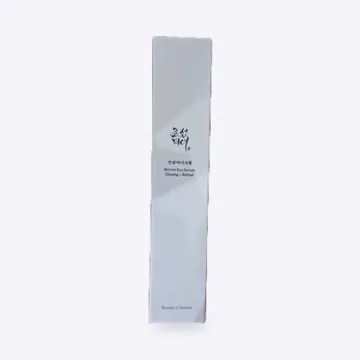
Eye Serum
Evening eye cream with niacinamide, retinal and glycerin. Fragrance-free.
Suits: Normal, Dry, Oily, Combination skin
From Pori's catalogue. Amazon links carry our Associates tag: Pori earns from qualifying purchases, at no cost to you. No brand pays to be listed. Photos: Open Beauty Facts contributors, CC BY-SA 3.0.
Beauty of Joseon's Revive Eye Serum, above, is a good example of the hanbang style with a modern active: ginseng extract with a small amount of retinal, sold as fragrance-free.
Frequently asked questions
What is K-beauty?
K-beauty means Korean beauty: skincare and makeup from South Korea and the routine that goes with it, built on gentle cleansing, layers of hydration, mild actives and daily sunscreen.
Why is Korean skincare so popular?
The products are often affordable, light and pleasant to use, and Korean brands launch new formats quickly. Korean sunscreens in particular feel lighter than many US ones because they can use newer UV filters.
Is Korean skincare better than American skincare?
Not across the board. Both use many of the same ingredients. Korean products tend to focus on hydration and texture; US sunscreens are more limited in filters. Pick by ingredient list and skin type.
Do I need a 10-step Korean routine?
No. A cleanser, one hydrating layer, a moisturizer and sunscreen do most of the work. Extra steps are optional, and the skip-care trend reflects that.
Who regulates Korean cosmetics?
Korea's Ministry of Food and Drug Safety (MFDS). Products with functional claims, such as sunscreen, brightening and anti-wrinkle, need an MFDS evaluation or report before sale.
Are Korean sunscreens legal in the US?
Korean-market sunscreens are not made for US sale, and many use filters not on the FDA's list. Several brands sell US versions with a Drug Facts label; look for that panel when you buy in the US.
Sources
- Korea.net: Korea's cosmetics exports hit record high in 2025 (MFDS data, May 2026)
- Ministry of Food and Drug Safety (Korea): Functional cosmetics evaluation
- Turner CW, Torgerson L. Modernizing U.S. sunscreen regulations: how newer filters can improve public health. Photodermatol Photoimmunol Photomed, 2025 (PMC)
- Cho S et al. Knowledge and behavior regarding cosmetics in Koreans visiting dermatology clinics. Ann Dermatol, 2017 (PMC)
- Sethi A et al. Moisturizers: the slippery road. Indian J Dermatol, 2016 (PMC)
- Ratz-Lyko A et al. Moisturizing and antiinflammatory properties of cosmetic formulations containing Centella asiatica extract. Indian J Pharm Sci, 2016 (PMC)
- 2024 review of snail extract in skin care, J Cosmet Dermatol (PubMed)
- Wang Y et al. Short-term skin reactions with different ways of facial sheet mask usage. J Tissue Viability, 2024 (PubMed)
- Korea JoongAng Daily: Explainer, Americans are hoarding Korean sunscreen. Should they? (2025)
- The Zoe Report: Olive Young opens its first US store (May 2026)
Pori is a wellness and skincare education app, not a medical device. This article is for general information and isn't medical advice. For anything that worries you, see a dermatologist.