Pori
- Snail secretion filtrate contains glycoproteins, hyaluronic acid, allantoin, glycolic acid and small peptides.
- Its clearest benefit is gentle hydration; small trials suggest modest help with fine lines, healing and inflamed acne.
- There's no good evidence it fades acne scars, and many studies are small or funded by snail-extract makers.
- It isn't vegan, harvesting methods vary, and people with dust-mite or snail allergies should patch test or skip it.
Snail mucin, listed on labels as snail secretion filtrate, is a humectant-rich mix of glycoproteins, hyaluronic acid, allantoin and small peptides. Its main proven benefit is modest: it can help skin feel more hydrated and smooth. Small trials also suggest some help with healing, fine lines and inflamed acne, but most studies are small, short or industry-funded.
Below we look at what's actually in the filtrate, what the human studies measured, whether it helps acne and acne scars, how it's collected, and who should be careful with it.
What is snail mucin?
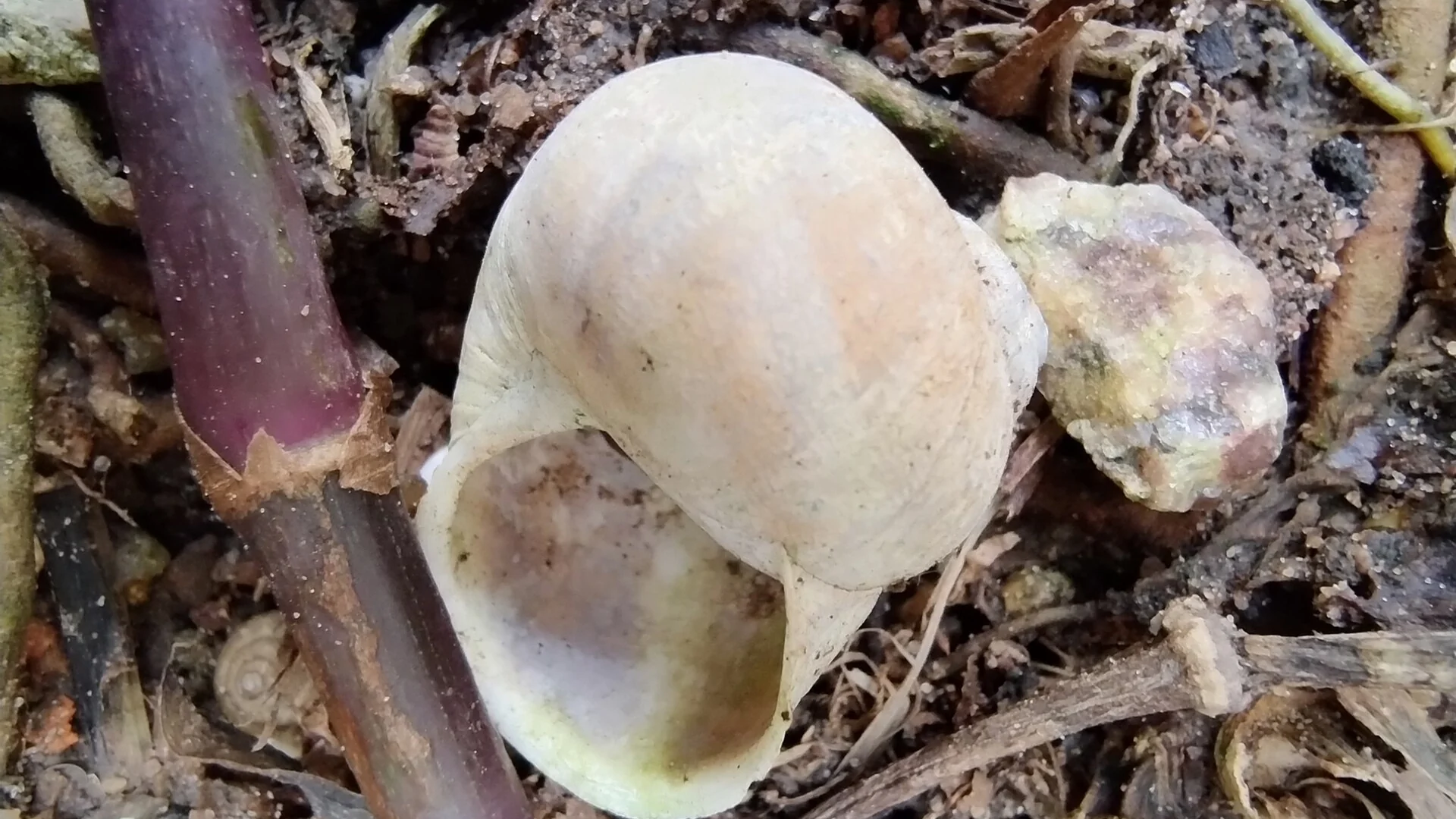
Snail mucin is the slime snails produce to move, stay moist and protect themselves, filtered for use in skincare. Researchers at Hunter College describe snail mucins as a family of heavily glycosylated proteins that snails secrete for adhesion, hydration, lubrication and microbial protection, and note that snail mucus is already used in skin care, wound healing products and even surgical glues. The studies below mostly used mucus from the garden snail, which papers name Helix aspersa, Cryptomphalus aspersa or Cornu aspersum.
It's a common ingredient in K-beauty essences and creams, which is why you'll often see it in the essence step of a Korean skincare routine.
What's in snail secretion filtrate?
The filtrate is mostly water carrying a mix of moisture-binding and soothing compounds. A 2025 review in Biology lists proteoglycans, glycosaminoglycans such as hyaluronic acid, glycoprotein enzymes, copper peptides, antimicrobial peptides and metal ions, along with mucin, allantoin, collagen, elastin and glycolic acid. Published analyses don't describe one standard recipe, and product labels don't list how much of each component is in the bottle.
| Component | What it does in skincare | Read more |
|---|---|---|
| Glycoproteins (mucins) | Form a slippery, water-holding film on the surface | Covered above |
| Hyaluronic acid and other glycosaminoglycans | Humectants that draw water into the outer skin | Hyaluronic acid guide |
| Allantoin | A soothing, skin-conditioning ingredient | Allantoin guide |
| Glycolic acid | An exfoliating acid | Amount in filtrate not disclosed on labels |
| Peptides, including copper peptides | Signaling molecules studied for repair | Amounts in filtrate are not standardized |
What does snail mucin do for skin?
For most people, snail mucin works as a lightweight hydrator that leaves skin feeling smoother. Beyond that, the evidence is promising but limited. A 2024 review in the Journal of Cosmetic Dermatology found research on snail mucin for anti-aging, hydration, acne, scarring and pigmentation, but stressed that most studies were preclinical or small clinical studies and called for larger trials. Here are the human studies worth knowing:
| Study | Who and how long | What it found | Caveats |
|---|---|---|---|
| Fabi et al., 2013 | 25 people with photodamage, 12 weeks, split face | Periocular wrinkles improved on the snail side (8% emulsion plus 40% serum) | Small; subjects didn't report a significant difference in overall skin quality |
| Lim et al., 2020 | 50 women aged 45 to 65, 3 months | Lower water loss and better roughness, firmness and elasticity in the snail group | Hydration gain wasn't significantly different from vehicle; company-funded |
| Tsoutsos et al., 2009 | 43 adults with partial-thickness facial burns | Faster healing and less pain than a standard burn ointment | Medical burn care, not a cosmetic routine |
| Puaratanaarunkon et al., 2022 | 66 people with mask acne, 12 weeks | Fewer inflamed spots than placebo | Serum also contained calendula and licorice extract |
Does snail mucin actually hydrate skin?
It can, but the hard data are weaker than the reputation. In the 2020 Singapore trial, women using the snail regimen had reduced transepidermal water loss and significant improvements in roughness, firmness and elasticity. Their hydration readings rose too, but the study reports that the hydration improvement was not significantly different from the vehicle group, so the base cream did much of that work. The trial was funded by Cantabria Labs, and one author is a company employee. A fair summary: snail mucin is a pleasant humectant, and it may help the skin barrier hold on to water.
If your skin feels tight, it helps to know whether it's dry or dehydrated, since the fix differs. Our guide to dry vs dehydrated skin explains how to tell them apart.
Does snail mucin help wrinkles and healing?
Two small trials suggest a modest effect on fine lines. In a double-blind split-face study, 25 people with moderate to severe photodamage used an emulsion with 8% snail secretion and a serum with 40% on one side for 12 weeks; periocular wrinkles improved significantly on that side, though subjects didn't report a significant difference in overall skin quality. For healing, a Greek study of 27 burn patients treated with a snail extract cream, compared with 16 on a standard ointment, found faster healing (about 11 vs 15 days) and less pain. That's a medical setting, and it doesn't mean a serum will heal your skin faster at home.
Is snail mucin good for acne?
There's one encouraging trial, and it involved a blend. In a randomized, double-blind study of 66 people with mild to moderate mask-related acne, a serum of snail secretion filtrate, calendula and licorice root used twice daily for 12 weeks reduced inflamed spots more than placebo. It didn't improve blackheads and whiteheads (non-inflamed lesions), oil levels or hydration compared with placebo, and side effects were mild and seen in both groups. That makes snail mucin a reasonable gentle add-on alongside a proven acne treatment, not a replacement for one.
For deep, painful or scarring acne, see a dermatologist; prescription treatment works far better than any essence.
Does snail mucin help acne scars?
There's no good evidence that it does. The 2024 review lists scarring among the uses people have studied, but notes that most of the work is preclinical or small, and we didn't find a controlled trial of snail mucin for atrophic acne scars. Hydration can make the skin surface look smoother for a while, which may be why people report a difference. Indented scars generally need in-office procedures, so a dermatologist is the right person to ask.
How is snail mucin harvested, and is it ethical?
Methods vary, and the industry doesn't follow a single standard. In one research group's protocol, mucus was collected from snails on Bulgarian farms using low-voltage electrical stimulation, a method the authors say can be used repeatedly without disturbing the snails' biological functions; the crude mucus was then homogenized, centrifuged and passed through progressively finer filters. Other suppliers may use different methods, and product labels don't say which.
Whether that's acceptable is a personal call. The 2024 review lists ethical habitats for collection among the open limitations of snail mucin. It is an animal-derived ingredient, so it isn't vegan. There's an environmental angle too: the giant African land snail used in some research is an invasive species that poses environmental and health risks. If sourcing matters to you, ask the brand which species it uses and how the mucus is collected.
Who should be careful with snail mucin?
Most people tolerate it well, but a few groups should patch test first or skip it:
- People allergic to dust mites. Lab work confirms cross-reactivity between Helix snails and house dust mites, and a 2010 case report describes snail allergy in a patient with dust-mite allergy after eating snails. Skin reactions to cosmetics are less studied, but it's a reason for caution.
- Anyone who has reacted to eating snails. Check with an allergist before using it on your skin.
- People who break out easily. We found no study showing snail mucin clogs pores, but many snail products are rich essences and creams with other ingredients. If you get new bumps after starting one, read our guide to breaking out after a new skincare product.
To patch test, the American Academy of Dermatology suggests applying a new product to a quarter-sized spot, such as the bend of your elbow, twice daily for 7 to 10 days. Stop if you see redness, itching or swelling.
How do I use snail mucin?
- Apply after cleansing (and after toner, if you use one), on slightly damp skin.
- Follow with moisturizer to seal in the water it draws to the surface.
- Use it morning, evening or both. We found no published warnings about combining it with other actives, so it can sit under a retinoid at night or sunscreen in the morning.
- Judge it after 4 to 12 weeks, the range of the studies above, and keep your other products unchanged so you know what's doing what.
How can a selfie scan or ingredient scanner help?
Because the benefits of snail mucin are subtle, a steady record works better than guessing. An app like Pori takes a selfie and returns an overall skin score with a breakdown including Hydration & Moisture and Pores & Texture, and its before/after comparison makes a 12-week trial easier to judge. Pori's ingredient scanner (Pro) reads a barcode or a photo of the label and flags each ingredient as beneficial, use with caution or avoid for your skin type, which helps when a snail essence also contains fragrance or essential oils.
An app is not a diagnosis; it tracks how your skin looks. For a rash, swelling or persistent breakouts, see a dermatologist or allergist.
Frequently asked questions
What does snail mucin do for skin?
It mainly hydrates, thanks to glycoproteins, hyaluronic acid and allantoin. Small trials also suggest modest improvements in fine lines and skin barrier function.
Is snail mucin good for acne?
One 12-week trial found a serum with snail filtrate, calendula and licorice reduced inflamed mask-acne spots more than placebo. It's a gentle add-on, not a replacement for proven acne treatments.
Does snail mucin help acne scars?
There's no good evidence that it fades indented acne scars. It can make skin look smoother by hydrating it, but scars usually need in-office treatment.
Is snail mucin ethical?
It depends on how it's collected, and methods vary between suppliers. Some researchers use low-voltage stimulation on farmed snails, but it's an animal product and isn't vegan.
Can snail mucin cause breakouts?
We found no study showing it clogs pores, but some people react to snail products or to other ingredients in them. Patch test first, and stop if you get new bumps or irritation.
Who should not use snail mucin?
People allergic to snails or house dust mites should be cautious, since snail and dust-mite allergens can cross-react. Ask an allergist if you're unsure.
Sources
- Singh N, Brown AN, Gold MH. Snail extract for skin: A review of uses, projections, and limitations. J Cosmet Dermatol, 2024 (PubMed)
- Alogna A et al. Evaluation of Biological Properties and Beneficial Effects for a Sustainable and Conscious Exploitation of Achatina fulica Snails. Biology, 2025 (PMC)
- McDermott M et al. Advancing Discovery of Snail Mucins Function and Application. Front Bioeng Biotechnol, 2021 (PMC)
- Fabi SG et al. The Effects of Filtrate of the Secretion of the Cryptomphalus Aspersa on Photoaged Skin. J Drugs Dermatol, 2013 (PubMed)
- Lim VZ et al. Efficacy and Safety of a New Cosmeceutical Regimen Based on Snail Secretion Filtrate and Snail Egg Extract. J Clin Aesthet Dermatol, 2020 (PMC)
- Puaratanaarunkon T et al. Snail secretion filtrate, Calendula officinalis and Glycyrrhiza glabra serum for maskne: a randomized placebo-controlled study. J Cosmet Dermatol, 2022 (PubMed)
- Tsoutsos D et al. The efficacy of Helix aspersa Müller extract in the healing of partial thickness burns. J Dermatolog Treat, 2009 (PubMed)
- Guilloux L et al. Cross-reactivity between terrestrial snails (Helix species) and house-dust mite. Allergy, 1998 (PubMed)
Pori is a wellness and skincare education app, not a medical device. This article is for general information and isn't medical advice. For anything that worries you, see a dermatologist.