Pori
- Ferulic acid's best-documented benefit is stabilizing vitamins C and E and doubling their UV protection, from about 4-fold to 8-fold.
- The classic recipe is 15% L-ascorbic acid, 1% vitamin E and 0.5% ferulic acid; a small human study confirmed the protection.
- On its own it's a plant antioxidant with mostly lab evidence and a tendency to oxidize quickly.
- It adds to sunscreen and never replaces it: use the serum in the morning, then SPF 30 or higher.
Ferulic acid's main benefit for skin is teamwork. In a 2005 study, adding it to a serum of 15% vitamin C and 1% vitamin E made the vitamins more chemically stable and doubled the formula's protection against simulated sunlight, from about 4-fold to about 8-fold. On its own, ferulic acid is a plant antioxidant with promising but mostly early evidence.
Here's what ferulic acid is, how the classic vitamin C, E and ferulic trio works, what the human studies show, what ferulic acid does by itself, and how to use a serum that contains it.
What is ferulic acid?
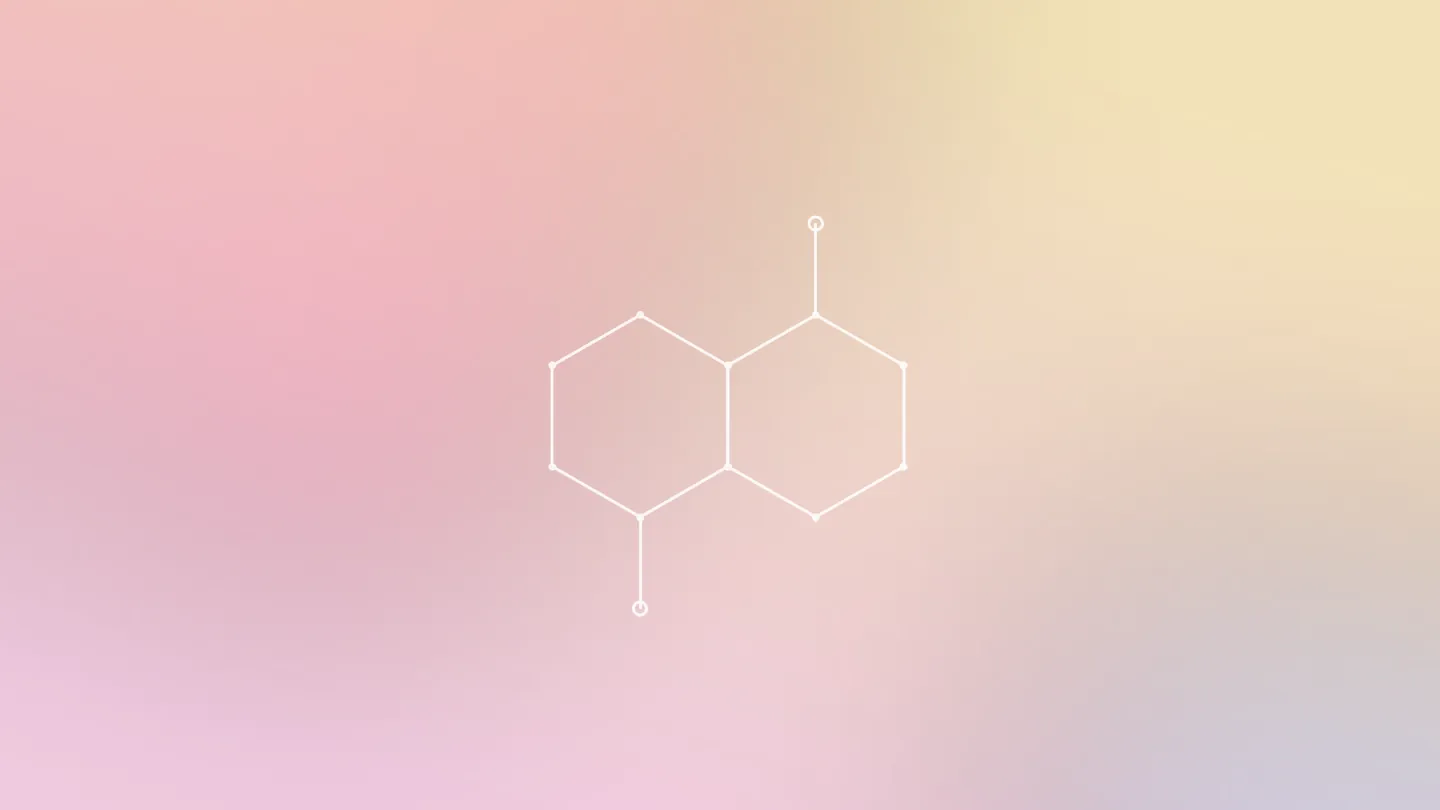
Ferulic acid is an antioxidant found throughout the plant world. A biochemistry review describes it as a ubiquitous plant constituent that occurs mainly in seeds and leaves, and explains that its structure lets it form a stable radical that ends free radical chain reactions. In other words, it can absorb the damage that would otherwise pass from molecule to molecule.
A 2018 review in Skin Pharmacology and Physiology notes that ferulic acid has low toxicity and is widely used in the pharmaceutical, food and cosmetics industries. On an ingredient list it appears simply as "ferulic acid", usually near the end because it's used in small amounts.
What does ferulic acid do in a vitamin C and E serum?
Ferulic acid does three jobs in a vitamin C and E serum: it stabilizes the vitamins, helps keep the formula acidic enough to work, and boosts sun-damage protection.
- Stability. L-ascorbic acid oxidizes quickly. In the 2005 study, ferulic acid improved the chemical stability of vitamins C and E.
- pH. A dermatology review notes that ferulic acid aids both the stabilization of vitamin C and keeping the pH below 3.5, the acidity L-ascorbic acid needs to enter skin.
- Photoprotection. The same 2005 study measured protection by redness and sunburn cells after solar-simulated light, and found it doubled from about 4-fold to about 8-fold. The formula also reduced thymine dimers, a type of DNA damage linked to skin cancer.
Vitamins C and E already help each other. An earlier study by the same group found that either vitamin alone was protective, but the combination of 15% L-ascorbic acid and 1% alpha-tocopherol was superior, and a review explains that vitamin C is the primary replenisher of vitamin E, regenerating it after it neutralizes a radical. Ferulic acid adds a third antioxidant that protects the pair. The standard recipe, as one review summarizes, is 0.5% ferulic acid with 15% vitamin C and 1% vitamin E.
What do the vitamin C, E and ferulic acid studies show?
The studies show real protection from UV damage, but they are small and mostly short. Here are the main ones:
| Study | Formula | Tested on | Main finding | Limit |
|---|---|---|---|---|
| Lin et al., 2003 | 15% vitamin C + 1% vitamin E | Pig skin, 4 days | Combination beat either vitamin alone; about 4-fold protection | Animal skin |
| Lin et al., 2005 | 15% vitamin C + 1% vitamin E + 0.5% ferulic acid | Skin under solar-simulated light | Better stability; protection about doubled to 8-fold; fewer thymine dimers | Single preclinical study |
| Murray et al., 2008 | Same trio | Human skin, 4 days, then UV | Significant protection on every measure | Small number of patients |
| Oresajo et al., 2008 | Vitamin C + ferulic acid + phloretin | 10 human volunteers | Less sunburn cell formation, DNA damage and collagen-degrading enzyme | Small; authors from L'Oréal |
The human study is the most useful for everyday decisions. Volunteers applied the serum for four days before exposure to 2 to 10 times the dose that causes redness, and the formula provided significant protection by all methods of evaluation, with the authors noting it was particularly effective for reducing thymine dimer mutations. The authors also flag that the number of patients was relatively small.
The phloretin study, with 10 subjects treated on the lower back, found the mixture blunted UV-induced sunburn cells, thymine dimers, MMP-9 (an enzyme that breaks down collagen) and p53 changes. Its authors include researchers from L'Oréal USA, worth knowing when you read it.
A 2026 systematic review of recent vitamin C studies reached a similar conclusion at a wider scale: vitamin C, E and ferulic acid type complexes consistently improved photoaging, pigment problems and healing after procedures.
Does ferulic acid replace sunscreen?
No. Antioxidant serums work differently from sunscreen and only add to it. The authors of the human study wrote that the trio's mechanism of action is different from sunscreens and would be expected to supplement them. Vitamin C, the main active in these serums, does not absorb UV light; it neutralizes free radicals after UV hits the skin.
Keep using a broad-spectrum sunscreen with SPF 30 or higher, as the American Academy of Dermatology (AAD) recommends, and apply enough of it. Our guide on how much sunscreen to use shows the amounts.
What does ferulic acid do on its own?
By itself, ferulic acid is a broad antioxidant with a list of lab-backed effects. The 2018 review says it scavenges free radicals, inhibits enzymes that generate them and enhances the activity of the skin's own scavenger enzymes. It also reports that ferulic acid protects keratinocytes, fibroblasts, collagen and elastin, inhibits melanogenesis and accelerates wound healing.
That's why formulators use it as a photoprotective agent, a delayer of photoaging and a brightening component. Ferulic acid also absorbs some UV itself: the biochemistry review notes that UV absorption by ferulic acid strengthens its ability to stop free radical reactions, and a review of natural compounds in sunscreens found that ingredients such as ferulic acid could enhance the in vivo SPF of sunscreen formulas. That doesn't make it a sunscreen filter on its own.
The catch is the same one vitamin C has. The 2018 review notes that ferulic acid's use is limited by its tendency to be rapidly oxidized. The human studies we found tested it inside combination formulas, so for skin results, the trio is where the evidence is.
Ferulic acid vs vitamin C: which one do you need?
If you only pick one, pick vitamin C, and look for a formula that includes ferulic acid. Vitamin C is the main active; ferulic acid is the supporting player that keeps it working.
| Vitamin C (L-ascorbic acid) | Vitamin E (tocopherol) | Ferulic acid | |
|---|---|---|---|
| Role in the trio | Main active | Partner antioxidant, recycled by vitamin C | Stabilizer and booster |
| Typical amount | 15% | 1% | 0.5% |
| Best-known effect | Brightening, collagen support, antioxidant | Antioxidant | Doubled UV protection of C + E |
| Weak point | Oxidizes; can sting | Occasional contact allergy | Oxidizes quickly |
Vitamin C comes in several forms with different strengths and stability; our vitamin C serum guide compares them. For the vitamin E side of the trio, including when it causes rashes, see vitamin E in skincare.
Is a ferulic acid serum safe for sensitive skin?
Usually, but the serum around the ferulic acid matters more than the ingredient. Classic C, E and ferulic serums are acidic, and a recent review notes that low-pH ascorbic acid may cause skin irritation. Older reviews describe stinging, redness and dryness as rare.
Patch test before you commit. The AAD suggests applying a new product to a quarter-sized spot twice daily for seven to 10 days; our guide on how to patch test skincare has the details. If you have rosacea, eczema or very reactive skin, ask a dermatologist before adding a low-pH serum.
How do you use a vitamin C, E and ferulic acid serum?
- Use it in the morning, after cleansing, on dry skin.
- Apply a few drops to the face and neck, then let it absorb before moisturizer.
- Finish with sunscreen, SPF 30 or higher, every day.
- Be consistent. The human study applied the serum for four days before UV exposure, so the protection builds with daily use.
- Store it well. Keep the cap closed and the bottle away from heat and light, and replace it if it turns orange or brown.
These serums target sun damage, so they make most sense if you're already seeing it. Our guide to the signs of sun damage on your face shows what to look for.
How can a selfie scan or ingredient scanner help?
Ferulic acid serums vary a lot in what else they contain, from fragrance to extra acids. The ingredient scanner in Pori (part of Pro) reads a barcode or a photo of the label and flags each ingredient as beneficial, use with caution or avoid for your skin type, using fixed rules over a curated list of about 250 ingredients. A regular selfie scan gives you a Pigmentation & Tone score to compare over months, so you can see whether an antioxidant serum and daily sunscreen are changing anything.
An app is not a diagnosis. See a dermatologist about any new, changing or bleeding spot, especially on sun-exposed skin.
Frequently asked questions
What does ferulic acid do for skin?
Ferulic acid is a plant antioxidant that neutralizes free radicals. Its best-documented benefit is stabilizing vitamins C and E and doubling their protection against simulated sunlight in a 2005 study.
Why is ferulic acid combined with vitamin C and E?
It makes L-ascorbic acid and vitamin E more chemically stable and helps keep the formula's pH low enough for vitamin C to work. In that study, the trio gave about 8-fold protection against simulated sunlight, versus about 4-fold for C and E alone.
Ferulic acid vs vitamin C: which is better?
Vitamin C is the main active for brightening and antioxidant protection; ferulic acid mainly supports it. If you choose one product, choose a vitamin C serum that includes ferulic acid.
Can I use ferulic acid instead of sunscreen?
No. Antioxidant serums work differently from sunscreen and are meant to add to it, so keep using broad-spectrum SPF 30 or higher every day.
Should I use a ferulic acid serum in the morning or at night?
Morning is the usual choice because the serum's job is adding to your protection against daytime UV. Apply it after cleansing and before moisturizer and sunscreen.
Is ferulic acid good for sensitive skin?
Ferulic acid itself has low toxicity, but the vitamin C serums it's paired with are often acidic and can sting. Patch test for seven to 10 days and ask a dermatologist if you have rosacea or eczema.
Sources
- Lin FH et al. Ferulic acid stabilizes a solution of vitamins C and E and doubles its photoprotection of skin. J Invest Dermatol, 2005 (PubMed)
- Lin JY et al. UV photoprotection by combination topical antioxidants vitamin C and vitamin E. J Am Acad Dermatol, 2003 (PubMed)
- Murray JC et al. A topical antioxidant solution containing vitamins C and E stabilized by ferulic acid provides protection for human skin against damage caused by ultraviolet irradiation. J Am Acad Dermatol, 2008 (PubMed)
- Oresajo C et al. Protective effects of a topical antioxidant mixture containing vitamin C, ferulic acid, and phloretin against ultraviolet-induced photodamage in human skin. J Cosmet Dermatol, 2008 (PubMed)
- Zduńska K et al. Antioxidant properties of ferulic acid and its possible application. Skin Pharmacol Physiol, 2018 (PubMed)
- Graf E. Antioxidant potential of ferulic acid. Free Radic Biol Med, 1992 (PubMed)
- Al-Niaimi F, Chiang NYZ. Topical vitamin C and the skin: mechanisms of action and clinical applications. J Clin Aesthet Dermatol, 2017 (PMC)
- American Academy of Dermatology: Sunscreen FAQs
Pori is a wellness and skincare education app, not a medical device. This article is for general information and isn't medical advice. For anything that worries you, see a dermatologist.