Pori
- Alpha arbutin inhibits tyrosinase, slowing melanin production so brown spots fade gradually with little irritation.
- Some studies find the alpha form a stronger tyrosinase inhibitor than beta arbutin; EU experts consider it safe up to 2% in face creams.
- Use a 2% serum once or twice daily with broad-spectrum SPF 30+ and judge it after 8 to 12 weeks.
- It contains a hydroquinone unit but isn't hydroquinone; store it well, don't overuse it, and see a dermatologist for stronger options.
The main benefit of alpha arbutin is that it slows melanin production by inhibiting tyrosinase, the enzyme pigment cells use to make melanin, which can gradually lighten post-acne marks and sun spots with little irritation. It's a synthetic form of a plant compound, used at up to 2% in face products, and it needs 8 to 12 weeks of daily use plus sunscreen.
Below we cover how alpha arbutin differs from plain (beta) arbutin, what the research shows and where it's thin, how to use a 2% serum, how it fits with niacinamide, how it works on darker skin, and the hydroquinone connection, explained without the scare stories.
What is alpha arbutin?
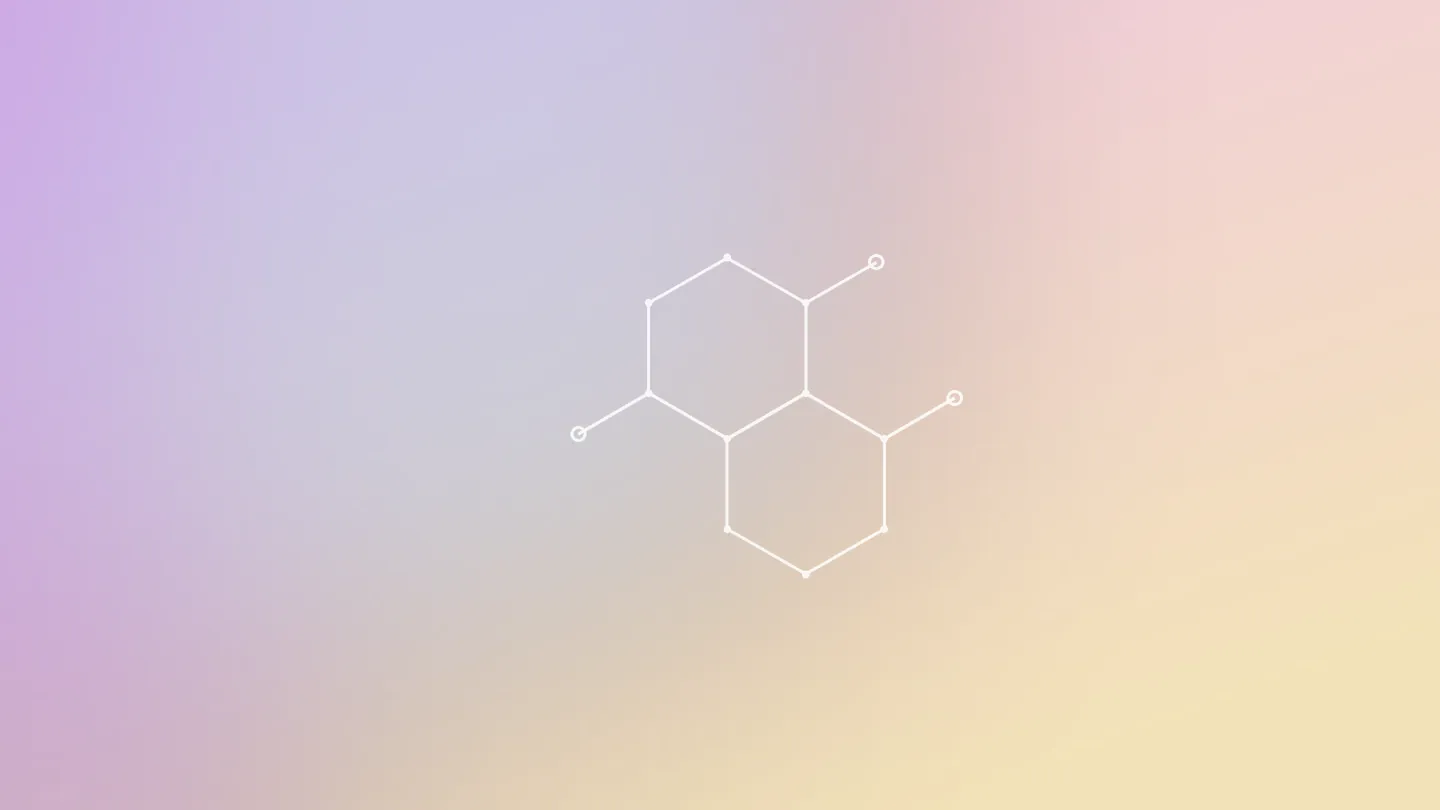
Alpha arbutin is a brightening ingredient made of hydroquinone bonded to a glucose (sugar) molecule. A 2021 review in Antioxidants describes arbutin as a compound of hydroquinone and D-glucose that has been studied as a skin lightener for more than 30 years. Natural arbutin, also called beta arbutin, is extracted from the dried leaves of the bearberry shrub, or from pear, cranberry and blueberry plants. Alpha arbutin is the synthetic version, with the sugar attached in a different orientation.
It works on the pigment pathway early. A review of hyperpigmentation treatments in skin of color explains that arbutin inhibits both tyrosinase activity and melanosome maturation, meaning it slows how much melanin is made and how the pigment packages develop.
What are the benefits of alpha arbutin?
The main benefits are gradual fading of brown spots and a more even tone, with a low risk of irritation compared with stronger lighteners. Specifically:
- Less new pigment. In a lab study, alpha arbutin at 0.5 mM cut melanin synthesis in human pigment cells to 76% of untreated cells and, in a three-dimensional human skin model, to 40% of the control, without harming cell viability.
- Gentle on most skin. The 2021 review states that arbutin causes dermatitis rarely, though some people do react to arbutin-containing products.
- Plays well with others. It is often blended with niacinamide, tranexamic acid or vitamin C, and those blends have been tested against hydroquinone (details below).
What it won't do: exfoliate, treat acne or erase spots quickly. Treat it as a slow, steady background ingredient.
Why is alpha arbutin preferred over beta arbutin?
Alpha arbutin is preferred mainly because some studies found it inhibits tyrosinase more strongly, so it can be used at lower concentrations. The skin-of-color review notes that alpha-arbutin and deoxyarbutin inhibit tyrosinase more strongly than natural arbutin, and one study cited in the 2021 review found alpha arbutin about 10 times more potent than beta arbutin against tyrosinase from mouse pigment cells.
The picture is less tidy than marketing suggests. The same review notes contradictory results: a mushroom-tyrosinase study found no inhibition by alpha arbutin, and another found the enzyme had a higher affinity for beta arbutin. Results depend on which enzyme and test system researchers used, and human skin may not behave like any of them.
The safety limits differ too. The EU's Scientific Committee on Consumer Safety (SCCS), as summarized in the review, considers alpha arbutin safe up to 2% in face creams and 0.5% in body lotions, and beta arbutin safe up to 7% in face creams provided hydroquinone contamination stays below 1 ppm. That is where the familiar "alpha arbutin 2%" label comes from.
| Alpha arbutin | Beta arbutin | |
|---|---|---|
| Source | Synthetic | Bearberry, pear and other plants |
| Tyrosinase inhibition | Stronger in some studies, not all | Weaker in most cited studies |
| SCCS safe level, face | Up to 2% | Up to 7% (hydroquinone below 1 ppm) |
| SCCS safe level, body | Up to 0.5% | Not covered in the review's summary |
Does alpha arbutin actually fade dark spots?
It can, but the human evidence is modest, and most clinical studies test arbutin in blends. The strongest data for alpha arbutin is from lab and skin-model studies. The clinical studies summarized in the 2021 review include:
- A placebo-controlled trial in 102 women, in which a plant extract providing 2.51% arbutin, used twice daily for 8 weeks on melasma and sun spots (solar lentigines), led to reported clinical improvement in 75.86% of melasma cases and 56% of sun-spot cases.
- A 4-week trial of a serum combining 4% alpha arbutin, 2% niacinamide and 2% to 3% tranexamic acid, which found no difference in depigmenting effect compared with 4% hydroquinone.
- 7% alpha arbutin used alongside a laser in 35 people with stubborn melasma, where two-thirds had more than half their melasma reduced at 6 months, with mild, short-lived side effects.
Only the first of these used a placebo, and the review flags a missing control product as a limitation of another arbutin study. Most of the evidence comes from small trials or from blends, so expect gradual, partial fading and judge it on your own photos.
Alpha arbutin vs hydroquinone: what's the connection?
Alpha arbutin contains a hydroquinone unit, but it's a different molecule with a much gentler profile, and you are not putting hydroquinone cream on your face when you use it. Hydroquinone itself is the long-standing prescription lightener. DermNet describes it at 1% to 5%, applied twice daily for 3 months, and notes no human cancers have been reported after 50 years of topical use, though high-dose oral hydroquinone caused cancer in rats. In the US, the FDA required unapproved over-the-counter hydroquinone lighteners to come off the market as of September 23, 2020, after reports of rashes, facial swelling and ochronosis, a bluish-gray darkening that may be permanent.
So where does the concern about arbutin come from? The 2021 review notes that arbutin products can produce hydroquinone depending on storage conditions, exposure to skin microorganisms or UV light. Hydroquinone is far more potent, so even traces could matter. Still, the review concludes that most evidence supports arbutin working on its own rather than by turning into hydroquinone, and the SCCS limits above exist to keep contamination low.
Practical takeaways:
- Store arbutin serums closed, away from heat and sunlight, and finish them within the period on the label.
- Don't pile on concentration. The skin-of-color review warns that higher concentrations of arbutin can lead to a paradoxical hyperpigmentation.
- If you need something stronger than arbutin, ask a dermatologist about prescription options rather than buying unregulated "whitening" creams.
How do you use alpha arbutin 2%?
Apply a few drops of a 2% serum to clean skin once or twice a day, before moisturizer, and wear sunscreen every morning. A simple routine:
- Morning: cleanser, alpha arbutin serum, moisturizer, broad-spectrum SPF 30 or higher.
- Evening: cleanser, alpha arbutin serum (or alternate nights with another active), moisturizer.
- Patch test first on a small area for a few days if you have sensitive skin.
- Stay with one routine for 8 to 12 weeks before deciding whether it's working.
Sunscreen does a lot of the work. The AAD recommends a tinted, broad-spectrum SPF 30+ sunscreen with iron oxide, which also protects against the visible light that can darken spots.
How long does alpha arbutin take to work?
Expect 8 to 12 weeks before you see a clear difference, and longer for deeper or older spots. The 8-week arbutin study above sits at the short end of that window, and hydroquinone, the stronger benchmark, is typically judged after 3 months. For context, the AAD says a spot a few shades darker than your skin usually fades within 6 to 12 months on its own, and deeper discoloration can take years, so an ingredient that speeds this up is doing its job even if it isn't instant.
Is alpha arbutin good for dark skin?
Alpha arbutin is a reasonable low-irritation choice for darker skin, mostly because irritation itself can cause new dark marks, but the research in deeper skin tones is limited. A review of hyperpigmentation in skin of color found that clinical studies of arbutin for post-inflammatory hyperpigmentation in darker skin types are lacking, and that a related compound, deoxyarbutin, faded sun spots in light-skinned people but was not significantly effective in the small group with darker skin.
The gentleness still matters. DermNet notes that post-inflammatory hyperpigmentation is more common and more persistent in darker skin, and the AAD lists an irritating product among the triggers for extra melanin in medium and dark skin. A brightener that doesn't sting is a safer bet than a stronger one that inflames. For a full routine, see how to fade dark spots.
Can you use alpha arbutin and niacinamide together?
Yes, and they make a sensible pair because they work at different steps: alpha arbutin slows melanin production, and niacinamide reduces the transfer of pigment to surface skin cells. Many serums combine them, and the 4% alpha arbutin blend in the trial above included 2% niacinamide. Read more in our niacinamide guide. If your marks are pink or red rather than brown, they're a different problem; see red marks after acne.
Alpha arbutin can also sit alongside tranexamic acid, which has more research specific to melasma (see our tranexamic acid guide), or alongside a retinoid at night, as long as you add one product at a time.
Is alpha arbutin safe, and who should be careful?
For most people it is well tolerated, but anyone can react to a product. Stop if you notice redness, itching or a rash, and see a doctor if it doesn't settle, as the 2021 review advises. If you are pregnant or breastfeeding, ask your doctor before starting any skin-lightening ingredient. And see a dermatologist for any spot that is new, changing, bleeding or unlike your other marks. A brightening serum is for harmless discoloration; a spot that might be something else belongs with a dermatologist.
How can Pori help you track alpha arbutin results?
Slow ingredients are easy to quit too early, so keep a consistent photo record. Pori turns a selfie into an overall skin score with a Pigmentation & Tone reading, which you can compare week to week across the 8 to 12 weeks. With Pori Pro, the ingredient scanner can read a serum's barcode or label and flag each ingredient it recognizes as beneficial, use with caution or avoid for your skin type, which helps when a brightening serum also contains fragrance or a strong acid.
An app can show changes in how your skin looks, but it isn't a diagnosis, and it can't tell a harmless spot from one a dermatologist should see.
Frequently asked questions
What does alpha arbutin do for your skin?
It inhibits tyrosinase, the enzyme that makes melanin, so dark spots gradually lighten and new pigment builds up more slowly. It's mainly used for post-acne marks, sun spots and uneven tone.
Is alpha arbutin the same as hydroquinone?
No. Alpha arbutin is hydroquinone bonded to glucose and is far gentler. Hydroquinone is a stronger, prescription-only lightener in the US.
How long does alpha arbutin take to work?
Give it 8 to 12 weeks of daily use with sunscreen. Older or deeper spots can take longer.
Can I use alpha arbutin with niacinamide?
Yes. They act on different steps of pigmentation and are often combined in one serum, including in a trial that compared such a blend with 4% hydroquinone.
Is alpha arbutin safe for dark skin?
It's a low-irritation option, which helps because irritation can cause new dark marks in deeper skin tones. Research specifically in darker skin is limited, so track your results and stop if it irritates.
Can alpha arbutin make dark spots worse?
Rarely. A review warns that higher concentrations of arbutin can cause paradoxical hyperpigmentation, so stick to products labeled around 2% and stop if spots darken.
Sources
- Boo YC. Arbutin as a skin depigmenting agent with antimelanogenic and antioxidant properties. Antioxidants, 2021 (PMC)
- Sugimoto K et al. Inhibitory effects of alpha-arbutin on melanin synthesis in cultured human melanoma cells and a three-dimensional human skin model. Biol Pharm Bull, 2004 (PubMed)
- Davis EC, Callender VD. Postinflammatory hyperpigmentation: a review of the epidemiology, clinical features, and treatment options in skin of color. J Clin Aesthet Dermatol, 2010 (PMC)
- FDA: FDA works to protect consumers from potentially harmful OTC skin lightening products
- DermNet: Hydroquinone
- American Academy of Dermatology: How to fade dark spots in darker skin tones
- DermNet: Postinflammatory hyperpigmentation
- Hakozaki T et al. The effect of niacinamide on reducing cutaneous pigmentation and suppression of melanosome transfer. Br J Dermatol, 2002 (PubMed)
Pori is a wellness and skincare education app, not a medical device. This article is for general information and isn't medical advice. For anything that worries you, see a dermatologist.