Pori
- A Japanese routine runs about five or six steps: oil cleanser, face wash, layered lotion, milk or cream, and sunscreen in the morning.
- Japanese lotion is a watery hydrating step, closer to an essence than an astringent toner; pat it in two or three thin layers on damp skin.
- A milk is a light emulsion that seals in the lotion; dry skin adds a cream on top at night.
- PA grades rate UVA separately from SPF, which matters because a high SPF doesn't predict UVA protection.
A Japanese skincare routine usually has five or six steps: an oil cleanser for sunscreen and makeup, a gentle face wash, a watery hydrating "lotion" patted in, often in two or three thin layers, a milk or cream to seal it, and a high-UVA sunscreen every morning. It uses fewer products than the Korean 10-step routine and puts more weight on texture, gentleness and daily UV protection.
This guide covers what sets J-beauty apart, what Japanese "lotion" is and how to layer it, where milks fit, what the SPF and PA numbers on Japanese sunscreen mean, and a step-by-step morning and evening routine. If you want the full Korean format for comparison, see our guide to the 10-step Korean skincare routine.
What is the difference between J-beauty and K-beauty?
J-beauty tends to use fewer, more refined steps built around one hydrating lotion and one sealing layer, while K-beauty stacks more separate products such as essences, ampoules and sheet masks. Both start with a double cleanse and end with sunscreen. The difference is mostly in the middle of the routine.
| Japanese routine | Korean routine | |
|---|---|---|
| Typical number of steps | 5 to 6 | Up to 10, often 5 to 7 in practice |
| Hydration method | One lotion, layered two or three times | Several different watery products: toner, essence, serum or ampoule |
| Sealing layer | Milk (emulsion) or cream | Moisturizer or cream, sometimes a sleeping mask |
| Signature extras | Lotion masks (cotton soaked in lotion), oil cleansers | Sheet masks, ampoules, first essences |
| Sunscreen labeling | SPF plus PA grade (industry standard set by the Japan Cosmetic Industry Association) | SPF plus PA, with data reviewed by Korea's food and drug ministry |
| Overall feel | Minimal, gentle, texture-focused | Layered, ingredient-driven, trend-led |
Neither approach is more effective by default. The core of both is the same as any dermatologist-style routine: gentle cleansing, hydration, moisturizer and sunscreen.
What is Japanese lotion, and is it the same as toner?
Japanese lotion (keshōsui) is a watery hydrating liquid used right after cleansing, so it does the job Western "toner" sometimes does, but it's designed to add water-binding ingredients rather than strip oil. That distinction matters: the AAD's acne tips warn that astringents and toners can dry the skin, and hydrating lotions are formulated the other way round.
A well-known example is Rohto's Hada Labo Gokujyun Hyaluronic Lotion. Rohto's product page lists four types of hyaluronic acid and describes it as fragrance-free, colorant-free, oil-free, alcohol-free and paraben-free, in 170 mL bottles and refills. That formula style, humectants in water with few extras, is typical of the category.
Hyaluronic acid suits this role because it binds water well; Cleveland Clinic notes that a quarter-teaspoon holds about one and a half gallons of water and that reactions to it are rare. Our guide to using hyaluronic acid explains why it works best on damp skin under a moisturizer.
How do you layer Japanese lotion?
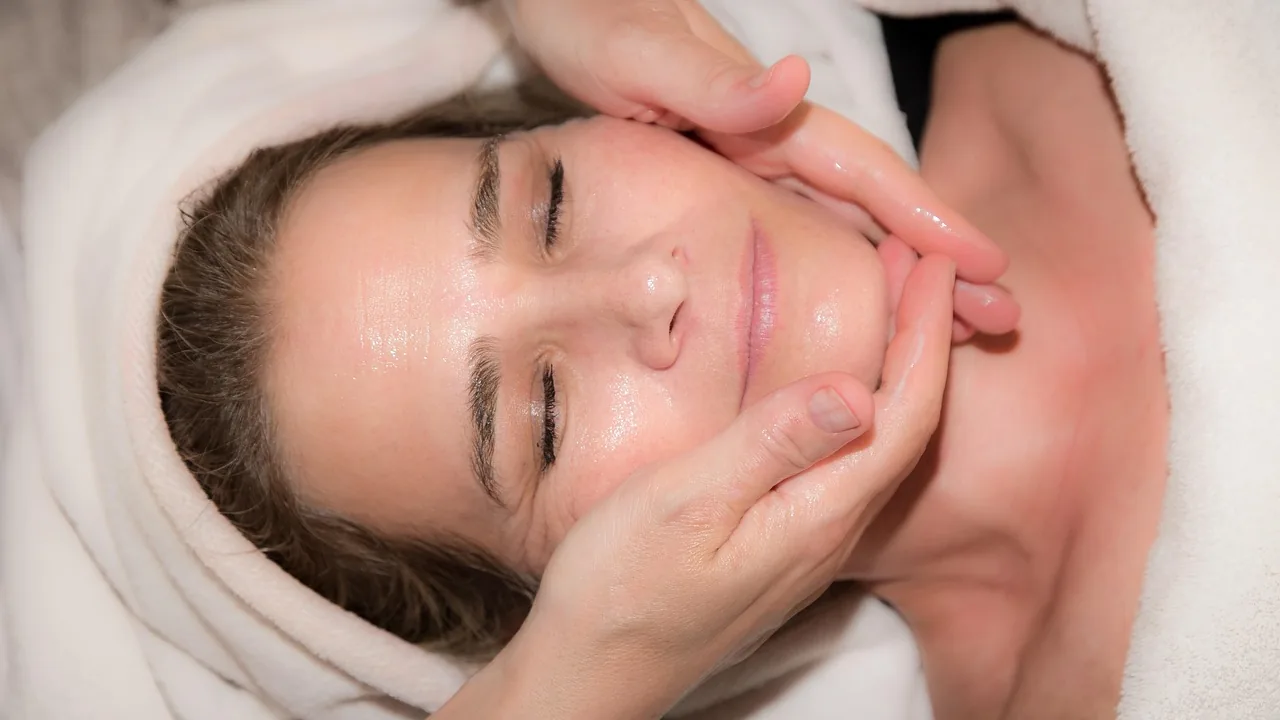
Pat a small amount into damp skin with your palms, wait until it's mostly absorbed, then repeat once or twice. Several thin coats spread more evenly than one big splash, and you can stop as soon as your skin feels supple instead of tight.
- Cleanse, then lightly towel off, leaving skin slightly damp.
- Pour a coin-sized amount of lotion into your palm.
- Press it into your face with both hands. Patting, rather than rubbing, avoids friction.
- Wait 20 to 30 seconds and repeat on areas that still feel dry, usually the cheeks.
- Follow with a milk or cream within a minute or two so the water has something to hold it in.
The last step matters. The American Academy of Dermatology (AAD) recommends applying moisturizer while skin is still damp and lists glycerin and hyaluronic acid among the moisturizing ingredients to look for. Lotion on its own evaporates; lotion under a sealing layer stays put.
Some people make a "lotion mask" by soaking cotton pads in lotion and laying them on the cheeks for a few minutes. Keep it short. In a randomized trial of facial sheet masks, wearing a mask for under 25 minutes improved hydration, while longer wear increased dryness and redness.
What does a milk (emulsion) do in a Japanese routine?
A milk is a light, fluid emulsion of water and oil that seals in the lotion without the weight of a cream. It's the step most Western routines lack, sitting between a hydrating toner and a full moisturizer.
The reason it works comes down to how moisturizers are built. A review of moisturizer science describes humectants that draw water into the skin and occlusives and emollients that slow its loss and smooth the surface. Lotion supplies the humectant; the milk adds the emollient and some occlusion. Oily skin may find a milk is enough on its own, while dry skin often needs a cream on top at night. The AAD suggests that creams suit dry skin, while oily skin may do better with a light gel.
Do Japanese routines always double cleanse?
Double cleansing is common in J-beauty, though it's only necessary if you wear makeup or a water-resistant sunscreen. Cleveland Clinic dermatologist Jane Wu says most people do fine washing once thoroughly with a gentle cleanser, and that double cleansing helps mainly with waterproof makeup and sunscreen.
Japanese sunscreen packaging often tells you which case you're in. Kao's page for Biore UV Aqua Rich Watery Essence, for example, states that it can be removed with an ordinary face wash or body wash, even though it carries a "super waterproof" claim. With a long-wear or water-resistant formula that doesn't say that, an oil cleanser first is worth it: in a 20-person study, cleansing oil removed waterproof sunscreen best, and fewer people reported dryness afterward than with a foaming cleanser. Our guide on how to double cleanse has the technique.
What makes Japanese sunscreen different?
Japanese sunscreens are known for thin, watery textures and for printing a PA grade, which rates UVA protection separately from SPF. SPF measures protection against UVB, the rays mainly behind sunburn; PA grades protection against UVA.
- PA grades: PA+ to PA++++, with more plus signs meaning more UVA protection. They're an industry standard set by the Japan Cosmetic Industry Association, and the top grade, PA++++, was introduced in 2013.
- Why UVA labeling matters: a 2026 study measured 38 sunscreens labeled SPF 50 or higher and found UVA protection factors ranging from 3.6 to 46.6, with no clear relationship between SPF and UVA protection. A high SPF alone doesn't tell you much about UVA.
- Different filters: US sunscreens are regulated as over-the-counter drugs, which limits filters to the FDA's list. Japanese formulas can use filters that US products haven't; the Japanese Biore Watery Essence, for example, contains bis-ethylhexyloxyphenol methoxyphenyl triazine (bemotrizinol), which the FDA added as a US sunscreen active ingredient in a final order dated June 10, 2026.
- Same name, different formula: the Japanese Biore Watery Essence is labeled SPF 50+ PA++++, with ethanol as the third ingredient and fragrance, while the US UV Aqua Rich is a separate drug-labeled product listed at $15.99 for 1.7 fl oz on Biore's US site (as of October 2026). Our Biore Aqua Rich review compares them in detail.
Whatever the label, the protection only holds if you use enough. Kao warns that applying too little won't give the stated protection, and the AAD recommends at least 1 teaspoon for your face, SPF 30 or higher, reapplied every two hours outdoors. Alcohol-heavy, fragranced formulas can sting sensitive or freshly irritated skin, so patch test first if that's you.
What are the steps of a Japanese skincare routine?
Here's a standard Japanese skincare routine, morning and night. It works for most skin types with small adjustments.
Morning
- Gentle face wash, or a lukewarm rinse if your skin is dry.
- Hydrating lotion, patted in one to three times.
- Serum (optional), for a specific concern such as uneven tone.
- Milk or light moisturizer.
- Sunscreen rated SPF 30 or higher with PA+++ or PA++++, or labeled broad spectrum in the US.
Evening
- Oil cleanser, on days you wore makeup or a sunscreen that isn't soap-removable.
- Gentle face wash.
- Hydrating lotion, layered.
- Serum or treatment (optional), such as retinol on alternate nights.
- Milk, then cream if your skin is dry.
Introduce one new product at a time. The AAD suggests testing each on a quarter-sized spot on your inner arm twice a day for 7 to 10 days before using it on your face.
Who is a Japanese routine best for?
A Japanese routine suits people who want fewer products, those with dry or dehydrated skin, and anyone who finds long ingredient-heavy routines irritating. The adjustments by skin type are small:
- Dry skin: layer the lotion three times and finish with cream at night. See our dry skin routine.
- Oily or combination skin: one or two lotion layers and a light milk, or a gel moisturizer instead. Skip heavy creams on the T-zone.
- Sensitive skin: pick fragrance-free, alcohol-free lotions and a fragrance-free sunscreen; the AAD lists fragrance and alcohol among the ingredients to avoid for dry skin.
- Acne-prone skin: always follow an oil cleanser with a water-based wash, and choose non-comedogenic products. See a dermatologist for painful or scarring acne.
How can a selfie scan show whether lotion layering is working?
Hydration changes are easy to feel and hard to see, which makes it tricky to judge whether a second or third layer of lotion is worth the time. Pori takes a selfie and gives an overall skin score from 0 to 100 with a breakdown that includes Hydration & Moisture and Pores & Texture. Scan on the same morning each week in the same light and you have a record to compare against, instead of a guess. Pori's ingredient scanner (Pro) can also read a barcode or a photographed label and flag each ingredient as beneficial, use with caution or avoid for your skin type. Its barcode data comes from Pori's own catalogue plus Open Beauty Facts, so imported Japanese products may not be listed and a photo of the label is the more reliable route.
An app reads appearance and isn't a diagnosis. For rashes, persistent redness or anything that stings, burns or spreads, see a dermatologist.
Frequently asked questions
What is the order of a Japanese skincare routine?
Oil cleanser (at night if you wore makeup or water-resistant SPF), gentle face wash, hydrating lotion, an optional serum, then a milk or cream. In the morning, finish with sunscreen.
Is Japanese lotion the same as toner?
It sits in the same place in the routine, right after cleansing, but it's made to hydrate rather than to remove oil. Many Japanese lotions are humectants in water, often alcohol-free.
What is the difference between J-beauty and K-beauty?
J-beauty usually uses fewer products, layering one lotion and sealing it with a milk or cream. K-beauty stacks more separate steps such as essences, ampoules and sheet masks.
What does PA++++ mean on Japanese sunscreen?
PA is a UVA protection grade set by the Japan Cosmetic Industry Association, and more plus signs mean more UVA protection. PA++++ is the highest grade and was introduced in 2013.
Do I need to double cleanse with Japanese sunscreen?
Not always. Some Japanese sunscreens state they come off with an ordinary face wash, while water-resistant or long-wear formulas without that claim are best removed with an oil cleanser first.
How many times should I layer Japanese lotion?
One to three thin layers, patted into damp skin, is typical. Stop when your skin feels supple, then apply a milk or cream to seal it.
Sources
- Rohto Pharmaceutical: Hada Labo Gokujyun Hyaluronic Lotion product page (Japanese)
- Kao (My Kao Mall): Biore UV Aqua Rich Watery Essence product page (Japanese)
- Mizuno M. Current conditions of sun protection test methods for sunscreen products. J Soc Cosmet Chem Jpn, 2013 (J-STAGE)
- Young A et al. In vivo measurement of UVA protection factor (ISO 24442:2011) across 38 different SPF 50 and SPF 50+ sunscreens. Photodermatol Photoimmunol Photomed, 2026 (PubMed)
- FDA: Questions and answers: FDA's regulatory actions on over-the-counter sunscreen
- Cleveland Clinic: Double cleansing explained
- Sethi A et al. Moisturizers: the slippery road. Indian J Dermatol, 2016 (PMC)
- American Academy of Dermatology: How to apply sunscreen
Pori is a wellness and skincare education app, not a medical device. This article is for general information and isn't medical advice. For anything that worries you, see a dermatologist.