Pori

- Niacinamide has the best evidence, from controlled trials; centella and snail mucin have small human studies behind them.
- Heartleaf, ginseng, propolis and galactomyces rest on a few small, often industry-linked trials.
- Rice, mugwort and birch sap are supported mostly by lab work; topical PDRN has one promising 28-day trial, and many products contain only traces.
- Propolis is a known contact allergen and snail can cross-react with dust-mite allergy, so patch test before using them on your face.
Of the ingredients Korean skincare is known for, niacinamide has the strongest evidence, from controlled trials. Centella and snail mucin come next, with small human studies. Heartleaf, ginseng, propolis, galactomyces and PDRN rest on a handful of small, often industry-linked trials, and rice, mugwort and birch sap rest mostly on lab work. A 2017 review of popular South Korean anti-aging ingredients concluded that high-level evidence was lacking and the published results were modest, and that still holds for most of the newer names.
To see which of these a product contains and how its list fits your skin type, scan its barcode or label with the ingredient scanner in Pori. Pori reads ingredient lists; it doesn't diagnose skin conditions.
Below is a quick evidence table, then what each of the 11 ingredients does, the label name to look for, and who should be careful. We graded evidence from PubMed studies: "good" means several controlled human trials, "some" means a few small human trials, "thin" means one small or industry-run trial, and "lab only" means cell, animal or skin-model work. For how these ingredients fit into a routine, see our Korean skincare routine steps and Korean skincare for beginners; for the bigger picture, what K-beauty is.
Which Korean skincare ingredients have the best evidence?
| Ingredient | Label name | Used for | Evidence |
|---|---|---|---|
| Niacinamide | Niacinamide | Oil, dark spots, fine lines | Good |
| Centella (cica) | Centella Asiatica Extract, Madecassoside, Asiaticoside | Redness, dryness, barrier | Some |
| Snail mucin | Snail Secretion Filtrate | Hydration | Some |
| Heartleaf | Houttuynia Cordata Extract or Water | Soothing, oily skin | Thin |
| Ginseng | Panax Ginseng Root Extract | Fine lines | Thin |
| Propolis | Propolis Extract | Glow, oily skin | Thin |
| Galactomyces | Galactomyces Ferment Filtrate | Texture, pores | Thin |
| Rice | Oryza Sativa (Rice) Bran Extract or Water, rice ferment | Hydration, glow | Lab only |
| Mugwort | Artemisia Princeps Extract | Soothing, dryness | Lab only |
| Birch sap | Betula Platyphylla Japonica Juice, Betula Alba Juice | Hydration | Lab only |
| PDRN | Sodium DNA, Polydeoxyribonucleotide | Repair, fine lines | Thin |
"Thin" or "lab only" doesn't mean an ingredient does nothing. It means you're paying for a texture, a story or a hunch, and the product's humectants and moisturizers are doing most of the visible work.
What does each Korean skincare ingredient do?
Niacinamide
Niacinamide is vitamin B3 and the best-studied ingredient on this list. In a 12-week split-face trial, 50 women who applied 5% niacinamide to one side of the face saw fewer fine lines, spots and red blotches and better elasticity than on the placebo side. The trial was run by Procter & Gamble researchers. Korean brands sell it alone or with tranexamic acid for marks. Our niacinamide guide covers strengths and the flushing some people get.
Centella asiatica (cica)
Centella is a medicinal herb whose active compounds are madecassoside and asiaticoside. In small studies, creams with 2.5% to 5% centella extract raised skin hydration and reduced water loss, A 2021 review traced its effects on acne, burns, eczema and wounds mainly to lab and animal studies and called for rigorously controlled long-term clinical trials. Allergy is rare but documented. Our guides to centella benefits and the best centella products go further.
Snail mucin
Snail secretion filtrate contains glycoproteins, hyaluronic acid and allantoin, and its clearest effect is gentle hydration. A 2024 review found that most studies were preclinical or small clinical studies and called for larger trials and better allergy data. It isn't vegan, and people with dust-mite allergy can cross-react to snail proteins. See snail mucin benefits and our COSRX Snail 96 review.
Heartleaf (Houttuynia cordata)
Heartleaf is a herb eaten as a vegetable in parts of Asia and used in folk medicine. A 2022 review describes anti-inflammatory, antibacterial and antioxidant effects, drawn from cell, chemical and animal studies rather than human trials. The best human data is an 8-week randomized trial in 60 people with mild to moderate acne, where a cream with four herbal extracts, heartleaf among them, significantly reduced inflamed and non-inflamed lesions; the other group used a plain base. It can't tell you what heartleaf did on its own. Our Anua Heartleaf 77% toner review looks at the best-known heartleaf product.
Ginseng
Ginseng root is a pillar of hanbang, Korean herbal medicine, and brands such as Beauty of Joseon build products around it. Human data is small: in a randomized, placebo-controlled study of 23 people, a cream with enzyme-modified ginseng extract reduced roughness measures around the eyes and improved a photo-damage score compared with placebo. Most other ginseng work is in cells and mice. Beauty of Joseon's eye serum pairs ginseng with retinal, a retinoid, which does more of the anti-aging work.
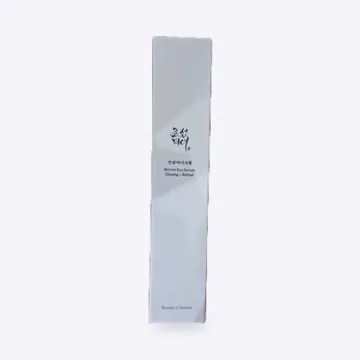
Eye Serum
Evening eye cream with niacinamide, retinal and glycerin. Fragrance-free.
Suits: Normal, Dry, Oily, Combination skin
From Pori's catalogue. Amazon links carry our Associates tag: Pori earns from qualifying purchases, at no cost to you. No brand pays to be listed. Photos: Open Beauty Facts contributors, CC BY-SA 3.0.
Propolis
Propolis is the resin bees use to seal their hives. In a 28-day randomized trial, face creams with a standardized propolis extract reduced wrinkle depth by 25% at 1.5% and 34% at 3%, but the authors work for the company that patented the extract. The bigger issue is allergy: propolis is a known contact allergen, and how often people react depends on its source: in a 2025 study, 6.2% of 257 Italian dermatitis patients reacted to propolis, mostly Brazilian propolis, while reactions to Chinese propolis stayed under 1% in Italy and Sweden. Skip it if you react to bee products. Our Beauty of Joseon Glow Serum review covers a popular propolis serum.
Galactomyces ferment filtrate
Galactomyces is a yeast ferment, best known as Pitera in SK-II and copied in many Korean "first essences." Two studies of 47 and 57 young Japanese women found that four weeks of a galactomyces formula reduced pore area, roughness and redness compared with their own baseline. There was no placebo group, and the researchers worked for or with Procter & Gamble, SK-II's owner. Our best essences list compares ferment essences.
Rice
Rice bran water and rice ferments are old hanbang ingredients that show up in cleansers, toners and sunscreens. In a lab model of human skin, ceramides and glucosylceramides purified from rice reduced water loss; the work came from a company that makes rice ingredients. An expert safety panel found rice-derived cosmetic ingredients at most mildly irritating in clinical tests, and rice in general non-allergenic. Think of rice as a gentle base, not a treatment. Our best Korean rice skincare list compares the products that use them.
Mugwort (Artemisia)
Mugwort, ssuk in Korean, is sold as a calming ingredient for red or reactive skin. In cultured skin cells, an Artemisia princeps extract raised levels of filaggrin and loricrin, two barrier proteins; most of the authors worked for a skincare company, and we found no controlled trials on the face. One caution: some cleansing oils contain mugwort essential oil, which is a different and more fragrant ingredient than the extract.
Birch sap
Birch sap (birch juice) is a watery tree sap used as a hydrating base; Round Lab's Birch Juice line is built around it. The research is early: white birch sap reduced melanin production in mouse pigment cells and zebrafish larvae. That's a reason for more study, not proof it fades spots on people. It's a pleasant, low-risk ingredient and little more.
PDRN (salmon DNA)
PDRN, or polydeoxyribonucleotide, is DNA fragments, often from salmon or trout. Clinics inject it as a "skin booster," and creams borrow the name. A 2025 review notes PDRN is sold as gels, creams, serums, masks and injectables, and that researchers use the terms PDRN and PN loosely, which makes studies hard to compare. The first good topical data is recent: in a 28-day split-face trial, a 0.1% PDRN eye cream improved wrinkles and eye-bag measures about twice as much as 0.1% retinol. That's one short study of one specific preparation. Amounts in many K-beauty products are far smaller: Purito lists sodium DNA at 5 ppm in its Oat PDRN toner, a soothing oat formula you'd buy for the oat.
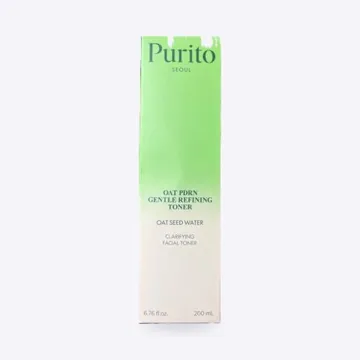
Purity Oat PDRN Gentle refining toner
Toner with panthenol, dipotassium glycyrrhizate and Beta-Glucan. Fragrance-free.
Suits: Normal, Dry, Oily, Combination, Sensitive skin
From Pori's catalogue. Amazon links carry our Associates tag: Pori earns from qualifying purchases, at no cost to you. No brand pays to be listed. Photos: Open Beauty Facts contributors, CC BY-SA 3.0.
Which Korean skincare ingredients can cause reactions?
Most of these are low-risk, and the ones worth a careful look are easy to spot on a label.
- Propolis: a recognized contact allergen; patch test or skip it.
- Snail secretion filtrate: possible cross-reaction in people allergic to dust mites; patch test first.
- Centella: rare allergic reactions are documented.
- Fragrance and essential oils: the most common irritants in any skincare, Korean or not. Mugwort, citrus and lavender oils often appear in cleansing oils.
- Retinal in ginseng serums: a retinoid, so start slowly and ask a doctor before using it during pregnancy.
Use the AAD's method and our patch testing guide: twice a day on a small patch of arm skin for 7 to 10 days before the face.
How do you read these ingredients on a Korean product label?
On a US label, ingredients appear by their standard INCI names, and FDA rules require them in descending order of predominance, except that those at 1% or less may be listed in any order. So a headline number like "77% heartleaf" or "96% snail" usually describes the share of one ingredient, and position on the list tells you roughly how much of everything else there is. If a famous ingredient sits near the end, after the preservatives, there's very little of it. Our guide to reading ingredient labels walks through a full list.
Which of these should you actually look for?
If you want an ingredient that does something you can measure, choose niacinamide for oil and marks, centella for redness and a damaged barrier, and snail mucin or a simple humectant toner for dehydration. Treat heartleaf, ginseng, propolis, galactomyces, rice, mugwort, birch sap and PDRN as extras worth watching, and pick products for their texture and full list, not the headline extract. Daily sunscreen and a moisturizer you'll use matter more than any of them. For more K-beauty guides, browse the K-beauty hub and our roundup of snail mucin products.
Frequently asked questions
What is the most effective Korean skincare ingredient?
Niacinamide has the strongest evidence, including a 12-week split-face trial showing fewer fine lines, spots and red blotches. Centella and snail mucin come next, with small human studies.
What is PDRN in skincare?
PDRN (polydeoxyribonucleotide) is a mix of DNA fragments, usually from salmon or trout. Clinics inject it as a skin booster. In creams and toners it is often listed as sodium DNA, sometimes in tiny amounts. One 28-day trial of a 0.1% PDRN eye cream was promising, but evidence for topical use is still thin.
Is heartleaf good for acne?
Possibly, but the evidence is thin. The best trial tested a cream with four herbal extracts, heartleaf among them, which reduced acne lesions over 8 weeks, so heartleaf's own effect is unknown. It works best as a gentle, soothing add-on.
Is propolis safe for sensitive skin?
Propolis is a recognized contact allergen. In a 2025 study, 6.2% of Italian dermatitis patients reacted to it, mostly to Brazilian propolis. Avoid it if you react to bee products and patch test it for 7 to 10 days if you have sensitive skin.
Does ginseng in skincare reduce wrinkles?
One small placebo-controlled study of 23 people found a ginseng cream reduced roughness around the eyes. Most other ginseng research is in cells or mice, so expect modest results at best.
What is galactomyces ferment filtrate?
It is a yeast ferment, known as Pitera in SK-II and used in many Korean first essences. Studies by its maker found less pore area, roughness and redness after four weeks, but without a placebo group.
Sources
- Quay ER et al. Evidence for anti-aging South Korean cosmeceuticals. J Drugs Dermatol, 2017 (PubMed)
- Bissett DL et al. Niacinamide: a B vitamin that improves aging facial skin appearance. Dermatol Surg, 2005 (PubMed)
- Park KS. Pharmacological effects of Centella asiatica on skin diseases: evidence and possible mechanisms. Evid Based Complement Alternat Med, 2021 (PMC)
- Singh N, Brown AN, Gold MH. Snail extract for skin: a review of uses, projections, and limitations. J Cosmet Dermatol, 2024 (PubMed)
- Yang JH et al. Clinical efficacy of herbal extracts in treatment of mild to moderate acne vulgaris: an 8-week, double-blinded, randomized, controlled trial. J Dermatolog Treat, 2021 (PubMed)
- Hwang E et al. Efficacy and safety of enzyme-modified Panax ginseng for anti-wrinkle therapy in healthy skin: a randomized, double-blind, placebo-controlled study. Rejuvenation Res, 2015 (PubMed)
- Antelmi A et al. Prevalence of contact allergy to propolis: testing with different propolis patch test materials. Contact Dermatitis, 2025 (PubMed)
- Miyamoto K et al. Daily fluctuation of facial pore area, roughness and redness among young Japanese women; beneficial effects of Galactomyces ferment filtrate containing antioxidative skin care formula. J Clin Med, 2021 (PubMed)
- Marques C et al. From polydeoxyribonucleotides (PDRNs) to polynucleotides (PNs): bridging the gap between scientific definitions, molecular insights, and clinical applications. Biomolecules, 2025 (PubMed)
- Ye R et al. Topical medium-length PDRN enhances dermal extracellular matrix repair in photodamaged skin. PLoS One, 2026 (PubMed)
Pori is a wellness and skincare education app, not a medical device. This article is for general information and isn't medical advice. For anything that worries you, see a dermatologist.