Pori
- Buy from the brand or a seller on its authorized list; COSRX publishes one by country and warns that its fakes can irritate or damage skin.
- In a GAO test purchase from third-party sellers, all 13 cosmetics bought were counterfeit.
- Korean law requires a batch number and a use-by date on both the box and the container; missing or mismatched codes and wording errors are red flags.
- Amazon Transparency codes and brand verification pages help when present; report reactions to the FDA and counterfeits to CBP.
The surest way to avoid fake Korean skincare is to buy from the brand or a seller on the brand's authorized list, then check the box: a fake often gets small things wrong, such as wording, the batch number or the expiry date. Packaging checks can only raise suspicion, because good fakes copy logos and Korean text closely. If a price is far below every major retailer, or the seller isn't the brand, walk away.
Once you have the product, you can scan its barcode or label with the ingredient scanner in Pori to check its ingredients against your skin type, and compare the list with the brand's own page. Pori reads ingredient lists; it can't certify that a product is genuine and doesn't diagnose skin conditions.
Below we cover how common counterfeits are, how to check a seller, what Korean and US labels must show, the verification tools brands and Amazon offer, and what to do if you think you bought a fake. Every claim here comes from a brand, a regulator or a government report. For a store-by-store guide, see where to buy Korean skincare in the US.
How common is fake Korean skincare?
Counterfeits are common enough that the biggest brands warn about them on their own sites. COSRX's store page carries a notice that counterfeit products falsely claiming to be made by COSRX are being distributed worldwide, that they don't meet its quality control standards and "may cause skin irritation or serious damage," and that it can't guarantee products bought outside official and authorized channels.
The wider numbers point the same way. When the US Government Accountability Office bought 47 items from third-party sellers on popular websites, rights holders found 20 were counterfeit, including all 13 cosmetics. US Customs and Border Protection says counterfeits are made with substandard materials and can be hazardous to your health, and that nearly 90% of its intellectual property seizures in fiscal 2025 originated from China and Hong Kong.
Where do fake Korean skincare products get sold?
Mostly through third-party marketplace sellers and social media shops, where anyone can list a product under a famous name.
- Marketplaces: in a 2023 warning to UK shoppers, COSRX said counterfeits were reaching buyers through TikTok Shop and Amazon resellers, and that positive reviews and a Prime badge can add to the confusion.
- Big-box websites too: retailer sites now host marketplace sellers. When we checked Target.com in November 2026, an Aestura Atobarrier 365 Cream listing was sold and shipped by a third-party seller, not by Target. That doesn't make it fake; it means the seller, not the store, is who you're trusting.
- Social media links and group buys: a seller with no website, a brand-new account or payment only by direct transfer gives you nothing to fall back on.
How do you check a seller is authorized?
Look up the brand's own list of authorized sellers for your country, and buy only from those or from the brand directly.
- COSRX publishes a list by country. For the US it names its official site plus Amazon, TikTok, Ulta, JCPenney, Revolve, Dermstore, Costco, TJ Maxx, Marshalls, Soko Glam, Cupidrop, Macy's, Walmart, Nordstrom and Nordstrom Rack, and international sellers such as YesStyle, Stylevana, iHerb and Olive Young Global. On a marketplace, that means COSRX's own storefront, not any seller using the name.
- Beauty of Joseon links its official Amazon US storefront from its FAQ and keeps an authorized retailers list. It also says that apart from its Daily Relief Sunscreen SPF 40, its sunscreens aren't sold on its official Amazon US store, so a Relief Sun SPF 50+ listing there comes from someone else. Our Relief Sun review explains why.
- Lists change and differ by country. In 2023 COSRX told UK shoppers TikTok Shop wasn't an authorized seller there; its current US list includes TikTok. Check the brand's page on the day you buy.
On Amazon, check "Ships from" and "Sold by" on the listing, and open the brand link under the product title to reach the official store. Big stores that stock the brand themselves, such as Ulta, Sephora, Target (when Target is the seller) and Olive Young's US site, which launched in May 2026, are the low-risk choice. The simplest route is the brand's own site: COSRX, for example, sells its Hydrium cleanser directly on cosrx.com.
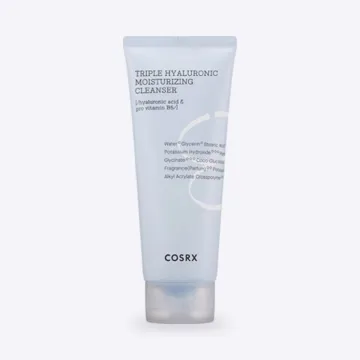
Hydrium Triple Hyaluronic Moisturizing Cleanser
Face cleanser with glycerin, panthenol and hyaluronic acid.
Suits: Normal, Dry, Oily, Combination skin
From Pori's catalogue. Amazon links carry our Associates tag: Pori earns from qualifying purchases, at no cost to you. No brand pays to be listed. Photos: Open Beauty Facts contributors, CC BY-SA 3.0.
What should the box and label show?
A genuine product carries the information the law requires. A Korean-market product follows Korea's Cosmetics Act; a product made or relabeled for US sale also follows FDA rules.
| Check | Korean-market product | US-labeled product |
|---|---|---|
| Batch number | Required on the box and on the bottle or tube | Compare with the brand's own format |
| Dates | Use-by date, or a period after opening, required | Compare with the brand's own format |
| Ingredients | Full list on the outer box, in Korean | Full list in English, in descending order above 1% |
| Company | The company's name and address | Manufacturer or distributor name, with city, state and ZIP |
| Sunscreen | "Functional cosmetic" wording or logo | A Drug Facts panel listing active ingredients |
Korea's Cosmetics Act requires the outer package to list the product name, the company's name and address, all ingredients, the volume, the batch number, the use-by date or period after opening, the price and, for functional products such as sunscreens, the "functional cosmetic" wording or logo. The inner container must repeat the product name, company, batch number and dates. In the US, the FDA requires the name of the manufacturer, packer or distributor, with "Distributed by" or similar wording when it isn't the maker, and a city, state and ZIP code.
Red flags, then:
- Missing or mismatched codes: no batch number or date, or a batch number on the box that doesn't match the one on the bottle.
- Wording errors: COSRX says the main giveaway on its fakes is small differences, often in the wording on the packaging. Compare spelling, fonts and layout with photos on the brand's own site.
- A different ingredient list: check it against the brand's current product page. Korean brands reformulate often, so a mismatch can also mean old stock; either way, ask the seller.
- A "US" sunscreen with no Drug Facts panel: in the US, sunscreen is an over-the-counter drug. Many Korean-market sunscreens use filters the FDA doesn't allow and are sold here as imports with no US label. That's an import, not proof of a fake, but it's not a US product either. Our guide to Korean vs American sunscreen explains.
- Texture, color or smell that differs from your last bottle, or a familiar product that suddenly stings.
Are there tools to verify Korean skincare?
A few, and none works for every brand.
- Brand verification pages: COSRX's site links to a "Verify Authenticity" page, and some brands, Medicube among them, answer authenticity questions through their help centers. If a sticker or QR code sends you to a site that isn't the brand's own domain, treat that as a warning.
- Amazon Transparency: some brands print a small square Transparency code on the package. You can scan it with the Amazon Shopping app or the Transparency app, which tells you whether the code is valid. Only enrolled products carry one.
- Customer service: send the brand photos of the box, the batch number and the seller's name, and ask whether they match.
A sticker or code is only as trustworthy as the page it opens, so the seller remains the best signal you have.
What should you do if you think you bought a fake?
- Stop using it. Wash it off if it stings or itches, and keep the packaging.
- Ask the seller or marketplace for a refund, with photos of the batch number, the label and the listing.
- Tell the brand, using the same photos.
- Report a skin reaction to the FDA through the MedWatch online form, or by calling 1-888-723-3366 and choosing option 4.
- Report the counterfeit to CBP through its e-Allegations page, linked from its counterfeit goods guide.
A reaction that spreads, blisters or swells needs a dermatologist. Before trying the real version again, patch test it for 7 to 10 days.
Which Korean products should you be most careful with?
Be most careful with bestsellers, since popular products are the ones worth copying, and with sunscreens, because a weak copy fails silently: you can't feel missing UV protection. If you're buying a bestseller such as COSRX's snail essence or Anua's heartleaf toner, see our COSRX Snail 96 review and Anua toner review for what the real formulas list. For US-labeled sunscreens worth buying from authorized stores, see best Korean sunscreen.
If you're new to K-beauty, our guide to Korean skincare for beginners keeps the shopping list short, which also means fewer chances to be fooled. The K-beauty hub has our brand guides, from who owns which brand to COSRX's best products.
Frequently asked questions
Is Korean skincare on Amazon fake?
Most is genuine when it is sold by the brand's official storefront or by Amazon. The risk comes from third-party sellers. Check 'Ships from' and 'Sold by', and compare the seller with the brand's authorized seller list.
How can I tell if my COSRX product is fake?
Check that you bought it from COSRX or a seller on its authorized list, then compare the wording, batch number and ingredient list with the brand's own site. COSRX says its fakes usually differ in small details of the packaging text. COSRX's site also links to a verification page.
What should be printed on a genuine Korean skincare product?
Korea's Cosmetics Act requires the product name, company name and address, all ingredients, volume, batch number, a use-by date or period after opening, and the price on the outer box. The container must show the name, company, batch number and dates.
Can fake skincare hurt your skin?
Yes. COSRX warns that counterfeits of its products may cause skin irritation or serious damage, and US Customs says counterfeit goods are made with substandard materials that can be hazardous. Stop using a suspect product and see a dermatologist for a severe reaction.
Is a Korean sunscreen without a Drug Facts label fake?
Not necessarily. Many Korean-market sunscreens use filters the FDA does not allow and are imported without a US label. They are not US-approved products, though, so buy US-labeled versions from authorized stores.
Where should I report fake skincare?
Report a skin reaction to the FDA through MedWatch online or at 1-888-723-3366, option 4. Report the counterfeit to US Customs through its e-Allegations page, and tell the brand and the marketplace.
Sources
- COSRX: Store locator and authorized sellers, with counterfeit warning
- Cosmetics Business: COSRX issues warning over influx of counterfeit products flooding TikTok (2023)
- US GAO: Intellectual Property, agencies can improve efforts to address risks posed by changing counterfeits market (GAO-18-216)
- US Customs and Border Protection: Fake Goods, Real Dangers
- Korea Legislation Research Institute: Cosmetics Act (English translation), Article 10
- FDA: Cosmetics labeling guide
- Amazon: Transparency program
- Beauty of Joseon: FAQ, general inquiries (Amazon US availability)
- FDA: How to report a cosmetic product related complaint
- The Zoe Report: Olive Young opens its first US store and US website (May 2026)
Pori is a wellness and skincare education app, not a medical device. This article is for general information and isn't medical advice. For anything that worries you, see a dermatologist.