Pori

- Pick texture by skin type: gel for oily, lotion for normal, cream or ointment for dry and mature skin.
- Look for humectants (glycerin, hyaluronic acid) plus barrier ingredients (ceramides, petrolatum, shea).
- Use broad-spectrum SPF 30 or higher in the morning, as a separate sunscreen or a moisturizer with SPF applied generously.
- Choose fragrance-free if your skin is sensitive; treat "non-comedogenic" and "hypoallergenic" as loose hints only.
To choose a moisturizer, match the texture to your skin type, then check the ingredient list. Oily skin does best with a light gel or oil-free lotion, normal skin with a lotion, and dry or aging skin with a cream or ointment. Look for humectants such as glycerin and hyaluronic acid, plus ceramides or other barrier lipids; pick fragrance-free if your skin is sensitive, and use a separate SPF 30 sunscreen or a moisturizer with SPF 30 in the morning.
Once you've found a candidate, you can scan its barcode or label with the ingredient scanner in Pori to check its ingredients against your skin type. It reads the formula; it doesn't diagnose skin conditions.
Below is a five-step way to choose, a table by skin type, the ingredients worth looking for, how to judge SPF, fragrance and "non-comedogenic" claims, and how to tell if you picked wrong. It's based on American Academy of Dermatology (AAD) and FDA guidance and published research; we compared published ingredient lists and brand claims and did not test these products on skin. For a tour of every moisturizer category, see our types of moisturizers guide.
What is the quickest way to choose a moisturizer?
Run through five checks, in this order:
- Your skin type: oily, combination, normal, dry or sensitive. Not sure? Start with how to find your skin type.
- A texture that matches it: gel, lotion, cream or ointment.
- The core ingredients: at least one humectant and something that slows water loss.
- Morning or night: SPF 30 or higher for daytime, richer textures at night if you want them.
- The extras: fragrance, acne-friendly labels and any actives that might clash with the rest of your routine.
Which moisturizer texture suits your skin type?
Texture does most of the work. The AAD's guide to picking a moisturizer explains that gels are usually water-based and lighter than lotions, creams are thicker with more oil and more hydrating, and ointments are the thickest and most effective for dry skin.
| Skin type | Texture | Look for | Go easy on |
|---|---|---|---|
| Oily | Gel or light gel-cream | Glycerin, hyaluronic acid, niacinamide, "oil-free" | Heavy butters and oils |
| Combination | Gel or lotion; cream only on dry patches | Humectants, light emollients | One rich cream all over |
| Normal | Lotion | Humectants plus ceramides | Little to avoid |
| Dry | Cream or ointment | Ceramides, shea butter, petrolatum, urea | Alcohol, fragrance, AHAs |
| Sensitive | Lotion or cream with a short list | Fragrance-free, ceramides, glycerin, panthenol | Fragrance, essential oils, many actives at once |
| Mature (50+) | Cream | Ceramides, humectants, a retinoid or peptides at night | Gels alone in dry weather |
The AAD adds a few specifics. A lotion is enough for most younger people with normal skin, while people in perimenopause and everyone 50 and older should switch to a cream. People with dry skin can skip lotions and start with a cream or ointment. With oily skin, you may skip moisturizer or use a gel, since too much can clog pores. With combination skin, one dermatologist in the guide suggests treating the face "as though it's two faces": moisturize the dry areas and skip the oily T-zone. Our gel vs. cream moisturizer comparison goes deeper on texture.
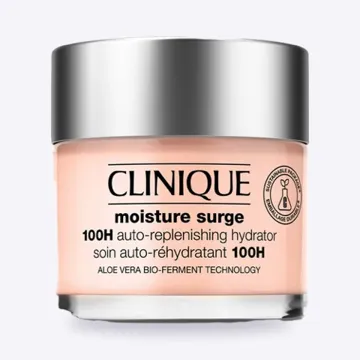
Moisture Surge 100 Hour Auto-Replenishing Hydrator
Moisturizer with magnesium ascorbyl phosphate, aloe vera and green tea extract. Fragrance-free.
Suits: Normal, Dry, Oily, Combination, Sensitive skin
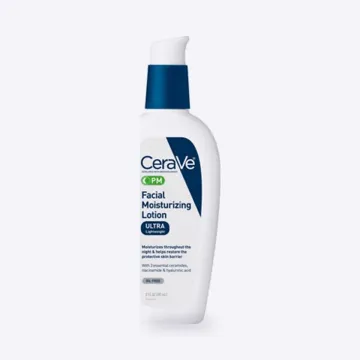
PM Facial Moisturizing Lotion
Light night lotion that hydrates without feeding shine.
Suits: Normal, Combination, Oily skin
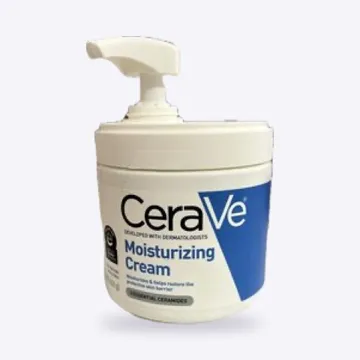
Moisturizing Cream
Thick ceramide cream for skin that dries out by midday.
Suits: Dry, Normal, Sensitive skin
From Pori's catalogue. Amazon links carry our Associates tag: Pori earns from qualifying purchases, at no cost to you. No brand pays to be listed. Photos: Open Beauty Facts contributors, CC BY-SA 3.0.
What ingredients should a good moisturizer have?
Every effective moisturizer combines some of three kinds of ingredients. A review in the Indian Journal of Dermatology describes them:
- Humectants such as glycerin, hyaluronic acid, urea and sodium PCA pull water into the outer skin. The review warns they can draw water up from deeper layers, where it can evaporate, which is why they are mostly combined with occlusives.
- Emollients such as squalane, fatty alcohols and plant oils smooth and soften.
- Occlusives such as petrolatum, lanolin, mineral oil and dimethicone form a film that slows water loss. The same review notes that petrolatum at 5% or more cuts water loss by over 98%, while lanolin, mineral oil and silicones cut it by only 20 to 30%.
On top of those, the AAD recommends ceramides, which help hydrate skin, and hyaluronic acid. Niacinamide and panthenol are common, well-tolerated extras. The review's ideal moisturizer reduces water loss, restores the lipid barrier, is fragrance free and non-comedogenic, absorbs quickly, feels pleasant and is affordable. That last point is useful: a basic drugstore cream can tick every box. See ceramides and the skin barrier and types of hyaluronic acid for more.
Which ingredients should you avoid in a moisturizer?
For dry skin, the AAD advises avoiding moisturizers with alcohol, alpha hydroxy acids (AHAs) and fragrance. AHAs are exfoliants that earn their place elsewhere in a routine, and they can sting skin that is already dry and cracked. If you use a retinoid or acid elsewhere in your routine, a plain moisturizer with no added actives is the safer partner.
Do you need a moisturizer with SPF?
You need sunscreen every morning, and a moisturizer with SPF is one way to get it. The AAD recommends broad-spectrum sunscreen with SPF 30 or higher every day for every skin tone. If you go the two-in-one route, check three things:
- "Broad Spectrum SPF 30" or higher on the front, with a Drug Facts panel listing the active ingredients.
- Enough of it. The AAD says to use at least 1 teaspoon on the face.
- Reapplication. The AAD notes that moisturizers and cosmetics with SPF still need reapplying about every two hours outdoors.
At night, use a moisturizer without SPF. CeraVe AM Facial Moisturizing Lotion SPF 30 and La Roche-Posay Toleriane Double Repair Face Moisturizer UV SPF 30 are two fragrance-free examples. Our best moisturizer with SPF roundup and how to choose a sunscreen guide cover the details.
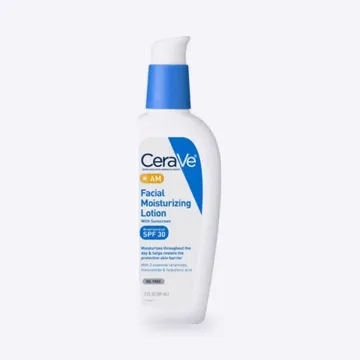
AM Facial Moisturizing Lotion SPF 30
SPF 30 sunscreen with niacinamide, homosalate and octinoxate. Fragrance-free.
Suits: Normal, Dry, Oily, Combination, Sensitive skin
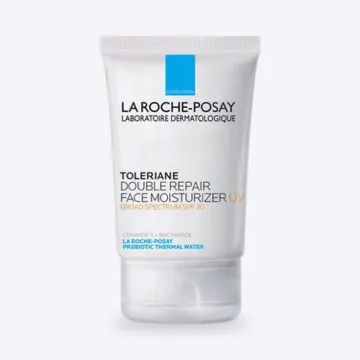
Toleriane Double Repair Face Moisturizer UV SPF 30
SPF 30 sunscreen with niacinamide, avobenzone and homosalate. Fragrance-free.
Suits: Normal, Dry, Oily, Combination, Sensitive skin
From Pori's catalogue. Amazon links carry our Associates tag: Pori earns from qualifying purchases, at no cost to you. No brand pays to be listed. Photos: Open Beauty Facts contributors, CC BY-SA 3.0.
Should you choose a fragrance-free moisturizer?
If your skin is dry, sensitive or reacts easily, yes. The AAD says fragranced moisturizers can irritate dry skin. Watch the wording on the label, too. The FDA notes that even some products labeled "unscented" may contain fragrance ingredients, added to mask the smell of other ingredients. Under US rules, fragrance can appear on the list as a single word, "fragrance" or "parfum," so the label alone won't tell you which scent chemicals are inside.
Two more claims carry less weight than they seem to. The FDA says there are no federal standards or definitions for "hypoallergenic", so the term means whatever a company wants it to mean. And "natural" isn't a safety guarantee: the AAD's guide points out that "all natural in no way means hypoallergenic." Our guide to fragrance and essential oils in skincare explains which scent ingredients cause the most reactions.
Does "non-comedogenic" on a moisturizer mean anything?
It's a useful hint and no guarantee. The AAD tells people with acne to look for moisturizers labeled "oil-free," "non-comedogenic" or "won't clog pores", and to apply them after washing while some water is still on the skin. It also notes that acne treatments such as benzoyl peroxide, salicylic acid and retinoids dry the skin, and that a daily moisturizer helps you tolerate them.
The limits are worth knowing. The FDA has told reporters that it has no definition or required test for "non-comedogenic", and lists of "pore-clogging ingredients" mostly come from old rabbit-ear tests of raw materials. When dermatologists tested finished products on human skin, they concluded that finished products using comedogenic ingredients are not necessarily comedogenic. So judge the whole formula and your own skin's reaction over a few weeks. Our best non-comedogenic moisturizers and moisturizers for acne-prone skin go further.
Do you need a separate day and night moisturizer?
No. One fragrance-free moisturizer used morning and night, plus a separate sunscreen, works for most people. A second product makes sense in two cases: you use a moisturizer with SPF in the morning and want one without sunscreen filters at night, or your skin is dry enough to want something richer while you sleep. A night cream with niacinamide and ceramides, or a thin layer of an occlusive over your usual moisturizer, covers that. See our night skincare routine and what a sleeping mask is.
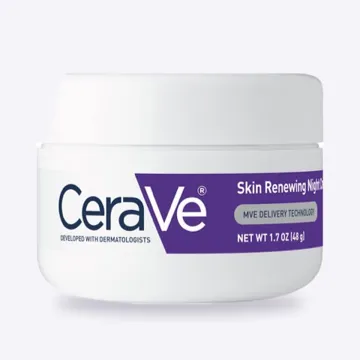
Skin Renewing Night Cream
Moisturizer with niacinamide, ceramides and shea butter. Fragrance-free.
Suits: Normal, Dry, Combination, Sensitive skin
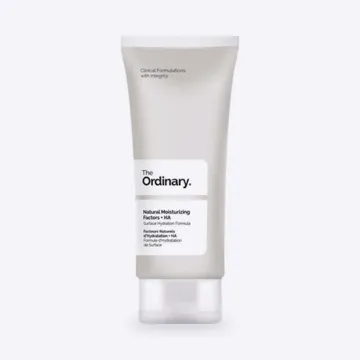
Natural Moisturizing Factors + HA
The cheapest moisturiser worth owning, if money is the constraint.
Suits: Normal, Dry, Combination, Sensitive skin
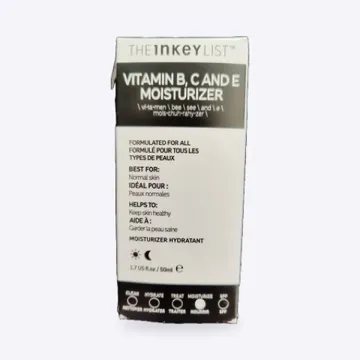
Vitamin B, C and E moisturizer
Moisturizer with niacinamide, sodium ascorbyl phosphate and panthenol. Fragrance-free.
Suits: Normal, Dry, Oily, Combination, Sensitive skin
From Pori's catalogue. Amazon links carry our Associates tag: Pori earns from qualifying purchases, at no cost to you. No brand pays to be listed. Photos: Open Beauty Facts contributors, CC BY-SA 3.0.
How do you apply moisturizer so it works?
- Apply to damp skin. The AAD advises moisturizing right after washing or showering, while skin is still damp, to trap water.
- Layer thin to thick. Serums first, then moisturizer, then sunscreen in the morning. See skincare routine order.
- Patch test new products. Try a new moisturizer on a small area for a few days first; our guide to patch testing skincare shows how.
- Use enough. A thin, even layer over the whole face and neck, with a little extra on dry patches.
How can you tell if you've picked the wrong moisturizer?
- Tight or flaky an hour later: too light. Move from gel to lotion, or lotion to cream.
- Greasy by midday or makeup slides off: too heavy for daytime. Try a gel, or keep the cream for night.
- Stinging, redness or itching: a possible irritant or allergen, often fragrance, an essential oil or an active. Stop and switch to a short, fragrance-free formula.
- New small bumps after a few weeks: the formula may be too occlusive for your skin. Switch to a lighter, oil-free option and see whether they settle.
The AAD recommends seeing a dermatologist if dryness is painful, cracked, bleeding or very irritating despite a good moisturizer. You can find one in our dermatologist directory, or browse every option in the moisturizer catalogue.
Frequently asked questions
How do I know which moisturizer is right for my skin?
Start with your skin type. Oily skin suits a gel, normal skin a lotion, and dry or mature skin a cream or ointment. Then look for humectants and ceramides and skip fragrance if your skin reacts easily.
What ingredients should I look for in a moisturizer?
A humectant such as glycerin or hyaluronic acid, plus something that slows water loss, such as ceramides, petrolatum, dimethicone or shea butter. Niacinamide and panthenol are useful, gentle extras.
Is a moisturizer with SPF enough sunscreen?
It can be if it says Broad Spectrum SPF 30 or higher and you apply about a teaspoon to your face. Reapply every two hours when you're outdoors.
Should oily skin use moisturizer?
Often yes, especially if you use drying acne treatments. A light, oil-free gel is usually enough, and some people with very oily skin can skip it.
What does non-comedogenic mean?
It means the brand believes the product won't clog pores. There's no FDA definition or required test, so treat it as a helpful hint and watch how your own skin responds.
Do I need a separate night cream?
Not usually. One fragrance-free moisturizer used twice a day works for most people. A richer night cream helps if your skin is dry or your day moisturizer contains sunscreen.
Sources
- American Academy of Dermatology: How to pick the right moisturizer for your skin
- American Academy of Dermatology: Moisturizer: Why you may need it if you have acne
- American Academy of Dermatology: Sunscreen FAQs
- Sethi A et al. Moisturizers: the slippery road. Indian J Dermatol, 2016 (PMC)
- U.S. Food and Drug Administration: Fragrances in Cosmetics
- U.S. Food and Drug Administration: Hypoallergenic Cosmetics
- Draelos ZD, DiNardo JC. A re-evaluation of the comedogenicity concept. J Am Acad Dermatol, 2006 (PubMed)
- SELF via Yahoo: How to tell if your skin-care products are actually noncomedogenic (FDA statement), 2019
- American Academy of Dermatology: Dermatologists' tips for relieving dry skin
Pori is a wellness and skincare education app, not a medical device. This article is for general information and isn't medical advice. For anything that worries you, see a dermatologist.