Pori

- Choose Broad Spectrum SPF 30 or higher; SPF 30 blocks about 97% of UVB.
- Pick water resistant (40 or 80 minutes) for swimming or sweat; no sunscreen is waterproof.
- Mineral suits sensitive skin, clear gels suit oily skin, creams suit dry skin, and tinted formulas help dark spots.
- Use about 1 ounce for the body and reapply at least every two hours outdoors.
To choose a sunscreen, pick one labeled broad spectrum with SPF 30 or higher, water resistant (40 or 80 minutes) if you'll sweat or swim, and in a filter type and texture you'll actually wear every day. Mineral (zinc oxide or titanium dioxide) suits sensitive skin, clear chemical gels suit oily skin, creams suit dry skin, and tinted formulas help darker skin tones and dark spots. Then use enough: about 1 ounce for the body, reapplied every two hours outdoors.
Once you've narrowed it down, you can scan a sunscreen's barcode or label with the ingredient scanner in Pori to check its filters and other ingredients against your skin type. It reads the formula; it doesn't diagnose skin conditions.
Below is a six-step way to choose, a quick table by skin type, what to ignore on the label and what changed in US sunscreens in 2026. It's based on FDA and American Academy of Dermatology (AAD) guidance and each product's US label; we did not test these products on skin. For a tour of every filter type and format, see our types of sunscreen guide.
What is the quickest way to choose a sunscreen?
Run through six checks, in this order:
- SPF 30 or higher.
- "Broad Spectrum" on the front.
- Water resistant, 40 or 80 minutes, if you'll swim or sweat.
- Mineral, chemical or hybrid, by how sensitive your skin is and how much white cast you'll accept.
- A format that suits your skin and the body area: cream, gel, fluid, stick or spray.
- A finish you'll wear daily, tinted or clear, matte or dewy.
Each step is explained below.
What SPF should you choose?
Choose SPF 30 or higher. The AAD recommends SPF 30 or higher and explains that SPF 30 blocks 97% of the sun's UVB rays, while higher numbers block slightly more and none blocks 100%. The FDA's own floor is lower: it advises broad spectrum sunscreens with SPF values of 15 or higher. SPF mostly measures protection from UVB, the rays behind sunburn.
A higher SPF helps most when you're likely to under-apply, which most people do, or when you'll be outside for hours. It doesn't let you skip reapplying. Our how much sunscreen to use compares SPF 30 and 50 in more detail.
What does broad spectrum mean, and why does it matter?
Broad spectrum means the sunscreen protects against both UVA and UVB. On a US label it is a tested claim, not marketing. Under the FDA's labeling rule, a product needs a mean critical wavelength of 370 nm or greater in a lab test to say "Broad Spectrum." Only a broad spectrum product with SPF 15 or higher may claim to reduce the risk of skin cancer and early skin aging. Anything else must carry a warning that it has been shown only to help prevent sunburn, not skin cancer or early skin aging.
So the two words to find first on the front are "Broad Spectrum." If they're missing, keep looking.
Do you need a water-resistant sunscreen?
You do if you'll swim, sweat or play sports. The FDA requires water-resistant products to state whether they stay effective for 40 minutes or 80 minutes while swimming or sweating, and notes that no sunscreen is waterproof. The words "sunblock," "waterproof" and "sweatproof" are considered false or misleading on a US label. For a desk day you can skip it. For the beach, choose 80 minutes and reapply when the time runs out or after toweling off.
Neutrogena Ultra Sheer Dry-Touch is a long-running chemical option with 80-minute water resistance; it contains fragrance, so skip it if fragrance bothers your skin.
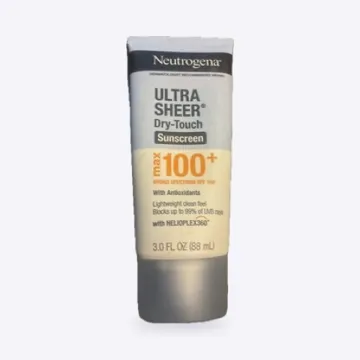
Ultra Sheer Dry-Touch Sunscreen SPF 55
Sunscreen with avobenzone, homosalate and octisalate.
Suits: Normal, Dry, Oily, Combination, Sensitive skin
From Pori's catalogue. Amazon links carry our Associates tag: Pori earns from qualifying purchases, at no cost to you. No brand pays to be listed. Photos: Open Beauty Facts contributors, CC BY-SA 3.0.
Mineral or chemical: which filter type should you pick?
Both prevent sunburn when you use enough, so pick the one you'll wear. Mineral sunscreens use zinc oxide or titanium dioxide, and the AAD says dermatologists recommend them for people with sensitive skin. Chemical sunscreens use filters such as avobenzone, homosalate and octisalate, which spread clear and suit people who dislike a white cast. Many modern products are hybrids of the two. Our chemical sunscreen filters explained covers the safety questions in depth.
Bubble Solar Mate Daily Mineral SPF 40 is a fragrance-free, zinc-only option. Supergoop Unseen SPF 50 is a clear, fragrance-free chemical gel with avobenzone, homosalate, octisalate and octocrylene.
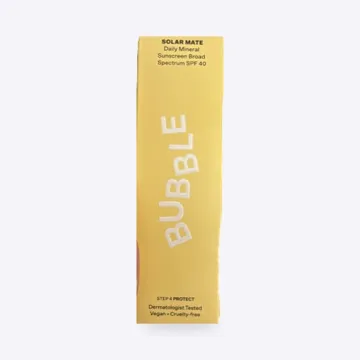
Solar Mate Daily Mineral Sunscreen Broad Spectrum SPF 40
Mineral spf 40 sunscreen with zinc oxide and glycerin. Fragrance-free.
Suits: Normal, Dry, Oily, Combination, Sensitive skin
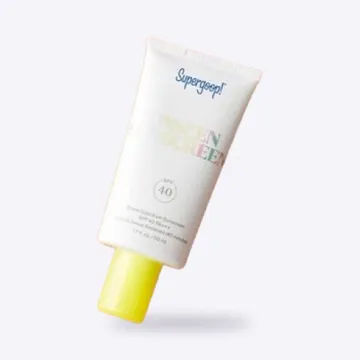
Unseen Sunscreen SPF 50
Dry, grippy finish — doubles as a primer, leaves no cast.
Suits: Oily, Combination, Normal skin
From Pori's catalogue. Amazon links carry our Associates tag: Pori earns from qualifying purchases, at no cost to you. No brand pays to be listed. Photos: Open Beauty Facts contributors, CC BY-SA 3.0.
Which sunscreen format is best?
The AAD matches formats to skin and body areas:
- Creams are best for dry skin and applying on the face.
- Gels are good for oily complexions and hairy areas such as the scalp or chest.
- Sticks are good around the eyes.
- Sprays are quick on a wriggling child, but it's hard to tell whether you've covered everything. Spray until skin glistens, rub it in, and never spray near the face or mouth or into the wind.
- Moisturizers and makeup with SPF are convenient, but the AAD reminds you they still need reapplying approximately every two hours outdoors.
The AAD doesn't recommend combination sunscreen and insect repellent products, since sunscreen needs to go on generously and often; buy the two separately.
Which sunscreen suits your skin type and tone?
| If your skin is | Look for | Why |
|---|---|---|
| Oily | A gel or light fluid | The AAD says gels suit oily complexions |
| Acne-prone | "Non-comedogenic" or "won't clog pores" | The AAD's advice for acne-prone skin |
| Dry | A cream or a moisturizer-sunscreen | The AAD says creams suit dry skin and the face |
| Sensitive or rosacea-prone | Mineral, fragrance-free | Dermatologists recommend mineral filters for sensitive skin |
| Medium to deep tone, or dark spots | Tinted, or a clear chemical formula | Tint avoids a white cast and adds visible-light protection |
For acne-prone skin, the AAD advises looking for a sunscreen that says "non-comedogenic" or "won't clog pores". For darker skin tones and anyone treating dark spots, tint matters. The AAD notes that visible light can increase darkening and that tinted sunscreens contain iron oxide, which research shows helps protect against visible light.
La Roche-Posay Toleriane Double Repair Face Moisturizer UV SPF 30 is a fragrance-free moisturizer and sunscreen in one, with niacinamide and ceramides, for normal to dry skin.
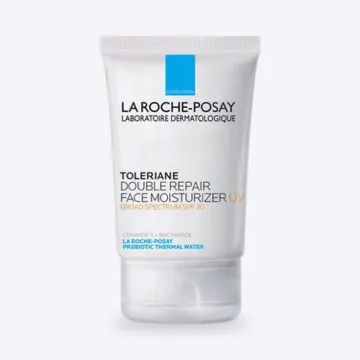
Toleriane Double Repair Face Moisturizer UV SPF 30
SPF 30 sunscreen with niacinamide, avobenzone and homosalate. Fragrance-free.
Suits: Normal, Dry, Oily, Combination, Sensitive skin
From Pori's catalogue. Amazon links carry our Associates tag: Pori earns from qualifying purchases, at no cost to you. No brand pays to be listed. Photos: Open Beauty Facts contributors, CC BY-SA 3.0.
For more picks by skin type, see the best sunscreens for oily skin, dry skin, acne-prone skin, sensitive skin and dark skin, or our longer sunscreen for your skin type guide.
How much sunscreen should you use, and how often?
More than most people think. The AAD says most adults need about 1 ounce of sunscreen, roughly the amount to fill a shot glass, to cover the body. The FDA advises applying it 15 minutes before going out and reapplying at least every two hours, and more often when swimming or sweating. A face takes far less; our how much sunscreen to use guide shows how to measure it.
Two more checks before you buy or reuse a bottle. The FDA requires sunscreens to keep their original strength for at least three years, the AAD notes, so follow the expiration date if there is one. And for babies, the FDA says sunscreen is not recommended for infants under six months old; keep them in the shade and ask a doctor.
What label claims can you ignore?
- "Sunblock," "waterproof" and "sweatproof." The FDA treats these as misleading on US sunscreens. If you see them, the product may not carry a US Drug Facts label.
- Very high SPF numbers. Higher SPFs block only slightly more UVB than SPF 30, and they still need reapplying every two hours.
- "Reef safe." It isn't one of the claims the FDA's labeling rule tests. If reefs matter to you, our chemical filters guide covers what the research shows.
What to read instead is the Drug Facts box: the active ingredients with their percentages, the broad spectrum claim, the water resistance time and the directions.
What changed in US sunscreens in 2026?
Two FDA orders changed the list of allowed filters. On June 10, 2026, the FDA added bemotrizinol, a broad UVA and UVB filter used in Europe and Asia as Tinosorb S, to the US sunscreen monograph at up to 6 percent, for adults and children 6 months and older. The order took effect on August 9, 2026, and gives the company that requested it, DSM, and its licensees 18 months of exclusive marketing from then, so expect it first in a limited number of products. Look for bemotrizinol in the active ingredients if you want it.
In September 2026, the FDA issued a final order removing PABA and trolamine salicylate from the monograph for safety reasons. The FDA says it is not aware of any sunscreen currently sold in the US that contains either, so you don't need to check your bottles for them. Our Korean vs. American sunscreen guide explains why many imports still use filters the US hasn't approved.
Frequently asked questions
How do I choose a good sunscreen?
Look for Broad Spectrum and SPF 30 or higher on the front, water resistance of 40 or 80 minutes if you'll sweat or swim, and a filter type and texture you'll wear every day. Then apply enough and reapply every two hours outdoors.
Is SPF 30 enough?
For most days, yes. Dermatologists recommend SPF 30 or higher, which blocks about 97% of UVB. Higher SPFs block slightly more but still need reapplying.
Is mineral or chemical sunscreen better?
Neither is better for everyone. Mineral sunscreen with zinc oxide or titanium dioxide is recommended for sensitive skin; chemical sunscreen spreads clear and usually leaves no white cast.
What does broad spectrum mean on sunscreen?
It means the product passed the FDA's test for protecting against both UVA and UVB. Only broad spectrum sunscreens with SPF 15 or higher can claim to lower the risk of skin cancer and early skin aging.
How long does water-resistant sunscreen last?
Either 40 or 80 minutes of swimming or sweating, as stated on the label. No sunscreen is waterproof, so reapply after that time or after toweling off.
Which sunscreen is best for dark skin?
A tinted mineral sunscreen or a clear chemical formula avoids a white cast. Tinted sunscreens with iron oxide also help protect against visible light, which can worsen dark spots.
Sources
- U.S. Food and Drug Administration: Sunscreen: How to Help Protect Your Skin from the Sun
- American Academy of Dermatology: How to select a sunscreen
- American Academy of Dermatology: Sunscreen FAQs
- American Academy of Dermatology: Acne skin care tips
- 21 CFR 201.327: Over-the-counter sunscreen drug products; required labeling (Cornell LII)
- U.S. Food and Drug Administration: Final Administrative Order OTC000039 (bemotrizinol), June 10, 2026
- U.S. Food and Drug Administration: Questions and answers on FDA's regulatory actions on OTC sunscreen
Pori is a wellness and skincare education app, not a medical device. This article is for general information and isn't medical advice. For anything that worries you, see a dermatologist.