Pori
- Mineral sunscreens use zinc oxide or titanium dioxide; chemical sunscreens use other filters; hybrids mix both.
- The FDA has proposed zinc oxide and titanium dioxide as GRASE, added bemotrizinol in June 2026, and wants more data on 12 chemical filters, which remain on sale.
- Creams suit dry skin and the face, gels suit oily skin, sticks and powders are for touch-ups, and sprays should never go directly on the face.
- Choose broad-spectrum SPF 30 or higher, use at least a teaspoon for the face, and reapply about every two hours outdoors.
Sunscreens come in three filter types and many formats. Mineral sunscreens use zinc oxide or titanium dioxide, chemical sunscreens use other filters such as avobenzone and homosalate, and hybrids combine both. Formats include lotion, cream, gel, stick, spray, powder, tinted sunscreen and moisturizer with SPF. Whatever the type, dermatologists recommend a broad-spectrum sunscreen with SPF 30 or higher, water-resistant if you'll sweat or swim, and enough of it.
To check what's in a bottle, you can scan its barcode or label with the ingredient scanner in Pori and compare the filters and other ingredients with your skin type. It reads the formula; it doesn't diagnose skin conditions.
Below we explain the three filter types and where each stands with the FDA, every format with a table, what SPF, broad spectrum and water resistance mean on a US label, how to choose for your skin, where sunscreen goes in a routine, and the common mistakes. This guide is based on FDA and dermatology guidance and each product's US Drug Facts label; we did not test these products on skin.
What is the difference between mineral, chemical and hybrid sunscreen?
The difference is the active ingredient. The American Academy of Dermatology (AAD) says that if the active ingredient is titanium dioxide, zinc oxide or both, you have a physical sunscreen; chemical sunscreens contain neither, and some sunscreens combine the two. Physical sunscreens absorb UV and also reflect some of it. The AAD notes that dermatologists recommend mineral sunscreens for people with sensitive skin.
- Mineral: zinc oxide covers UVB and the full UVA range; titanium dioxide is stronger on UVB. They can leave a white cast, less so in newer, finer formulas. See zinc oxide sunscreen and titanium dioxide in sunscreen.
- Chemical: filters such as avobenzone, homosalate, octisalate and octocrylene absorb UV. They spread thin and leave no cast, which is why most clear gels use them. Our chemical sunscreen filters explained goes filter by filter.
- Hybrid: a mix, usually zinc oxide with one or more chemical filters, to cut the cast while keeping some mineral protection. CeraVe AM Facial Moisturizing Lotion SPF 30 is one: its US label lists homosalate, octinoxate, octocrylene and 8% zinc oxide.
What is the FDA's GRASE status of sunscreen filters?
In the US, sunscreens are over-the-counter drugs, and the FDA decides which filters are "generally recognized as safe and effective" (GRASE). As of November 2026, its sunscreen Q&A gives this picture:
| Filter | FDA status |
|---|---|
| Zinc oxide, titanium dioxide | Proposed GRASE, at up to 25% |
| Bemotrizinol | Added to the sunscreen monograph by final order on June 10, 2026 |
| Avobenzone, oxybenzone, homosalate, octinoxate, octisalate, octocrylene, ensulizole, cinoxate, dioxybenzone, meradimate, padimate O, sulisobenzone | More safety data requested; still sold |
| PABA, trolamine salicylate | Not GRASE, by final order dated September 10, 2026; the FDA says it knows of no current US sunscreens that contain them |
The FDA states that asking for more data on the 12 filters does not represent a conclusion that they are unsafe. In practice, if you want only filters the FDA has proposed as GRASE, choose a mineral sunscreen. Many Korean, Japanese and European sunscreens use filters, such as bisoctrizole, that aren't approved in the US; see the best Korean sunscreens and Japanese sunscreens.
What are the different sunscreen formats?
| Format | What it does well | Key ingredients | Best for | Skip if |
|---|---|---|---|---|
| Lotion or cream | Easy to apply evenly and thickly | Any filters in an emulsion; creams add more emollients | Dry, normal and sensitive skin; the face | Very oily skin (choose a fluid) |
| Gel or fluid | Light, sheer, little or no cast | Mostly chemical filters; silicones or water-alcohol bases | Oily skin, hairy areas, under makeup | Alcohol stings your skin |
| Stick | Mess-free touch-ups | Waxes with mineral or chemical filters | Around the eyes, nose, ears, reapplying | You'd use it as your only face sunscreen |
| Spray | Fast coverage on the body | Usually chemical filters with propellant | Body, scalp, reapplying on the go | The face (never spray it directly) |
| Powder | Touch-ups over makeup | Zinc oxide or titanium dioxide | Reapplying over makeup | It's your main sunscreen |
| Tinted | Evens tone; iron oxides help against visible light | Mineral or hybrid filters plus iron oxides | Melasma, dark spots, deeper skin tones | No shade matches you |
| Moisturizer with SPF | One step for moisture and protection | Any filters plus humectants and ceramides | Normal days mostly indoors | Long days outside, swimming |
Lotions, creams and gels
These are the everyday face formats. The AAD says creams are best for dry skin and for the face, and gels are good for oily skin and hairy areas. Supergoop Unseen Sunscreen SPF 40 is a clear silicone gel with avobenzone, homosalate, octisalate and octocrylene, and it's water-resistant for 40 minutes. Neutrogena Ultra Sheer Dry-Touch SPF 55 is a chemical lotion that dries to a matte feel and is water-resistant for 80 minutes. Neutrogena Invisible Daily Defense SPF 60+ is a cheaper clear option; its label lists avobenzone 3%, homosalate 13.5%, octisalate 5% and octocrylene 10%. See our Supergoop Unseen review and sunscreens for oily skin.
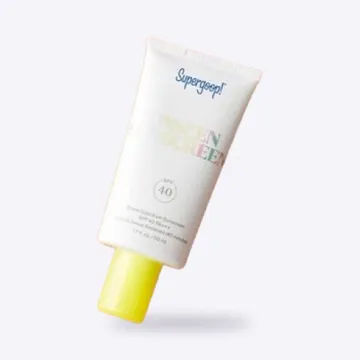
Unseen Sunscreen SPF 40
Dry, grippy finish — doubles as a primer, leaves no cast.
Suits: Oily, Combination, Normal skin
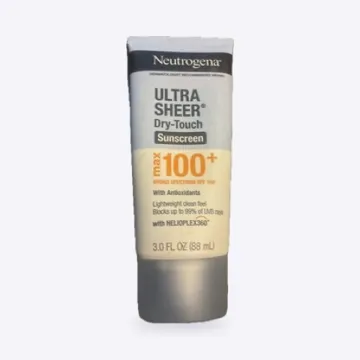
Ultra Sheer Dry-Touch Sunscreen
Sunscreen with avobenzone, homosalate and octisalate.
Suits: Normal, Dry, Oily, Combination, Sensitive skin
Invisible Daily Defense Sunscreen Lotion SPF 60+
Cheap, light, invisible — the one people actually reapply.
Suits: Normal, Combination, Oily, Dry skin
From Pori's catalogue. Amazon links carry our Associates tag: Pori earns from qualifying purchases, at no cost to you. No brand pays to be listed. Photos: Open Beauty Facts contributors, CC BY-SA 3.0.
For a mineral option, Bubble Solar Mate Daily Mineral SPF 40 uses 12% zinc oxide and is fragrance-free. Our best mineral sunscreen for sensitive skin compares more zinc and titanium options.
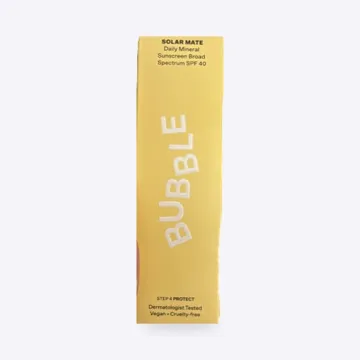
Solar Mate Daily Mineral Sunscreen Broad Spectrum SPF 40
Mineral spf 40 sunscreen with zinc oxide and glycerin. Fragrance-free.
Suits: Normal, Dry, Oily, Combination, Sensitive skin
From Pori's catalogue. Amazon links carry our Associates tag: Pori earns from qualifying purchases, at no cost to you. No brand pays to be listed. Photos: Open Beauty Facts contributors, CC BY-SA 3.0.
Sticks, sprays and powders
The AAD calls sticks good for use around the eyes. They're handy for reapplying over makeup, but it's hard to put enough of a stick on a whole face. For sprays, the AAD notes it's difficult to know if you've used enough, and both the AAD and the FDA say never to spray sunscreen directly on or near your face: spray it into your hands and rub it in. The FDA also warns that flammable sprays must carry a warning, and that some sprays have been recalled for benzene contamination. Powders are the least settled format: in its 2019 proposal, the FDA said sunscreen powders were eligible but that it needed additional data to support their GRASE status. Treat a powder as a touch-up over a full layer of lotion.
Tinted sunscreen
Tinted sunscreens add iron oxides, which the AAD says research suggests help protect against visible light, and visible light can increase skin darkening. That makes them a good fit for melasma, dark spots and deeper skin tones, and the tint hides a white cast. Neutrogena Mineral UV Tint SPF 30 and La Roche-Posay Anthelios Tinted Mineral Light Fluid SPF 40 are two mineral examples. See the best tinted sunscreens and sunscreen for dark skin.
Moisturizer with SPF
A moisturizer with SPF counts as sunscreen if it is broad-spectrum SPF 30 or higher and you apply enough. The AAD notes that sunscreen in moisturizers or cosmetics still needs reapplying about every two hours outdoors. CeraVe AM Facial Moisturizing Lotion SPF 30 is a hybrid with ceramides and niacinamide, and La Roche-Posay Toleriane Double Repair Face Moisturizer UV SPF 30 is a chemical formula with avobenzone, homosalate, octisalate and octocrylene. Both are fragrance-free. See the best moisturizers with SPF.
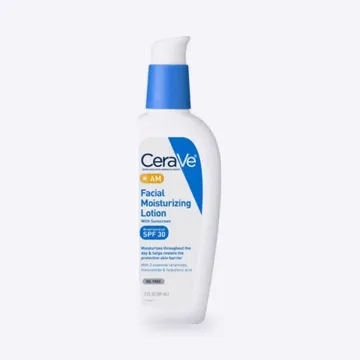
AM Facial Moisturizing Lotion SPF 30
SPF 30 sunscreen with niacinamide, homosalate and octinoxate. Fragrance-free.
Suits: Normal, Dry, Oily, Combination, Sensitive skin
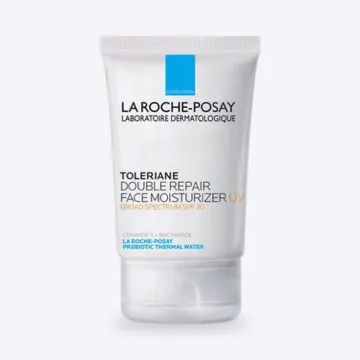
Toleriane Double Repair Face Moisturizer UV SPF 30
SPF 30 sunscreen with niacinamide, avobenzone and homosalate. Fragrance-free.
Suits: Normal, Dry, Oily, Combination, Sensitive skin
From Pori's catalogue. Amazon links carry our Associates tag: Pori earns from qualifying purchases, at no cost to you. No brand pays to be listed. Photos: Open Beauty Facts contributors, CC BY-SA 3.0.
What do SPF, broad spectrum and water resistant mean on the label?
- SPF measures protection from sunburn, mostly caused by UVB. The FDA says it reflects the level of sunburn protection, and it doesn't tell you how long you can stay out. The AAD notes SPF 30 blocks 97% of UVB rays and that no sunscreen blocks 100%.
- Broad spectrum means the product passed the FDA's test for UVA as well as UVB. Products that aren't broad spectrum, or have an SPF below 15, must warn that they help prevent sunburn only, not skin cancer or early skin aging.
- Water resistant labels must say whether protection lasts 40 or 80 minutes while swimming or sweating. The FDA says there's no such thing as waterproof sunscreen, and the AAD notes "waterproof" and "sweatproof" aren't allowed on labels.
In its 2019 proposal, the FDA also suggested capping labeled SPF at 60+ and requiring every sunscreen of SPF 15 or higher to be broad spectrum. That proposal hasn't been finalized, and US shelves still carry SPF 70 and 100 products.
Which sunscreen type suits your skin?
- Oily or acne-prone: a gel or fluid labeled non-comedogenic; mineral filters if you break out easily. See sunscreen for acne-prone skin.
- Dry: a cream or moisturizing lotion. See sunscreen for dry skin.
- Sensitive or rosacea-prone: a fragrance-free mineral formula.
- Medium to deep skin: a chemical, hybrid or tinted formula without a cast. See sunscreen without white cast.
- Wanting only the filters the FDA has proposed as GRASE: a mineral sunscreen.
Our sunscreen for your skin type guide goes deeper, and the sunscreen catalogue lets you filter by skin type.
Where does sunscreen go in your routine?
Sunscreen is the last step of your morning routine, after moisturizer and before makeup. Cleveland Clinic calls putting it on as the final step each morning key to healthy skin. The AAD says to use at least a teaspoon for the face, apply it 15 minutes before going out, and reapply about every two hours or after swimming or sweating. Our guide on how much sunscreen to use shows the amounts.
What are the most common sunscreen mistakes?
- Using too little. The AAD says many people apply only 20% to 50% of the amount needed to get the SPF on the label.
- Counting on makeup SPF. You won't wear enough foundation or powder to reach the labeled number.
- Treating high SPF as all-day protection. SPF 50 or 100 still needs reapplying.
- Skipping cloudy days. The AAD notes that up to 80% of UV rays get through clouds.
- Spraying the face. Spray into your hands first.
- Missing spots. Ears, neck, hairline and the tops of the feet are easy to forget; use a lip product with SPF 30 or higher.
Frequently asked questions
What are the three types of sunscreen?
Mineral (physical) sunscreens with zinc oxide or titanium dioxide, chemical sunscreens with other filters such as avobenzone and homosalate, and hybrids that combine both.
Is chemical sunscreen safe?
The FDA has asked for more safety data on 12 chemical filters, and it says that request is not a conclusion that they are unsafe. They remain on sale. If you prefer the filters the FDA has proposed as safe and effective, choose a mineral sunscreen.
Is mineral or chemical sunscreen better for sensitive skin?
Mineral. The AAD says dermatologists recommend physical sunscreens, made with zinc oxide or titanium dioxide, for people with sensitive skin.
Can I use spray sunscreen on my face?
Not directly. The FDA and the AAD say never to spray sunscreen on or near your face. Spray it into your hands and rub it in.
What does water resistant mean on sunscreen?
US labels must say whether the sunscreen stays effective for 40 or 80 minutes while swimming or sweating. No sunscreen is waterproof, so reapply after swimming, sweating or towel drying.
Is a moisturizer with SPF enough?
Yes, if it is broad-spectrum SPF 30 or higher and you apply enough, about a teaspoon for the face. Reapply about every two hours outdoors; for long days outside, a dedicated sunscreen is easier.
Sources
- FDA: Questions and answers: FDA's regulatory actions on over-the-counter sunscreen
- FDA: Sunscreen: How to Help Protect Your Skin from the Sun
- FDA fact sheet: Proposed rule on sunscreen drug products for over-the-counter human use, 2019
- American Academy of Dermatology: Sunscreen FAQs
- Cleveland Clinic: The Correct Order for Skin Care Products
- Schneider SL, Lim HW. A review of inorganic UV filters zinc oxide and titanium dioxide. Photodermatol Photoimmunol Photomed, 2019 (PubMed)
Pori is a wellness and skincare education app, not a medical device. This article is for general information and isn't medical advice. For anything that worries you, see a dermatologist.