Pori
- La Roche-Posay Anthelios UVDefense SPF 50 is the best overall sunscreen without white cast: an all-chemical formula with the new filter bemotrizinol that dries clear.
- Biore UV Aqua Rich SPF 50 is the budget chemical pick, CeraVe AM SPF 30 is a low-zinc hybrid, Fenty Skin Hydra Vizor Mineral SPF 30 is the sheerest untinted mineral here, and Neutrogena Mineral UV Tint SPF 30 is the budget tinted mineral.
- Cast comes from zinc oxide and titanium dioxide particles scattering light. Chemical filters leave none, hybrids leave a little, untinted minerals leave the most, and tints hide it with iron oxides.
- On the label, check the active ingredients: titanium dioxide looks whiter than zinc oxide, and a tinted mineral only works if the shade matches your skin.
The best sunscreens without white cast are La Roche-Posay Anthelios UVDefense SPF 50, Biore UV Aqua Rich SPF 50 and CeraVe AM Facial Moisturizing Lotion SPF 30. La Roche-Posay is best overall because its all-chemical formula, including the new filter bemotrizinol, dries clear on every skin tone. If you want mineral protection, Fenty Skin Hydra Vizor Mineral SPF 30 is the sheerest untinted zinc option here, and Neutrogena Mineral UV Tint SPF 30 hides cast with iron oxides for $15.49.
Before you buy, you can scan a sunscreen's barcode or photograph its label with the ingredient scanner in Pori to check it against your skin type and see its filters at a glance. Pori reads the label for you; it does not diagnose.
Quick picks
- Best overall: La Roche-Posay Anthelios UVDefense SPF 50 ($39.99 for 1.7 fl oz, La Roche-Posay): five chemical filters including bemotrizinol, nothing white to show.
- Best budget chemical: Biore UV Aqua Rich SPF 50 ($15.99 for 1.7 fl oz, Biore): a watery chemical essence that disappears, if fragrance and alcohol don't bother you.
- Best hybrid: CeraVe AM Facial Moisturizing Lotion SPF 30 ($14.99 for 3 fl oz, Target): 8% zinc oxide alongside chemical filters, so cast stays low.
- Best untinted mineral: Fenty Skin Hydra Vizor Mineral SPF 30 ($45 for 1.7 fl oz, Fenty Beauty): 15.5% zinc oxide that Fenty pitches as sheer on every skin tone.
- Best budget tinted mineral: Neutrogena Mineral UV Tint SPF 30 ($15.49 for 1.1 oz, Target): zinc and titanium colored with iron oxides, in shades up to Deep.
- Best under makeup: Supergoop Unseen Sunscreen SPF 40 ($38 for 1.7 oz, Sephora): a clear silicone gel with four chemical filters and no pigment at all.
We compared published drug labels, brand claims and listed prices; we did not test these products on skin. Prices are US prices as of November 2026, with the retailer named, and they change often. If you have medium to deep skin and want picks chosen for that, our best sunscreen for dark skin roundup goes deeper; for shade matching, see best tinted sunscreen. This guide is about the cast itself and which filter types cause it.
How do sunscreens without white cast compare?
| Sunscreen | Filter type and actives (US label) | Cast risk | Price (November 2026) |
|---|---|---|---|
| La Roche-Posay Anthelios UVDefense SPF 50 | Chemical: avobenzone 3%, bemotrizinol 2%, homosalate 11%, octisalate 5%, octocrylene 6% | None | $39.99 for 1.7 fl oz (La Roche-Posay) |
| Biore UV Aqua Rich SPF 50 | Chemical: avobenzone 3%, homosalate 10%, octisalate 5%, octocrylene 5% | None | $15.99 for 1.7 fl oz (Biore) |
| CeraVe AM Facial Moisturizing Lotion SPF 30 | Hybrid: zinc oxide 8%, homosalate 10%, octinoxate 5%, octocrylene 2% | Low | $14.99 for 3 fl oz (Target) |
| EltaMD UV Clear SPF 46 | Hybrid: zinc oxide 9%, octinoxate 7.5% | Low to moderate on deep skin | $45 (Mayo Clinic Store) |
| Fenty Skin Hydra Vizor Mineral SPF 30 | Mineral: zinc oxide 15.5% | Moderate, depends on skin tone | $45 for 1.7 fl oz (Fenty Beauty) |
| Neutrogena Mineral UV Tint SPF 30 | Tinted mineral: zinc oxide 21.6%, titanium dioxide 3.2%, iron oxides | Hidden if the shade matches | $15.49 for 1.1 oz (Target) |
Why does sunscreen leave a white cast?
White cast comes from the two mineral filters, zinc oxide and titanium dioxide. They are white particles that scatter visible light as well as UV, so an untinted layer can look white, gray or ashy, and it shows most on medium and deep skin. Chemical filters such as avobenzone, homosalate and octocrylene are colorless once they are spread out, so they leave no cast.
The American Academy of Dermatology (AAD) puts it simply: if the active ingredient is titanium dioxide, zinc oxide or both, you have a physical (mineral) sunscreen; otherwise it is chemical. It also says tinted sunscreen can help you avoid the white residue some sunscreens leave.
Two details on the label change how much cast you'll see:
- Which mineral. A study that compared the two found microfine zinc oxide less white than titanium dioxide at every concentration, and better at blocking long-wave UVA. A zinc-only formula usually looks clearer than one built on titanium.
- Particle size. A review of mineral nanoparticles explains that shrinking zinc and titanium particles below 100 nanometers makes the opaque look disappear, though it can shift the balance between UVA and UVB protection. Brands rarely print particle size, so you'll usually judge this by wearing it.
Our guides to zinc oxide and titanium dioxide cover the safety side of nanoparticles.
How much white cast does each filter type leave?
Chemical sunscreens: no cast
Chemical (organic) filters absorb UV and are clear on the skin, so they are the surest way to avoid cast on any skin tone. The trade-off is that some people, often those with sensitive skin or rosacea, find chemical filters sting. Our chemical sunscreen filters guide explains each one, including bemotrizinol.
Hybrid sunscreens: a little cast
Hybrids pair zinc oxide with chemical filters. The lower the zinc percentage, the less cast you can expect, though the base and particle size matter too.
Untinted mineral sunscreens: the most cast
All-mineral formulas need more zinc or titanium to reach SPF 30, so they carry the highest cast risk. Zinc-only formulas look clearer than titanium-heavy ones. Expect at least a faint sheen on deep skin, and test before you commit.
Tinted mineral sunscreens: cast hidden by color
Tinted sunscreens add iron oxides that color the minerals toward your skin tone. The AAD says the iron oxides in tinted sunscreen also help protect against visible light, which can worsen dark spots, especially on darker skin. The catch is shade: a tint that is too light looks gray, and one that is too dark looks muddy.
Which sunscreens leave no white cast?
La Roche-Posay Anthelios UVDefense SPF 50: best overall
This sunscreen's US label lists avobenzone 3%, bemotrizinol 2%, homosalate 11%, octisalate 5% and octocrylene 6%, with dimethicone and glycerin high in the base, and it is water resistant. There are no mineral filters, so there is nothing to leave a cast. Bemotrizinol is a broad UVA and UVB filter that is new to US sunscreens. La Roche-Posay lists it at $39.99 for 1.7 fl oz.
Who it suits: any skin tone that wants a high-SPF daily face sunscreen with no cast. Who should skip it: people whose skin stings with chemical filters. The catch: it only launched in October 2026, and it costs more than drugstore chemical options.
Biore UV Aqua Rich SPF 50: best budget chemical
Biore's US label lists avobenzone 3%, homosalate 10%, octisalate 5% and octocrylene 5% in a watery base. It is water resistant and leaves no cast. Biore lists it at $15.99 for 1.7 fl oz. Our Biore Aqua Rich review explains how the US version differs from the Japanese one.
Who it suits: normal to oily skin that wants the lightest possible feel. Who should skip it: sensitive or fragrance-allergic skin; alcohol denat. is the second ingredient, and fragrance, citral, geraniol and limonene are on the list. The catch: alcohol-heavy formulas can feel tight on dry skin.
CeraVe AM Facial Moisturizing Lotion SPF 30: best hybrid
CeraVe's label lists zinc oxide 8% with homosalate 10%, octinoxate 5% and octocrylene 2% (older boxes: zinc oxide 6.3% plus meradimate 5%). That small amount of zinc is why most people see little or no cast. The base has ceramides, niacinamide and hyaluronic acid, and it is fragrance-free. Target lists it at $14.99 for 3 fl oz.
Who it suits: normal to dry skin that wants a moisturizer and sunscreen in one. Who should skip it: very deep skin that sees any zinc as gray; a chemical-only pick is safer. The catch: it is a moisturizing lotion, so it can look slightly shiny on oily skin.
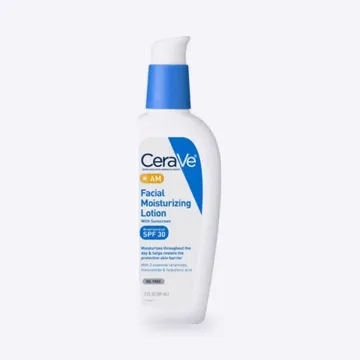
AM Facial Moisturizing Lotion SPF 30
SPF 30 sunscreen with niacinamide, homosalate and octinoxate. Fragrance-free.
Suits: Normal, Dry, Oily, Combination, Sensitive skin
From Pori's catalogue. Amazon links carry our Associates tag: Pori earns from qualifying purchases, at no cost to you. No brand pays to be listed. Photos: Open Beauty Facts contributors, CC BY-SA 3.0.
EltaMD UV Clear SPF 46 is another popular hybrid. Its label lists zinc oxide 9% and octinoxate 7.5% with niacinamide. Because it contains zinc, test the untinted version on deep skin before you commit; EltaMD also makes tinted versions, which we cover in best tinted sunscreen.
Fenty Skin Hydra Vizor Mineral SPF 30: best untinted mineral
Fenty Skin now sells a mineral version of Hydra Vizor alongside the original chemical one. The mineral label lists zinc oxide 15.5% as the only active, with niacinamide, hyaluronic acid and shea butter, and it is water resistant. Fenty lists it at $45 for 1.7 fl oz and describes it as sheer sun defense for every skin tone. Zinc-only formulas tend to look clearer than titanium-based ones, which is why this is our untinted mineral pick.
Who it suits: sensitive skin that wants zinc and no tint. Who should skip it: anyone who wants zero cast on deep skin with no testing; at 15.5% zinc, some sheen is possible. The catch: there are two versions on DailyMed, one labeled fragrance-free; check the box if fragrance matters to you. Fenty also sells a tinted mineral version, Hydra Vizor Huez.
Neutrogena Mineral UV Tint SPF 30: best budget tinted mineral
This fluid lists zinc oxide 21.6% and titanium dioxide 3.2%, with iron oxides that tint it, and it is water resistant for 80 minutes. It comes in Light, Medium, Medium Deep and Deep, and Target lists it at $15.49 for 1.1 oz. Because the color covers the minerals, it can look natural even with a high zinc load, as long as the shade is right.
Who it suits: anyone who wants mineral filters plus visible-light protection on a budget. Who should skip it: people between shades, or anyone who wants a no-color sunscreen. The catch: four shades is a narrow range; our tinted sunscreen roundup has wider ones.
Supergoop Unseen Sunscreen SPF 40: best under makeup
Unseen is a clear silicone gel with avobenzone 3%, homosalate 8%, octisalate 5% and octocrylene 4%, and no white pigment. It works as a primer under foundation. Sephora lists it at $38 for 1.7 oz. Our Unseen review covers the formula and the price per use.
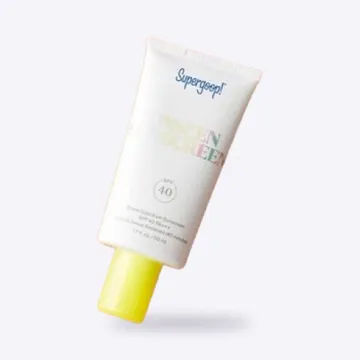
Unseen Sunscreen SPF 40
Dry, grippy finish — doubles as a primer, leaves no cast.
Suits: Oily, Combination, Normal skin
From Pori's catalogue. Amazon links carry our Associates tag: Pori earns from qualifying purchases, at no cost to you. No brand pays to be listed. Photos: Open Beauty Facts contributors, CC BY-SA 3.0.
How can you tell if a sunscreen will leave a white cast?
- Read the active ingredients. No zinc oxide or titanium dioxide means no mineral cast.
- Check the mineral percentage. Less zinc means less cast, and titanium dioxide looks whiter than zinc oxide at the same level.
- Look for iron oxides. If the inactive list has iron oxides, the product is tinted, and the shade matters more than the minerals.
- Test the full amount in daylight. The AAD says to use at least a teaspoon of sunscreen for the face. A thin layer always looks clearer but protects less; our guide to how much sunscreen to use explains why.
How we chose
We sorted US sunscreens by filter type using their Drug Facts labels on DailyMed, then kept broad-spectrum SPF 30 or higher face products that are chemical, low-zinc hybrid, zinc-only or tinted. We gave the most weight to the active ingredients, since they decide the cast, and noted fragrance and alcohol where they appear. We avoided repeating the picks in our dark skin and tinted sunscreen roundups where we could. Prices come from the brand or retailer site named, in November 2026. We did not wear-test any product. You can browse more options in our sunscreen catalogue.
Frequently asked questions
What sunscreen has no white cast?
Chemical sunscreens leave no white cast because their filters are colorless on skin. La Roche-Posay Anthelios UVDefense SPF 50 is our best overall pick, Biore UV Aqua Rich SPF 50 is the budget option, and Supergoop Unseen SPF 40 is a clear gel for under makeup.
Is there a mineral sunscreen with no white cast?
Tinted mineral sunscreens hide the cast with iron oxides if the shade matches your skin. Among untinted options, zinc-only formulas look clearer than titanium dioxide ones; Fenty Skin Hydra Vizor Mineral SPF 30 uses only zinc oxide, but some people with deep skin may still see a slight sheen.
Why does my sunscreen look gray or purple on my skin?
The zinc oxide or titanium dioxide particles in mineral sunscreens scatter visible light, which shows as a white, gray or ashy layer, most noticeably on medium and deep skin. Switching to a chemical sunscreen or a tinted mineral in your shade usually fixes it.
Do hybrid sunscreens leave a white cast?
Usually only a little, because they combine a modest amount of zinc oxide with chemical filters. CeraVe AM SPF 30, for example, has 8% zinc oxide. The less zinc, the less cast.
Is zinc oxide or titanium dioxide less white?
Zinc oxide. A study comparing the two found microfine zinc oxide less white than titanium dioxide at every concentration tested, and better at blocking long-wave UVA.
Can I just apply less sunscreen to avoid white cast?
That lowers your protection. The AAD recommends at least a teaspoon for the face. If the full amount leaves a cast, choose a different filter type.
Sources
- American Academy of Dermatology: Sunscreen FAQs
- Pinnell SR et al. Microfine zinc oxide is a superior sunscreen ingredient to microfine titanium dioxide. Dermatol Surg, 2000 (PubMed)
- Smijs TG, Pavel S. Titanium dioxide and zinc oxide nanoparticles in sunscreens: focus on their safety and effectiveness. Nanotechnol Sci Appl, 2011 (PMC)
- DailyMed (NLM): La Roche-Posay Anthelios UV Defense SPF 50 drug label
- La Roche-Posay: Anthelios UVDefense SPF 50 with BEMT (price)
- DailyMed (NLM): Biore UV Aqua Rich SPF 50 drug label
- DailyMed (NLM): CeraVe AM Facial Moisturizing Lotion SPF 30 drug label
- DailyMed (NLM): EltaMD UV Clear SPF 46 drug label
- DailyMed (NLM): Fenty Skin Hydra Vizor Mineral SPF 30 Fragrance-Free drug label
- DailyMed (NLM): Neutrogena Mineral UV Tint Face SPF 30 drug label
Pori is a wellness and skincare education app, not a medical device. This article is for general information and isn't medical advice. For anything that worries you, see a dermatologist.