Pori
- La Roche-Posay Toleriane Double Repair Face Moisturizer is the best non-comedogenic moisturizer overall: oil-free, fragrance-free, with niacinamide and ceramide NP.
- Neutrogena Hydro Boost Water Gel is the lightest pick, CeraVe Moisturizing Cream and Vanicream Moisturizing Cream suit dry skin, and Cetaphil Daily Oil-Free SPF 35 covers the morning.
- The FDA has no definition of "non-comedogenic," so the claim is the brand's own, and testing methods vary.
- Comedogenic ingredient lists come mostly from rabbit ear tests of raw ingredients; a study of finished products found that formulas with "comedogenic" ingredients are not necessarily comedogenic.
The best non-comedogenic moisturizers are La Roche-Posay Toleriane Double Repair Face Moisturizer, Neutrogena Hydro Boost Water Gel and CeraVe Moisturizing Cream. La Roche-Posay is best overall because it is oil-free and fragrance-free, carries a non-comedogenic claim and has niacinamide and ceramide NP for the barrier. Be aware that "non-comedogenic" is a marketing claim with no FDA definition, so treat it as a useful first filter and judge a moisturizer by how your own skin responds.
Before you buy, you can scan a moisturizer's barcode or photograph its label with the ingredient scanner in Pori to check it against your skin type and flag fragrance or heavy oils. Pori reads the label for you; it does not diagnose.
Quick picks
- Best overall: La Roche-Posay Toleriane Double Repair Face Moisturizer ($25.99 for 3.38 oz, Ulta): oil-free and non-comedogenic, with niacinamide, ceramide NP and no fragrance.
- Best lightweight gel: Neutrogena Hydro Boost Water Gel ($26.99 for 1.7 oz, Ulta): an oil-free hyaluronic acid gel for normal to oily skin.
- Best rich cream: CeraVe Moisturizing Cream ($14.99, CeraVe): petrolatum and three ceramides, fragrance-free, labeled "won't clog pores."
- Best for very dry, reactive skin: Vanicream Moisturizing Cream ($13.19 for 16 oz, Target): ten ingredients, no fragrance, lanolin or botanicals, and a non-comedogenic claim.
- Best with SPF: Cetaphil Daily Oil-Free Facial Moisturizer SPF 35 ($18.99 for 3 oz, Ulta): oil-free, fragrance-free and non-comedogenic daytime lotion.
We compared published ingredient lists, brand claims and listed prices; we did not test these products on skin. Prices are US prices as of November 2026, with the retailer named, and they change often. If you are treating acne and want moisturizers chosen to pair with acne medicine, see our best moisturizer for acne-prone skin roundup. This guide is about the label itself and covers more skin types.
How do the best non-comedogenic moisturizers compare?
| Moisturizer | Key ingredients | Skin type | Price (November 2026) |
|---|---|---|---|
| La Roche-Posay Toleriane Double Repair Face Moisturizer | Glycerin, niacinamide, ceramide NP, dimethicone | Normal to oily, sensitive | $25.99 for 3.38 oz (Ulta) |
| Neutrogena Hydro Boost Water Gel | Hyaluronic acid, glycerin, dimethicone | Normal to oily | $26.99 for 1.7 oz (Ulta) |
| CeraVe Moisturizing Cream | Glycerin, petrolatum, ceramides, hyaluronic acid | Normal to dry, face and body | $14.99 (CeraVe) |
| Vanicream Moisturizing Cream | Petrolatum, sorbitol, cetearyl alcohol | Very dry, eczema-prone | $13.19 for 16 oz (Target) |
| Cetaphil Daily Oil-Free Facial Moisturizer SPF 35 | Avobenzone, homosalate, octisalate, octocrylene, niacinamide, panthenol | Combination, sensitive, daytime | $18.99 for 3 oz (Ulta) |
What does non-comedogenic mean?
"Non-comedogenic" means the brand says the product is unlikely to clog pores and cause comedones (blackheads and whiteheads). The American Academy of Dermatology (AAD) tells people with acne to look for "oil-free," "non-comedogenic" or "won't clog pores" on a moisturizer, and it explains why moisturizing matters: acne treatments such as benzoyl peroxide, salicylic acid and retinoids tend to dry and irritate the skin.
"Oil-free" is a different claim. It describes what is in the formula, while "non-comedogenic" is a claim about how the product behaves on skin. The two often appear together, but one does not guarantee the other.
Is non-comedogenic regulated by the FDA?
No. An FDA spokesperson told SELF that "there are no federal definitions or FDA cosmetic regulations specific to the use of the term 'noncomedogenic' on labels for cosmetics." That means there is no required test, no minimum standard and no approval step. Some brands test finished products on people; others base the claim on their ingredient choices. The label can't tell you which.
Where do comedogenic ingredient lists come from?
Most of them trace back to rabbits. In 1972, dermatologists Kligman and Mills described "acne cosmetica", the idea that some cosmetics cause comedones. Researchers then tested raw ingredients on the inside of rabbit ears, which form comedones easily. A later study using the same method found that isopropyl palmitate, isopropyl myristate, butyl stearate, isopropyl isostearate, decyl oleate, isostearyl neopentanoate, isocetyl stearate, myristyl myristate and cocoa butter tested positive, while cetyl alcohol, paraffin, stearyl alcohol, sodium lauryl sulfate and petrolatum did not.
The rabbit ear is far more sensitive than human skin. When Mills and Kligman built a human test on the upper back, they wrote that "the rabbit model is more sensitive than the human", and that substances only weakly comedogenic in rabbits are probably safe for people, with the possible exception of the acne-prone.
What does the evidence say about comedogenic ingredients in finished products?
A finished moisturizer is not a raw ingredient at full strength. In a 2006 study, dermatologists Draelos and DiNardo patched finished cosmetic products onto the backs of six people prone to comedones, three times a week for four weeks, and counted microcomedones. Their conclusion was blunt: "Finished products using comedogenic ingredients are not necessarily comedogenic." The study was small, and the authors note only a limited number of products could be tested.
Petrolatum is a good example of how ingredient myths spread. A 2024 review in the Journal of the American Academy of Dermatology addressed misconceptions about petrolatum as a cause of acne. Our petrolatum and slugging guide covers that evidence.
The practical takeaway:
- Use "non-comedogenic" and "oil-free" as a first filter, as the AAD suggests.
- Don't throw out a moisturizer because one ingredient appears on an online "comedogenic list." Those ratings mostly describe raw ingredients in rabbits.
- If you break out easily, note heavy esters and butters that tested positive in rabbits, such as isopropyl myristate or cocoa butter, when they sit near the top of a list.
- Add one new product at a time for a few weeks, so you can tell what caused a breakout.
Which non-comedogenic moisturizers are best?
La Roche-Posay Toleriane Double Repair Face Moisturizer: best overall
Ulta lists Toleriane Double Repair at $25.99 for 3.38 oz and names "non-comedogenic" among its benefits. It is described as oil-free, with fragrance and oil listed under "formulated without." The ingredients include glycerin, dimethicone, niacinamide and ceramide NP. Its list also includes myristyl myristate, one of the ingredients that tested positive in rabbit ears. That is the Draelos point in practice: a finished formula with a "comedogenic" ingredient can still carry the claim.
Who it suits: normal, oily and sensitive skin. Who should skip it: very dry skin that needs a richer cream. The catch: it costs more per ounce than the drugstore creams below.
Neutrogena Hydro Boost Water Gel: best lightweight gel
Neutrogena describes the original Water Gel as an oil-free gel with hyaluronic acid for normal to oily skin, and marks it non-comedogenic. Ulta lists it at $26.99 for 1.7 oz. Our gel vs. cream guide explains why gels suit oily skin.
Who it suits: oily and combination skin, and humid climates. Who should skip it: dry skin and anyone sensitive to fragrance. The catch: the original Water Gel contains fragrance. Neutrogena sells a fragrance-free Hydro Boost gel-cream, which Target lists at $19.99 for 1.7 oz.
CeraVe Moisturizing Cream: best rich cream
CeraVe lists Moisturizing Cream at $14.99, says it won't clog pores and is fragrance-free, and notes it is accepted by the National Eczema Association. The ingredients include glycerin, cetearyl alcohol, petrolatum, three ceramides and hyaluronic acid. It shows that a thick cream with petrolatum can still carry a pore-friendly claim. Our CeraVe Moisturizing Cream review has the full breakdown.
Who it suits: normal to dry skin, and anyone who wants one cream for face and body. Who should skip it: very oily skin that dislikes a rich feel. The catch: it can feel heavy in the daytime; try it at night first.
Vanicream Moisturizing Cream: best for very dry, reactive skin
Vanicream lists only ten ingredients for this cream on its product page, led by water, petrolatum and sorbitol. The brand says it won't clog pores, is free of fragrance, lanolin, parabens, botanical extracts and essential oils, and carries the National Eczema Association seal. Target lists the 16 oz jar at $13.19.
Who it suits: very dry, eczema-prone or reactive skin that also breaks out. Who should skip it: people sensitive to propylene glycol, which is on the list. The catch: it is a thick body-and-face cream that can feel greasy on oily skin.
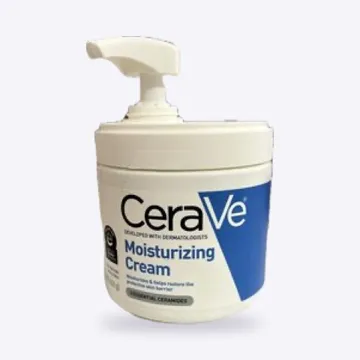
Moisturizing Cream
Thick ceramide cream for skin that dries out by midday.
Suits: Dry, Normal, Sensitive skin
From Pori's catalogue. Amazon links carry our Associates tag: Pori earns from qualifying purchases, at no cost to you. No brand pays to be listed. Photos: Open Beauty Facts contributors, CC BY-SA 3.0.
Cetaphil Daily Oil-Free Facial Moisturizer SPF 35: best with SPF
This lotion uses avobenzone 2.8%, homosalate 9.5%, octisalate 4.8% and octocrylene 7%, with niacinamide, panthenol and glycerin. Ulta lists it at $18.99 for 3 oz and labels it oil-free, fragrance-free, non-comedogenic and hypoallergenic.
Who it suits: combination and sensitive skin that wants one product in the morning. Who should skip it: people who react to chemical filters. The catch: moisturizers with SPF are easy to under-apply; use about a teaspoon for the face.
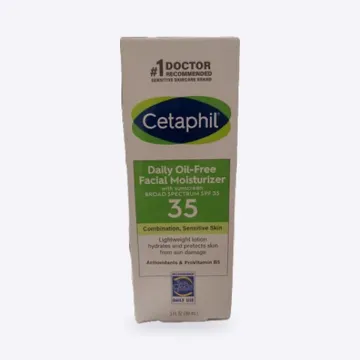
Oil-Free Facial Moisturizer with Sunscreen SPF 35
SPF 35 sunscreen with niacinamide, panthenol and tocopherol. Fragrance-free.
Suits: Normal, Dry, Oily, Combination, Sensitive skin
From Pori's catalogue. Amazon links carry our Associates tag: Pori earns from qualifying purchases, at no cost to you. No brand pays to be listed. Photos: Open Beauty Facts contributors, CC BY-SA 3.0.
How do you tell if a moisturizer is clogging your pores?
Give a new product a few weeks before you judge it. Watch for small, skin-colored bumps or new blackheads in the areas where you apply it, often the forehead, cheeks and jaw. Our guide to closed comedones shows what they look like. If you see them, stop the newest product first. If breakouts persist or are deep and painful, a dermatologist can help; you can search our dermatologist directory.
How we chose
We kept US moisturizers whose brand or retailer states a non-comedogenic or "won't clog pores" claim, with published ingredient lists, and covered several textures and skin types. We left out the picks in our acne-prone moisturizer roundup so the two lists don't repeat. For the evidence, we read the original comedogenicity studies and the AAD's guidance. We checked claims and prices on the brand or retailer site named, in November 2026. We did not wear-test any product, and no label can promise you won't break out. You can browse more options in our moisturizers for oily skin catalogue.
Frequently asked questions
What is the best non-comedogenic moisturizer?
La Roche-Posay Toleriane Double Repair Face Moisturizer is our best overall pick: oil-free, fragrance-free and labeled non-comedogenic, with niacinamide and ceramide NP. Neutrogena Hydro Boost Water Gel is lighter, and CeraVe Moisturizing Cream suits drier skin.
Is non-comedogenic regulated by the FDA?
No. An FDA spokesperson told SELF there are no federal definitions or FDA cosmetic regulations specific to the term on cosmetic labels. The claim is the brand's own, and testing methods vary.
Are comedogenic ingredient lists accurate?
Only partly. Most ratings come from rabbit ear tests of raw ingredients, and the rabbit ear is more sensitive than human skin. A 2006 study of finished products concluded that products made with comedogenic ingredients are not necessarily comedogenic.
What is the difference between oil-free and non-comedogenic?
Oil-free describes what is in the formula. Non-comedogenic is a claim that the product is unlikely to clog pores. The two often appear together, but one does not guarantee the other.
Does petrolatum clog pores?
Petrolatum did not test as comedogenic in the rabbit ear study we cite, and a 2024 review in the Journal of the American Academy of Dermatology addressed the misconception that it causes acne. Some people still prefer lighter textures on the face.
Can a non-comedogenic moisturizer still cause breakouts?
Yes. The label is not standardized and skin varies. Add one product at a time and give it a few weeks, so you can tell which product, if any, is causing new comedones.
Sources
- SELF via Yahoo: How to tell if your skin-care products are actually noncomedogenic (FDA statement), 2019
- American Academy of Dermatology: Moisturizer: Why you may need it if you have acne
- Kligman AM, Mills OH Jr. "Acne cosmetica". Arch Dermatol, 1972 (PubMed)
- Mills OH Jr, Kligman AM. A human model for assessing comedogenic substances. Arch Dermatol, 1982 (PubMed)
- Nguyen SH, Dang TP, Maibach HI. Comedogenicity in rabbit: some cosmetic ingredients/vehicles. Cutan Ocul Toxicol, 2007 (PubMed)
- Draelos ZD, DiNardo JC. A re-evaluation of the comedogenicity concept. J Am Acad Dermatol, 2006 (PubMed)
- Kamrani P et al. Petroleum jelly: A comprehensive review of its history, uses, and safety. J Am Acad Dermatol, 2024 (PubMed)
- Ulta Beauty: La Roche-Posay Toleriane Double Repair Face Moisturizer (price, claims and ingredients)
- CeraVe: Moisturizing Cream (claims and ingredients)
- Ulta Beauty: Cetaphil Daily Oil-Free Facial Moisturizer SPF 35 (price and claims)
Pori is a wellness and skincare education app, not a medical device. This article is for general information and isn't medical advice. For anything that worries you, see a dermatologist.