Pori

- Plain water mists refresh skin but can leave it drier as the water evaporates.
- Mists hydrate when they contain humectants and you apply moisturizer while skin is still damp.
- Many mists are toners in a spray bottle; essences are usually more concentrated and patted in.
- Thermal spring water reduced inflammation markers in a lab study, but most clinical evidence comes from the brands.
A facial mist is a fine spray of water, usually with added humectants, plant extracts, minerals or oils, that refreshes skin and adds a light layer of moisture. On its own, plain water evaporates within minutes and can leave skin drier than before. A mist hydrates only when it contains humectants such as glycerin or hyaluronic acid and you seal it in with a moisturizer.
If you're looking at a specific mist, you can scan its barcode or label with the ingredient scanner in Pori to check it against your skin type. It shows what's in the formula; it doesn't diagnose skin conditions.
Below we explain what mists can and can't do, how they differ from toners and essences, what thermal spring water really offers, and how to use a mist so it actually helps. This guide is based on published research, dermatology guidance and each product's ingredient list; we did not test these products on skin.
Do facial mists actually hydrate your skin?
Only partly, and only with the right ingredients. Water itself is a surprisingly tricky thing to put on skin. A review in Contact Dermatitis by Tsai and Maibach describes water as a skin irritant in some settings and lists extraction or dilution of the skin's natural moisturizing factors as one possible reason. When a spritz of plain water evaporates, it can take some of the skin's own water-binding compounds with it, and the cool, dewy feeling fades quickly.
Humectants change that. Glycerin, hyaluronic acid, panthenol and sodium PCA bind water to the skin's surface. Even then, humectants work best under something that slows evaporation. The AAD's advice for dry skin is to apply moisturizer while skin is still damp, and a mist is an easy way to get your skin damp before moisturizer. On its own and left to air-dry, it's mostly a refresher.
What are the different types of facial mist?
| Type | Typical ingredients | What it does | Best for |
|---|---|---|---|
| Thermal or mineral water | Spring water only, sometimes with a propellant | Cools and refreshes; possible soothing effect | Sensitive skin, after sun or exercise |
| Hydrating mist | Water with glycerin, hyaluronic acid, panthenol | Adds a light humectant layer | Dry or dehydrated skin, under moisturizer |
| Toner mist | Witch hazel, rose water, aloe, sometimes fragrance | Toner in spray form | Normal and oily skin that tolerates botanicals |
| Oil-in-water ("dewy") mist | Water plus a small amount of oil or emollient | Adds glow and a little slip | Dry skin, over makeup |
| Hypochlorous acid spray | Hypochlorous acid in salt water | Mild antimicrobial cleansing | Acne-prone or irritated skin |
| Setting spray | Film formers, alcohol or polymers | Holds makeup in place | Makeup wearers; it's a makeup product |
What's the difference between a facial mist, a toner and an essence?
The three overlap, and the names aren't regulated. The difference is mostly format and concentration:
- Mist: sprayed, usually the thinnest formula, used any time of day, including over makeup.
- Toner: a water-based liquid used after cleansing and before serums, applied with hands or a pad. Cleveland Clinic notes that toners also come in spray form, which is why many mists are simply toners in a spray bottle. Toners can carry exfoliating acids; mists rarely do.
- Essence: a watery hydration step that sits between toner and serum, often more concentrated in humectants, ferments or extracts, and patted in by hand.
If you already use a hydrating toner or essence, a mist adds little to your routine at home. It earns its place when you can't wash your face and start over: at a desk, on a plane, after the gym or over makeup. Our guides to what toner does and serum vs. moisturizer vs. essence go deeper on the other two.
Does thermal spring water do anything special?
Possibly a little, though the evidence is thin and mostly funded by the brands. Avène and La Roche-Posay both build their ranges around water from French spa towns. La Roche-Posay describes its water as rich in selenium, an antioxidant trace mineral. Its Thermal Spring Water face spray lists only water and sells for $11.99 for 5.1 fl oz at Target as of November 2026, labeled fragrance-free and non-comedogenic.
The most independent study we found is a lab study from Goethe University in Frankfurt. Researchers grew skin cells in media made with La Roche-Posay and Avène thermal waters and with two ordinary mineral drinking waters. The thermal waters reduced markers of inflammation and cell damage after UVB exposure; the drinking waters had smaller effects. The authors suggest trace elements such as selenium and zinc may explain it. That work was done in cell culture, so it shows a possible mechanism and no effect on real faces. A 2013 review of La Roche-Posay's water was written by an author based at the brand's own laboratories, and a 2026 review of Avène's water draws on conference proceedings and the spa's own hydrotherapy program.
Our read: a thermal water spray is a pleasant, low-risk option for sensitive skin and is useful for cooling skin after sun or exercise. Don't expect it to treat a skin condition. More background is in our Avène guide and La Roche-Posay guide.
Which facial mists are worth a look?
Read the ingredient list before the label. A useful mist has humectants high up, and a sensitive-skin mist has no fragrance. A few common examples:
- La Roche-Posay Thermal Spring Water: water only. Good for cooling and for sensitive skin; follow with moisturizer.
- Thayers Rose Petal Witch Hazel (toner or facial mist): witch hazel and aloe with glycerin, plus rose flower water and fragrance. Thayers' Unscented toner is the version to pick if scent bothers you; our Thayers guide compares them.
- Mario Badescu Facial Spray with Aloe, Herbs and Rosewater: water and propylene glycol (a humectant) with aloe and plant extracts, plus fragrance and dyes. It's $14 for 8 oz at Ulta, regular price as of November 2026. It feels nice, but fragrance-sensitive skin should skip it, as our Mario Badescu guide explains.
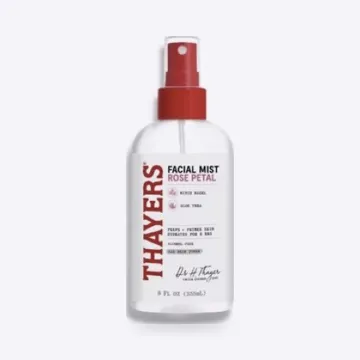
Facial Mist Rose Petals & Witch Hazel
Toner with aloe vera and glycerin.
Suits: Normal, Dry, Oily, Combination skin
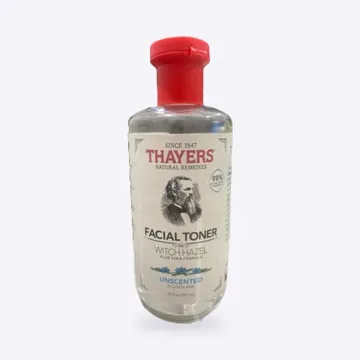
Witch Hazel Facial Toner Uncented
Toner with aloe vera, witch hazel and glycerin. Fragrance-free.
Suits: Normal, Dry, Oily, Combination, Sensitive skin
From Pori's catalogue. Amazon links carry our Associates tag: Pori earns from qualifying purchases, at no cost to you. No brand pays to be listed. Photos: Open Beauty Facts contributors, CC BY-SA 3.0.
If fragrance is a problem for you, our article on fragrance and essential oils in skincare lists the names to look for. Witch hazel can feel tightening, which oily skin may like and dry skin may not.
Are hypochlorous acid sprays different?
Yes. Hypochlorous acid is a compound the body makes as part of its immune response, and manufacturers make it from salt water. Cleveland Clinic explains that by lowering the amount of bacteria on skin it may help limit breakouts, and that because it's gentle it may calm irritation linked to eczema or psoriasis. The article's dermatologist, Sadia Tahir, MD, says there really isn't much risk when these products are used as directed. Use one labeled for the face, keep it out of your eyes and pick fragrance-free if your skin is sensitive. It's a niche tool for acne-prone or irritated skin and won't hydrate on its own.
What should you look for on a facial mist's ingredient list?
Because a mist is mostly water, the few ingredients after it decide what it does. Read the first five or six:
- Helpful humectants: glycerin, hyaluronic acid or sodium hyaluronate, panthenol, sodium PCA, betaine, trehalose and propylene glycol. These are what let a mist add moisture.
- Soothing extras: allantoin, centella asiatica and aloe are common and usually well tolerated.
- Light emollients: a little squalane or another oil turns a mist into a dewy, two-phase spray you shake before use. Good for dry skin, less so for oily skin under makeup; our guide to types of face oils explains which oils suit which skin.
- Things to check: alcohol denat. high on the list, fragrance, and essential oils such as lavender or rose oil. They add scent or a quick-dry feel and are common triggers for sensitive skin.
A mist that is only water, such as a thermal water spray, is fine too. Just treat it as a first step, with moisturizer straight after.
How should you use a facial mist?
- Seal it in. Mist, then apply serum or moisturizer within a minute or two while skin is still damp. This is the single most useful way to use one.
- Don't let plain water air-dry on dry skin, especially in heated rooms or on planes, where low humidity speeds evaporation. A humidifier, which the AAD recommends for dry skin, does more than repeated spritzing.
- Over makeup, hold the bottle at arm's length and use a fine mist with humectants or a little oil, then let it dry without rubbing.
- In heat, a chilled water mist is a quick way to cool down after sun or exercise. It doesn't replace sunscreen or reapplying it.
- Keep it clean. Don't share bottles, and replace a pump spray that's past its date or smells off.
For which routines a mist fits best, see our guides to a travel skincare routine, skincare before makeup and dry vs. dehydrated skin. Browse more options in the toners catalogue.
Frequently asked questions
Do face mists actually work?
As a refresher, yes. For hydration, only if they contain humectants like glycerin or hyaluronic acid and you follow with a moisturizer. Plain water that is left to evaporate can leave skin feeling drier.
Is a facial mist the same as a toner?
Often it is a toner in a spray bottle. Toners are applied after cleansing and can contain exfoliating acids; mists are usually lighter and can be used throughout the day, including over makeup.
Can a facial mist dry out your skin?
It can. Water evaporating from the skin's surface may take some of the skin's natural moisturizing factors with it. Seal a mist in with moisturizer, especially in dry air.
Is thermal spring water better than regular water?
Possibly a little. In a lab study, two thermal spring waters reduced inflammation markers in skin cells more than drinking waters did, but most clinical evidence comes from the brands that sell them.
Should I use a facial mist before or after moisturizer?
Before. Mist onto clean skin, then apply serum or moisturizer while it's still damp. Over makeup, a fine humectant mist can refresh skin during the day.
Are facial mists good for sensitive skin?
A fragrance-free mist such as plain thermal water is usually well tolerated. Avoid mists with fragrance, essential oils or alcohol near the top of the list if your skin reacts easily.
Sources
- Tsai TF, Maibach HI. How irritant is water? An overview. Contact Dermatitis, 1999 (PubMed)
- American Academy of Dermatology: Dermatologists' top tips for relieving dry skin
- Cleveland Clinic: What Does Toner Do for Your Face?
- Cleveland Clinic: Hypochlorous Acid: What It Is and Skin Care Uses
- Zoller N et al. Impact of Different Spa Waters on Inflammation Parameters in Human Keratinocyte HaCaT Cells. Ann Dermatol, 2015 (PMC)
- Seite S. Thermal waters as cosmeceuticals: La Roche-Posay thermal spring water example. Clin Cosmet Investig Dermatol, 2013
- Lio P et al. Management of Inflammatory and Skin Barrier Impairment-Related Diseases: The Experience at the Avene Hydrotherapy Center. Am J Clin Dermatol, 2026 (PubMed)
- Target: La Roche-Posay Thermal Spring Water Face Spray (listing and ingredients)
- Ulta: Mario Badescu Facial Spray with Aloe, Herbs and Rosewater (price and ingredients)
Pori is a wellness and skincare education app, not a medical device. This article is for general information and isn't medical advice. For anything that worries you, see a dermatologist.