Pori
- Pick a format by skin type: gentle foaming gel for oily, cream or lotion for dry and sensitive, mild gel for combination.
- Choose a gentle, alcohol-free, non-abrasive wash; healthy skin pH averages about 4.7, while most soaps measure 9 to 10.
- Use salicylic acid (0.5 to 2%) or benzoyl peroxide (2.5 to 10%) washes only for acne or clogged pores.
- Double cleanse only on days with makeup or water-resistant sunscreen.
To choose a face cleanser, start with your skin type: a gentle foaming or gel wash for oily skin, a cream, lotion or non-foaming wash for dry and sensitive skin, and a mild gel for combination skin. Then check that it's a gentle, non-abrasive, alcohol-free formula built on mild surfactants with a skin-friendly pH, add an acne active only if you need one, and use a cleansing oil or balm first only on days you wear makeup or water-resistant sunscreen.
When you've narrowed it down, you can scan a cleanser's barcode or label with the ingredient scanner in Pori to check its surfactants and other ingredients against your skin type. It reads the formula; it doesn't diagnose skin conditions.
Below is a five-step way to choose, a table by skin type, what pH and surfactants mean on a label, when an acne cleanser makes sense, and when double cleansing is worth it. It's based on American Academy of Dermatology (AAD) guidance and published research; we compared published ingredient lists and brand claims and did not test these products on skin. For a tour of every cleanser format, see our types of face cleansers guide.
What is the quickest way to choose a face cleanser?
Run through five checks:
- Your skin type: oily, combination, normal, dry or sensitive. See how to find your skin type.
- A format to match: foaming gel, cream, lotion, micellar water, oil or balm.
- Mildness: gentle surfactants, no alcohol or scrubbing particles, and a pH close to skin's.
- Actives: salicylic acid or benzoyl peroxide only if you have acne or clogged pores.
- Makeup and sunscreen: whether you need a first cleanse to remove them.
The AAD's basic rules apply to everyone: use a gentle, non-abrasive, alcohol-free cleanser, lukewarm water and your fingertips, wash no more than twice a day and after sweating, and don't scrub.
Which cleanser suits your skin type?
| Skin type | Best format | Look for | Avoid |
|---|---|---|---|
| Oily | Gentle foaming gel | Mild surfactants; salicylic acid if pores clog | Oil- or alcohol-based washes, harsh scrubs |
| Acne-prone | Foaming gel or cream with an active | Salicylic acid 0.5 to 2% or benzoyl peroxide 2.5 to 10% | Stacking an acne wash with several other actives |
| Combination | Mild gel or low-foam cream | Glycerin, gentle surfactants | Strongly foaming washes that leave cheeks tight |
| Normal | Gel or lotion | A short, mild formula | Little to avoid |
| Dry | Cream, lotion or non-foaming wash | Glycerin, ceramides, fatty alcohols | Soap bars, strong sulfates, fragrance |
| Sensitive or rosacea-prone | Lotion or micellar water | Fragrance-free, short list | Fragrance, essential oils, scrubs, acids |
For oily skin, the AAD recommends a gentle, foaming face wash and warns against oil-based or alcohol-based cleansers. It also cautions that a wash that is too harsh can irritate skin and trigger more oil. Salicylic, glycolic and lactic acids can help reduce oiliness, but cut back if your skin gets irritated.
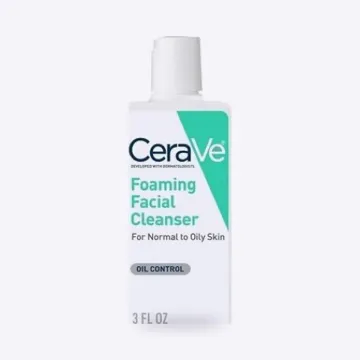
Foaming Facial Cleanser
Gel-to-foam wash that clears excess oil without stripping.
Suits: Oily, Combination, Normal skin
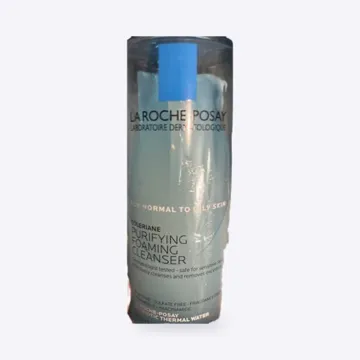
Toleriane Purifying Foaming Cleanser
Foaming wash for oily skin that still reacts to strong cleansers.
Suits: Oily, Combination, Sensitive skin
From Pori's catalogue. Amazon links carry our Associates tag: Pori earns from qualifying purchases, at no cost to you. No brand pays to be listed. Photos: Open Beauty Facts contributors, CC BY-SA 3.0.
For dry and sensitive skin, a cream or lotion wash leaves more of the skin's own lipids in place. CeraVe Hydrating Facial Cleanser, La Roche-Posay Toleriane Hydrating Gentle Cleanser and Cetaphil Gentle Skin Cleanser are three widely sold fragrance-free examples. Our roundups of the best cleansers for oily skin, dry skin, combination skin and sensitive skin compare more.
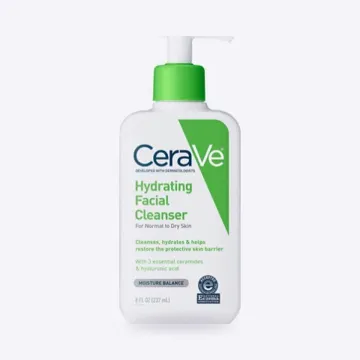
Hydrating Facial Cleanser
Creamy non-foaming wash that leaves the moisture barrier intact.
Suits: Dry, Normal, Sensitive, Combination skin
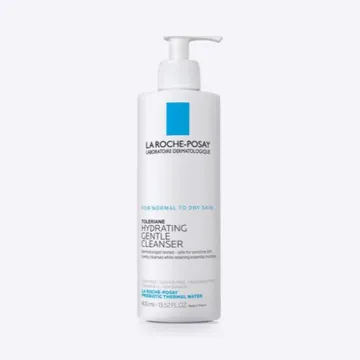
Toleriane Hydrating Gentle Cleanser
Milky cleanser built for reactive, tight-feeling skin.
Suits: Dry, Sensitive, Normal skin
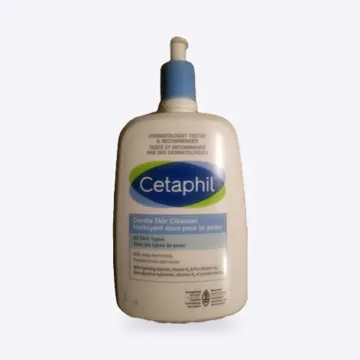
Gentle Skin Cleanser
The default gentle cleanser most dermatologists start people on.
Suits: Dry, Normal, Sensitive skin
From Pori's catalogue. Amazon links carry our Associates tag: Pori earns from qualifying purchases, at no cost to you. No brand pays to be listed. Photos: Open Beauty Facts contributors, CC BY-SA 3.0.
Does the pH of a cleanser matter?
Yes, though most labels won't tell you the number. Healthy skin is slightly acidic. In a study of 330 people who skipped showers and products for 24 hours, skin surface pH settled at an estimated average of 4.7, below 5, and skin with a pH below 5 had a better barrier, more moisture and less scaling than skin above 5. The same study found that even plain tap water at about pH 8 raised skin pH for up to six hours.
Soaps sit well above that. When dermatologists in India measured popular bathing soaps, most had a pH of 9 to 10. A review in Dermatologic Therapy reports that high-pH (pH 10) solutions, even without surfactants, can make the outer skin layer swell, one reason alkaline cleansers leave skin tight.
In practice:
- Skip traditional bar soap on your face if your skin is dry or sensitive. "Beauty bars" and syndet bars are a different, milder product.
- "Low pH" or "pH balanced" on a label usually means slightly acidic to neutral. COSRX Low pH Good Morning Gel Cleanser is built around that idea; see our COSRX Low pH cleanser review.
- Skin recovers. pH drifts back after washing, so a gentle formula overall matters more than chasing an exact number.
What surfactants should you look for in a cleanser?
Surfactants are the ingredients that lift oil and dirt so water can rinse them away. They also decide how harsh a cleanser is. A review by dermatologist Zoe Draelos explains that synthetic detergents, called syndets, cause less skin irritation and dryness than alkaline soaps, because they disturb skin proteins less.
| Group | Examples on the label | How it behaves |
|---|---|---|
| Strong anionic | Sodium lauryl sulfate, ammonium lauryl sulfate | Lots of foam; most likely to dry and irritate |
| Milder anionic | Sodium laureth sulfate, sodium cocoyl isethionate, sodium methyl cocoyl taurate, sodium cocoyl glutamate | Good cleansing with less stripping, especially when blended |
| Amphoteric | Cocamidopropyl betaine, cocamidopropyl hydroxysultaine | Mild; often added to soften harsher surfactants |
| Nonionic | Decyl glucoside, coco-glucoside, lauryl glucoside | Very mild and low-foam; occasionally cause contact allergy |
The whole formula matters more than any one name. A sulfate cushioned with glycerin and a mild co-surfactant can be gentler than a "sulfate-free" wash that strips. A good test is how your face feels 10 minutes after rinsing: comfortable is right, tight or squeaky means too harsh. Glucosides aren't allergy-proof either: the group was named the 2017 "Allergen of the Year" by contact dermatitis specialists. Our guide to sulfates in face wash goes deeper, and how to read ingredient labels explains the order of the list.
Should you use a cleanser with acne actives?
Only if you have acne or clogged pores. The two over-the-counter acne actives you'll see in US washes are salicylic acid, allowed at 0.5 to 2%, and benzoyl peroxide, allowed at 2.5 to 10%. These carry a Drug Facts panel because they are regulated as acne drugs.
- Salicylic acid dissolves oil in pores and suits blackheads and oily skin. See the best salicylic acid cleansers.
- Benzoyl peroxide reduces acne bacteria and suits red, inflamed spots. It can bleach towels and pillowcases. See how to use benzoyl peroxide.
- Glycolic or lactic acid in a wash gives light exfoliation; most of it rinses away.
A wash touches your skin for less than a minute, so these work best as one gentle step in a plan. If you already use a retinoid or leave-on acid, a plain cleanser is often the better partner. The AAD advises people with acne to wash gently, up to twice a day and after sweating, with fingertips, since washcloths, sponges and other tools can irritate.
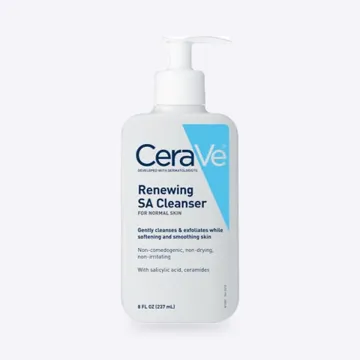
Renewing SA Cleanser
Face cleanser with niacinamide, gluconolactone and salicylic acid. Fragrance-free.
Suits: Normal, Oily, Combination, Sensitive skin
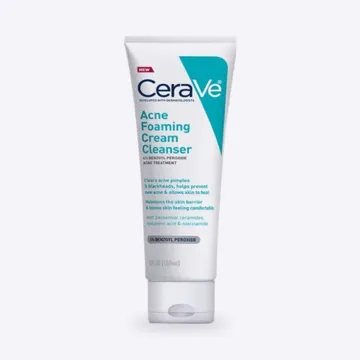
Acne Foaming Cream Cleanser
Face cleanser with benzoyl peroxide, niacinamide and glycolic acid. Fragrance-free.
Suits: Normal, Oily, Combination, Sensitive skin
From Pori's catalogue. Amazon links carry our Associates tag: Pori earns from qualifying purchases, at no cost to you. No brand pays to be listed. Photos: Open Beauty Facts contributors, CC BY-SA 3.0.
Do you need to double cleanse?
Only on days you wear makeup or water-resistant sunscreen. Double cleansing means an oil, balm or micellar water first to dissolve makeup and sunscreen, then a regular water-based wash. A small study shows why it can help: after a water-resistant sunscreen, about 37% stayed on the skin after a foaming cleanser and about 6% after a cleansing oil. For a regular, non-water-resistant sunscreen, the cleanser and the oil worked about equally well. Eight of the 20 people reported dry skin after the foaming cleanser, compared with one after the oil.
If you wear neither makeup nor water-resistant sunscreen, one gentle wash is enough, and in the morning plain water or a quick, mild wash is fine. Our step-by-step guide to how to double cleanse, plus our best cleansing balms and best micellar waters, cover the first step in detail.
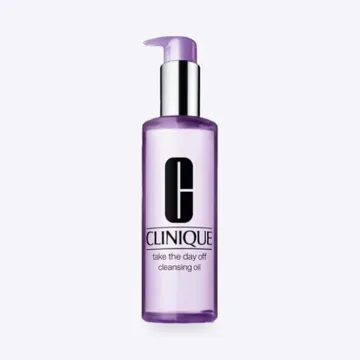
Take The Day Off Cleansing Oil
Face cleanser with tocopherol and glycerin. Fragrance-free.
Suits: Normal, Dry, Oily, Combination, Sensitive skin
Sensibio H₂O Micellar Water
Face cleanser. Fragrance-free.
Suits: Normal, Dry, Oily, Combination, Sensitive skin
From Pori's catalogue. Amazon links carry our Associates tag: Pori earns from qualifying purchases, at no cost to you. No brand pays to be listed. Photos: Open Beauty Facts contributors, CC BY-SA 3.0.
How can you tell if your cleanser is wrong for you?
- Tight, squeaky or itchy after washing: too harsh. Move to a cream, lotion or low-foam formula.
- Stinging when you apply moisturizer or a serum afterward: your barrier may be stressed. Simplify and see damaged skin barrier.
- Still oily or with makeup residue: too light. Add a first cleanse on makeup days rather than washing more often.
- New redness or dry patches after an acne wash: use it once a day or every other day, or switch to a plain cleanser.
The AAD suggests applying moisturizer if your skin feels dry or itchy after washing. For a fuller routine, see our guide to choosing a moisturizer, or browse the cleanser catalogue by skin type.
Frequently asked questions
How do I choose the right cleanser for my face?
Match the format to your skin type: a gentle foaming gel for oily skin, a cream or lotion for dry or sensitive skin, and a mild gel for combination skin. Then pick a gentle, alcohol-free formula and add an acne active only if you need it.
What pH should a face cleanser be?
Close to skin's own slightly acidic pH. Healthy skin averages about 4.7, and most bar soaps measure 9 to 10. Few brands print a number, so "low pH" or "pH balanced" labels are a useful clue.
Are sulfate-free cleansers better?
Not always. Sodium lauryl sulfate is one of the harsher surfactants, but the whole formula decides how gentle a wash feels. If your face feels comfortable after rinsing, the cleanser suits you.
Should I use a salicylic acid or benzoyl peroxide cleanser?
Salicylic acid suits blackheads and oily skin; benzoyl peroxide suits red, inflamed spots. Use either only if you have acne, and skip them if you already use strong leave-on treatments.
Do I need to double cleanse?
Only when you wear makeup or water-resistant sunscreen. A cleansing oil removes water-resistant sunscreen far better than a foaming wash, according to a small study.
How often should I wash my face?
Up to twice a day and after sweating, with lukewarm water and your fingertips, according to the American Academy of Dermatology.
Sources
- American Academy of Dermatology: Face washing 101
- American Academy of Dermatology: How to control oily skin
- American Academy of Dermatology: Acne skin care tips
- Lambers H et al. Natural skin surface pH is on average below 5, which is beneficial for its resident flora. Int J Cosmet Sci, 2006 (PubMed)
- Tarun J et al. Evaluation of pH of bathing soaps and shampoos for skin and hair care. Indian J Dermatol, 2014 (PMC)
- Ananthapadmanabhan KP et al. Cleansing without compromise: the impact of cleansers on the skin barrier and the technology of mild cleansing. Dermatol Ther, 2004 (PubMed)
- Draelos ZD. The science behind skin care: Cleansers. J Cosmet Dermatol, 2018 (PubMed)
- Chen W et al. The optimal cleansing method for the removal of sunscreen: water, cleanser or cleansing oil? J Cosmet Dermatol, 2020 (PubMed)
- Sasseville D. Alkyl glucosides: 2017 "Allergen of the Year". Dermatitis, 2017 (PubMed)
- Electronic Code of Federal Regulations: 21 CFR 333.310, acne active ingredients (Cornell LII)
Pori is a wellness and skincare education app, not a medical device. This article is for general information and isn't medical advice. For anything that worries you, see a dermatologist.