Pori

- Angular cheilitis is red, cracked, sore skin at the corners of the mouth, usually on both sides; it is not contagious.
- Saliva breaks down the skin, and Candida yeast or Staphylococcus aureus bacteria often settle into the cracks.
- Dentures, lip licking, dry lips, isotretinoin, diabetes and low iron, B vitamins or zinc make it more likely.
- A barrier like petroleum jelly plus antifungal or antibiotic treatment matched to the cause usually clears it in about two weeks.
Angular cheilitis is sore, red, cracked skin at one or both corners of the mouth, often with crusting or a split that stings when you open wide. It starts when saliva keeps the corners wet and the skin breaks down, and yeast (Candida) or bacteria (usually Staphylococcus aureus) can then settle into the cracks. It is not contagious, and with the right treatment it usually clears in about two weeks.
Pori does not diagnose skin conditions; its selfie scans and photo diary in Pori can help you keep dated, consistent photos to show a dermatologist and see whether treatment is working.
What does angular cheilitis look like?
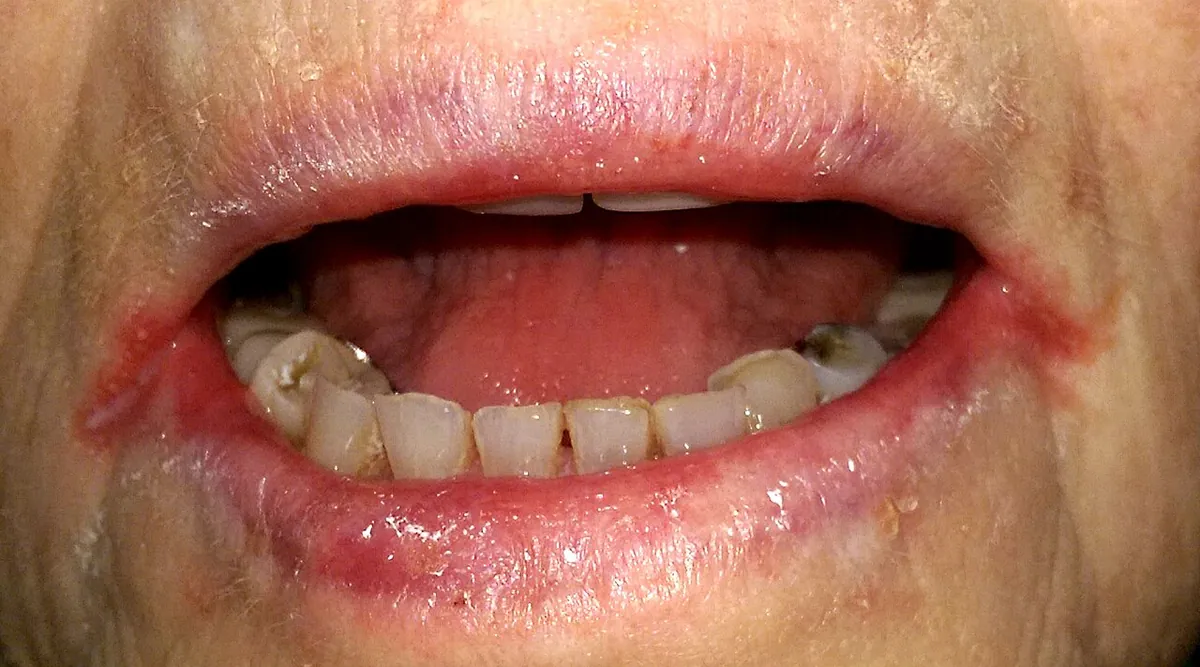
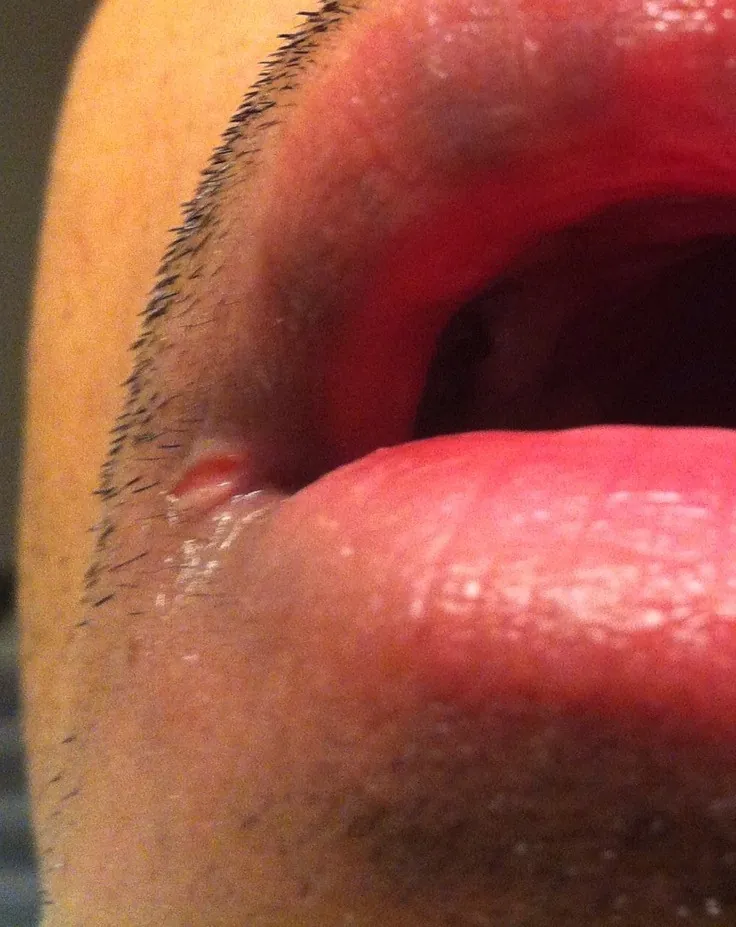
Cleveland Clinic lists the signs as bleeding, blisters, cracking, crusting, redness and swelling at the corners of the mouth, plus maceration, where the skin looks soggy and paler. DermNet adds that the cracks are painful, worse when you open your mouth, and that the condition is usually on both sides. Other names you may see are angular stomatitis, angular cheilosis and perleche.
- Early: a dry, red or slightly scaly patch right in the corner.
- Established: a split or fissure that reopens when you eat, yawn or laugh, with crusts or oozing.
What does it look like on brown and black skin?
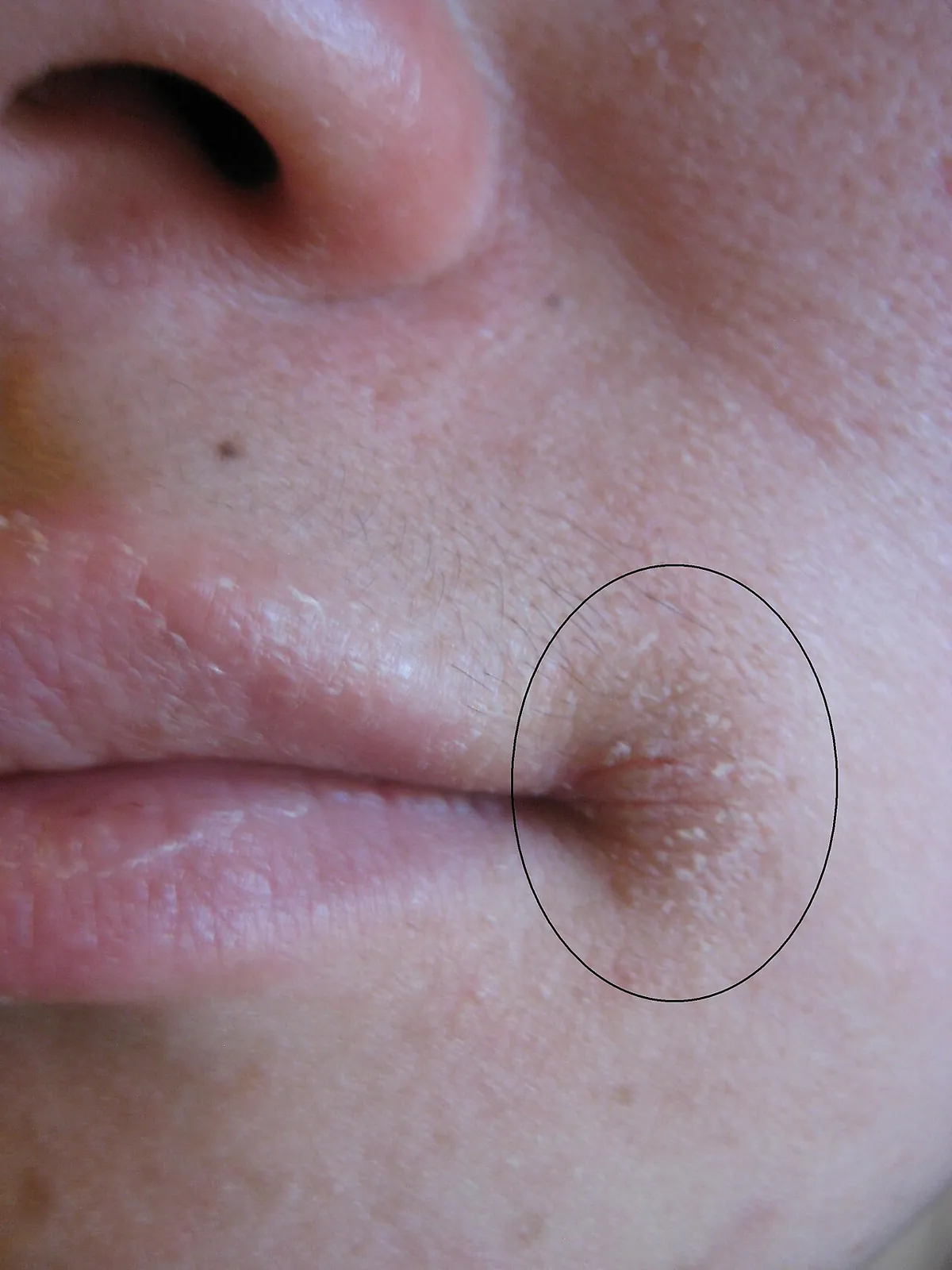
DermNet notes that on dark skin the changes can be subtler, and may show as pale patches with a darker rim instead of obvious redness. Pain when you open your mouth and a crack that keeps reopening are the clues to watch for on any skin tone.
What causes angular cheilitis?
Usually several things at once. The first step is moisture: saliva and its digestive enzymes sit in the corners, and DermNet says this often leads to an irritant dermatitis. Cleveland Clinic explains that when the skin dries and cracks, bacteria or fungi can get into the cracks. Common reasons saliva collects there:
- Dentures and teeth. Ill-fitting dentures, especially with gum recession, and misaligned teeth let saliva pool in the folds at the corners. Cleveland Clinic also lists cracked mouth corners as a sign of denture stomatitis, a yeast infection under dentures.
- Lip licking, dry or chapped lips, drooling during sleep, and thumb or pacifier sucking in children.
- Aging skin, which forms deeper creases at the corners.
- Face masks worn for long hours, which trap moisture.
Yeast and bacteria
DermNet says swabs from the cracks may grow Candida albicans yeast, Staphylococcus aureus bacteria, or occasionally herpes simplex virus. A 2013 study from India also found Candida and Staph aureus in swabs from mouth-corner cracks, more often in people with HIV. Oral thrush can feed the problem, and people with diabetes or a weakened immune system are more likely to get thrush.
Nutrient deficiencies and health conditions
DermNet lists low iron, riboflavin (vitamin B2), protein, zinc, vitamin B12 and folate as possible causes, along with celiac disease, inflammatory bowel disease and Sjogren syndrome. Cleveland Clinic adds diabetes, HIV, Down syndrome, rapid weight loss, smoking and stress. Cracked corners that keep returning can be a clue to one of these, which is why a doctor may order blood tests.
Medicines and skin conditions
Oral retinoids such as isotretinoin dry the lips and can lead to angular cheilitis; our Accutane skincare routine covers lip care during treatment. Eczema and allergies to lip products, toothpaste or other things that touch the mouth can also play a part.
Is angular cheilitis contagious?
No. Cleveland Clinic says it isn't contagious, unlike cold sores, which are caused by a herpes virus. Even when yeast or bacteria are involved, they come from your own mouth and skin. Cleveland Clinic says it is most common in the very young and the very old, though anyone can get it.
Is it angular cheilitis or something else?
| Condition | How it differs |
|---|---|
| Cold sore | Starts with a tingle, then a cluster of small blisters on the lip border; usually one side; contagious |
| Impetigo | Honey-colored crusts that spread beyond the corners onto the face; contagious |
| Perioral dermatitis | Many tiny bumps around the mouth with a clear band at the lip line, not a crack at the corner |
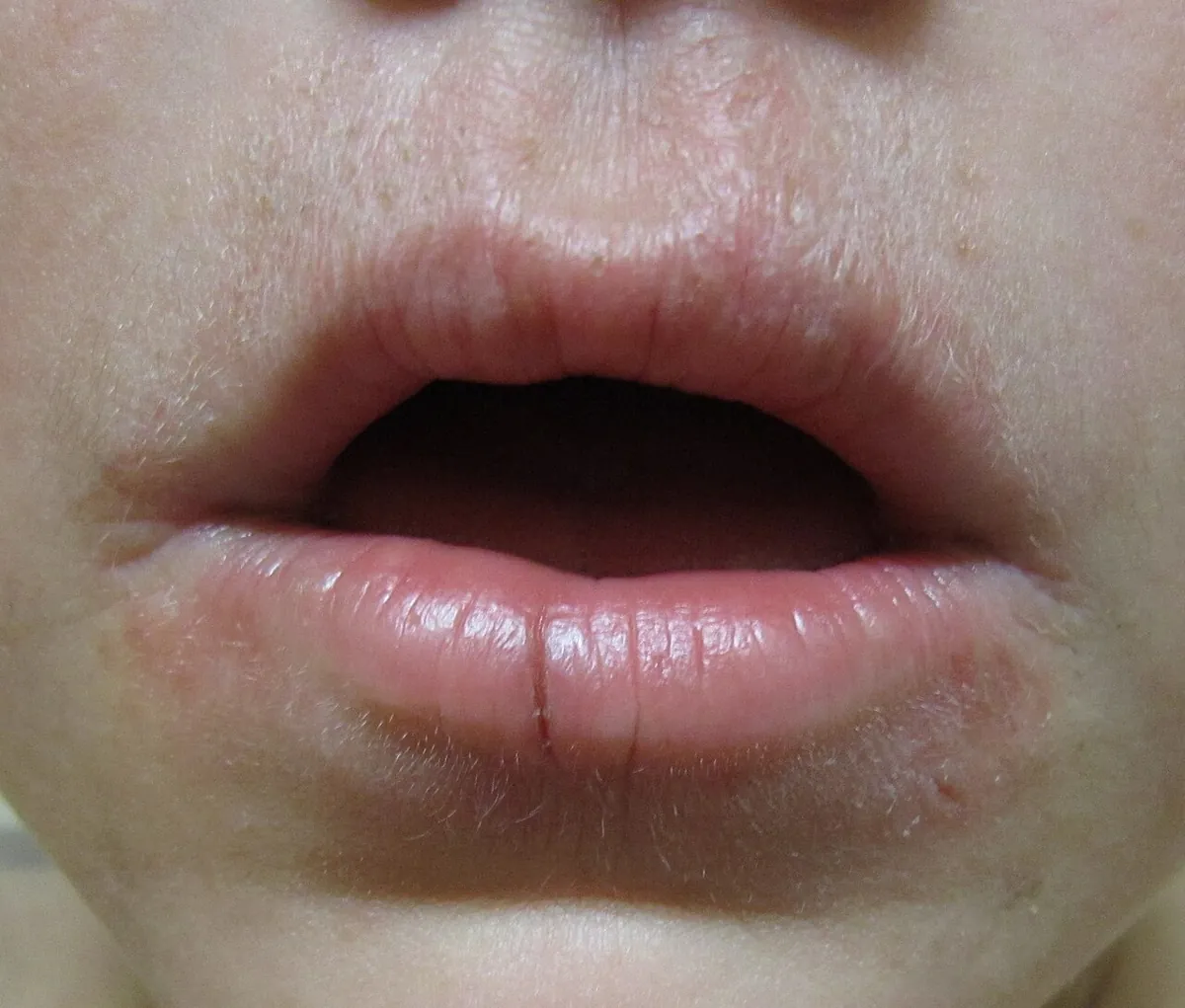
| Lip licker's dermatitis | A dry, red ring around the whole mouth where the tongue reaches; Cleveland Clinic notes it in children and teens who lick their lips often |
| Chapped lips | Dryness and peeling across the lips themselves |
| Contact dermatitis | Itchy rash from lip balm, lipstick, toothpaste or other products, often beyond the corners |
Cleveland Clinic also lists rarer causes of sores at the mouth corners, including oral lichen planus, leukoplakia, actinic keratosis, syphilis and oral cancer. A sore that does not heal needs to be seen.
How do you treat angular cheilitis?
Treatment targets whatever keeps the corners wet and whatever is growing in the cracks. DermNet says many cases clear on their own once the cause is dealt with.
What you can do at home
- Protect the corners. A thick barrier such as petrolatum (petroleum jelly) or a plain lip ointment keeps saliva off the skin. Apply it often, especially before bed.
- Stop licking your lips, and dab drool away instead of letting it dry on the skin.
- Drink enough water and eat foods that provide protein, iron and B vitamins.
- Skip fragranced, flavored or expired lip products while the skin heals.
- Look after dentures: Cleveland Clinic advises cleaning them thoroughly and soaking them in denture solution every night, and it names wearing them while you sleep as a risk factor for denture yeast infections.
What a doctor may prescribe
Both Cleveland Clinic and DermNet describe treatment matched to the cause:
- Antifungal cream or ointment, or an antifungal by mouth, when yeast is involved or you also have thrush.
- Antibiotic cream, or an antibiotic by mouth, for bacterial infection, usually staph.
- A mild steroid ointment, sometimes combined with an antifungal, for a short time when the skin is very inflamed.
- Blood tests and supplements if iron, B vitamins or zinc are low, and treatment of conditions such as diabetes.
- Dental work, such as relining or replacing dentures or correcting the bite.
Ask before using an antifungal or steroid cream from your medicine cabinet on your lips. Over-the-counter labels are written for other parts of the body, and the right choice depends on whether yeast, bacteria or irritation is driving it.
How long does it take to heal?
DermNet says improvement usually shows in the first few days of treatment, and the condition typically clears within two weeks. Cleveland Clinic gives the same two-week timeline. It often comes back if the cause stays, such as dentures that do not fit or a deficiency that has not been corrected. Untreated, severe cases can leave scarring or thin skin, though DermNet says permanent scarring or color change is rare.
How can you stop angular cheilitis from coming back?
- Keep lips moisturized with a fragrance-free balm or ointment and don't lick them. Cleveland Clinic's chapped lips guide suggests avoiding fragrance and flavoring, stopping any product that stings, burns or tingles, and using a lip balm with SPF 30 or higher outdoors.
- Have dentures checked if they feel loose or your face shape has changed.
- Treat oral thrush when you have it, and keep diabetes well controlled.
- Avoid lip products and toothpastes that irritate you, and replace old cosmetics.
- Don't smoke.
- Change face masks when they get damp.
The Pori ingredient scanner can check a lip balm's label for fragrance and flavorings if those tend to bother you; our guide to fragrance and essential oils in skincare explains why they irritate some people.
When should you see a doctor?
- It has not improved after two weeks of barrier care, or it keeps coming back.
- The cracks are spreading, bleeding, oozing or crusting with honey-colored crusts.
- You also have white patches in your mouth, a sore tongue or trouble swallowing.
- You feel tired, look pale or have lost weight, which can point to anemia or another deficiency.
- You have diabetes, HIV or a weakened immune system, or you take isotretinoin.
- A sore at the mouth corner does not heal, or there is a lump or a white patch that won't rub off.
A primary care doctor, dentist or dermatologist can help; you can find a dermatologist near you. If you wear dentures, a dentist visit is often the step that stops it returning.
How can photos help?
A close-up of the corners every few days, in the same light, shows whether a treatment is working within its two-week window. If it keeps coming back, note what came before each episode, such as a new denture, a course of antibiotics, a cold that made you breathe through your mouth, or a new lip product, and bring the record to your appointment.
Frequently asked questions
What causes angular cheilitis?
Saliva keeps the mouth corners wet until the skin breaks down, and yeast or bacteria can then grow in the cracks. Dentures, lip licking, dry lips, nutrient deficiencies such as iron or B vitamins, diabetes and isotretinoin all make it more likely.
Is angular cheilitis contagious?
No. Cleveland Clinic and DermNet both say it is not contagious. Cold sores at the mouth corner are contagious, so see a doctor if you are not sure which you have.
How long does angular cheilitis last?
With treatment it usually starts improving within a few days and clears within about two weeks. It tends to return if the cause, such as loose dentures or a deficiency, is not fixed.
Can I put Vaseline on angular cheilitis?
Petroleum jelly is a good barrier that keeps saliva off the corners and is part of most treatment plans. If yeast or bacteria are involved, you may also need an antifungal or antibiotic cream from a doctor.
What vitamin deficiency causes cracked mouth corners?
DermNet lists low iron, riboflavin (vitamin B2), vitamin B12, folate, zinc and protein. A doctor can check with blood tests before you start supplements.
Is angular cheilitis a fungal infection?
Sometimes. Candida yeast is often found in the cracks, but Staphylococcus aureus bacteria and simple irritation from saliva are also common causes, so treatment depends on what is driving it.
Sources
Pori is a wellness and skincare education app, not a medical device. This article is for general information and isn't medical advice. For anything that worries you, see a dermatologist.