Pori
- In the US it's Cicaplast Balm B5, an over-the-counter skin protectant with 1% dimethicone listed as the active.
- Panthenol, glycerin, shea butter, centella and madecassoside support it; no ceramide appears in the published ingredient list.
- Best for chapped, cracked or irritated patches and diaper rash; oily or acne-prone faces should spot-apply it.
- $20.99 for 1.3 oz at Ulta as of November 2026 (about $16 per oz); Aquaphor seals more and CeraVe Moisturizing Cream costs less.
La Roche-Posay Cicaplast Balm B5 is a thick, fragrance-free protective balm for chapped, cracked, chafed or irritated patches of skin, and it's gentle enough for babies' diaper areas. In the US it's sold as an over-the-counter skin protectant with 1% dimethicone, backed by panthenol, shea butter, glycerin and madecassoside. The catch is the texture: it's a heavy balm, so most people use it on dry spots and at night rather than as an all-over daytime moisturizer.
If you want to see how its ingredients line up with your skin type, you can scan the tube's barcode or label with the ingredient scanner in Pori.
Below we cover the US name and label, every ingredient on it, what the evidence says about the key ones, who should buy it, what it costs per ounce, how to use it, and the alternatives. We compared published ingredient lists, brand claims and listed prices; we did not test these products on skin.
What is the US version of Cicaplast Baume B5 called?
In the US the product is called Cicaplast Balm B5, and its full label name on the FDA's DailyMed database is La Roche-Posay Cicaplast Balm B5 Soothing Therapeutic Multipurpose Cream. Ulta sells it as Cicaplast Balm B5 Soothing Therapeutic Multi Purpose Cream. "Baume" is the French name you'll see on European packaging and in many reviews.
The bigger difference is legal. The US tube carries a Drug Facts panel because it's sold as an over-the-counter skin protectant, with dimethicone 1% as the active ingredient. That means its uses and warnings are set by FDA rules for skin protectants, and its label claims are limited to what those rules allow.
| Detail | US label and retailer listing |
|---|---|
| Active ingredient | Dimethicone 1% (skin protectant) |
| Labeled uses | Chafed, chapped or cracked skin; wind and cold; diaper rash |
| Key supporting ingredients | Panthenol, shea butter, glycerin, centella asiatica leaf extract, madecassoside |
| Fragrance | Fragrance-free, according to Ulta |
| Ages | Adults, children and babies 1 week and older, according to Ulta's listing |
| Sizes | 1.3 oz and 3.38 oz |
What's in Cicaplast Balm B5? The full ingredient list explained
The current US label on DailyMed lists dimethicone 1% as the active, and these inactive ingredients: water, hydrogenated polyisobutene, dimethicone, glycerin, butyrospermum parkii (shea) butter, panthenol, zea mays (corn) starch, propanediol, butylene glycol, cetyl PEG/PPG-10/1 dimethicone, trihydroxystearin, centella asiatica leaf extract, polymnia sonchifolia root juice, zinc gluconate, madecassoside, manganese gluconate, alpha-glucan oligosaccharide, silica, aluminum hydroxide, magnesium sulfate, mannose, capryloyl glycine, vitreoscilla ferment, citric acid, trisodium ethylenediamine disuccinate, lactobacillus, acetylated glycol stearate, maltodextrin, pentylene glycol, polyglyceryl-4 isostearate, tocopherol, pentaerythrityl tetra-di-t-butyl hydroxyhydrocinnamate, phenoxyethanol, titanium dioxide. Ulta's page shows the same list.
Grouped by job, it looks like this:
- Protective film: dimethicone (the labeled active) and hydrogenated polyisobutene, a synthetic emollient that gives the balm its slip and cushion.
- Humectants: glycerin, panthenol, propanediol, butylene glycol and pentylene glycol pull water into the outer skin.
- Emollient: shea butter softens rough, flaky skin.
- Plant actives: centella asiatica leaf extract and madecassoside, one of centella's main compounds.
- Minerals: zinc gluconate and manganese gluconate. La Roche-Posay doesn't publish their concentrations.
- Microbiome-themed extras: polymnia sonchifolia (yacon) root juice, alpha-glucan oligosaccharide, mannose, vitreoscilla ferment and lactobacillus. These are ingredients the brand markets for the skin's microbiome; independent evidence on this blend is limited.
- Texture and stability: corn starch, silica, trihydroxystearin, aluminum hydroxide, magnesium sulfate and the emulsifiers keep the thick cream stable. Titanium dioxide sits last on the list.
- Preservation: phenoxyethanol, capryloyl glycine, a chelator and tocopherol (vitamin E) as an antioxidant.
One detail worth knowing: Ulta's page lists ceramide among the key ingredients, but no ceramide appears in the published ingredient list on either Ulta or DailyMed. If ceramides are what you want, a ceramide cream is a better pick.
What does the evidence say about its key ingredients?
Dimethicone
Dimethicone is one of the FDA's approved skin protectant actives, allowed at 1 to 30 percent, on the same list as petrolatum and zinc oxide. Cicaplast uses the minimum, 1%. Silicones form a breathable film; a moisturizer review in the Indian Journal of Dermatology reports that they reduce water loss by about 20 to 30%, compared with more than 98% for petrolatum. That's why Cicaplast feels less greasy than an ointment and also why it seals less. Our guide to dimethicone and silicones goes deeper.
Panthenol
This is the "B5" in the name. A review of topical dexpanthenol says it acts like a moisturizer, improving stratum corneum hydration and reducing water loss, and a placebo-controlled study found that seven days of dexpanthenol improved hydration and reduced water loss compared with the same base without it. La Roche-Posay doesn't publish the percentage. See our guide to panthenol.
Centella asiatica and madecassoside
This is the "cica" in Cicaplast. A review of centella in cosmetology describes its benefits as promoting fibroblast growth, increasing collagen production and calming the inflammatory phase of scarring. Human evidence is small: in a trial of 30 people after laser resurfacing, the side treated with a 0.05% centella gel had significantly less redness than the placebo side. Our centella guide covers the rest.
Shea butter and glycerin
The AAD lists ingredients such as shea butter, glycerin, dimethicone and petrolatum among those to look for in a cream or ointment for dry skin. Cicaplast has three of the four.
Who is Cicaplast Balm B5 for, and who should skip it?
It suits you if you have:
- Chapped, cracked or flaky patches on the face, hands or body, especially in cold, windy weather.
- Dry patches on the face that a regular moisturizer doesn't settle.
- Skin that's raw from over-exfoliating or a strong retinoid. Our damaged skin barrier guide explains what to pause.
- A baby with diaper rash. The label directs you to apply it liberally with each diaper change, especially at bedtime.
Skip it or use it sparingly if you:
- Have very oily or acne-prone skin: spot-apply it to dry areas instead of the whole face.
- Need a strong seal: for very cracked heels or hands, a petrolatum ointment holds water in better.
- Have deep wounds, bites or serious burns: the label says do not use on deep or puncture wounds, animal bites or serious burns.
- Have a rash that isn't settling: the label says to stop and ask a doctor if it worsens or lasts more than 7 days. Eczema, infection or contact dermatitis need diagnosis, not just a balm.
How much does Cicaplast Balm B5 cost?
As of November 2026, Ulta lists the 1.3 oz tube at $20.99, or $19.94 with its Replenish & Save subscription. That works out to about $16.15 per ounce. Ulta's page didn't show a price for the 3.38 oz tube when we checked, so compare the per-ounce cost of both sizes before buying.
| Size | Price at Ulta (November 2026) | Price per oz |
|---|---|---|
| 1.3 oz | $20.99 | About $16.15 |
| 3.38 oz | Not shown when checked | Check at purchase |
That's expensive per ounce for a moisturizer, but a little goes a long way when you use it only on patches.
How do you use it?
- Cleanse gently and pat the skin dry. Ulta's directions say to apply it to clean, dry skin.
- Apply a thin layer to the dry or irritated area only. The label says to apply as needed.
- At night, use it as the last step over any serum or moisturizer.
- In the morning, use a thin layer under sunscreen, or switch to the separate Cicaplast Balm B5 UV SPF 50 version, which is labeled as both a skin protectant and a sunscreen.
- For diaper rash, change wet diapers promptly, clean and dry the area, then apply.
What are the best alternatives?
- Aquaphor Healing Ointment: a petrolatum-based skin protectant with 41% petrolatum as its active. It seals more than Cicaplast and feels greasier. Our guide to slugging with petrolatum covers using it on the face.
- CeraVe Moisturizing Cream: a fragrance-free tub with ceramides, cholesterol and petrolatum that costs far less per ounce and works as an all-over moisturizer. See our CeraVe Moisturizing Cream review.
- First Aid Beauty Ultra Repair Cream: a rich cream with colloidal oatmeal as its skin-protectant active, plus shea butter and ceramide NP. It contains a little eucalyptus oil, as our Ultra Repair Cream review explains.
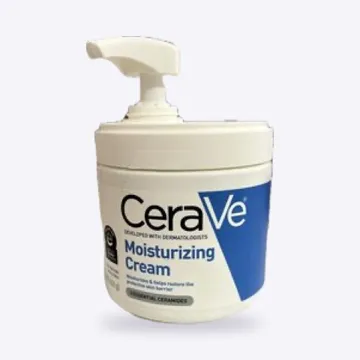
Moisturizing Cream
Thick ceramide cream for skin that dries out by midday.
Suits: Dry, Normal, Sensitive skin
From Pori's catalogue. Amazon links carry our Associates tag: Pori earns from qualifying purchases, at no cost to you. No brand pays to be listed. Photos: Open Beauty Facts contributors, CC BY-SA 3.0.
For more options by skin type, see our picks for the best moisturizer for dry skin and the moisturizers for dry skin in our catalogue. For the rest of the brand's lineup, read our La Roche-Posay skincare guide.
Is Cicaplast Balm B5 worth it?
For chapped, irritated patches, yes. It's fragrance-free, gentle enough for babies, and pairs a labeled skin protectant with panthenol, shea butter and centella in a balm that feels less greasy than an ointment. It isn't a ceramide cream, it isn't a treatment for eczema or infection, and per ounce it costs more than a drugstore tub. Keep a small tube for problem spots and use a cheaper moisturizer everywhere else.
Frequently asked questions
Is Cicaplast Balm B5 good for your face?
Yes for dry, chapped or irritated areas. It's fragrance-free, but it's thick, so oily or acne-prone skin usually does better using it only on dry patches or at night.
What is the difference between Cicaplast Baume B5 and Cicaplast Balm B5?
Baume is the French name used on European packaging. In the US the product is called Cicaplast Balm B5 and is labeled as an over-the-counter skin protectant with 1% dimethicone as the active ingredient.
Is Cicaplast Balm B5 better than Aquaphor?
They do different jobs. Aquaphor uses 41% petrolatum and seals in more water; Cicaplast feels lighter and adds panthenol, shea butter and centella. Choose Aquaphor for very cracked skin and Cicaplast for lighter, everyday protection.
Can I use Cicaplast Balm B5 on a baby?
The US label includes diaper rash directions, and Ulta lists it for babies 1 week and older. For a rash that worsens or lasts more than 7 days, the label says to ask a doctor.
Does Cicaplast Balm B5 contain ceramides?
No ceramide appears in the US ingredient list on DailyMed or Ulta, even though Ulta's page mentions ceramide as a key ingredient. Pick a ceramide cream if that's what you want.
Can I use Cicaplast Balm B5 with retinol?
Yes. Apply the retinoid first and Cicaplast over dry or peeling spots to make the irritation easier to live with.
Sources
- DailyMed: La Roche-Posay Cicaplast Balm B5 Soothing Therapeutic Multipurpose Cream (Drug Facts label)
- Ulta: La Roche-Posay Cicaplast Balm B5 (ingredients, sizes, price)
- 21 CFR 347.10: Skin protectant active ingredients (govinfo)
- Sethi A et al. Moisturizers: the slippery road. Indian J Dermatol, 2016 (PMC)
- Review: topical use of dexpanthenol in skin disorders (PubMed)
- Placebo-controlled study of topical dexpanthenol on barrier function and hydration (PubMed)
- Review: Centella asiatica in cosmetology (PMC)
- Centella asiatica gel after fractional laser resurfacing: split-face trial (PubMed)
- American Academy of Dermatology: Dermatologists' top tips for relieving dry skin
- Aquaphor: Healing Ointment
Pori is a wellness and skincare education app, not a medical device. This article is for general information and isn't medical advice. For anything that worries you, see a dermatologist.